

Spring-flowering bulbs to plant in October are your secret weapon if you want a gorgeous garden but don’t fancy spending every spare moment fussing over it. Run-of-the-mill tulips and daffodils are spring favorites for good reason, but there are more exciting varieties with standout flowers, intriguing shapes and plenty of personality. Tuck them into borders, containers or lawns in fall, then let nature do much of the heavy lifting.
Ever-more fabulous new varieties of spring-flowering bulbs are being bred and, though they boast showier flowers, there’s nothing difficult about growing them. The trick is to choose the right bulb for the right spot and give them conditions they naturally enjoy – which is usually as simple as good drainage and plentiful sunshine – and they'll quietly return each spring with very little intervention.
Fall is the perfect time to get planting bulbs, giving them time to settle in and establish roots before winter arrives. So, ditch the boring varieties and decide which of these far less basic beauties deserve a place in your garden. From charming gems to head-turning statement flowers, I’ve rounded up unusual spring-flowering bulbs that brim with character but couldn’t be easier to grow. All you need do is equip yourself with a bulb planter such as the Berry&Bird Planter, available via Amazon – or a long-handled planter such as the Colwelt Planter Tool, stocked by Walmart, if you're planting lots – then look forward to an enviable but effortless spring show.
1. Personality-Packed Parrot Tulips
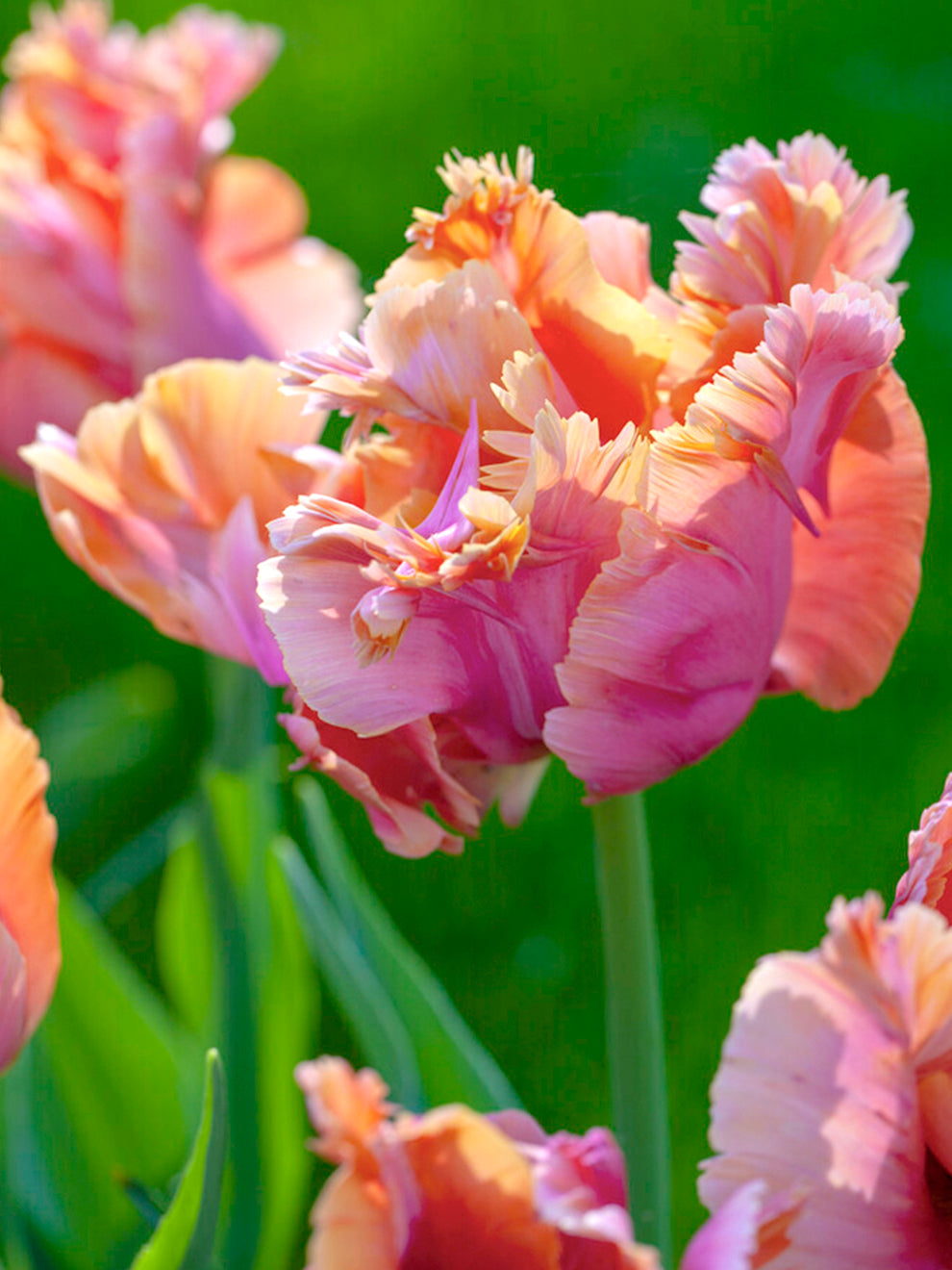
Living up to its name, these riotous petals will stop neighbors in their tracks.
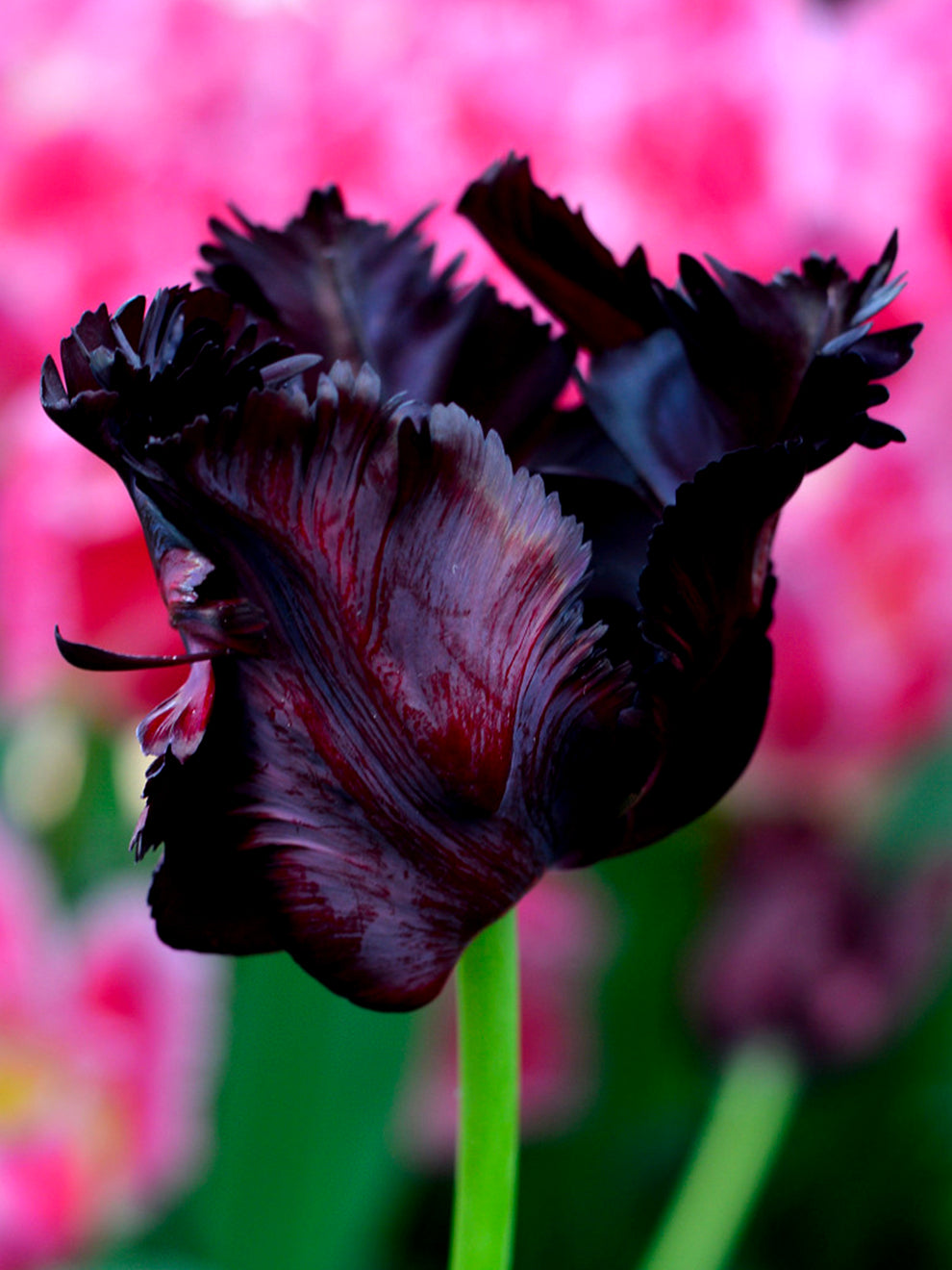
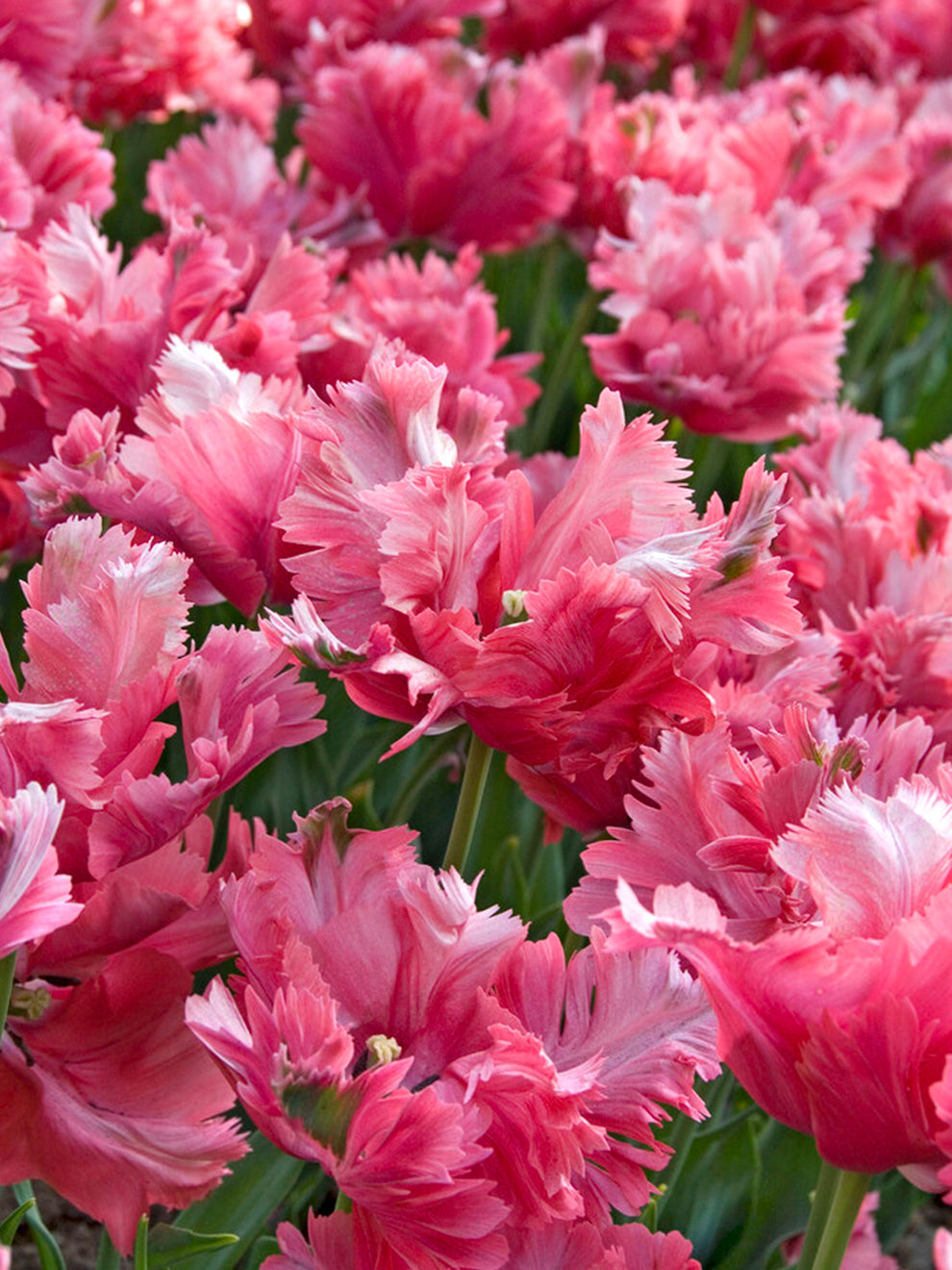
If you love to share your outdoor space on socials, these will steal the limelight.
While many varieties provide knockout color, parrots are among the best tulips to turn up the volume of a spring garden. The huge flowers offer a flamboyant upgrade with dramatically cut, twisted and feathered petals, often splashed with contrasting streaks or flashes of color.
Flowering later than many tulips around May, parrot tulips are particularly useful for extending the spring show and bridging the gap between the first bulbs and early summer blooms. Plant in generous groups so their fabulous flowers pack a color punch, and don't be shy with numbers. Don’t be afraid to lean into your favorite look, either, as parrot tulips are all about personality. Pop them close to paths, patios and seating areas where you and your garden guests can enjoy an up-close look at these wonderfully weird petals.
Parrot tulips can be less reliable repeat performers than some others, particularly in climates with hot, humid summers, so it's vital to grow parrot tulips in full sun and sharply drained soil, preferably sheltered from strong winds.
Zones 3-8 / Full sun / Flowers mid to late spring / Grows 18-24" high and 4-6" wide.
2. Opulent Double Anemones
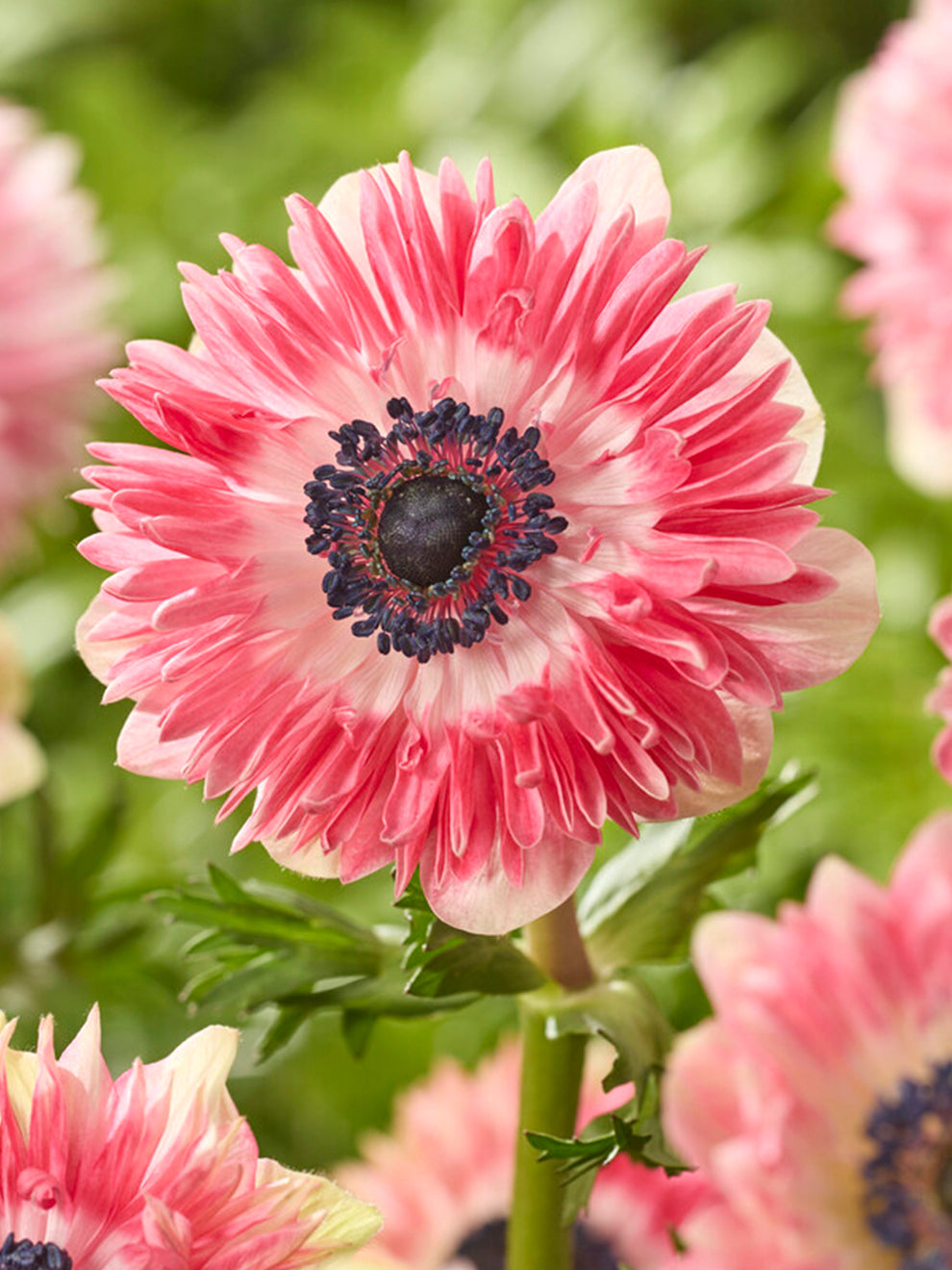
10 Fullstar Red/White Bulbs
'Fullstar Red/White' shines in a container with vivid tones and contrasting centers.
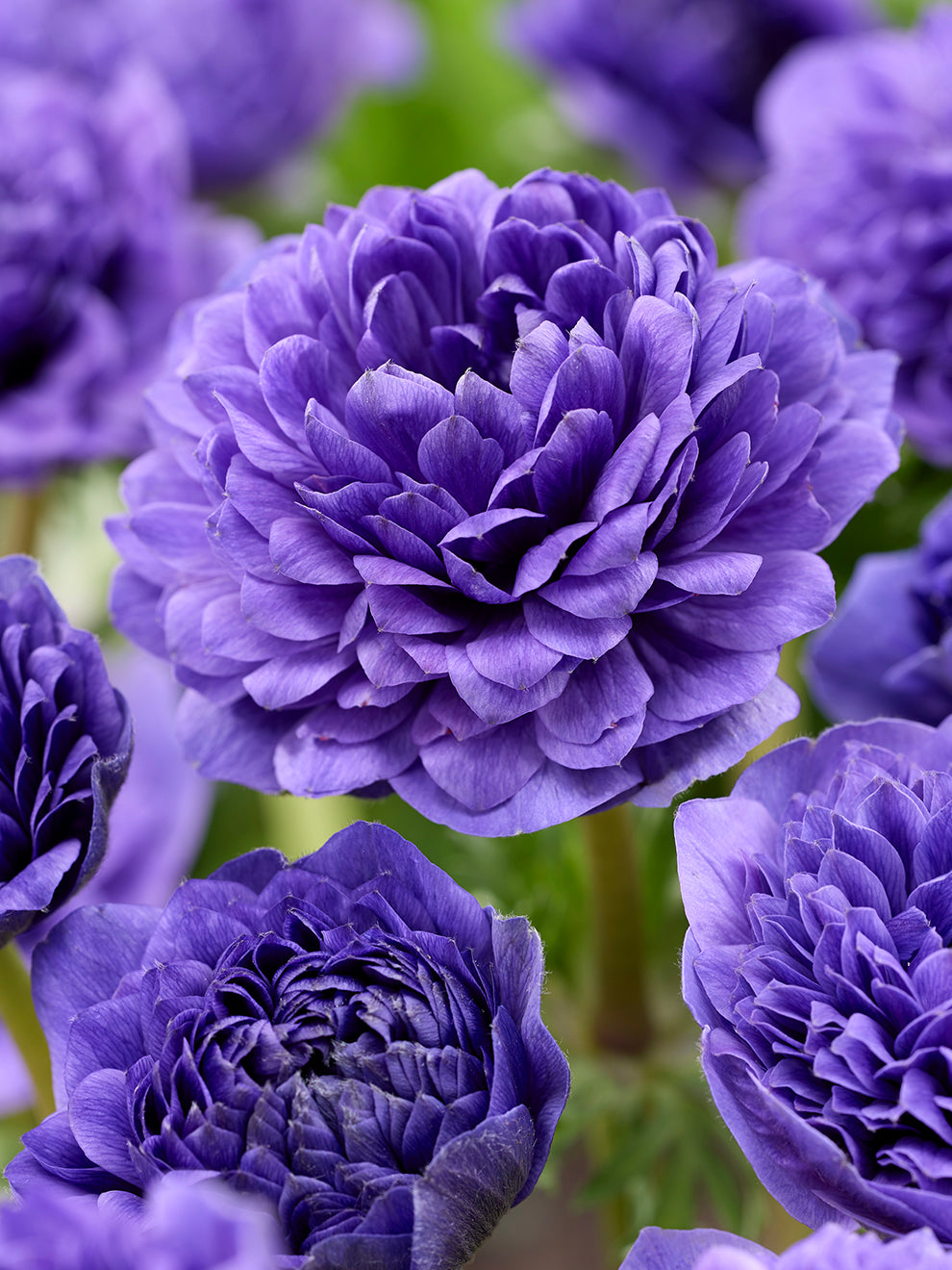
For pure impact, 'Fullstar Blue' is hard to beat with intensely rich blue petals.
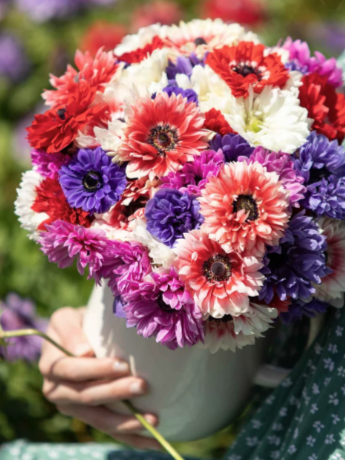
Can't decide? Plant a mixed collection for a colorful burst of spring petals.
Layer upon layer of petals gives double-flowered anemones an irresistibly full, almost peony-like appearance, so they make a big impact in a small space. Newer Fullstar anemones take the extravagance a step further, producing densely packed, ruffled blooms that can reach around 4 inches across. And though the blooms are bigger, the plants themselves stay compact so are easy to tuck into containers, rock gardens or border fronts.
Often sold as bulbs, anemones actually grow from small, woody corms but are planted in just the same way. For a fall planting, simply rehydrate the dry corms first by soaking in tepid water for up to 24 hours. These Mediterranean-origin anemones are particularly sensitive to wet conditions while dormant so choose a sunny, sheltered spot with fertile, very well-drained soil.
Zones 7-10 / Full sun to partial shade / Flowers spring to early summer / Grows 12-18” high and 6-9” wide.
3. Aliens-Have-Landed Alliums
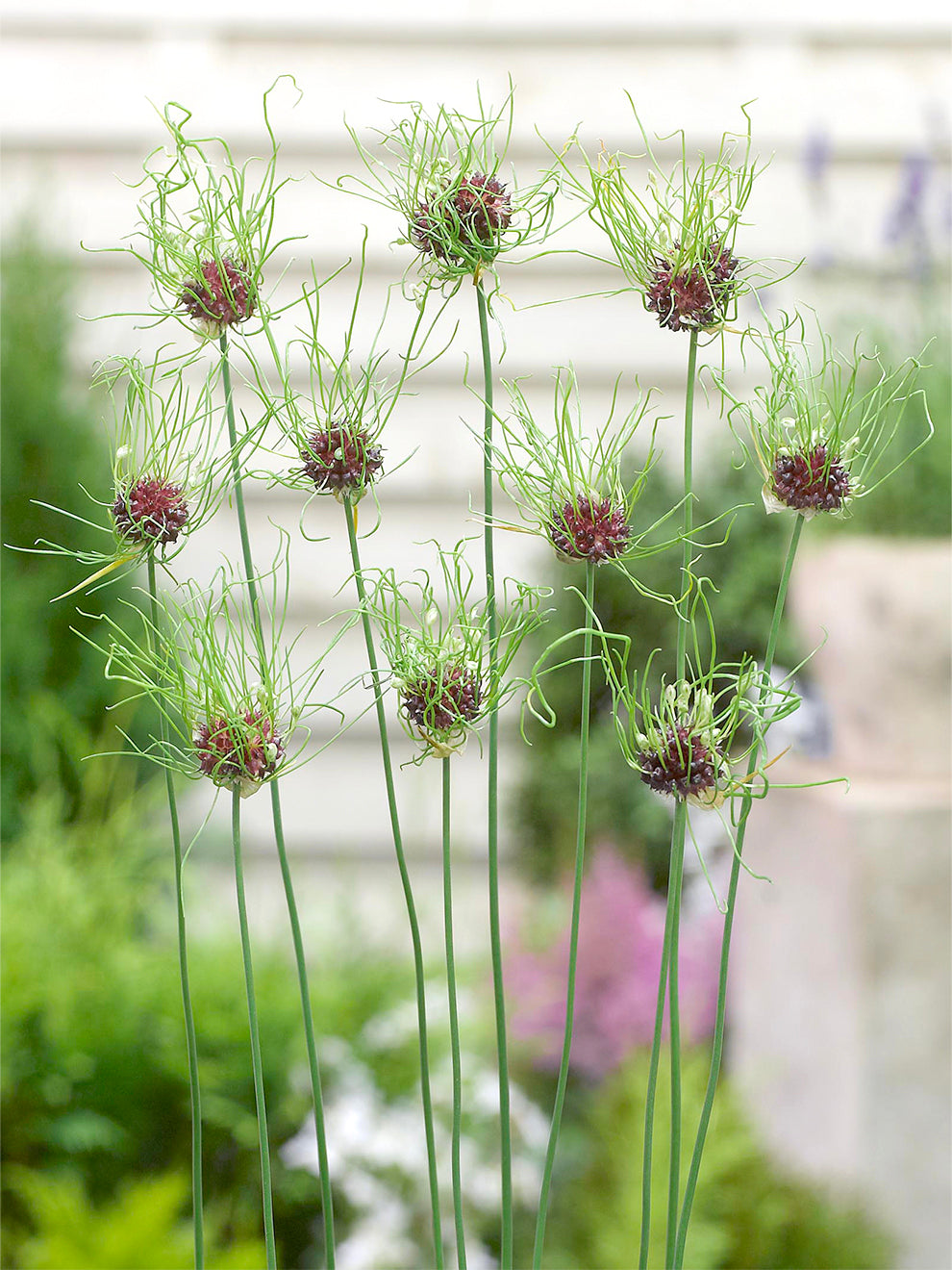
A real oddball and a wonderfully wild and weird tangle of wiry green tendrils.
3 Allium Schubertii Bulbs
These starburst blooms can reach a foot across and dry well for border structure.
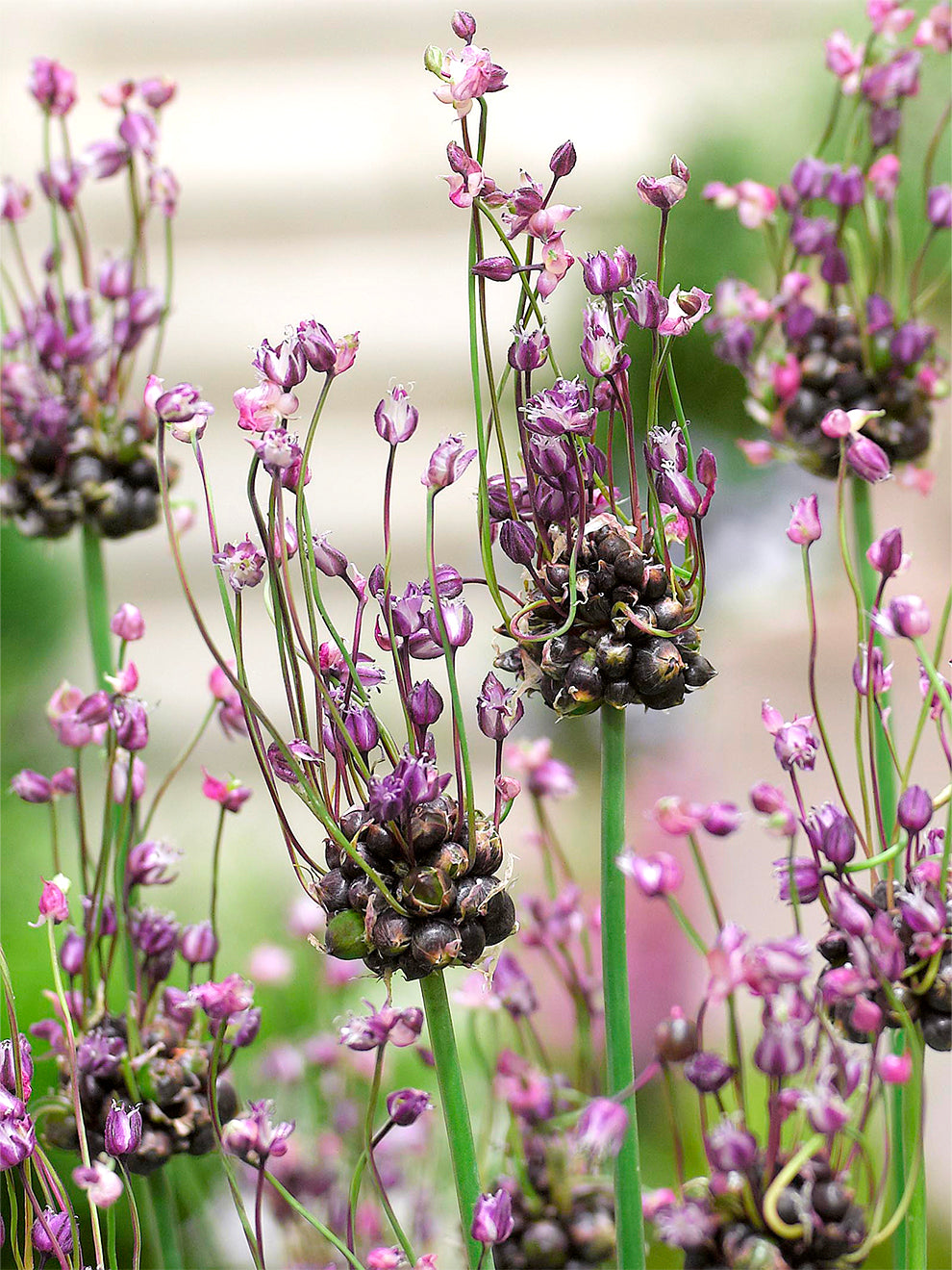
Intricate clusters and unusual fused stems bring a contemporary vibe.
If your summer border is hot, dry and sunny, ornamental alliums are among the best bulbs to plant in fall. We're all familiar with the classic purple pom-pom varieties that bob above the border but look a little closer and you'll find alliums with much stranger, more sculptural personalities. Some produce starbursts, spidery clusters or wonderfully wiry flowerheads, turning neighbors’ heads while still attracting pollinators. When flowers fade, the dried seedheads stick around, adding structure long after the main display is over.
It’s super-simple to grow alliums that return year after year, as long as you give them the right conditions. Plant the bulbs in early to mid-fall in free-draining soil and water to settle them in, but then ignore them unless the weather is unusually dry – because damp ground is the main reason these bulbs fail. And don't panic if the strap-like leaves start to yellow just as the flower stalks appear – allium leaves often die back around flowering time, which is why many gardeners plant them among grasses and leafy perennials that hide the fading foliage.
Zones 4-9 / Full sun / Flowers late spring to early summer / Grows 1-5' high and 4-12" wide.
4. Perfectly Peachy Daffodils
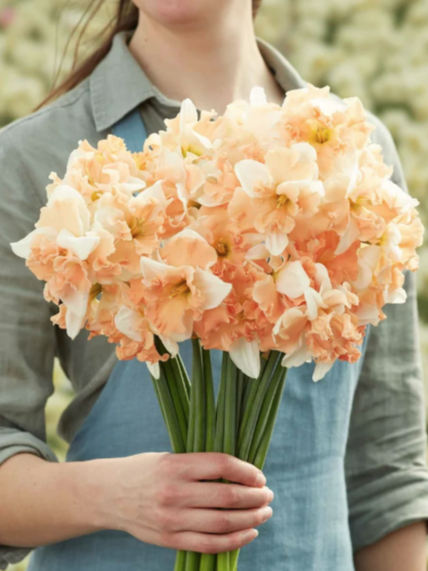
White petals set off the apricot crown a treat, making this variety a real beauty.
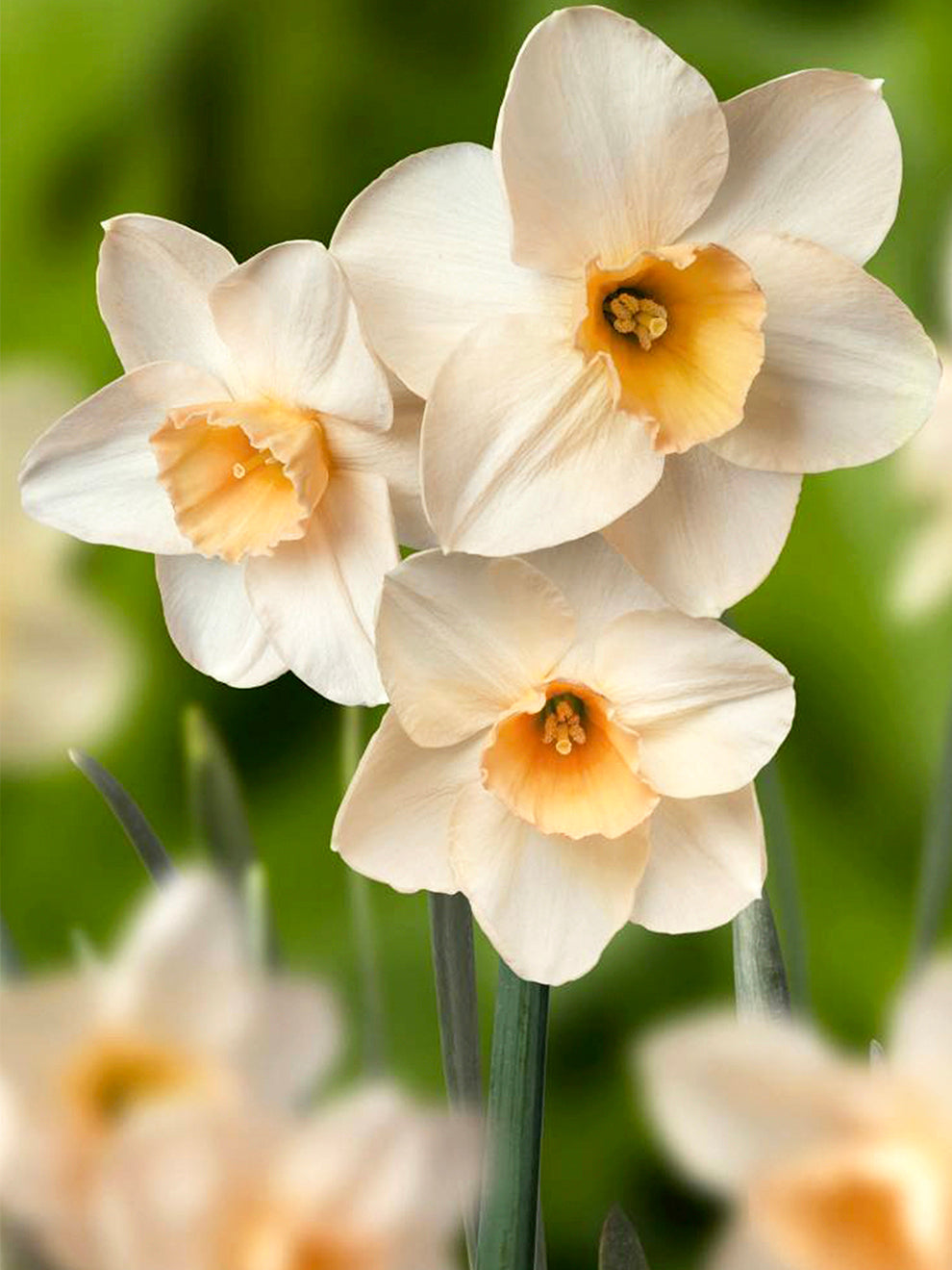
A neat little number for a border front or patio pot where full-size daffs don't fit.
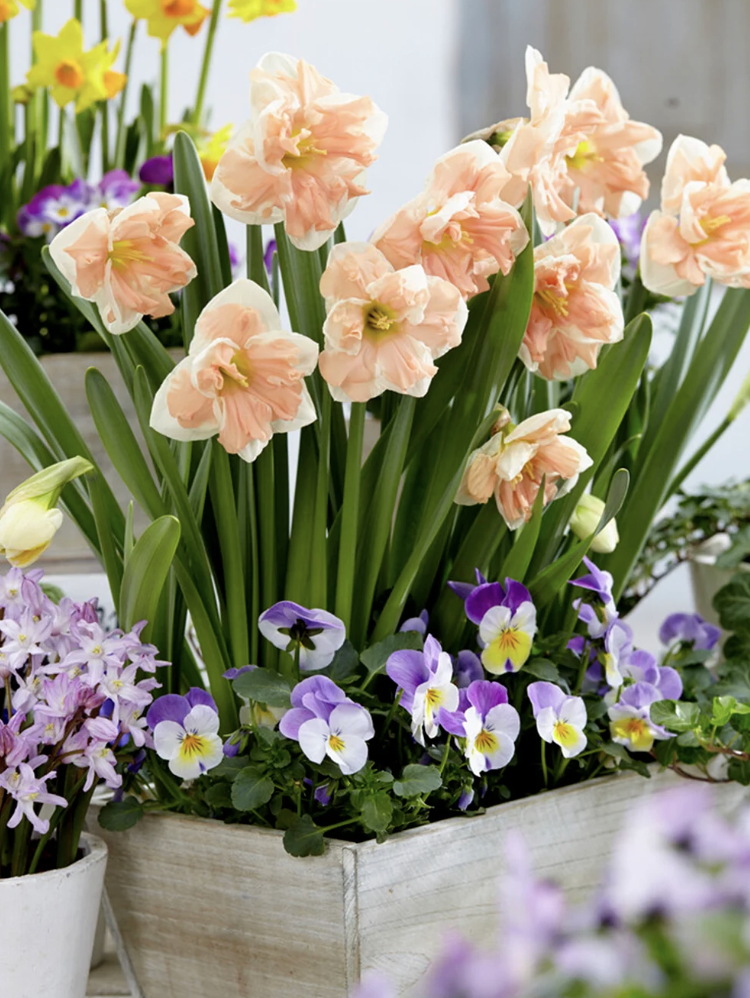
A real showstopper with frilled cups on flowers that can reach 4 inches across.
Appealing peachy daffs are comfortingly familiar without the brashness of their bright yellow cohorts. Their cups glow in shades of peach, apricot, salmon or coral, while the outer petals stay cream, white or greenish white. The effect is prettier and far more sophisticated, making these the best daffodils to add to a modern planting palette. Plant them in repeating groups through a border for a relaxed, natural look or pair with blush-toned tulips, flowering fruit trees and other pastel spring blooms.
Get daffodil bulbs into the ground before it freezes and then leave them alone – good news if you’re seeking genuine faff-free color as daffodils reliably return year and year, often forming larger clumps over time.
Zones 4-8 / Full sun to partial shade / Flowers late winter to late spring / Grows 8-30" high and 6-12" wide.
5. Smoky-Hued Dutch Iris
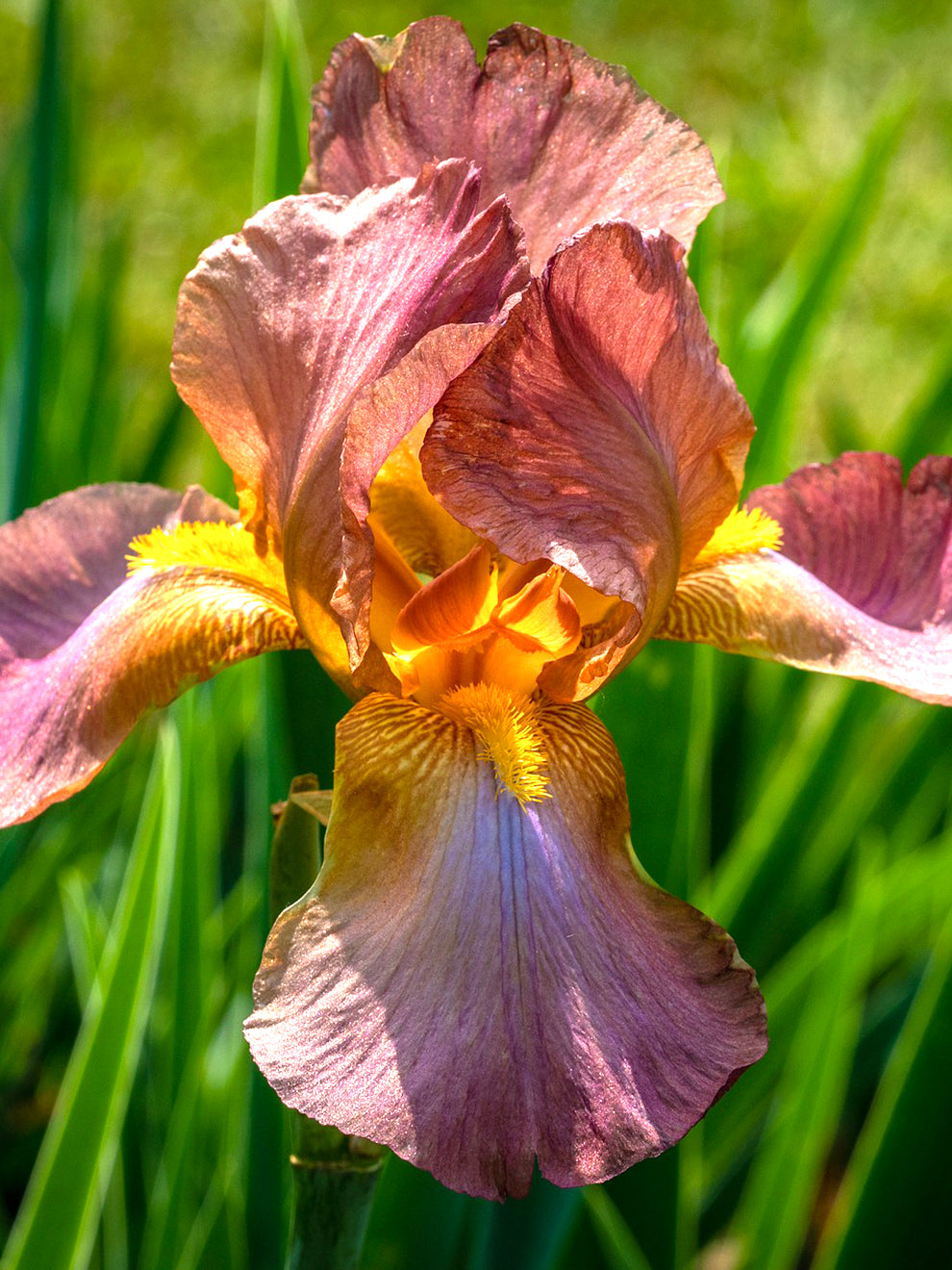
This variety has a super-smoky combination of bronze and ochre tones.
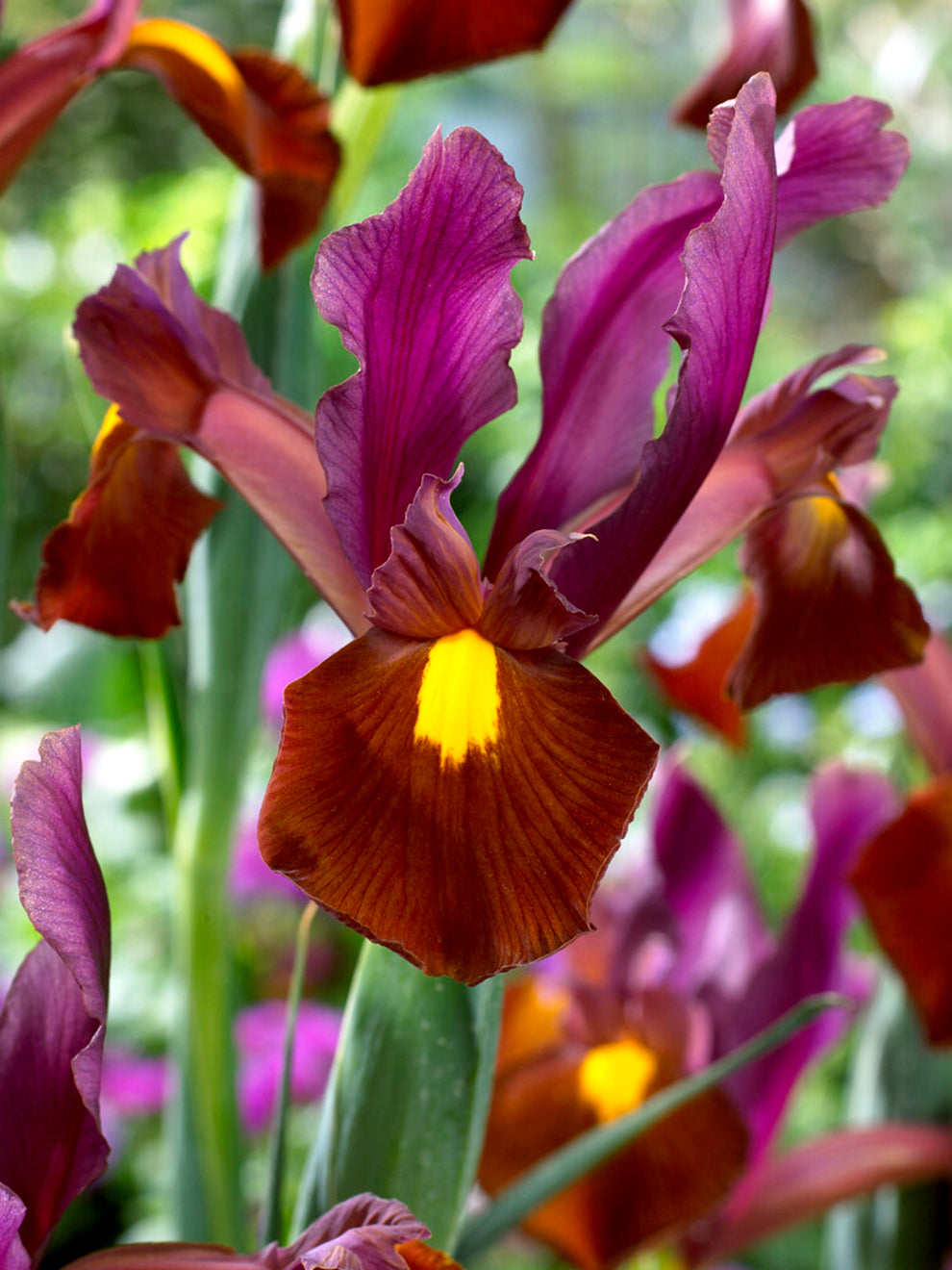
The rich colors of 'Red Ember' practically glow when lit by the evening sun.
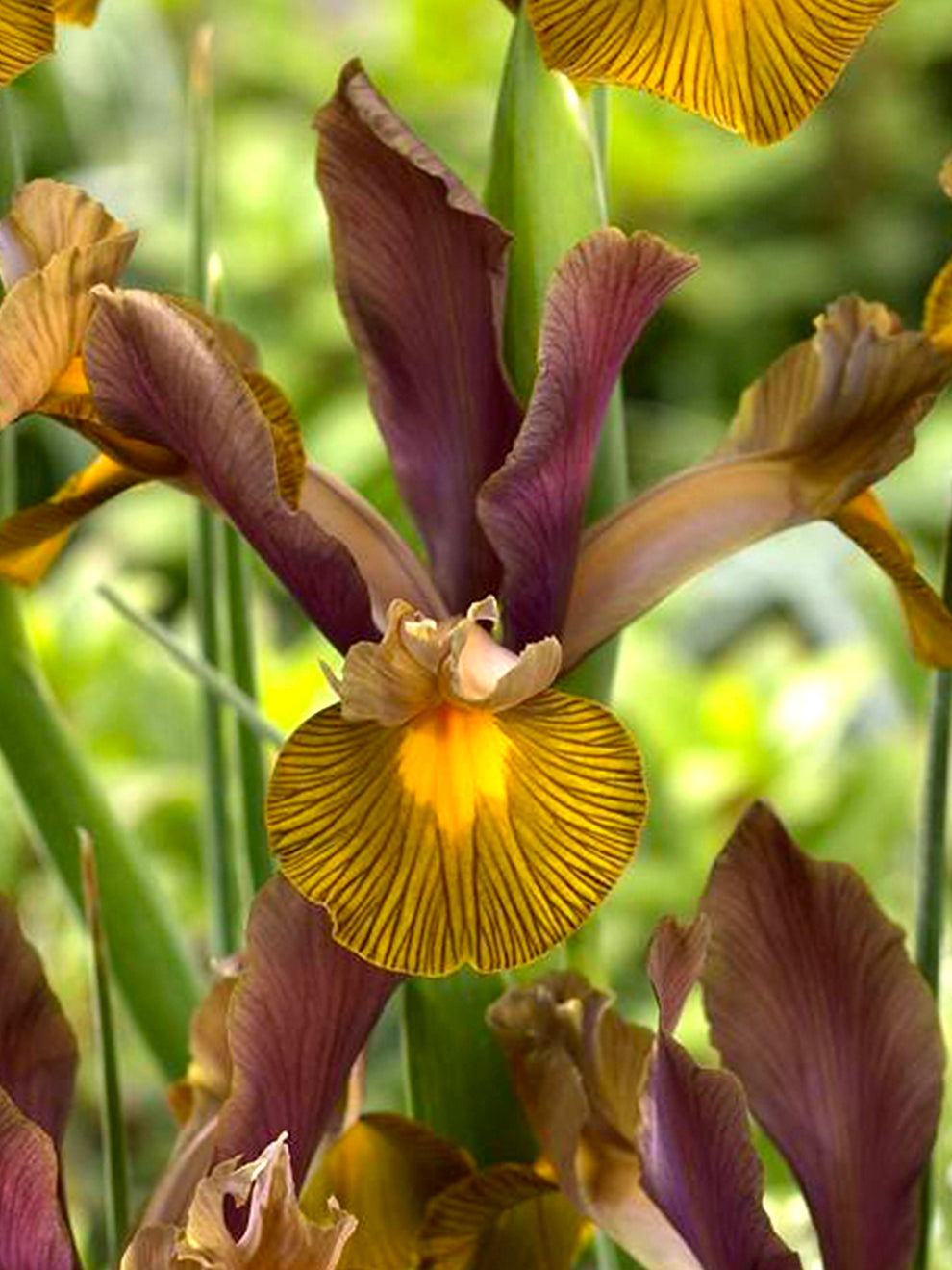
You can see how this blazing golden-bronze beauty earned its name!
With tall, elegant flowers in electric blue, yellow and white, classic Dutch iris (Iris × hollandica) has long earned its place in our yards. But if your taste runs a little moodier, check out the less obvious cultivars in plum, brown, bronze, copper and wine shades. Their smoky coloring brings a sophisticated twist to the familiar iris silhouette and works particularly well in a more restrained, contemporary planting scheme.
Each bulb sends up a strong stem with an architectural bloom, and that upright, narrow habit makes Dutch iris especially useful for an already-full border that needs vertical punctuation. They are also excellent cut flowers, if you like bringing armfuls of the garden indoors.
Plant bulbs in early fall and water to settle the soil, then keep moisture fairly even while they're establishing. This iris typically benefits from a period of cool winter temperatures so in zones 8–9, check the supplier's instructions for the cultivar and local growing conditions; some bulbs can be planted directly in fall, while others may perform more reliably with appropriate chilling.
Zones 6-9 / Full sun / Flowers late spring to early summer / Grows 2-3' high and 6-12" wide.
6. Ombre Grape Hyacinths
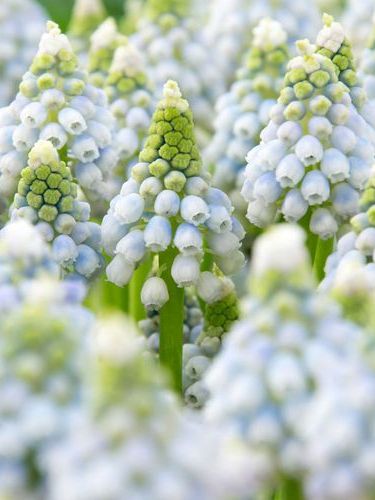
A fresh spring palette and the safest bet in a bed with some shade.
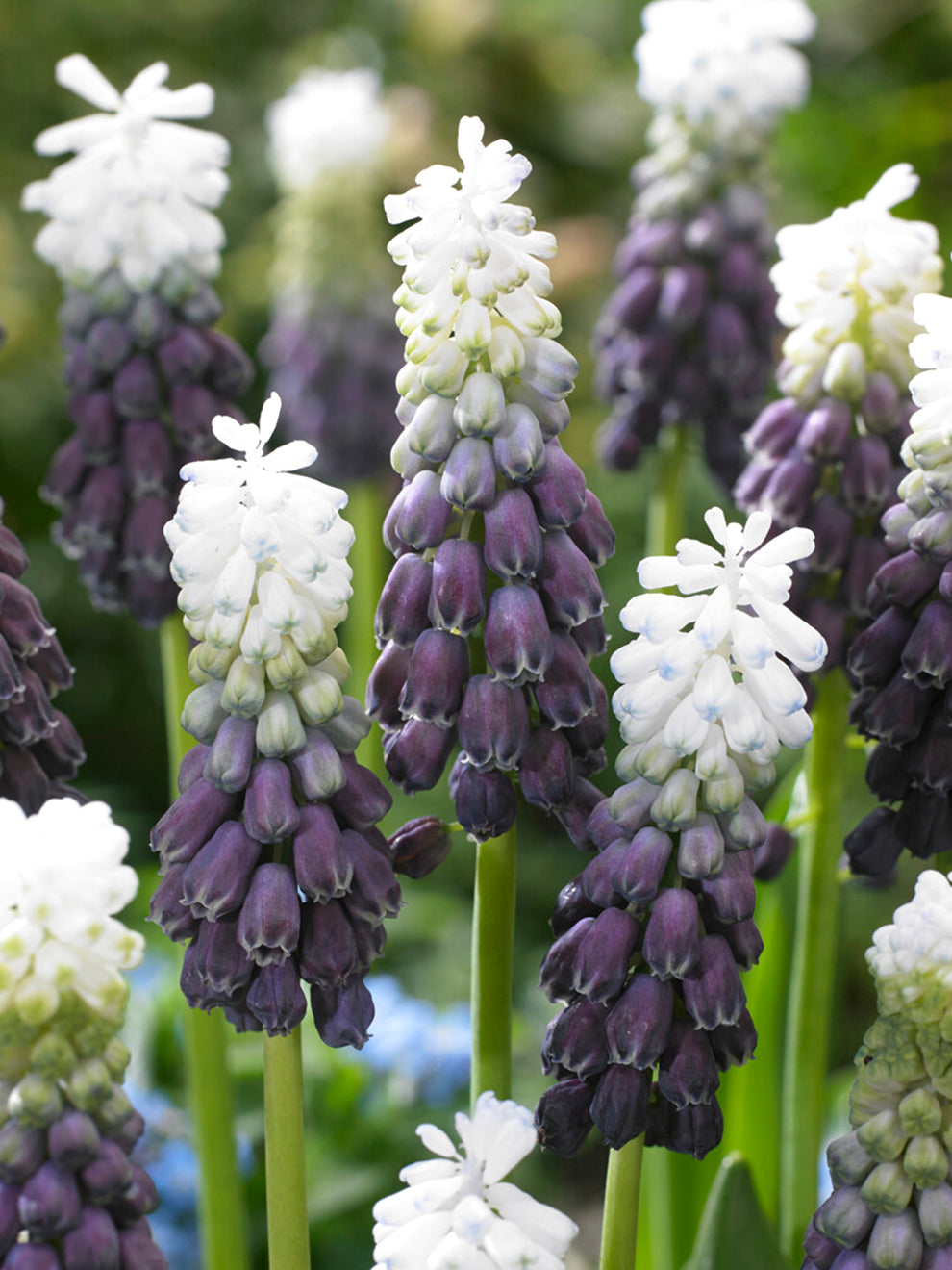
Flowers fade from a rich purple base through pale lilac to white tips.
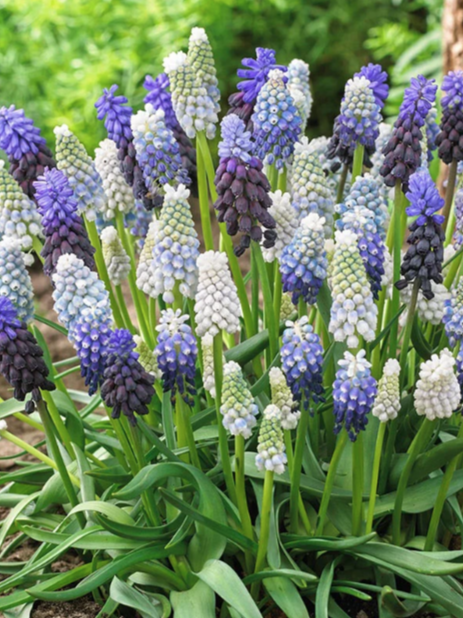
A collection of mixed varieties highlights the varied tones a treat.
Dinky grape hyacinths (Muscari) can be tucked around the bases of shrubs, in lawns or beneath taller daffodils and tulips, and squeeze into even the most crowded border. They’re one of the easiest spring flowering bulbs to grow, and newer multi-toned varieties bring lots more pizzazz than the usual solid-blue forms. Their appeal doesn’t stop at aesthetics either, as many of these rodent- and deer-resistant bulbs are sweetly fragrant and naturalize, gradually creating bigger clumps over time. They can occasionally be a little too enthusiastic, so plant in a spot where you won't mind some floral unruliness.
Plant grape hyacinths in fall before the ground freezes in well-drained soil, and forget scattering a handful here and there because this little stunner looks best among plenty of its own company.
Zones 4-8 / Full sun to partial shade / Flowers early to mid-spring / Grows 6-9" high and 2-6" wide.
7. Flamboyant Crown Imperial Fritillaries
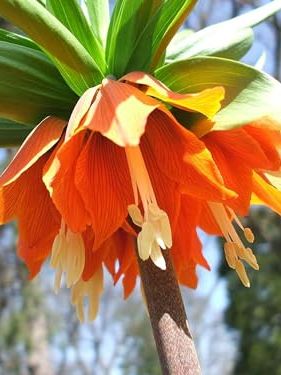
'Rubra Maxima' boasts burnt orange to flame red tones on 3-feet-high stems.
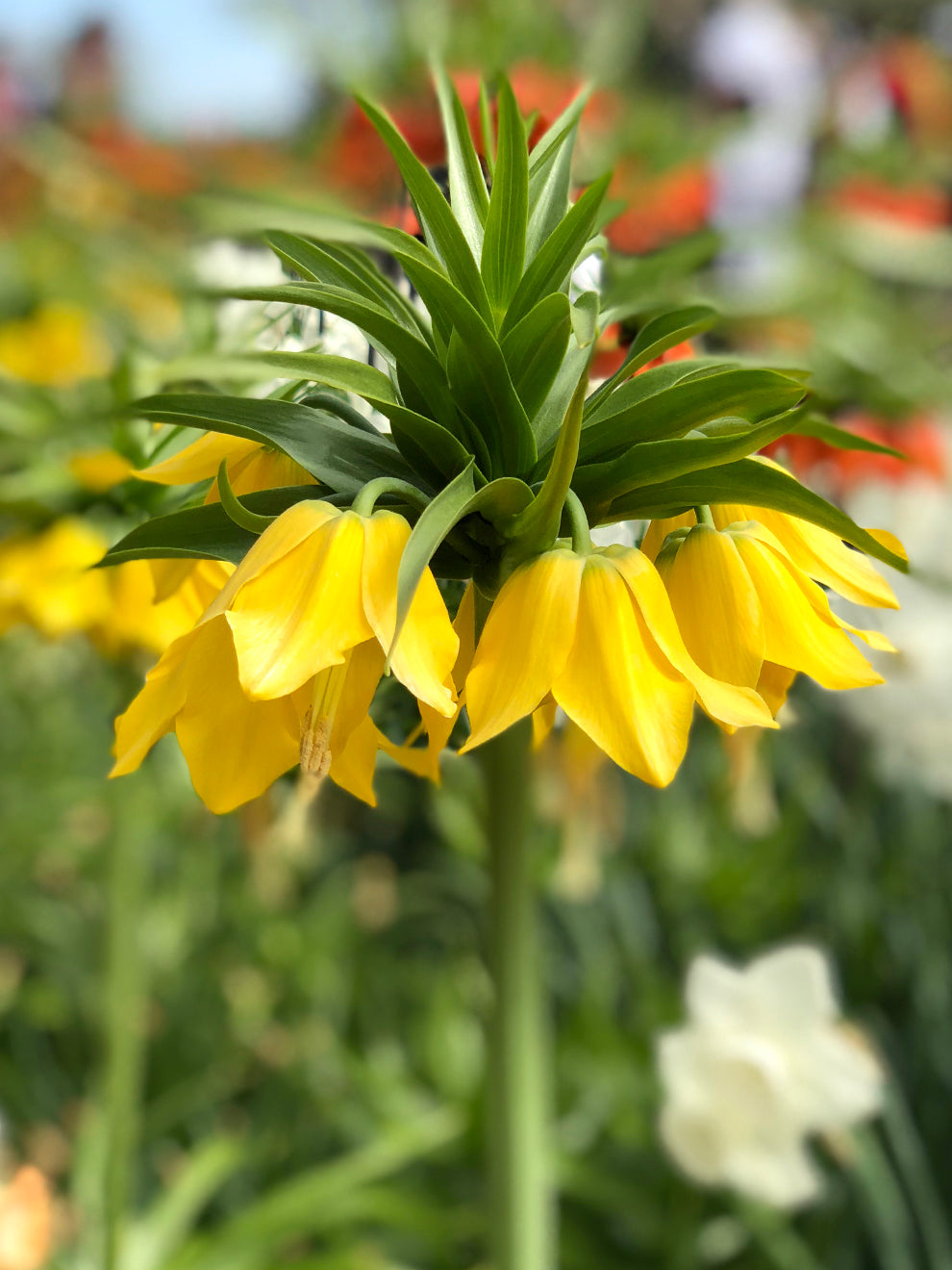
'Lutea Maxima' brings a bright burst of color and wonderfully glossy leaves.
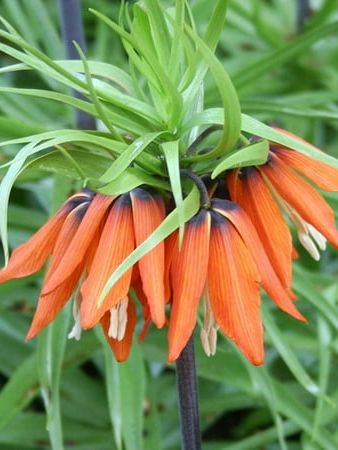
Classic 'Aurora' is a reliable return flowerer and is known to naturalize well.
Fritillaries are worth growing because they look like nothing else in the spring garden, and certainly aren’t shrinking violets! Crown imperial fritillary is the showstopper of all fritillaria with a whorl of pendant bells nodding beneath a tufted crown of leaves atop a sturdy stem. This architectural beauty looks almost too exotic to be hardy, but it returns year after year to wow neighbors and friends.
Despite the high-drama appearance, Fritillaria imperialis is surprisingly straightforward to grow. Just give bulbs well-drained soil as they’re prone to rotting in wet conditions. A clever tip for fall planting is to lay the bulbs on their sides to help prevent water from collecting in the little hollow on the top.
For maximum impact, use crown imperials as punctuation marks through a sunny spring border, giving them room to strut their stuff. A quirky bonus is their distinctive musky, slightly skunky scent, said to help keep rodents out of garden beds. It's not everyone's favorite fragrance, though, so best not to plant these showstoppers beside a seating area.
Zones 5-8 / Full sun to partial shade / Flowers mid to late spring / Grows 3-4’ high and 12-18” wide.
8. Ravishing Warm-Zone Ranunculus
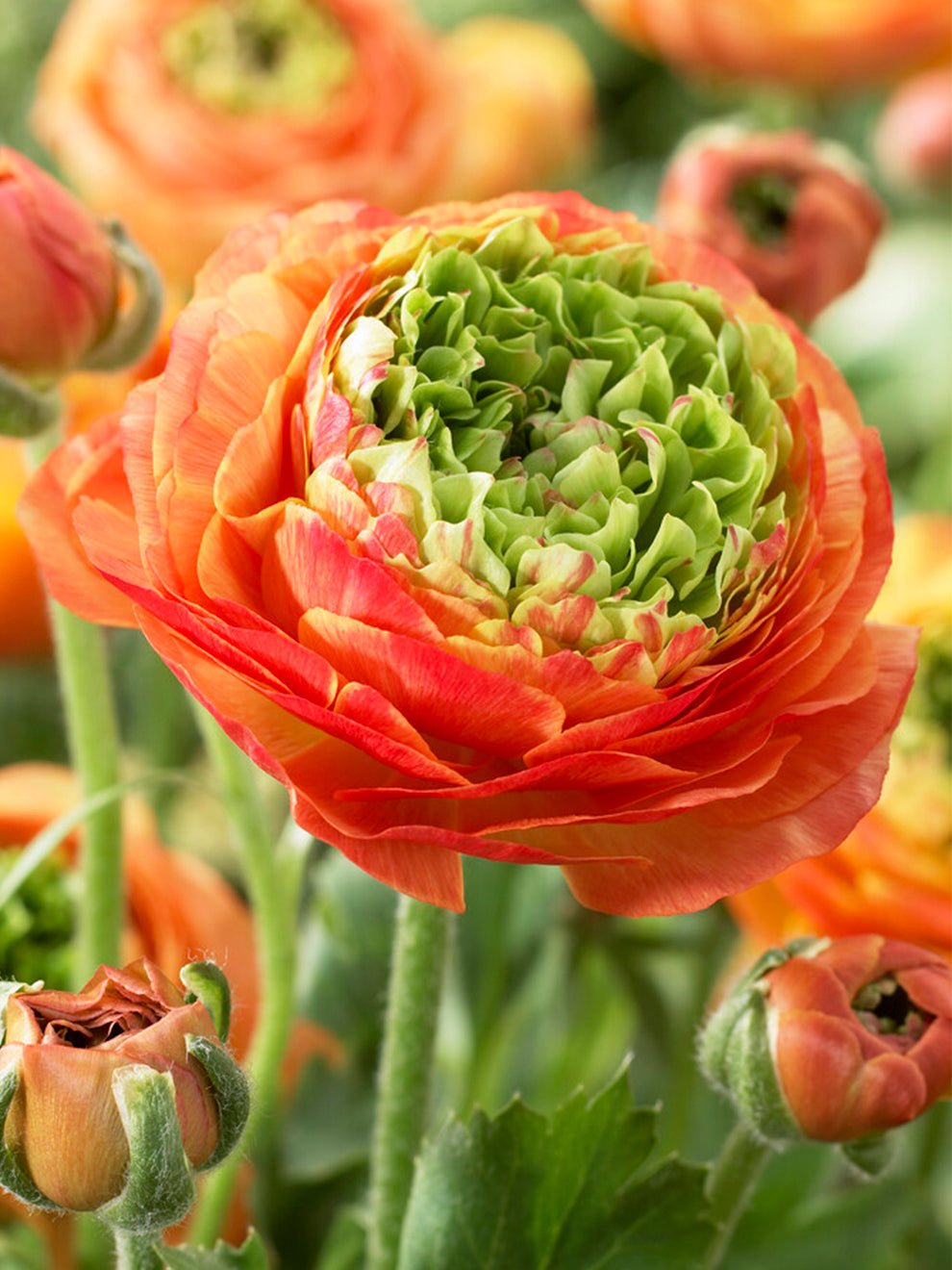
Delivering a fiery shot of vibrant color, this will warm up a spring border a treat.
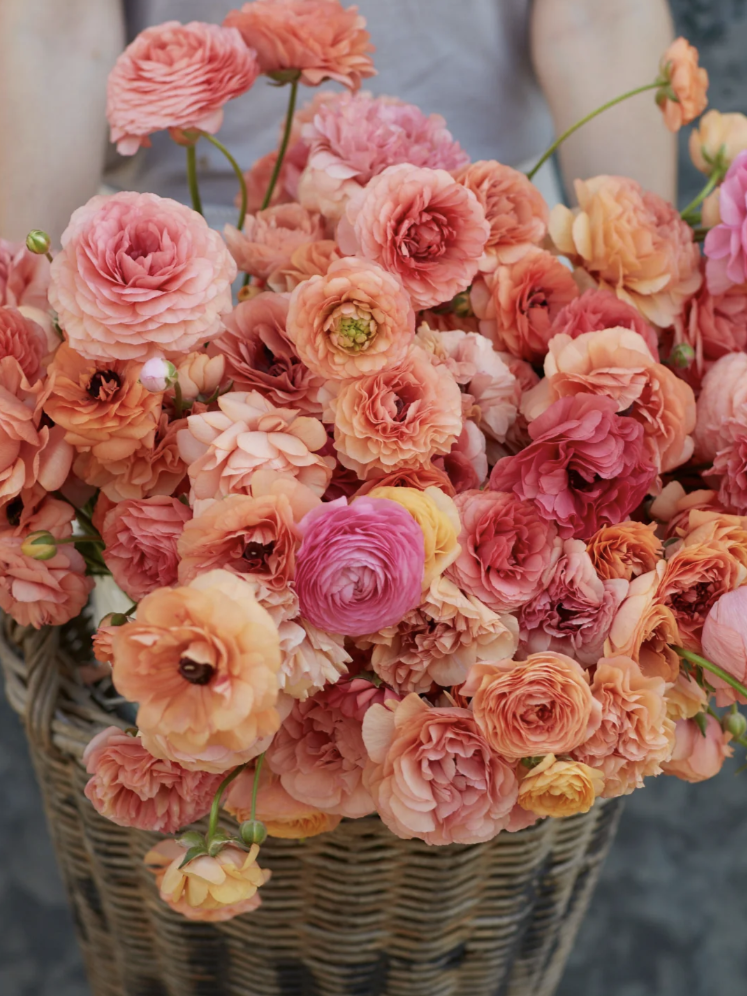
Skip straight to stunning with this mixed variety pack in standout peachy shades.
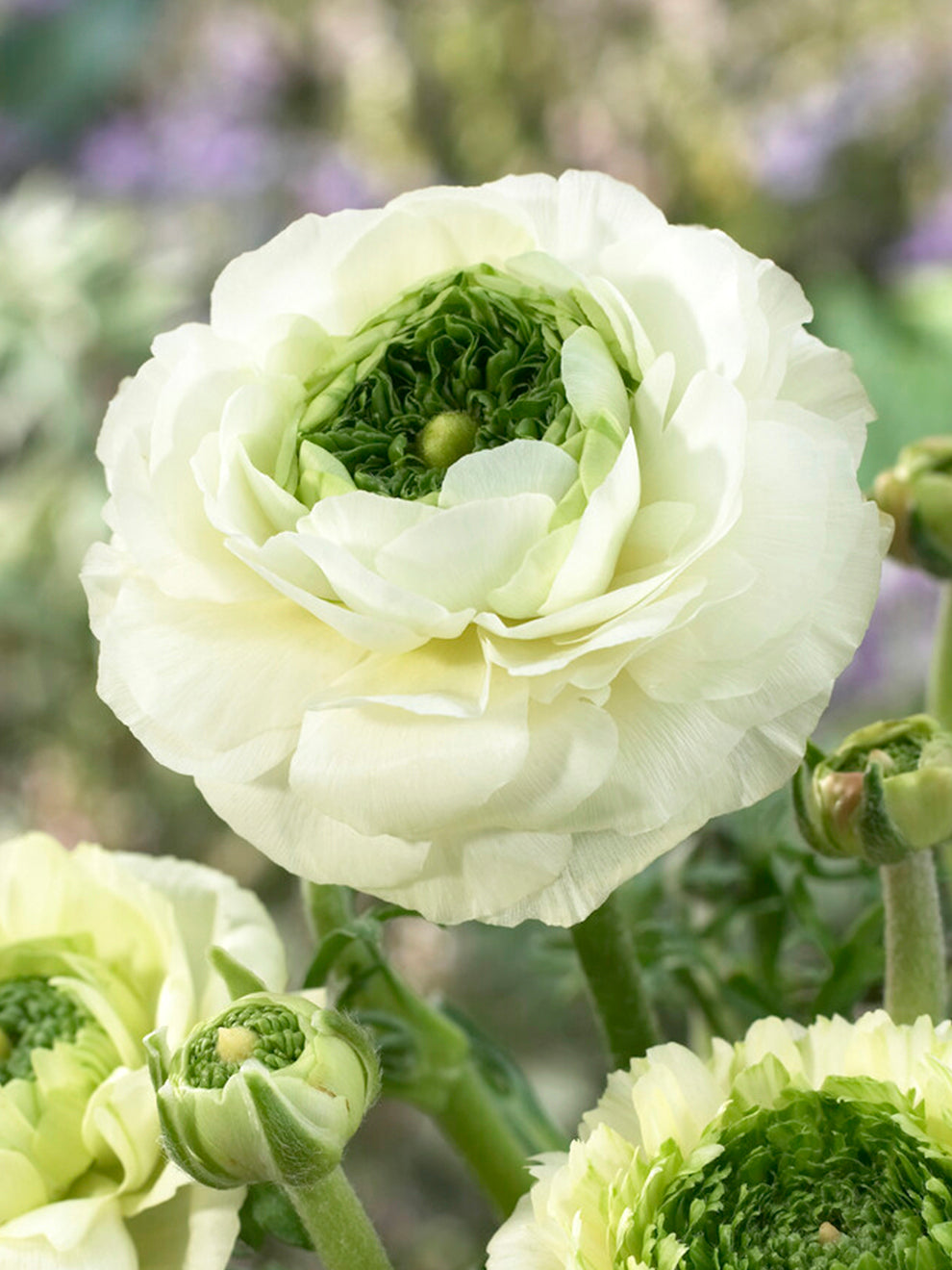
Achieve an elegant, sophisticated look with these pale petals and green center.
For maximum flower power, ranunculus is hard to beat – especially when you consider that such lavish blooms emerge from a surprisingly small corm. Add these little energy stores to your list of what to plant in October, though, and you'll be rewarded with a spectacular succession of rose- or peony-like blooms that look as though they belong to a far more demanding plant.
The Reinette ranunculus types take the showiness up another notch, producing huge, densely layered double blooms with distinctive green centers. They’re also stars of the cutting garden with long-lasting flowers that look just as fabulous in a vase as they do in the border.
Plant the corms in fall or early winter when temperatures have started to cool but the soil isn't cold and saturated. Soak dry corms in room-temperature water for a few hours first to rehydrate them, then plant in a sunny spot and keep the soil evenly moist but never waterlogged. Ranunculus dislike sitting in cold, soggy ground, so plant in containers if you have heavy soil.
Zones 8-10 / Full sun to partial shade / Flowers late spring to summer / Grows 12-18" high and 4-6" wide.
9. Big-Bloomed Crocus
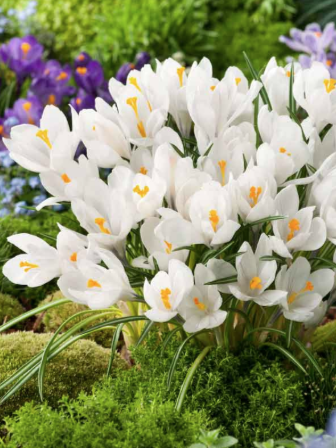
This all-white crocus produces unusually large, snow-white flowers.
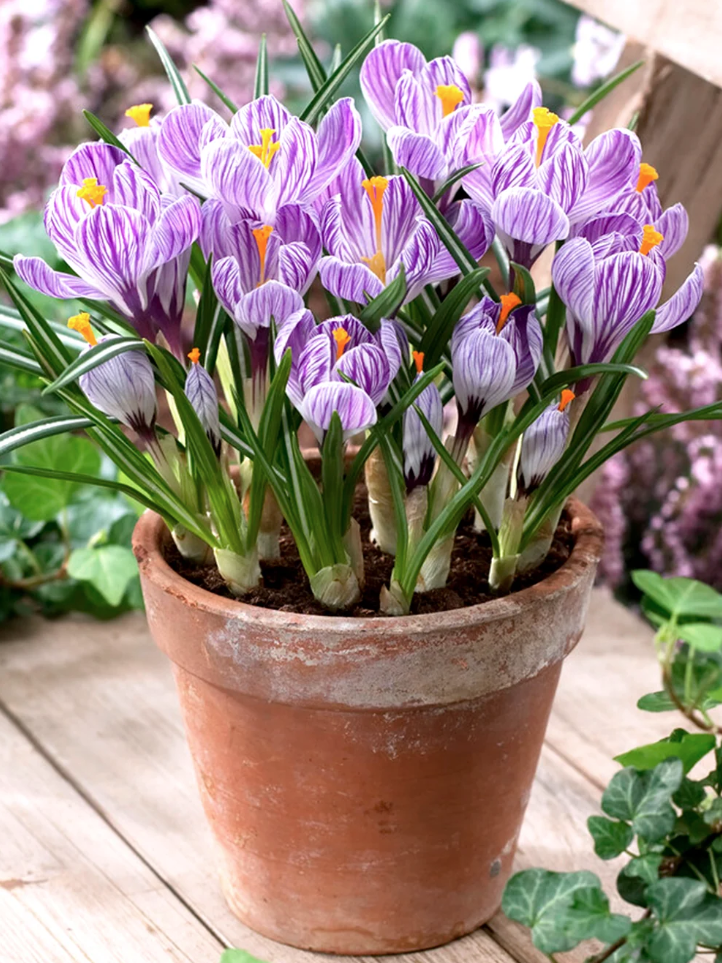
The showiest choice with boldly striped petals and a flash of golden yellow.
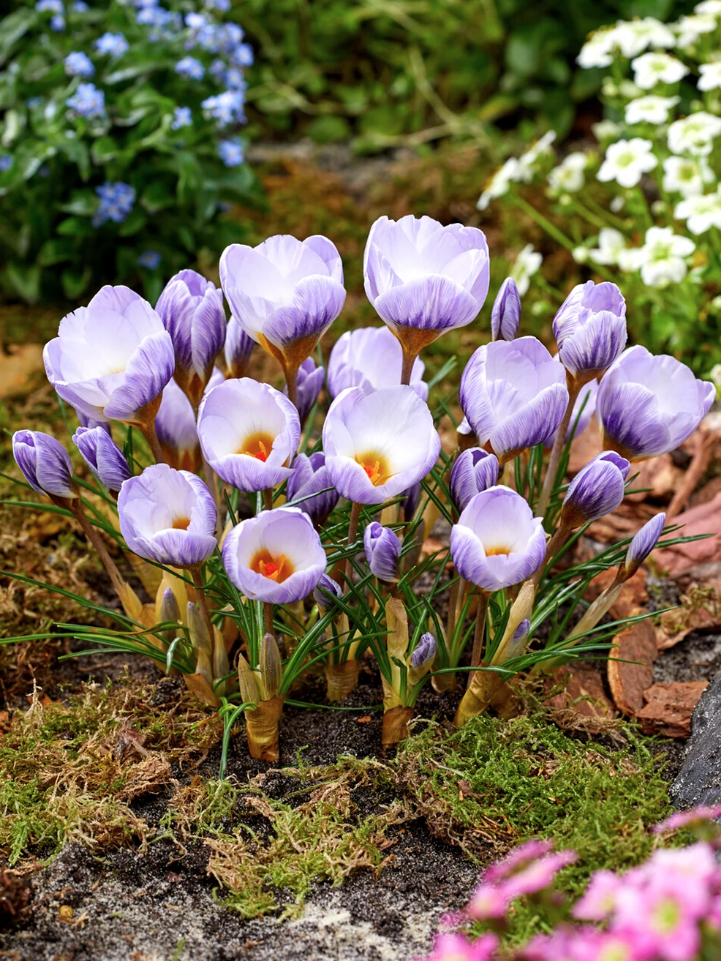
Lavender-blue watercolor hues brush the silvery white petals of 'Blue Marlin'.
Crocus earns its place in every garden because it asks so little of you. While the small-flowered types are charming, bolder big-bloomed crocuses make more of an early-season statement. Emerging in late winter when there aren’t many garden goings-on, they're guaranteed attention-grabbers but remain petite enough to be tucked beneath deciduous shrubs, through lawns or along a border front. Crocus naturalize, too, so groups can become more impressive over time.
Growing crocus is wonderfully straightforward. Plant the corms in fall in well-drained soil before it freezes and water to settle the soil. Then let nature do the rest, as hardy spring-flowering crocuses need a period of cold to flower well. Plant in generous drifts and you'll have one of spring's loveliest little curtain-raisers, as flowers often closes their petals when the clouds roll in for even more garden charm.
Zones 3-8 / Full sun to partial shade / Flowers late winter to early spring / Grows 2-6" high and 3-6" wide
Top Tips for Successful Fall Bulb Planting
- Most spring-flowering bulbs prefer a sunny or lightly shaded position with good air circulation but do check conditions for individual varieties.
- Prioritize good drainage by mixing a handful of coarse sand, fine gravel or vermiculite such as Plantonix Vermiculite Bliss from Walmart and multi-purpose compost into the soil before planting. Soggy soil is the quickest way to lose bulbs and corms, so take time to improve soil drainage for long-term success.
- As a general rule, plant bulbs at 2-3 times their own height, measuring from the base of the bulb. Always follow the instructions for the specific variety, particularly with corms and smaller bulbs.
- Plant bulbs with the growing tip pointing upwards. If you're unsure which way is up, planting bulbs on their side will allow new growth to find its way to the surface.
- Water newly-planted bulbs thoroughly to settle the soil but then allow autumn and winter rainfall to provide moisture, watering only if needed.
- If you’re gardening in a warmer part of the US, check the chilling requirements as pre-chilled bulbs or refrigerated storage before planting may be recommended by the supplier.
- You can grow bulbs and corms not suited to your USDA zone in containers as long as you overwinter pots indoors, or you can lift and store just as you would a dahlia tuber.
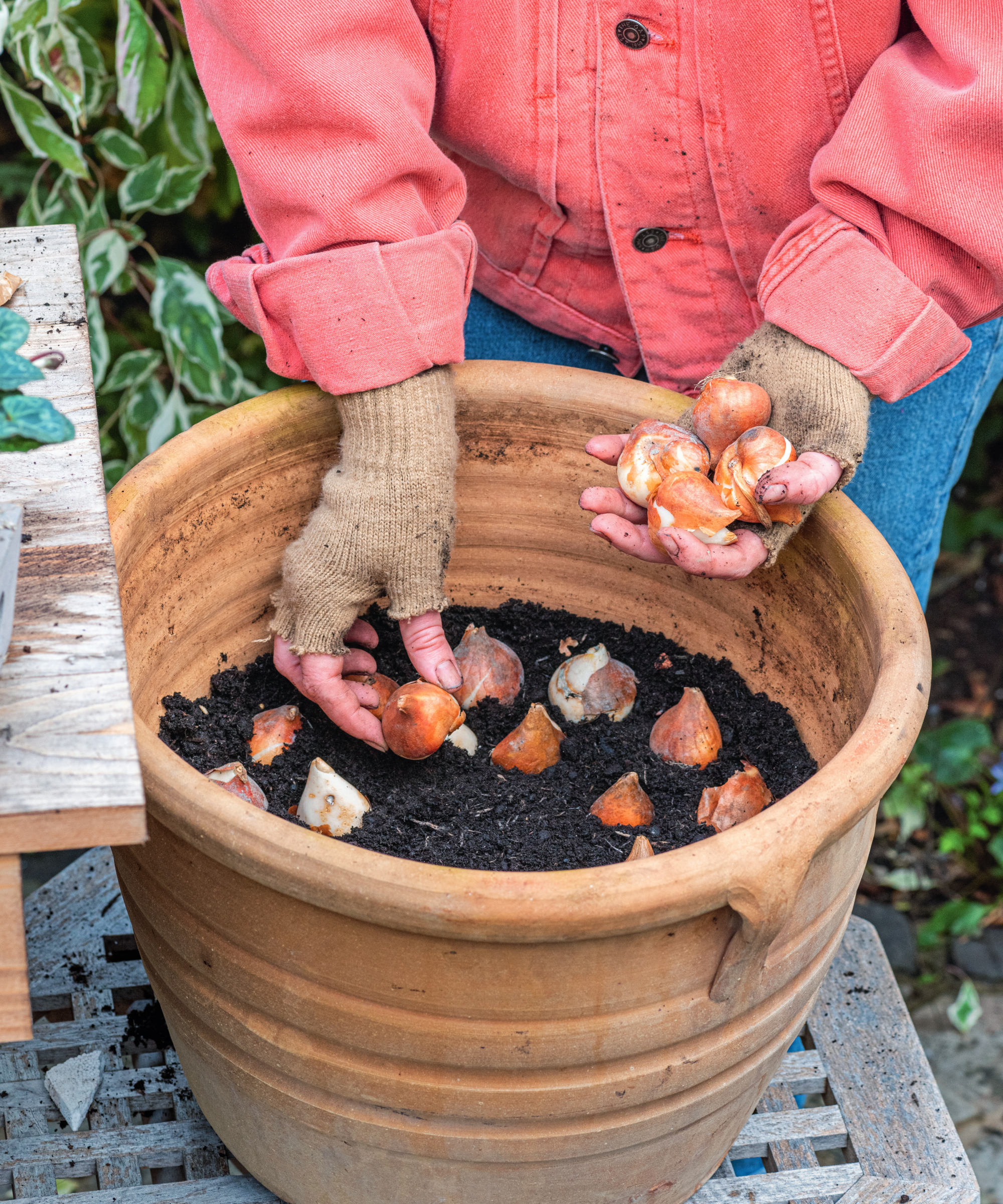
(Image credit: Nicola Stockden/Future Publishing Ltd)














 English (US) ·
  French (CA) ·