

PROTECT YOUR DNA WITH QUANTUM TECHNOLOGY
Orgo-Life the new way to the future Advertising by AdpathwayLate July is, for me, always a sad time of the year, as we say goodbye to the Swifts (Apus apus) that have graced our skies for the past three months. Of all the birds that nest in Britain, few spend such little time here. They arrive back in late April or early May, and leave again shortly after fledging their chicks. This is usually in late July, but because of the hot, Swift-friendly weather we have experienced, it may be a little earlier this year.
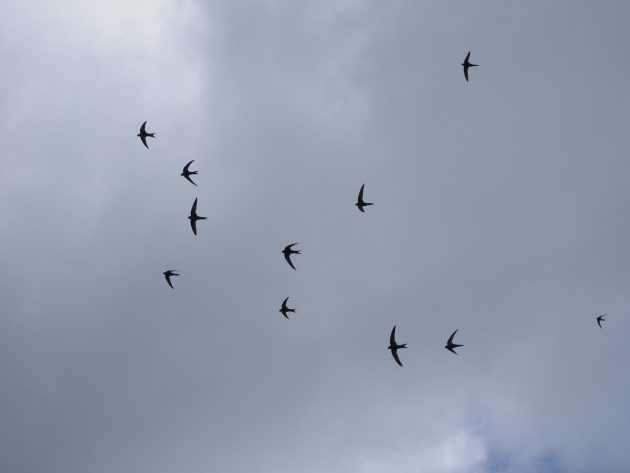
There’s often a late-nesting pair or two that remain longer, so I can usually see the odd bird up to mid August; I regularly see migrants on the North Norfolk coast through to the end of August and even in early September. These are birds that have bred much farther north, for Swifts nest in Britain as far north as Caithness and Sutherland, with even a few pairs on Orkney and Shetland.
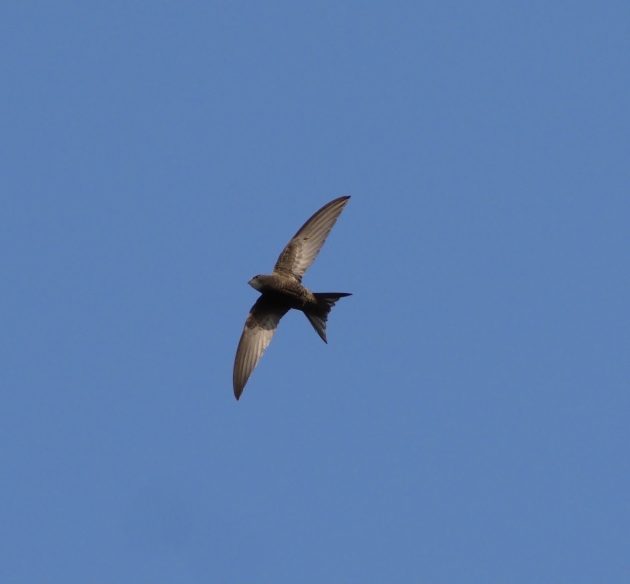
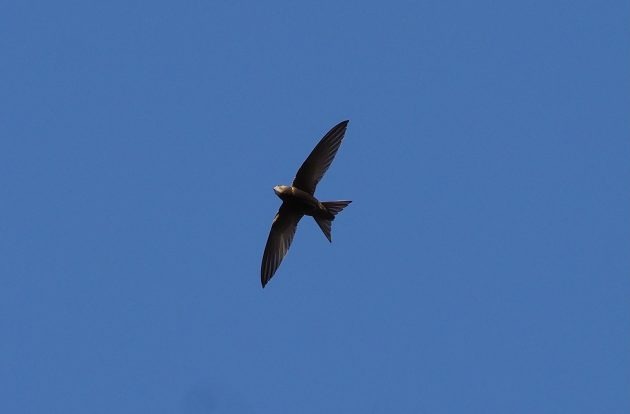
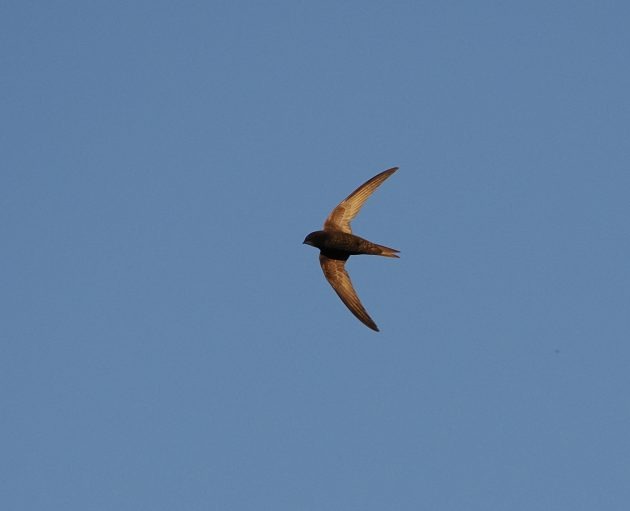
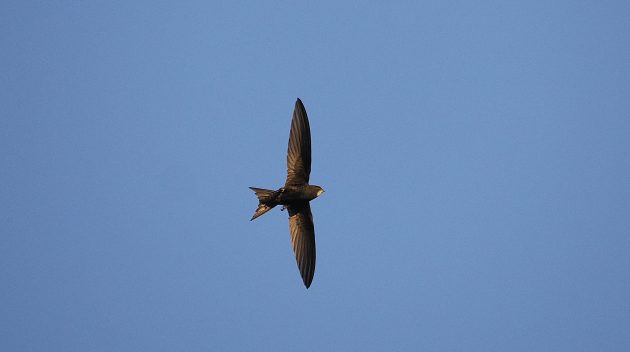
Swift photography is challenging – not only are they black birds, invariably photographed against a bright background, but they fly fast, too. I have yet to take a Swift photograph that I’m really pleased with
They have been declining in Britain for several decades, though I’m pleased to say that the populations in my local villages here in West Suffolk appear to be stable. The most serious problem for Swifts in Britain is loss of breeding sites. They like to nest under the eaves in old buildings; modern buildings seldom have any suitable spaces for them to squeeze into, while increasing numbers of old houses have had cosmetic work done to them which make them no longer suitable.
Fortunately swifts have many friends – in Suffolk it’s SOS (Save our Suffolk) Swifts. This is a joint campaign between Suffolk Bird Group and Suffolk Wildlife Trust. It was established in 2014 with the aim of reversing the downward trend in Swift numbers. Organising talks, walks and events throughout the county, SOSSwifts encourages the establishment of local swift groups and offers ongoing support. This includes surveys of suitable nest sites and recommendation of appropriate call systems, as well as education and advice about swift protection, in order to expand existing colonies and create new ones.
Establishing a new colony is a challenge, but it can be done, as my local farmer, James Bucher, has shown. Five years ago James asked my advice about putting swift boxes up on a Victorian feed mill on his farm, a lovely old brick-built building. He erected 18 special swift boxes on the mill, and also installed a sound system that plays swift calls throughout the spring. This is essential in order to draw in young birds to investigate. Hopefully the passing birds will find the nest boxes, and decide that this might be a good place to nest when they return the following year.
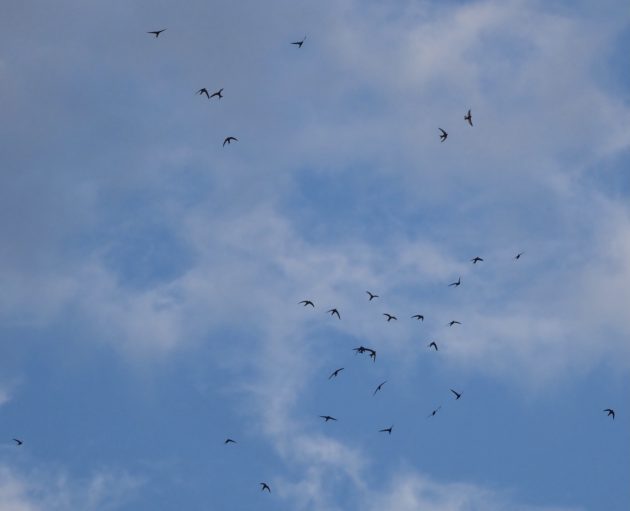
Counting Swifts is difficult. One of the best ways is to photograph the fast-flying flock
Today there’s a thriving colony of Swifts nesting in the boxes. In early July I spent a couple of evenings watching them. It was hard to work out how many boxes were occupied, but certainly several were, while crowds of young, non-breeding Swifts had been attracted to the site, racing around in the sky above the mill. These are birds that are likely to come back and nest in future years.
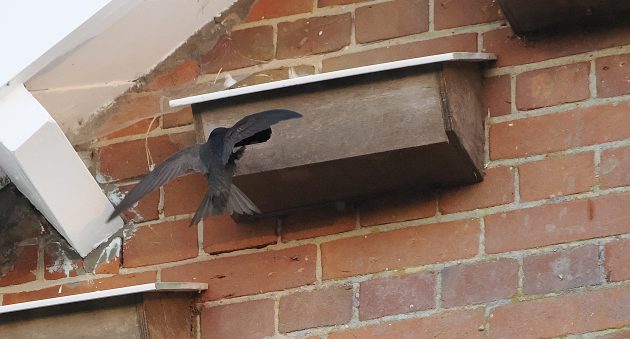
A young Swift “banging” a nest box
Swifts are long lived (up to 15 years), and rarely breed before they are at least three. The young birds return to where they were hatched, and prospect for suitable nests, even flying up to nests (or boxes) that are occupied, an action known as banging. It is the young birds that race around in screaming parties, a real sound of high summer. These youngsters are the first to head back to Africa, followed by this year’s crop of youngsters, and then the adult breeding birds.
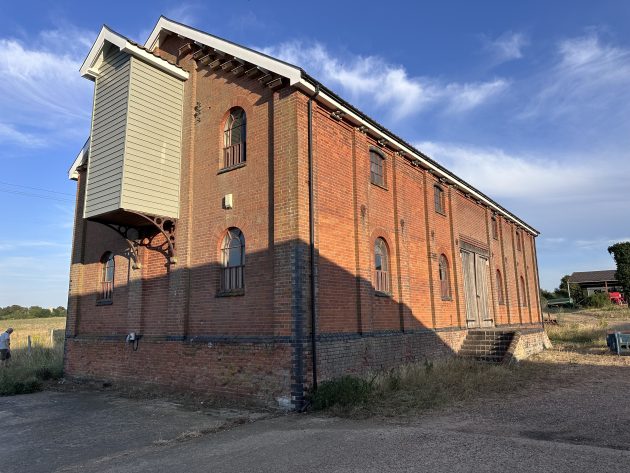
The old feed mill with its Swift boxes under the apex. There are House Martin boxes under the eaves along the side of the building. Both species require special boxes of a different design
Quite how good this breeding season has been is debatable. We have had a long, exceptionally hot, summer but it might have been too hot. According to Swift SOS (not the Suffolk group, but a nationwide organisation) “Swifts are one of the clearest examples of how extreme heat can turn into a wildlife emergency. These incredible birds spend most of their lives flying, but during breeding season their chicks are confined to nests, often inside roof spaces and building cavities. During intense heat, these spaces can become fatally hot. Unable to escape, young swifts may become desperate for cooler air and fall from their nests before they are old enough to fly. In France, where temperatures have reached 40C, rescue centres reported a huge increase in admissions of young swifts. Swift SOS, a volunteer network supporting swift rescues across Britain, recorded 215 rescue cases in just seven days during the recent heatwave. Their previous busiest period had been 52 cases over 48 hours, showing just how extreme the demand became.”
Our Swifts winter in tropical Africa. They migrate south through Spain and Morocco, but then head south-east towards Mali, eventually reaching the Congo Basin, while some are thought to continue on to Malawi. They never land in Africa, so remain on the wing until they come back to their breeding grounds next spring. I look forward to their return.
It’s bad enough to know that the Swifts are about to depart, but so too are many of the other migrant birds that come to Britain to nest. With the Swifts their departure is obvious: one night there they are, still circling and screaming over the village, the next the sky is empty. In contrast, young warblers just slip away, unseen. Trapping birds for ringing has shown that the peak migration of young Sedge Warblers, for example, is in the first week of August.
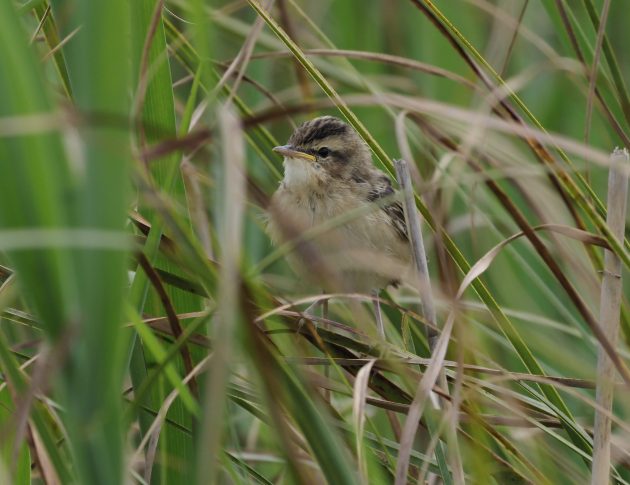
Just out of the nest: a juvenile Sedge Warbler. Most young Sedge Warblers have migrated south by the middle of August, heading for wintering grounds in West Africa
Early morning bird song has now all but stopped. Until a week or so ago I was still enjoying listening to Blackcaps, Chiffchaffs and Skylarks, but now almost all are silent. This morning the only singing birds I heard were Woodpigeons (they never seem to stop) and a single Yellowhammer. The latter are notably late singers, often carrying on into August. It’s a depressing thought that I am unlikely to hear a Blackbird sing again until next February, or a Blackcap until late March. I heard my last Cuckoo of the summer on 22 June. Radio-tagging by the BTO has shown that the majority of adult male Cuckoos leave these islands by the start of July. Most are now in southern Europe, but data from the BTO has shown that at least one has already crossed the Sahara and is back in tropical Africa. Happy travels.














 English (US) ·
  French (CA) ·