

 8 hours ago
7
PROTECT YOUR DNA WITH QUANTUM TECHNOLOGY
Orgo-Life the new way to the future Advertising by AdpathwayEducational materials generated by six prominent artificial intelligence chatbots to address common pediatric oral health questions consistently exceed the reading ease recommended for the general public, according to an investigation published in Frontiers in Digital Health. Researchers evaluated responses across multiple reading metrics and observed that every tested model produced text demanding educational backgrounds beyond the sixth-grade comprehension standard endorsed by the American Medical Association. While generative systems have rapidly emerged as convenient conduits for medical guidance, the empirical findings demonstrate that these automated tools routinely construct explanations requiring advanced comprehension, creating potential communication barriers for parents and caregivers seeking essential guidance on children’s dental care.
The investigation was prompted by persistent global challenges in pediatric dental welfare and the growing reliance of families on conversational artificial intelligence for health advice. Untreated dental caries in permanent teeth affects an estimated 2.3 billion individuals globally, while more than 530 million children experience untreated caries in primary teeth, with early childhood caries showing the highest prevalence among disadvantaged populations. Although major health authorities emphasize that routine childhood dental conditions are largely preventable through effective health communication and increased oral awareness, patient education materials must remain genuinely accessible to be effective. When informational documents are composed at educational thresholds that outpace general public literacy, the fundamental clinical value of health education becomes compromised.
To rigorously quantify readability, the investigators assembled ten representative questions covering frequent parental inquiries in pediatric dentistry. These sample prompts encompassed primary tooth decay, the potential self-healing of early lesions, the importance of treating primary teeth destined to fall out, the transmissibility of dental caries among family members, white spots as early decay markers, appropriate ages and toothpaste quantities for brushing, the suitability of electric toothbrushes, recurring decay despite daily cleaning, indications for pit-and-fissure sealants, and strategies for managing dietary sugar intake. Each prompt was submitted once in February 2026 to six widely used chatbots under default English settings: GPT-5 Mini, Gemini 3 Flash, Claude Haiku 4.5, DeepSeek-V3, Kimi K2.5, and Qwen3-Max, producing a balanced corpus of sixty verbatim texts without conversational length trimming or post-processing.
The study employed a blocked repeated-measures experimental design in which the ten specific questions served as blocks and the six artificial intelligence platforms served as within-block conditions. Rather than relying on a solitary metric, the authors assessed each response using six established formulas: the Flesch Reading Ease score, the Flesch–Kincaid Grade Level, the Gunning Fog Index, the Coleman–Liau Index, the Simple Measure of Gobbledygook, and the Automated Readability Index. Because each formula targets distinct linguistic dimensions—ranging from average sentence lengths and syllable counts to character densities and polysyllabic word frequencies—employing them in parallel provided a robust characterization of structural difficulty, avoiding the potential instability associated with single-index evaluations.
Across all sixty generated responses, reading difficulty varied systematically among the six language models while uniformly failing to meet the sixth-grade guideline. DeepSeek-V3 generated the most accessible texts overall, achieving a mean Flesch Reading Ease of 66.14 and the lowest corresponding grade levels across all five companion metrics, including an Automated Readability Index mean of 6.46. Gemini 3 Flash consistently ranked as the second most readable model, recording a mean Reading Ease of 62.26 and an Automated Readability Index mean of 8.10. Conversely, Claude Haiku 4.5 consistently produced the least readable responses, exhibiting a mean Reading Ease score of 13.11 alongside mean grade-level estimates exceeding the sixteenth grade on all five educational indices.
Statistical evaluation confirmed that these performance differences between platforms were highly consistent across the thematic blocks. Nonparametric Friedman testing across the ten questions yielded statistically significant variations among the models for all six readability indices, with test statistics ranging from 31.77 for the Simple Measure of Gobbledygook to 35.94 for Flesch Reading Ease, all achieving p-values below 0.0001. Furthermore, Kendall’s coefficient of concordance ranged between 0.635 and 0.719 across the formulas, establishing substantial agreement in model rankings regardless of the underlying pediatric question. Post-hoc pairwise evaluations via Dunn’s multiple comparison test substantiated that DeepSeek-V3 and Gemini 3 Flash scored significantly better than multiple competing models across various metrics.
The intermediate group of models—comprising GPT-5 Mini, Qwen3-Max, and Kimi K2.5—exhibited shifting relative positions depending on the exact formula evaluated. On the Flesch Reading Ease scale, Qwen3-Max and GPT-5 Mini yielded comparable means of 45.90 and 45.59, respectively, both surpassing Kimi K2.5 at 38.40. However, because individual formulas evaluate distinct textual features, their relative grade levels varied. For example, Kimi K2.5 registered a lower mean than GPT-5 Mini on the character-based Coleman–Liau Index (13.02 versus 14.79), but scored notably higher on the syllable- and sentence-sensitive Flesch–Kincaid Grade Level (14.92 versus 11.20) and Gunning Fog Index (16.82 versus 13.47), highlighting how model sentence construction interacts with specific testing algorithms.
When compared against established health communication standards, the generated texts universally missed the target threshold. Meeting the American Medical Association benchmark requires a Flesch Reading Ease score within the 80 to 89 range or an educational grade level of 6.0 or below. Even the highest observed median Reading Ease score, attained by DeepSeek-V3 at 66.75, remained well beneath this benchmark. When evaluated against a relaxed seventh-grade threshold, only the Automated Readability Index median of DeepSeek-V3, at 6.50, managed to fall below the cutoff, while all other model medians on all grade indices exceeded grade seven. Claude Haiku 4.5 exhibited severe deviations, including median scores of 26.20 on Flesch–Kincaid and 31.80 on the Automated Readability Index.
The researchers noted that algorithmic nuances influenced certain extreme values, particularly the pronounced score dispersion and extreme outliers observed in Claude Haiku 4.5 outputs. Because texts were evaluated verbatim with native formatting preserved, unparsed bullet points and list elements were frequently not detected as sentence terminators by the testing software. This artifact artificially reduced recognized sentence counts, inflating calculated sentence lengths and drastically elevating resulting grade-level scores. Beyond technical artifacts, the authors suggested that large language models are heavily trained on complex academic and technical literature, leading them to adopt advanced sentence structures and medical terminology while naturally overestimating the literacy capacities of everyday users.
Emphasizing the clinical implications, the authors cautioned that raw artificial intelligence outputs should not be deployed as unmediated patient education handouts in pediatric dentistry. Instead, healthcare organizations and developers must explore targeted prompt constraints—explicitly instructing models to adhere to sixth-grade reading levels—while refining algorithmic optimization and enforcing rigorous human oversight. The researchers acknowledged key limitations, noting that their evaluation examined single generations per prompt within an English-language context and focused solely on linguistic readability rather than clinical accuracy, safety, or factual truth. Consequently, automated drafts should serve primarily as preliminary starting points for healthcare professionals rather than standalone educational solutions for families.
Subject of Research: Readability evaluation of AI-generated pediatric dental patient education materials
Article Title: Evaluating readability of AI-generated pediatric dental education materials
Article References: Xiong, M., Xiong, M., Xiong, Y., Guénier, A., & Xie, M. (2026). Evaluating readability of AI-generated pediatric dental education materials. Frontiers in Digital Health, 8, Article 1949196. https://doi.org/10.3389/fdgth.2026.1949196
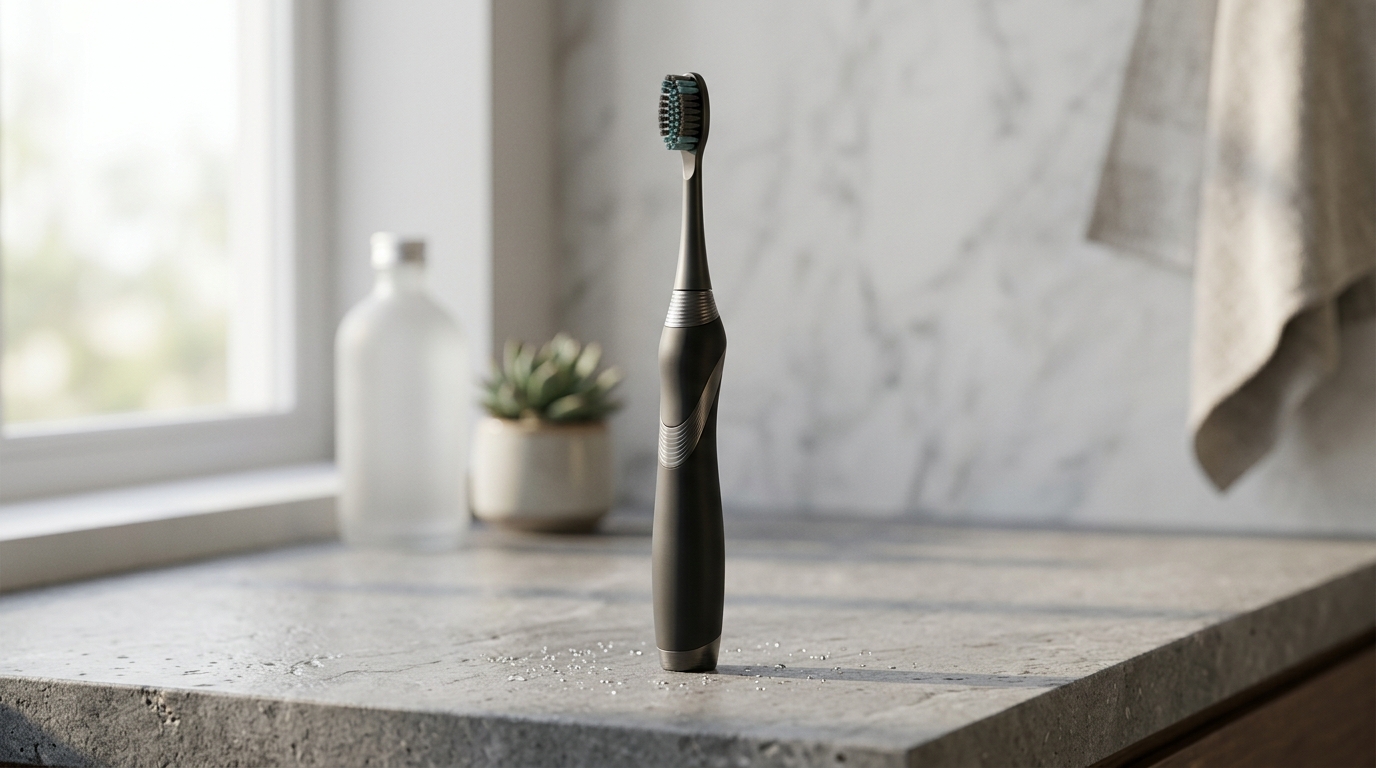
Image Credits: AI Generated
DOI: 10.3389/fdgth.2026.1949196
Keywords: artificial intelligence, health communication, large language models, pediatric dentistry, patient education, readability indices, digital health, health literacy, Evaluating, readability, AI-generated, pediatric
















 English (US) ·
 French (CA) ·