

 5 hours ago
6
PROTECT YOUR DNA WITH QUANTUM TECHNOLOGY
Orgo-Life the new way to the future Advertising by AdpathwayA central obstacle in traditional food safety inspection is that microorganisms proliferate silently, reaching problematic population thresholds long before sensory deterioration or physical decay becomes discernible. To address this monitoring gap, a research team developed the Bayesian Attention Temporal Microbial Growth Network, an advanced deep-learning framework engineered to predict future microbial concentrations while estimating early spoilage risk under quantified uncertainty. Reported in Frontiers in Sustainable Food Systems, the computational investigation combines long short-term memory recurrent layers, adaptive temporal attention mechanisms, and stochastic Bayesian approximations into a unified predictive pipeline. Rather than delivering rigid point estimates, the architecture evaluates sequential environmental factors to provide probabilistic forecasts six hours into the future. By coupling dynamic microbial modeling with confidence metrics, the investigators demonstrate how modern temporal intelligence can strengthen preventative food quality management.
The development and evaluation of the predictive framework relied on structured data extracted from ComBase, an established public repository containing more than sixty-five thousand laboratory-derived growth and inactivation datasets. Because developing a robust temporal learning model requires granular, unbroken time series, the authors isolated an analytical evaluation subset comprising approximately ten thousand two hundred record-level observations across twenty-nine distinct microbial species. This analytical corpus encompasses prominent foodborne pathogens and spoilage organisms, including Salmonella species, Listeria monocytogenes, Escherichia coli, Bacillus cereus, Pseudomonas species, Staphylococcus aureus, Clostridium perfringens, Vibrio parahaemolyticus, Enterobacter species, and Lactobacillus species. Each record documents microbial counts expressed in log colony-forming units per gram alongside critical environmental and matrix parameters, notably storage temperature, medium acidity or alkalinity represented by pH, and water activity. By testing the architecture against empirical trajectories characterized by fluctuating preservative factors, the researchers evaluated how effectively data-driven deep networks capture diverse biological growth behaviors across heterogeneous storage settings.
To ensure high data integrity and numerical stability prior to neural training, the analytical subset underwent rigorous multi-stage preprocessing. Incomplete data records created by measurement gaps or sensor anomalies were systematically addressed by evaluating variable-wise missingness rates across all observation points. The initial audit revealed overall low missingness across the dataset, with water activity exhibiting the highest missing proportion at 3.83 percent, followed by pH at 2.68 percent, incubation temperature at 1.82 percent, and microbial concentration at 0.95 percent, while time measurements contained no missing entries. Missing environmental readings were resolved through linear interpolation to maintain temporal continuity, whereas missing background environmental features were imputed using baseline mean values calculated strictly from the training partition. Following data completion, input attributes spanning broad numerical ranges were normalized into a uniform zero-to-one interval using Min-Max scaling. Parameter boundaries for both imputation and scaling were derived exclusively from training trajectories, preventing statistical leakage from validation and evaluation subsets.
Converting raw laboratory records into supervised learning representations required structuring individual data points into chronological multivariate sequences using a sliding window methodology. The authors established a historical observation window of six hours, configured as a sequence of twenty discrete temporal steps capturing the evolutionary dynamics of environmental conditions and bacterial cell counts. Paired with this input window, the modeling framework established a forward-looking prediction horizon of six hours, designed to provide adequate operational lead time before expanding microbial populations cross critical safety thresholds. As the sliding window advanced across individual experimental trajectories, it generated paired input-output matrices that preserved chronological dependencies, lag effects, and non-linear transitions across growth phases. This configuration allowed the recurrent layers to process the preceding six hours of continuous temperature, acidity, water activity, and microbial density to predict the exact microbial load expected six hours later, supplying actionable foresight rather than retrospective alerts.
A central methodological priority of the investigation focused on preventing data leakage between model development and performance validation. To establish rigorous generalization standards, the authors implemented a group-stratified eighty-twenty split where entire microbial growth curves served as indivisible sampling units. Every observation belonging to a specific experimental trajectory was assigned exclusively to either the eighty percent training partition or the twenty percent testing subset, guaranteeing that sliding windows never overlapped across partition boundaries. Furthermore, ten percent of the training groups were reserved as an internal validation partition to optimize hyperparameter configurations across twenty candidate combinations, including batch sizes, learning rates, and recurrent hidden units. The independent testing partition remained completely unexamined during statistical scaling, mean imputation, and hyperparameter tuning, ensuring an authentic evaluation on previously unseen growth trajectories.
The core predictive architecture of the proposed system utilizes an LSTM encoder featuring one hundred twenty-eight recurrent memory units optimized using the Adam algorithm. Unlike traditional feedforward neural networks, the recurrent gating structure regulates internal information flow through input, forget, and output gates, allowing the hidden state to retain critical historical context while filtering transient experimental noise. This capability proved decisive for tracking complex biological kinetics across lag, exponential, and stationary phases, as past preservative conditions directly dictate subsequent population expansion rates. In disaggregated performance evaluations across target organisms, the recurrent encoder attained an overall root mean square error of 0.198 log colony-forming units per gram, a mean absolute error of 0.154, and a coefficient of determination of 0.97. Phase-specific analysis demonstrated that the stationary phase yielded the lowest prediction error at 0.089, while the rapidly accelerating exponential phase presented the greatest modeling challenge, yielding a root mean square error of 0.201 in Salmonella trajectories.
To enhance temporal interpretability, the network integrates an attention layer with an internal dimension of sixty-four that computes adaptive alignment weights across the twenty historical time steps. By applying a softmax normalization function over learned latent scores, the attention mechanism generates dynamic context vectors that emphasize the specific temporal intervals exerting the strongest influence on forward predictions. Quantitative analysis revealed that the model consistently focused attention on the transition into active exponential proliferation across all twenty-nine evaluated organisms. Mean attention weights during the exponential phase ranged from 0.521 to 0.587, whereas lag phases received weights between 0.109 and 0.142, and stationary phases accounted for 0.304 to 0.337. Attention entropy values dropped from roughly 2.9 nats during lag phases down to 1.81 nats during exponential acceleration, reflecting sharper temporal focus. The investigators noted that while these learned weights illuminate algorithmic decision patterns, they represent model saliency rather than direct proof of underlying biological causality.
Addressing the deterministic limitations of standard deep learning, the architecture implements Monte Carlo Dropout to conduct probabilistic inference during both training and testing phases. By maintaining a dropout rate of 0.3 across fifty stochastic forward passes at inference time, the model samples an approximate posterior parameter distribution, generating an ensemble of predictions rather than an isolated point forecast. The mathematical mean across these stochastic iterations defines the expected microbial concentration, while the predictive variance quantifies epistemic uncertainty stemming from model parameters and data sparsity. Probabilistic evaluation across Salmonella, Listeria, and Escherichia coli data demonstrated high calibration fidelity, achieving a prediction interval coverage probability of 94.6 percent and a mean prediction interval width of 0.38 log colony-forming units per gram. Furthermore, empirical coverage reached 69.4 percent at the nominal 68 percent interval and 96.1 percent at the 95 percent interval, accompanied by a low calibration error of 0.021.
To convert raw numerical predictions and associated uncertainty bounds into actionable industrial decision support, the researchers introduced the Dynamic Probabilistic Spoilage-Risk Index. This operational classification layer calculates a normalized composite risk metric by balancing forecasted microbial density against predictive variance using a designated risk weight of 0.5 and an uncertainty threshold of 0.03. Thresholds established at 0.35 and 0.68 partition the continuous output into low, moderate, and high risk categories, offering an intuitive hierarchy for cold-chain monitoring. Across the held-out ComBase testing set, this index achieved an overall classification accuracy of 97.8 percent against reference risk assignments, paired with a mean warning lead time of 6.4 hours prior to crossing critical microbial thresholds. Class-wise assessment demonstrated robust discrimination, yielding F1-scores of 0.94 for low risk, 0.91 for moderate risk, and 0.95 for high risk, alongside a cost-sensitive evaluation applying a fivefold penalty on undetected high-risk events.
Component ablation experiments highlighted the necessity of each architectural module, showing that replacing the recurrent encoder with a simple multi-layer perceptron caused the root mean square error to increase sharply to 0.421. Removing the attention module degraded predictive precision to 0.342, while omitting the Bayesian module yielded an error of 0.298 and eliminated vital uncertainty metrics. Despite these strong benchmarking results, the authors emphasized critical operational boundaries regarding the findings. The reported 97.8 percent accuracy measures concordance between derived index tiers and predefined reference categories within the ComBase subset, rather than physical sensory or chemical spoilage detection. Because the database contains laboratory cell counts rather than direct sensory ground truth, the framework functions as a probabilistic risk estimator rather than an empirical spoilage detector. The authors stressed that broad industrial deployment will require external validation on commercial food matrices, dynamic cold-chain conditions, and multimodal sensory datasets.
Subject of Research: Predictive microbiology and temporal deep learning for food spoilage risk estimation
Article Title: Proactive early invisible spoilage-risk prediction through uncertainty-quantified temporal microbial growth intelligence
Article References: Alsmarah, M., Ponkumar, D. D. N., Elebeed, R. A. E., & Al-Duais, F. S. (2026). Proactive early invisible spoilage-risk prediction through uncertainty-quantified temporal microbial growth intelligence. Frontiers in Sustainable Food Systems, 10, Article 1957987. https://doi.org/10.3389/fsufs.2026.1957987
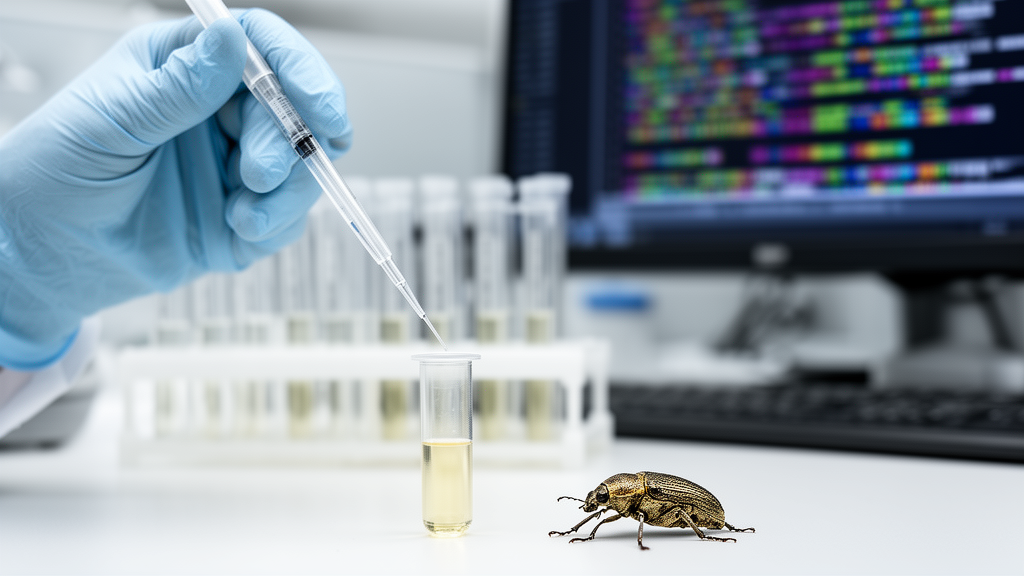
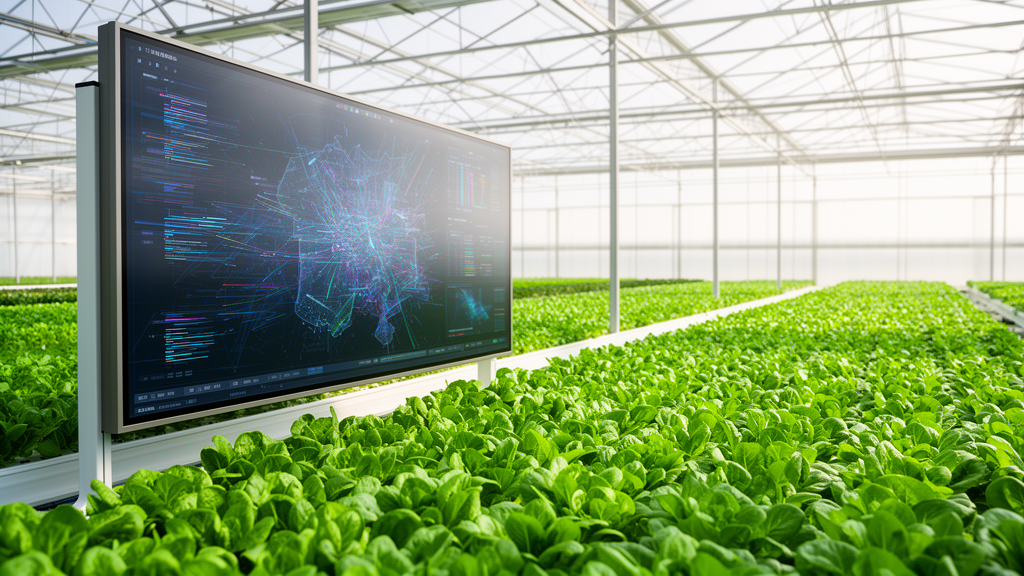
Image Credits: AI Generated
DOI: 10.3389/fsufs.2026.1957987
Keywords: predictive microbiology, food safety, deep learning, LSTM, attention mechanism, Monte Carlo dropout, microbial growth, ComBase, Proactive, early, invisible, spoilage-risk
















 English (US) ·
 French (CA) ·