

PROTECT YOUR DNA WITH QUANTUM TECHNOLOGY
Orgo-Life the new way to the future Advertising by AdpathwayWhen a truly big bird passes overhead, people stop talking. Conversations pause, heads tilt back, and for a moment everyone watches the sky. Wings stretch impossibly wide, barely moving, and the bird seems less like a living thing and more like a small aircraft.
Wingspan is the distance from one wingtip to the other. It is one of the most dramatic measurements in the natural world, telling us how a bird lives, how far it can travel, and how it masters the air. The largest wingspans belong to masters of soaring: species that ride wind currents for hours with hardly a flap.
Here are the giants of the sky.
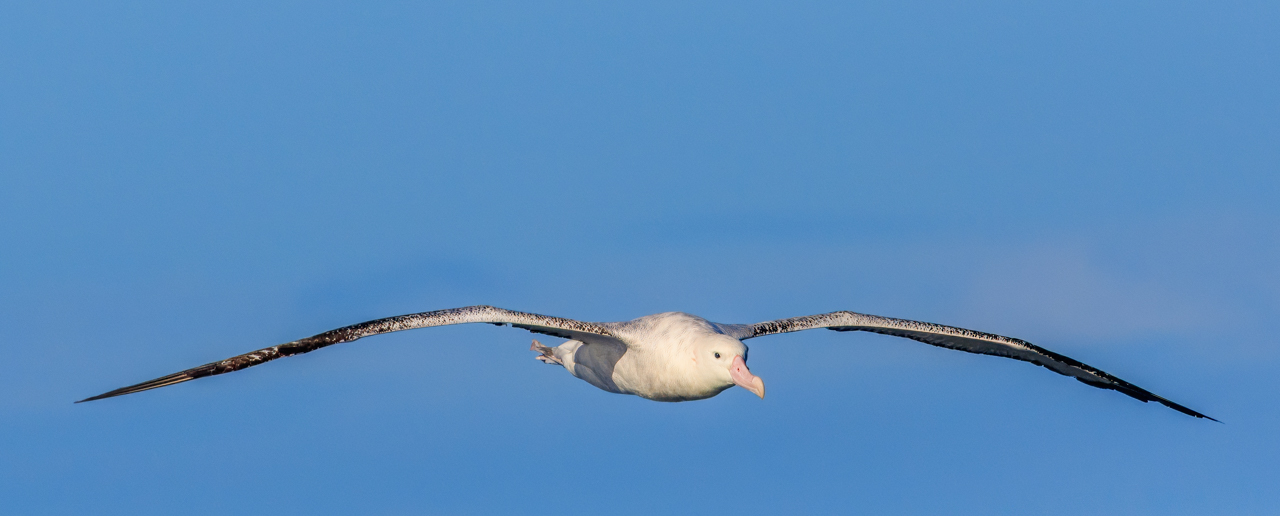
Wandering Albatross

The Wandering Albatross is the undisputed heavyweight champion of the skies when it comes to sheer scale, possessing the largest wingspan of any living bird. On average, their wings measure between 2.5 to 3.5 meters (8 to 11 feet) from tip to tip, though record-breaking individuals have been known to reach even greater lengths.
This immense wingspan is an evolutionary masterpiece designed for dynamic soaring, a flight technique that allows the bird to harvest energy from wind gradients over the ocean waves. Because their wings are exceptionally long and narrow—a high aspect ratio—they can glide for hundreds of miles with barely a single flap, effectively traveling across entire oceans while consuming less energy than they would simply sitting on a nest.
Great White Pelican
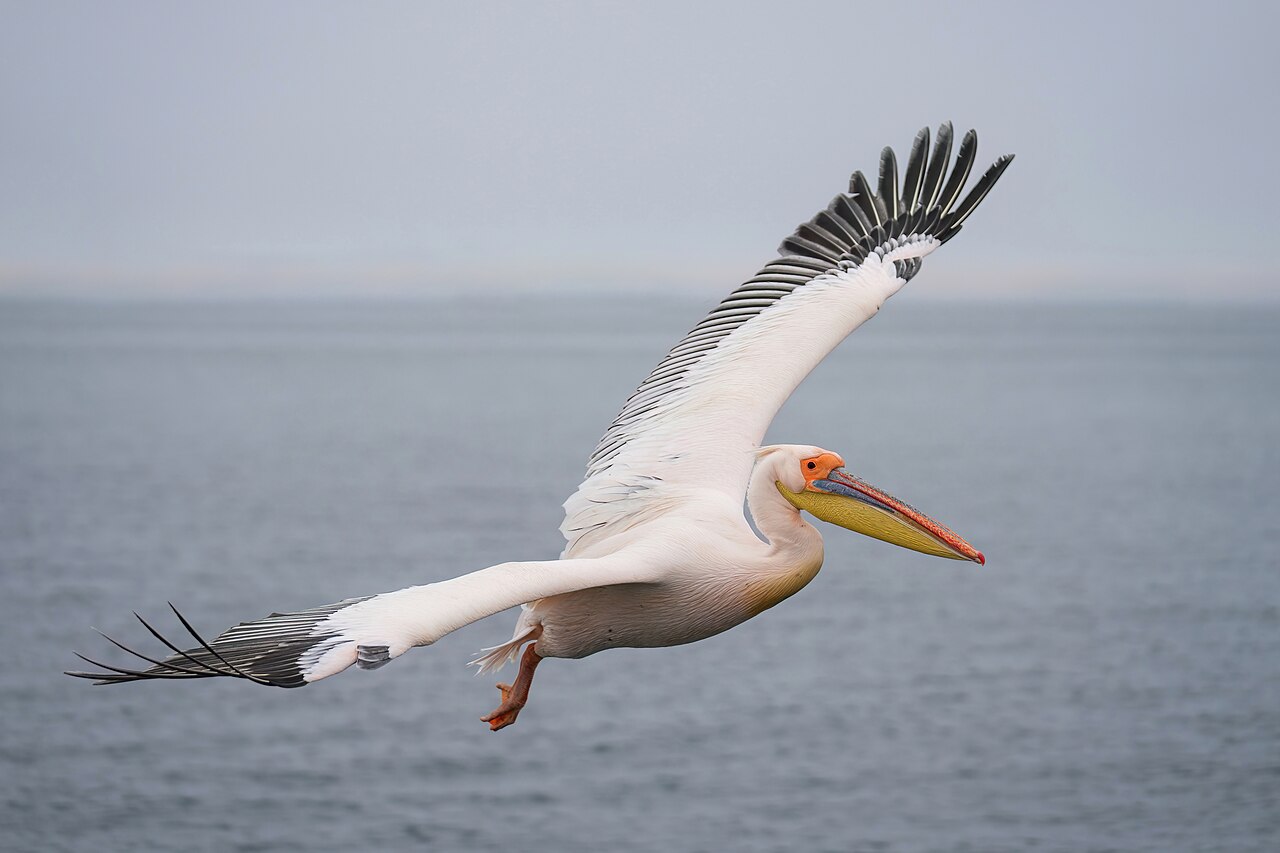
The Great White Pelican is a behemoth of the wetlands, rivaling the great albatrosses for the title of the most expansive wings in the avian world. Its wingspan typically stretches between 2.3 to 3.6 meters (approximately 7.5 to 11.8 feet), creating a massive surface area that is perfectly adapted for thermal soaring.
Unlike the narrow, blade-like wings of the albatross designed for ocean winds, the pelican’s wings are broad and “slotted” at the tips, allowing it to hitch a ride on rising columns of warm air to reach incredible altitudes with minimal effort. This vast wingspan is essential for supporting its heavy body—which can weigh up to 15 kilograms—during long-distance migrations, and it provides the necessary lift to carry a pouch full of fish back to its nesting colony.
Southern Royal Albatross

The Southern Royal Albatross is a titan of the Southern Ocean, often standing as the only true rival to the Wandering Albatross in terms of sheer breadth. Its magnificent wingspan typically measures between 2.9 to 3.3 meters (9.5 to 11 feet), providing a massive surface area for effortless gliding across the “Roaring Forties.”
While its wings are structurally similar to those of the Wandering Albatross—long, thin, and stiff—the Southern Royal is often slightly sturdier in build. In the air, these wings act as high-performance sails; by locking their wing joints with a specialized “tendon lock,” they can remain airborne for hours without using any muscle power, essentially becoming a living glider that harvests the energy of Antarctic gales.
Andean Condor

The Andean Condor holds the record for the largest wingspan of any bird of prey, reaching a massive 2.7 to 3.2 meters (8.9 to 10.5 feet). Unlike the slender, ribbon-like wings of the albatross, the condor’s wings are exceptionally broad and rectangular, designed for maximum lift rather than high-speed gliding.
At the ends of these wings are deep, finger-like primary feathers that the bird can adjust individually to reduce turbulence and navigate the tricky, unpredictable updrafts of the Andes Mountains. This enormous surface area allows the condor, one of the world’s heaviest flying birds, to soar for hours at a time—sometimes covering over 100 miles without flapping once—as it scans the rugged terrain below for carrion.
California Condor

The California Condor is the largest land bird in North America, boasting a massive wingspan that reaches up to 2.7 to 3.0 meters (about 9 to 10 feet). Similar in architecture to its Andean cousin, the California Condor’s wings are exceptionally broad and “drag-resistant,” featuring long, flexible primary feathers at the tips that fan out like fingers to catch the slightest bit of rising warm air.
Because these birds are heavy—often weighing between 18 and 25 pounds—their enormous wingspan is a biological necessity, allowing them to soar to heights of 15,000 feet and travel up to 150 miles in a single day while searching for food. To the observer below, their silhouette is a steady, soaring “plank” in the sky, a design that allows them to stay aloft with almost zero flapping for long durations.
Dalmatian Pelican

The Dalmatian Pelican holds the title for the largest and heaviest of all pelican species, sporting a wingspan that is truly gargantuan. Their wings typically stretch between 2.7 to 3.5 meters (8.9 to 11.5 feet), placing them in a neck-and-neck tie with the Wandering Albatross for the widest reach in the avian world.
These wings are incredibly broad and powerful, designed to lift a body that can weigh up to 15 kilograms (33 lbs). Unlike the Great White Pelican, which has black primary feathers that create a “dipped in ink” look, the Dalmatian Pelican’s wings appear more uniform in flight, with silvery-grey undersides that make their massive silhouette appear almost ghostly as they soar over the lakes and deltas of Eurasia.
Why the biggest wings are built for soaring
The reason the world’s largest wings are exclusively found on soaring birds is rooted in the physics of wing loading and energy efficiency. For a bird to stay airborne using flapping flight, it must generate enough power to overcome its own weight; however, as a bird’s size increases, its weight grows much faster than its muscle strength, making continuous flapping an unsustainable energy drain for giants like the albatross or condor.
To solve this, nature utilizes high-surface-area wings that act as high-performance sails, allowing these birds to extract free energy from the environment. Whether they are using long, narrow wings to harvest wind gradients over the ocean (dynamic soaring) or broad, slotted wings to ride rising columns of warm air (thermal soaring), the massive wingspan provides the necessary lift to keep a heavy body aloft for hours or even days with almost zero muscular effort.
Essentially, these birds have traded the “engine” of flapping for the “glider” of soaring, allowing them to traverse thousands of miles while burning less energy than they would while simply standing on the ground.

The two blueprints of big wings
While all these giants soar, they do so using two very different aerodynamic designs:
The Gliders (Albatross)
These birds use High Aspect Ratio wings. They are long and thin like the wings of a sailplane, which reduces drag and is perfect for the high-speed, constant winds of the open ocean.
The Lifters (Condors and Pelicans)
These birds use Low Aspect Ratio wings. They are short and wide, providing maximum lift at slower speeds. The “fingered” feathers at the tips act like winglets on a modern airplane, reducing turbulence as they circle tightly within narrow thermals.
The Top 5
Each of the birds with the largest wingspans are perfectly suited to their environment. Their wings have evolved in shape as well as size to take advantage of the winds and thermals found in the oceanic and mountainous habitats.
| Bird | Maximum Wingspan | Wing Style |
| Dalmatian Pelican | 3.5 meters | Broad, Silver-Grey, “Thermal” wing |
| Wandering Albatross | 3.5 meters | Narrow, Blade-like, “Wind” wing |
| Great White Pelican | 3.6 meters | Broad, Black & White, “Thermal” wing |
| Southern Royal Albatross | 3.3 meters | Narrow, Sturdy, “Wind” wing |
| Andean Condor | 3.2 meters | Broad, Fingered, “Mountain” wing |
Wingspan vs. weight
Interestingly, the bird with the largest wingspan is not always the heaviest. Bustards and swans can outweigh many albatrosses, but their spans are shorter. Meanwhile, albatrosses stretch out into extraordinary lengths without being massive in body.
It’s similar to the difference between a glider plane and a cargo aircraft—different designs for different jobs.
Meeting a giant in person
People lucky enough to see these birds often describe a shift in perspective. You realise that the sky is not empty—it’s habitat. Those huge wings belong to creatures perfectly engineered to use invisible rivers of air.
Whether above stormy seas, African lakes, or American canyons, they remind us how big the living world can be.

Final thoughts
Birds with the largest wingspans are specialists in grandeur. They trade speed and maneuverability for endurance and efficiency, becoming long-distance champions of the planet.
The next time you notice a vast silhouette drifting high overhead, consider what you might be seeing. It could be an albatross that has circled oceans, or a condor reclaiming ancient skies.
Either way, you are witnessing one of nature’s greatest achievements: the art of flying on wings wider than a car.

















 English (US) ·
  French (CA) ·