

PROTECT YOUR DNA WITH QUANTUM TECHNOLOGY
Orgo-Life the new way to the future Advertising by AdpathwayBy Henry Cooper
Henry is a bird guide for Jungle Safari India based in Central India. His main interests are bird conservation and photography.
Pench Tiger Reserve stretches across adjoining landscapes of Madhya Pradesh and Maharashtra in central India. Situated in the southern reaches of the Satpura hills, the reserve is associated with Rudyard Kipling’s The Jungle Book and takes its name from the Pench River. On the Maharashtra side, Pench National Park was established in 1975 and received tiger reserve status in 1999. Its landscape includes teak-dominated dry deciduous forests, open grasslands, rivers and water bodies that support a variety of wildlife.
Bird diversity figures for Pench vary across published sources. Maharashtra Tourism reports more than 210 recorded bird species for its description of the reserve, while the Madhya Pradesh Forest Department notes that around 325 bird species can be seen across different seasons. These figures reflect different source descriptions and should not be considered as the result of one identical survey. Winter visitors add to the region’s birdlife, particularly around suitable water habitats such as the Totladoh reservoir on the Madhya Pradesh side.
Where Should You Go To Spot Different Birds?
Not every place gives the same view. Some spots are best for water birds, and some are better for forest birds. Here are the places to think about.
Bodanala Irrigation Tank: This water body is near the park boundary on the Madhya Pradesh side. Birds and other animals come here. Winter is a good time to go, because migratory birds may visit.
Kolitmara Backwaters: These backwaters of the Pench Reservoir are on the Maharashtra side and attract water birds. A boat ride may give you a closer view, but only where boats are officially allowed. Check the local rules first.
Totladoh and Pench Reservoir: The reservoir is very wide and has small islands. Water birds like these places. You may also see fish-eating eagles in the area around it.
Turia and Karmajhiri Gates: These gates have nature trails outside the core forest area. They are good if you want to spend more time watching birds. Trained guides can name the birds and explain what they do.
Sillari, Chorbahuli, and Surewani (Nagalwadi): These are tourism and buffer areas on the Maharashtra side. You may find permitted safaris and nature trails, depending on local arrangements.
Before you go, ask which areas are open & which activities are allowed. Access, guide availability, and boat permission can change. Where you go and how long you stay both change what you see. So a small check can help you pick the place that matches your interest.
Why Do Winter Months Bring More Birdwatching Opportunities?
Why can two visits to the same place show different birds? Migration is one big reason.
In Pench Tiger Reserve, winter migratory birds arrive between October & March. Some come from the Himalayas, Central Asia, and Europe. Think about that: some birds travel a very long way just to reach Pench. They move from place to place as temperature, season, and food change.
Some birds live in Pench all year. These are resident birds. Migratory birds stay only for some months. So the birds you see in one month can be different from the birds you see in another. Try going in different months to see new birds.
Water birds are the ones to look for near reservoirs and other water areas, where they find food & rest.
But winter does not promise a sighting. Bird numbers & places change with weather, water levels, and other local conditions. Even in migration season, some birds are easy to find, and some are not.
To plan well, ask guides which birds were seen recently. Choose a place that matches the habitat you want to see. Then give yourself enough time. If you walk slowly and stay quiet, you can notice birds you might miss.
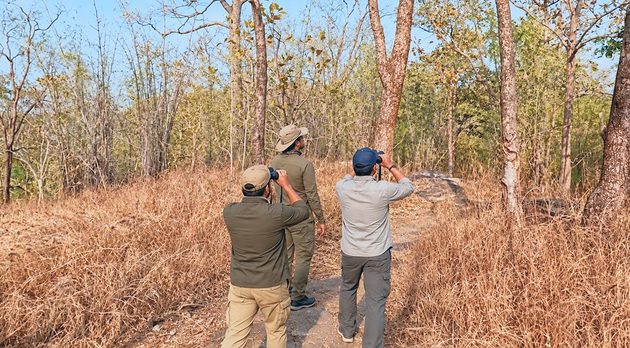
Can Birdwatching Help Protect Pench’s Wildlife?
Can birdwatching aid in conservation efforts for birds? Yes, it can, but again, how this kind of tourism is managed and carried out plays a key role. Here are four examples of how it can be achieved.
Jobs: A bird can help earn an individual a living. The local guides who know their way around the forest get paid for guiding tourists to spot the birds in the forest. Economic opportunities will ensure that people in the area are motivated towards the conservation of the forests.
Safe routes: Nature trails allow people to explore the forest in areas that are allowed to visit. Guided walks also lower the chance of entering restricted areas or disturbing wildlife.
Control of crowds: The forest department controls policies & booking procedures regarding gypsy safaris and boat rides that are allowed. This is necessary to minimize the number of visitors & noise. It is especially important during times when birds feed, rest, or nest.
Awareness: When watching birds, one learns that each type of bird requires certain habitat for feeding, resting, & breeding. Such observations may contribute to increased respect for wildlife.
Visitors have a duty too. Stay on approved routes, follow your guide, and keep quiet. Never go near nests, & never make birds move for a photo. Do not feed birds or disturb how they behave.
Birdwatching alone cannot save Pench. The reserve also needs good habitat management and strong enforcement of wildlife laws. But when birdwatching goes together with responsible tourism & local jobs, it supports this bigger work.














 English (US) ·
 French (CA) ·