

PROTECT YOUR DNA WITH QUANTUM TECHNOLOGY
Orgo-Life the new way to the future Advertising by AdpathwayFor a long time, people believed birds could hardly smell at all. Because many species rely so heavily on vision and hearing, scientists once assumed that the sense of smell—known as olfaction—was weak or unimportant in the avian world. Early anatomy studies seemed to support this idea, noting that birds generally have relatively small olfactory bulbs in their brains compared with many mammals.
But over the past few decades, research has turned this assumption upside down.
Today we know that many birds possess a surprisingly good sense of smell. In some species, it is essential for finding food, navigating across oceans, recognising individuals, and even choosing mates. While not every bird depends on scent to the same degree, olfaction plays a much bigger role in bird life than people once imagined.
So, can birds smell?
Yes—and sometimes extraordinarily well.
Why Did People Think Birds Couldn’t Smell?
The myth probably began because birds are so obviously visual animals. Their bright colours, sharp eyesight, and complex displays draw attention to what they see rather than what they sniff. Humans, too, rely more on sight than smell, so we tend to notice visual behaviours more easily.
Another reason is structural. Compared to animals like dogs or rodents, many birds have smaller olfactory bulbs. Early scientists equated size with ability and concluded that birds must therefore have poor noses.
However, brain size alone does not tell the whole story. Even a small olfactory system can be highly efficient, and in some birds the bulbs are actually quite large.
As field experiments accumulated, the old idea simply could not hold up.
The Anatomy of a Bird’s Nose

Birds breathe through nostrils called nares, usually located on the upper part of the beak. Air entering the nares passes over specialised tissues inside the nasal cavity that contain smell receptors. These receptors send information to the olfactory bulbs in the brain, which interpret the chemical signals.
The system is built differently from that of mammals, but it works on the same principle: airborne chemicals are detected and translated into information about the environment. In species that rely strongly on scent, these structures are more developed.
Masters of Smell: Seabirds

Some of the strongest evidence for avian olfaction comes from seabirds such as albatrosses, petrels, and shearwaters.
These birds travel enormous distances over seemingly empty oceans, yet they can locate productive feeding areas with remarkable accuracy. Researchers discovered that many of them are attracted to a chemical called dimethyl sulfide (DMS), which is released when tiny marine organisms are eaten by plankton. Where there is DMS, there is often food.
By following scent cues, seabirds can find fish or squid without seeing them.
Some petrels can even recognise the smell of their own burrow or their mate among thousands of others in a dense colony. Experiments have shown that blocking their sense of smell makes it much harder for them to navigate back home.
Vultures and the Scent of Survival
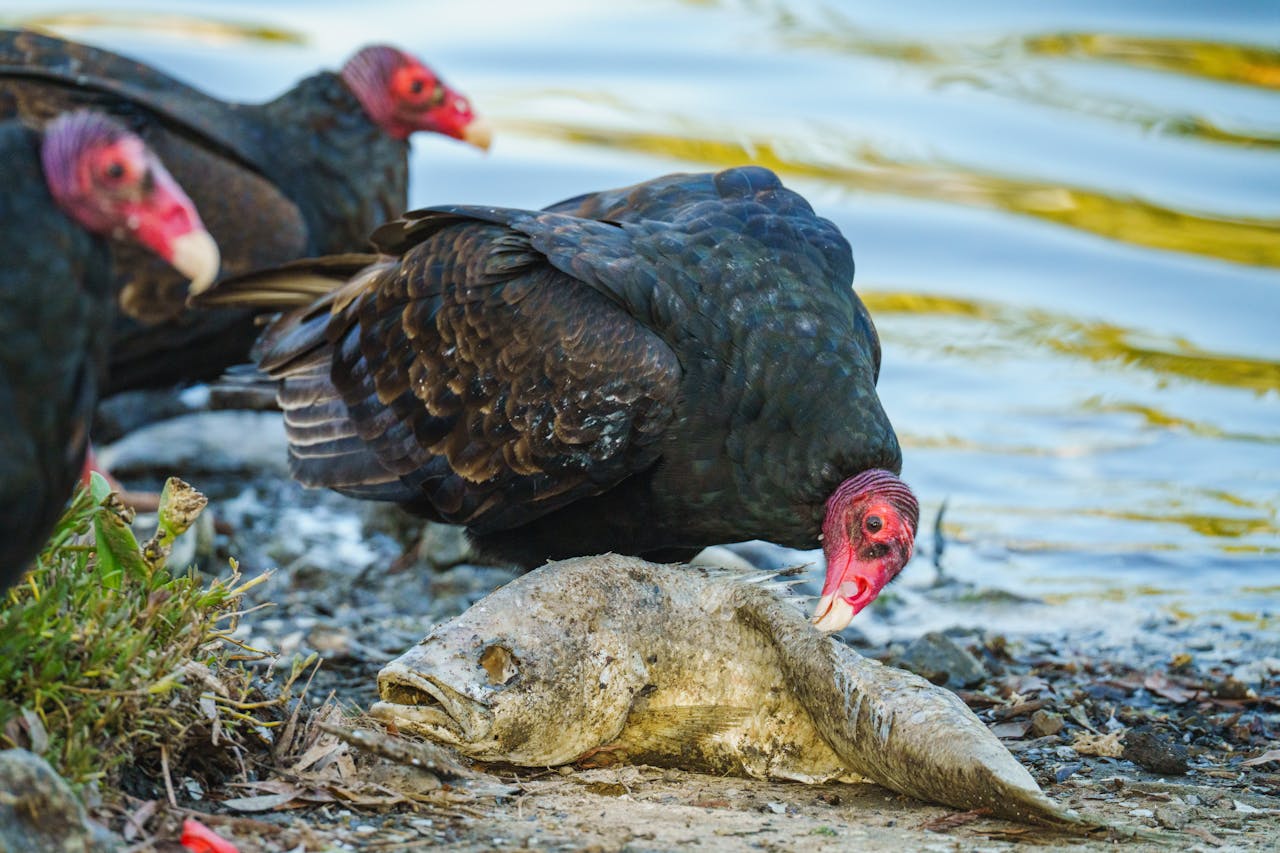
Turkey Vultures in the Americas are famous for their ability to find carcasses hidden beneath forest canopies. They can detect the odour of gases produced by decay, allowing them to locate food that would be invisible from the air.
This skill is so reliable that gas companies once added chemicals resembling the smell of rotting meat to pipelines; vultures would gather at leaks, helping workers find problems.
Not all vultures rely equally on scent—some depend more on sight or on following other birds—but for species like the turkey vulture, smell is crucial.
Everyday Birds with Hidden Noses
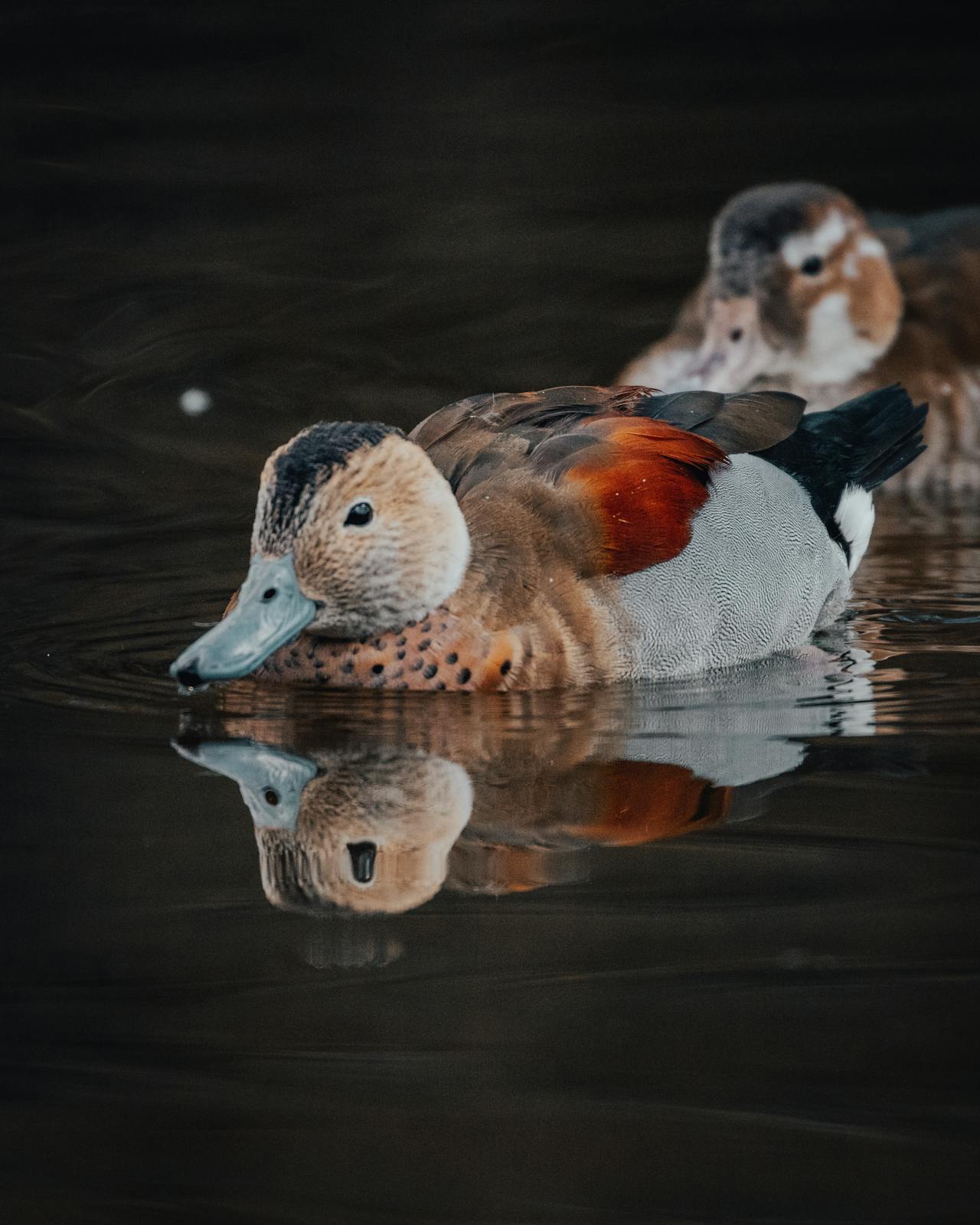
Even birds we think of as backyard regulars may use smell more than we realise. Studies suggest that pigeons use odours as part of their navigation system. When displaced to unfamiliar areas, they may build a “map” based partly on regional scents carried by the wind.
Songbirds have been shown to detect predator odours near nests, changing their behaviour to protect their chicks. Some species can also recognise individual partners or the condition of potential mates through chemical cues.
Chickens, ducks, and other domestic birds respond to smells in ways that influence feeding and social interactions. The abilities may be subtle, but they are present.
The Surprising Case of the Kiwi

One of the most extreme examples of avian smell comes from New Zealand’s kiwi. Unlike most birds, the kiwi has nostrils at the tip of its long beak. It probes the soil and leaf litter, sniffing out insects and worms much like a mammal.
Kiwis have relatively large olfactory bulbs, and smell is central to how they forage in the dark. Vision is less important to them than it is to many other birds.
Smell and Communication

Scientists are increasingly interested in how birds might use scent to communicate. Preen oil, produced by a gland near the tail, helps maintain feathers but may also carry chemical information. Variations in these scents could signal identity, health, or breeding status.
In colonial nesting species, where thousands of birds look similar, smell might help individuals find the right partner or chick. Research in this area is still growing, but it challenges the old stereotype of birds as creatures of sight alone.
Why the Misunderstanding Lasted
If birds can smell, why did we doubt it for so long?
Partly because humans are not very good at detecting when animals use scent. Visual behaviours are easy to observe, while following invisible chemical trails is harder. Without modern experimental techniques, early researchers simply missed the evidence. As new methods developed, the importance of olfaction became clearer.

A World Rich in Odours
To a bird, the air may be filled with information we cannot perceive: the presence of food far away, the direction of home, the identity of a mate, or the warning of danger. Smell adds another layer to how birds interpret their environment.
Different species emphasise different senses. Eagles may prioritise sight, owls hearing, and petrels smell. Each approach suits the bird’s lifestyle.
Final Thoughts
Birds can smell, and in many cases they do it extremely well. From seabirds tracking chemical traces across vast oceans to kiwis sniffing for worms in the soil, olfaction is a vital tool.
The long-standing belief that birds lack a sense of smell has faded, replaced by a richer understanding of how diverse and adaptable these animals are. Their world is not only one of colour and sound but also of scent.
Next time you watch a bird gliding overhead or hopping across the lawn, remember: it may be following smells you cannot even imagine.

















 English (US) ·
  French (CA) ·