

 2 months ago
74
2 months ago
74
PROTECT YOUR DNA WITH QUANTUM TECHNOLOGY
Orgo-Life the new way to the future Advertising by AdpathwayCarbon pollution has fuelled a “massive expansion” of marine heatwaves in Europe this summer, research has found, with some waters recording temperatures 6C higher than normal.
The hottest fortnights of this year would have been “virtually impossible” in a preindustrial climate in three of the four sea regions studied, according to analysis by World Weather Attribution, while in the Celtic region, which covers much of the water around the British Isles, heat hit levels that used to strike just once a century.
Climate breakdown was responsible for about two-thirds of the observed excess heat, the researchers said, having warmed waters by about 2C in the Mediterranean, 1.4C in the Bay of Biscay and Iberian Peninsula, and 1.3C around Ireland and the Channel.
The rapid analysis, which has not yet been submitted for peer review, comes as Europe reels from one of its hottest summers on record. Relentless heatwaves have killed tens of thousands of people and stripped plants of moisture, ruining crops and fuelling large wildfires.
While hot seas receive little attention, they can lead to the death of habitat-forming species such as corals and macroalgae, disrupting ecosystems and leading to large-scale mortality of fish and seabirds. They also raise dangerous overnight temperatures in coastal regions, as oceans cool more slowly than land.
Claire Bergin, a scientist at the Irish climate analysis research units of Maynooth University in Ireland, and co-author of the report said: “While warmer waters for swimming may sound appealing to beachgoers in cooler countries like mine, the impacts on marine life beneath the surface is more serious.
“This has the potential to completely reshape ecosystems that coastal communities rely on for food and income, and drive damaging extreme weather on land too.”
The study, the group’s first to focus on the effect of fossil fuel burning on marine heat, compared observed sea surface temperatures with simulations from climate models to asses the role of global heating.
They found a “massive expansion” of marine heatwaves in 2026 that has so far hit 90% of the Bay of Biscay and Iberian coast region, and 80% of the western Mediterranean. In a hypothetical climate not heated by humanity, scientists said they would expect those figures to be half as big.
Removing the effect of climate breakdown cut the expected marine heatwave area from 70% to 9% in the eastern Mediterranean, and from 80% to 30% in the Celtic region, the analysis showed.
Separate research published in January found that marine heatwaves lead to more intense rainfall on land. Globally, about 5-25% of extreme rainfall over coastal land is accompanied by a nearby marine heatwave, the study found. Rainfall during extreme downpours influenced by a strong heatwave was found to be 20-30% higher.
Jamie Atkins, a scientist at Utrecht University and lead author of recent research into the unprecedented 2023 marine heatwave in north-west Europe, who was not involved in the new analysis, said it reinforced previous research that showed current heat extremes in Europe should not be considered unexpected.
after newsletter promotion
The impact of climate change on European seas is “really starting to bite”, he said, and not just in isolated spots. “The impact that the seas have on our day-to-day lives should not be underestimated.”
Europe is the fastest-warming continent and is increasingly reckoning with the consequences of planet-heating pollution with which it has disproportionately polluted the atmosphere. In recent years, it has been struck by a series of catastrophic weather events found to have been made worse by climate breakdown, even as national governments have sought to extract more polluting fuels and roll back policies to stop the planet from heating.
Mohamed Adow, director of Power Shift Africa, a climate thinktank, who was not involved in the study, said it showed “there is no safe corner of the planet in a climate crisis” and questioned the continent’s expansion of fossil fuel infrastructure.
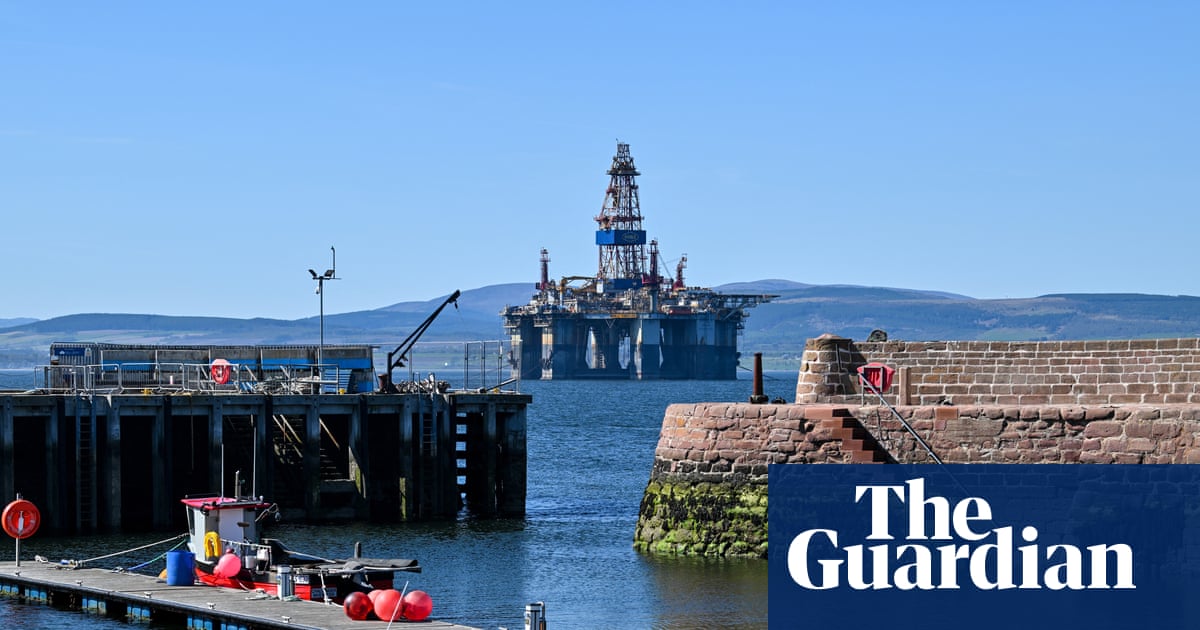
“Europe cannot acknowledge the science with one hand while continuing to expand fossil fuels with the other,” he said. “Every new oil and gas project locks in more warming and pushes ecosystems closer to limits from which they may not recover.”















 English (US) ·
  French (CA) ·