

 2 hours ago
5
PROTECT YOUR DNA WITH QUANTUM TECHNOLOGY
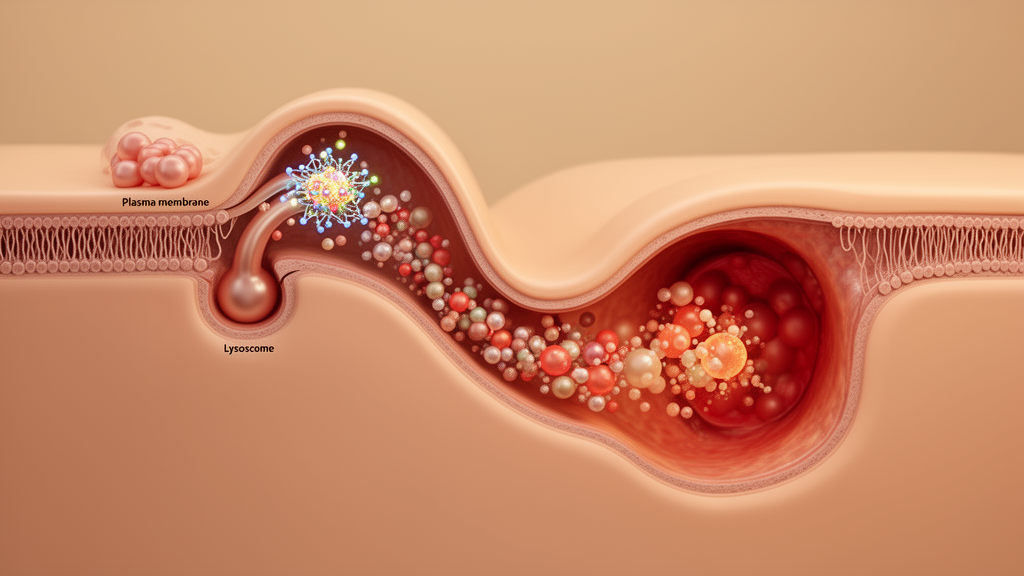
Orgo-Life the new way to the future Advertising by AdpathwayA computational analysis of a high-throughput compound screen, followed by experiments in human neuroblastoma cells, identified the histamine H1 receptor, HRH1, as a regulator of exodosis, the stress-induced secretion of endoplasmic reticulum-resident proteins.
The researchers developed SCOPE (Screening Compound Ontology for Pathway Enrichment), a KNIME-based framework that links phenotypic screening hits to annotated human targets and biological pathways. SCOPE standardizes compound structures, generates compound-target profiles from ChEMBL, IUPHAR/BPS Guide to Pharmacology, PubChem, PharmGKB and DrugBank, and performs target-level enrichment using the screened library as the statistical background. Enriched targets are then analyzed for KEGG pathways and Gene Ontology biological processes through STRING.
The researchers applied SCOPE to a previously published screen of 10,124 compounds from the NCATS bioactive collections. The screen had identified 185 compounds that reduced secretion of the GLuc SERCaMP reporter following endoplasmic reticulum calcium depletion, a model of exodosis. SCOPE produced target profiles for 143 hits and identified 26 targets enriched at a 5% false discovery rate.
Restricting pathway analysis to those 26 targets changed the result. Calcium signaling ranked 18th when all 392 mapped hit targets were analyzed, but ranked first among 11 KEGG pathways enriched from the target-enriched set. The analysis also implicated phospholipase C-activating G-protein-coupled receptor signaling, histamine response and regulation of cytosolic calcium. Several enriched receptors included muscarinic, serotonin, adrenergic, dopamine and histamine receptors.
The study then tested HRH1 in SH-SY5Y human neuroblastoma cells, where HRH1 and HRH3 were expressed appreciably. Two selective HRH1 agonists, N-methylhistaprodifen and 2-pyridylethylamine, increased GLuc SERCaMP release in the absence of thapsigargin-induced ER stress. The response to 2-pyridylethylamine was abolished in CRISPR-mediated HRH1-knockout cells, and HRH1 knockdown with siRNA significantly reduced the agonist-associated response.
In contrast, the HRH1 antagonists rupatadine, azelastine and clemastine each significantly reduced the GLuc SERCaMP signal relative to control. Concentration-matrix experiments combining each antagonist with thapsigargin showed dose-dependent suppression and predominantly antagonistic interactions. Mean deviation from Bliss independence was 0.105 for rupatadine (95% bootstrap confidence interval, 0.082–0.129), 0.151 for azelastine (0.129–0.176) and 0.148 for clemastine (0.125–0.172).
SCOPE also revised the interpretation of bromocriptine, a previously characterized screen hit. Although known as a dopamine D2 receptor agonist, its annotated activity included agonist effects at some dopamine and serotonin receptors and antagonist effects at adrenergic and other dopamine and serotonin receptors. The analysis therefore supported a possible contribution from broader GPCR polypharmacology rather than an exclusively dopaminergic mechanism.
The findings remain bounded by the study design. Target annotations were unavailable for 3,295 of the 10,124 screened compounds and 42 of the 185 hits, potentially biasing enrichment toward better-characterized molecules. SCOPE was evaluated on one screening dataset, while HRH1 validation was conducted primarily in one human neuroblastoma cell line. Whether HRH1 regulates exodosis through the phospholipase C/IP3 receptor pathway was not established, and HRH3 was not functionally evaluated.
Overall, the study shows that screened-library-aware target enrichment can focus pathway interpretation and generate experimentally testable hypotheses from polypharmacological phenotypic screening data. The cell experiments support HRH1 as a modulator of ER calcium-depletion-induced protein secretion, but the study does not establish a clinical benefit or therapeutic effectiveness in people.
Subject of Research: Computational target enrichment and cell-based validation of HRH1 as a regulator of exodosis
Article Title: SCOPE-based target and pathway enrichment identifies the histamine H1 receptor as a regulator of exodosis
Article References: Kapoor, A., Kelleher, K. J., Underhill, S. M., Jain, S., Williams, D., Harvey, B. K., & Henderson, M. J. (2026). SCOPE-based target and pathway enrichment identifies the histamine H1 receptor as a regulator of exodosis. Frontiers in Pharmacology, 17, Article 1972662. https://doi.org/10.3389/fphar.2026.1972662
Image Credits: AI Generated
DOI: 10.3389/fphar.2026.1972662
Keywords: SCOPE, HRH1, exodosis, endoplasmic reticulum stress, phenotypic screening, target enrichment, calcium signaling, GPCRs, neuroblastoma cells, SCOPE-based, target, pathway
















 English (US) ·
 French (CA) ·