

 1 month ago
28
1 month ago
28
PROTECT YOUR DNA WITH QUANTUM TECHNOLOGY
Orgo-Life the new way to the future Advertising by AdpathwayPlant disease diagnosis powered by artificial intelligence has moved from laboratory curiosity to agricultural necessity, and a new comprehensive survey now offers the most detailed map yet of how deep learning is transforming the way farmers and scientists detect and quantify crop diseases. The study, published as an open-access article in the journal Artificial Intelligence Review by Daudi Flavian and Sakthivel Ramachandran of the SENSE department at Vellore Institute of Technology in Vellore, India, systematically analyzes 137 peer-reviewed studies using the internationally recognized PRISMA 2020 reporting framework. Its central message is both encouraging and sobering: convolutional neural networks and their hybrid descendants can diagnose plant diseases with remarkable accuracy, but the gap between controlled laboratory conditions and the unpredictable realities of the field remains the discipline’s most stubborn obstacle.
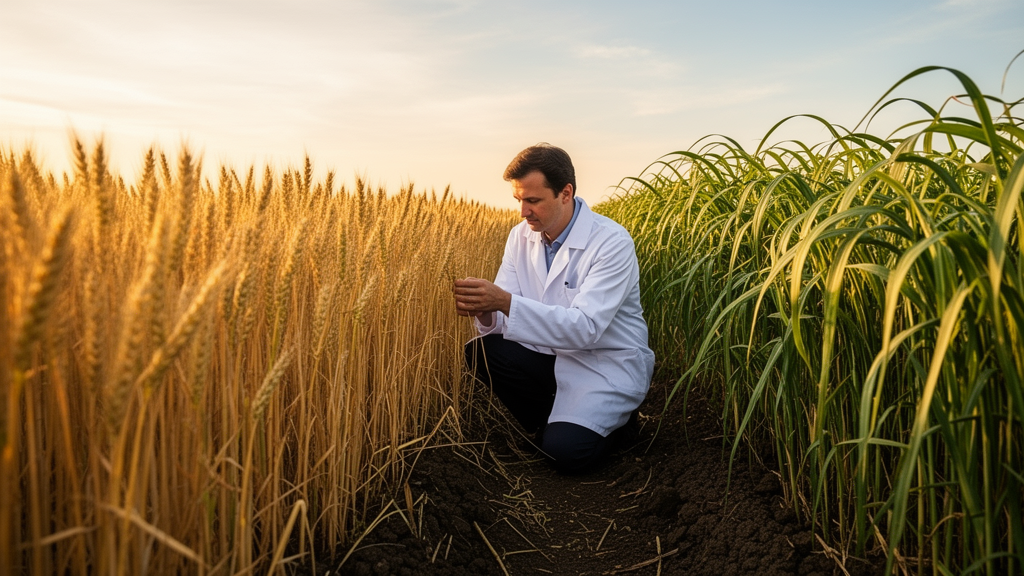
The review arrives at a moment when the stakes for plant health could hardly be higher. Global food security depends on sustainable agricultural productivity, and crop diseases destroy a substantial share of harvests worldwide each year, threatening livelihoods and food supplies in equal measure. Traditional diagnostic methods, which rely on visual inspection by trained pathologists, are slow, expensive, and often unavailable in the regions that need them most. Computer vision offers an alternative: a camera-equipped smartphone or drone, paired with a sufficiently capable neural network, could in principle identify a fungal blight or viral infection in seconds and estimate how far it has progressed. The new survey synthesizes the research effort that has grown around this vision, covering the four principal computational tasks involved: classifying images by disease category, detecting and localizing lesions within images, segmenting diseased tissue pixel by pixel, and regressing continuous severity scores that quantify how much of a plant is affected.
At the technical heart of the survey is an account of architectural evolution. The authors trace the transition from traditional convolutional neural networks, which process images through stacked layers of learned filters to extract increasingly abstract visual features, toward hybrid CNN-transformer frameworks. Transformers, originally developed for natural language processing, use self-attention mechanisms that let a model weigh relationships between distant parts of an image simultaneously, rather than building up context through local receptive fields alone. Hybrid designs pair the CNN’s strength at extracting fine-grained local texture, crucial for spotting subtle lesions and discolorations, with the transformer’s capacity to capture global context, such as the overall distribution of symptoms across a canopy. The survey documents how this architectural shift has progressively improved performance on both detection and severity estimation tasks, while noting that pure CNN architectures remain highly competitive and, importantly, more scalable for deployment in resource-constrained settings.
One of the survey’s clearest findings concerns which computational strategy best suits which diagnostic goal. For the delicate task of severity estimation, which requires measuring the precise extent of diseased tissue on leaves, stems, or fruit, segmentation-based approaches achieve the highest precision. Segmentation models assign a label to every pixel in an image, effectively tracing the outline of each lesion, and from these pixel-level masks researchers can compute the fraction of tissue affected with a fidelity that simple bounding boxes cannot match. Regression-based approaches, which map an image directly to a continuous severity score, occupy a valuable middle ground: they strike what the authors describe as a good balance between accuracy and computational performance, making them attractive when exact pixel masks are less important than a reliable overall estimate. Classification, the simplest task of assigning an image to a disease category, stands out as the most scalable option, capable of handling large datasets and running efficiently on modest hardware, which helps explain its dominance in the published literature.
The survey’s treatment of the laboratory-to-field performance drop is perhaps its most consequential contribution. Models trained on curated datasets of photographed leaves, shot against clean backgrounds under consistent lighting, routinely lose significant accuracy when deployed in real fields, where plants overlap, shadows shift, dust accumulates, and diseases present in bewildering visual variety. The authors identify three intertwined culprits. Domain shift arises when the statistical distribution of training images differs from that of deployment images, causing learned features to misfire. Class imbalance occurs when some disease categories are represented by thousands of examples while others have only a handful, biasing models toward the common cases. Long-tail distributions compound the problem, concentrating most images in a few prevalent conditions while rare but devastating diseases languish at the tail with insufficient training data. These are not minor technical wrinkles; they are the reason many promising systems have yet to leave the research setting.
Flavian and Ramachandran point to three emerging techniques as the most promising routes to generalizability. Domain adaptation methods attempt to align the statistical distributions of source and target data, so that a model trained on one farm’s or one region’s images can transfer its skills to another’s without retraining from scratch. Few-shot learning aims to equip models to recognize new diseases from very few examples, mimicking the way an experienced pathologist can identify an unfamiliar condition after seeing it only a handful of times, an ability that is essential given how many rare crop diseases lack large annotated datasets. Multimodal fusion, meanwhile, combines visual data with other sensing modalities, such as hyperspectral reflectance, thermal imaging, or environmental measurements, to build diagnostic signals that are more robust than any single channel alone. Together, the authors argue, these approaches form the technical foundation for systems that remain accurate outside the laboratory.
The survey goes beyond algorithms to consider what a practical disease diagnostic system actually requires, and here two themes dominate: robotics and explainability. Robotic implementation refers to the hardware platforms, from autonomous field rovers to drone swarms, that must carry cameras and compute across acreage at scale, surviving mud, weather, and battery limits while capturing images of sufficient quality for the models to work. Explainable AI addresses a subtler but equally important barrier: trust. Deep networks are notoriously opaque, and an agronomist or farmer asked to act on a model’s recommendation deserves to know why the model reached its conclusion. Techniques that highlight the image regions driving a diagnosis, or that express confidence in interpretable terms, are therefore treated in the survey not as optional extras but as crucial components of any system intended for real-world adoption. The authors frame their synthesis as a system-level guide, deliberately connecting model design, data strategy, hardware, and human factors into a single developmental roadmap.
The scale and rigor of the underlying review lend weight to these conclusions. Applying the PRISMA 2020 framework, which prescribes explicit criteria for identifying, screening, and including studies, the authors filtered the literature down to 137 studies that met their quality thresholds, ensuring that their synthesis reflects a systematically selected evidence base rather than a convenient sample. Their analysis spans classification, detection, segmentation, and regression as distinct but related tasks, and it explicitly evaluates trade-offs among precision, computational cost, and scalability, the three axes that most often determine whether a published method can actually be deployed. By organizing the field along these lines, the survey gives researchers a shared vocabulary for comparing architectures and gives funders and practitioners a realistic sense of where the technology stands.
The implications reach well beyond plant pathology. The pattern documented in this review, in which laboratory accuracy fails to survive contact with uncontrolled environments, is a recurring story across applied deep learning, from medical imaging to wildlife monitoring. The remedies highlighted here, domain adaptation, few-shot learning, and multimodal fusion, are the same ones being pursued across those domains, and lessons from agricultural deployment, with its harsh hardware constraints and its demand for interpretability, may well inform practice elsewhere. Conversely, the survey’s demonstration that segmentation offers the highest precision for quantification tasks, while classification offers the best scalability, provides a decision framework that could be exported to any field where the goal is not merely to label an image but to measure a condition.
For agriculture specifically, the road ahead is discernible in the survey’s synthesis. Near-term deployments will likely lean on classification and regression models, which balance accuracy with the computational efficiency needed to run on edge devices in the field, while severity-critical applications, such as determining how much pesticide or fungicide to apply to a specific plot, will benefit from segmentation pipelines where precision justifies the added compute. Longer term, the authors’ emphasis on robust, interpretable, field-ready systems suggests a convergence of strands: hybrid CNN-transformer architectures that generalize better, multimodal sensors that supply richer evidence, robotic platforms that gather data autonomously, and explainability methods that let human experts verify machine judgments. The 137 studies synthesized here collectively chart that trajectory, and the survey’s open-access publication means that researchers, agricultural engineers, and policymakers around the world can consult the full map as they work to bring AI-assisted plant diagnostics from the lab bench to the furrow. The authors, whose open-access funding was provided by Vellore Institute of Technology, declare no conflicts of interest, and the article, published under a Creative Commons license, is citable and carries a permanent DOI, making this system-level synthesis immediately available to the global community working on sustainable crop protection.
Subject of Research: Deep learning approaches, particularly convolutional neural network architectures, for plant disease detection and severity quantification in precision agriculture
Subject of Research: Technology and Engineering
Article Title: Deep learning in precision phytopathology: a comprehensive survey of CNN architectures for disease detection and severity quantification
Article References: Flavian, D., & Ramachandran, S. (2026). Deep learning in precision phytopathology: a comprehensive survey of CNN architectures for disease detection and severity quantification. Artificial Intelligence Review. https://doi.org/10.1007/s10462-026-11659-7
Image Credits: AI Generated
DOI: 10.1007/s10462-026-11659-7
Keywords: Convolutional neural networks, Precision agriculture, Plant disease detection, Severity quantification, Computer vision, Deep Learning, Systematic literature review, Domain shift
Cite Scienmag News
APA MLA Chicago
Alan Morgan. (September 5, 2026). CNN architectures advance crop disease detection and severity quantification. Scienmag. https://scienmag.com/cnn-architectures-advance-crop-disease-detection-and-severity-quantification/
Copy citation Download RIS
Tags: accuracy of AI in crop disease quantificationadvancements in plant pathology imagingadvancing sustainable crop disease managementAI-based severity quantification of crop diseasesAI-powered crop disease detectionchallenges in field-based plant disease detectionchallenges of field versus laboratory plant disease detectioncomputer vision applications in agriculturecomputer vision in sustainable farming practicesconvolutional neural networks for plant disease diagnosisconvolutional neural networks for plant healthcrop disease detection using deep learningdeep learning in agricultureglobal impact of crop diseases on food securityhybrid neural network models for agriculturehybrid neural network models for disease diagnosisimpact of AI on global food securitylimitations of current deep learning models in agricultureopen-access AI research in crop health monitoringPRISMA framework application in agricultural AI studiesPRISMA framework in agricultural AI researchsystematic review of AI studies in plant pathologysystematic review of plant disease detection studiestraditional vs AI diagnostic methods













 English (US) ·
  French (CA) ·