

 8 hours ago
9
PROTECT YOUR DNA WITH QUANTUM TECHNOLOGY
Orgo-Life the new way to the future Advertising by AdpathwayResearchers have reported that the deep cervical lymph nodes, small structures in the neck that serve as a terminal site for lymphatic drainage from the brain, are smaller in people with Parkinson’s disease than in healthy controls, and that their dimensions correlate with clinical measures of disease severity. The finding, published in the European Journal of Medical Research, suggests that these peripheral nodes could eventually serve as noninvasive markers for assessing how far the disease has progressed.
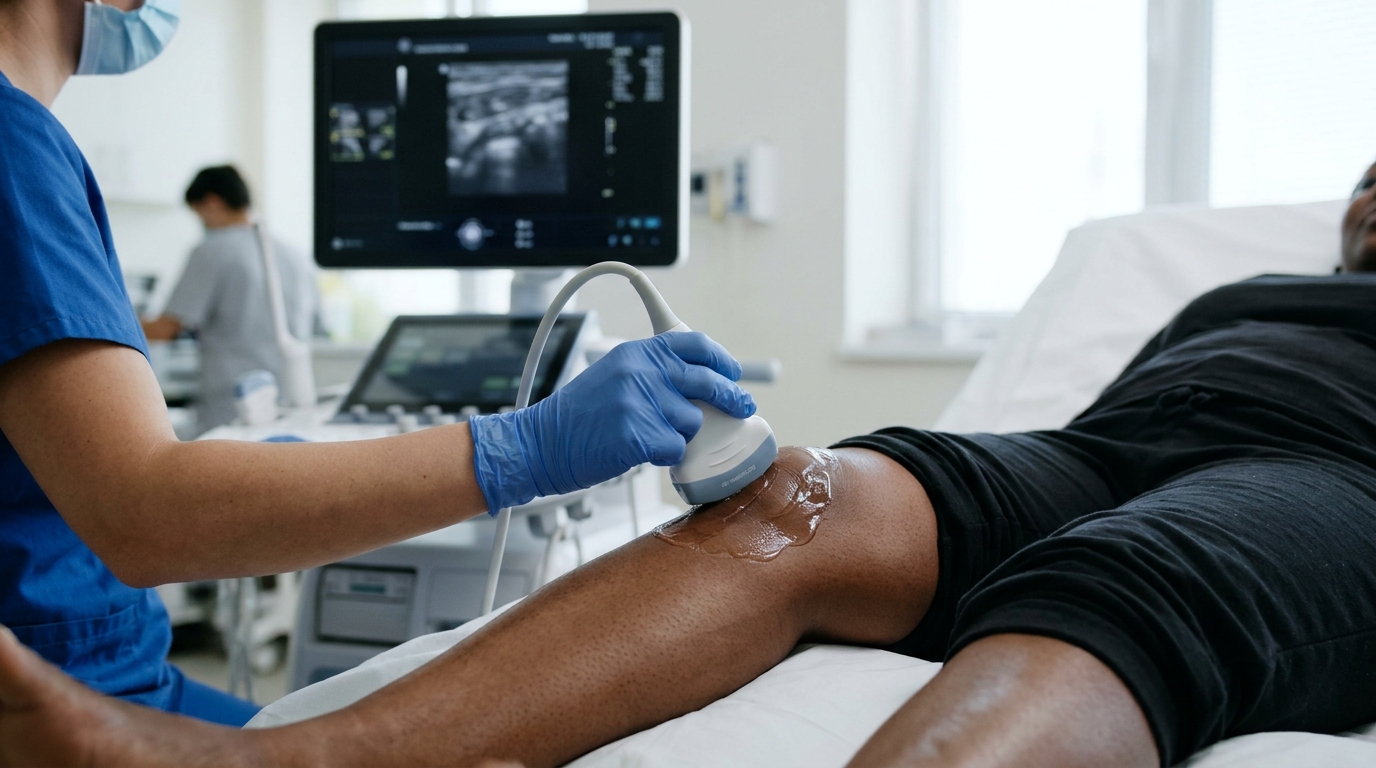
The study enrolled 40 subjects: 20 patients with Parkinson’s disease and 20 healthy controls. The severity of motor symptoms was evaluated using the Movement Disorder Society Sponsored Revision Unified Parkinson’s Disease Rating Scale, part III, while autonomic function was assessed with the Scales for Outcomes in Parkinson’s Disease—Autonomic Dysfunction. Ultrasound was used to measure the sizes of the deep cervical lymph nodes, and diffusion tensor imaging analysis along the perivascular space, known as DTI-ALPS, was performed with manual region-of-interest selection to calculate the ALPS index.
The results showed that both the volume and the diameters of the deep cervical lymph nodes were significantly decreased in the Parkinson’s disease group compared with the healthy controls, with P values below 0.05. In the patient group, these node measurements correlated with scores on the MDS-UPDRS part III, the scale that quantifies motor impairment. The ALPS index, which reflects the intermediate functional status of the cerebral lymphatic drainage system, was also significantly lower in patients than in controls.
An additional observation emerged from the healthy control group: the longitudinal diameter of the deep cervical lymph node was correlated with the left DTI-ALPS index and with age, with an R-squared value of 0.421 and a P value of 0.005. In the healthy control group, the longitudinal diameter of the deep cervical lymph node was correlated with the left DTI-ALPS index and with age (R2 = 0.421, P = 0.005), an association the authors report without drawing conclusions about normal physiology.
The authors frame their conclusion cautiously, describing the work as an exploratory analysis. They state that abnormal clearance of central metabolic waste is associated with morphological alterations of the peripheral deep cervical lymph nodes, and that morphological indicators of these nodes may be promising novel noninvasive methods for evaluating the severity of Parkinson’s disease. The study is small, enrolling 20 patients and 20 controls, and the authors describe it as an exploratory analysis, so the reported associations do not by themselves establish the measurements as tools for evaluating Parkinson's disease severity.
Several questions remain before these findings could influence practice. The sample of 20 patients and 20 controls is modest, and the published version is an early-release article that may still be edited before the final Version of Record appears. Future work would need to confirm the measurements in larger cohorts and determine whether the correlations with clinical measures hold in other populations. For now, the study adds a peripheral, measurable correlate to a system of brain waste clearance that has been largely invisible to routine clinical examination.
Subject of Research: Morphology of deep cervical lymph nodes as potential noninvasive markers of Parkinson's disease severity
Article Title: Morphological features of deep cervical lymph nodes: potential novel markers for assessing Parkinson’s disease severity
Article References: Dong, Z., Du, X., Zhang, Z., Li, X., Ai, Y., Zhang, C., Cheng, O., & Sun, Y. (2026). Morphological features of deep cervical lymph nodes: potential novel markers for assessing Parkinson’s disease severity. European Journal of Medical Research. https://doi.org/10.1186/s40001-026-05219-6
Image Credits: AI Generated
DOI: 10.1186/s40001-026-05219-6
Keywords: Parkinson's disease, deep cervical lymph nodes, DTI-ALPS, glymphatic system, ultrasound imaging, MDS-UPDRS, autonomic dysfunction, lymphatic drainage, neurodegenerative disease, biomarkers, Morphological, features
















 English (US) ·
 French (CA) ·