

Homespun water features made with a floating solar fountain and a container are a huge trend this summer – but add some plants and you'll create a garden highlight that’s even more of a showstopper. It’s quick and easy to do and, by getting clever with the containers you use, budget-friendly, too. The water spray naturally cools the air, and the gentle splashing makes for a soothing soundscape in your outside space. And when there's no telling how long this heatwave summer will last for, that's just what your too-hot garden needs right now.
Solar fountains have taken water features out of the realm of expensive, professionally landscaped gardens and put them firmly within reach of us everyday gardeners. DIY microponds are fast replacing trad water features as the must-have garden feature for 2026, and there are so many creative ways you can use a floating solar fountain to make one. There are even solar fountains with colored LEDs so you can DIY a stunning water feature to light summer evenings in your garden.
A water feature with plants, however, tops them all and, as quick and clever container gardening ideas you can DIY on a budget go, you can’t beat it! Here’s exactly what to do so you can make one this weekend.
1. Choose Your Containers
You’re going to need two containers, one larger than the other.
The central water bowl needs to be at least 12 inches wide to contain most of the fountain splashes, though obviously the wider and deeper it is, the less frequently you’ll have to top it up. You don’t need to buy an expensive purpose-made water bowl, as planters intended for succulents don’t usually have a drainage hole and make a stylish alternative at a fraction of the price. It’s easy to seal the drainage hole of other planters with a marine silicone sealant like this from Amazon. Just don’t use terracotta pots as the clay is porous.
The outer planter needs to be at least six inches wider than the water bowl that will stand inside it, to leave enough space for plants to flourish. That means you need a pretty big outer container – but that needn't come at a cost. Resin (also called polyresin) or composite plastic planters commonly mimic the look of stone, metal or wood and are far cheaper than the real thing. This material is lightweight, too, so it’s often used to make big, wide planters.
Have a hunt around your local hardware store in your search for a suitable container as well. Animal drinking troughs and utility tubs are typically robust and relatively inexpensive, and it’s a quick task to drill drainage holes.
Container Pairings At Sensible Prices
Budget Combo
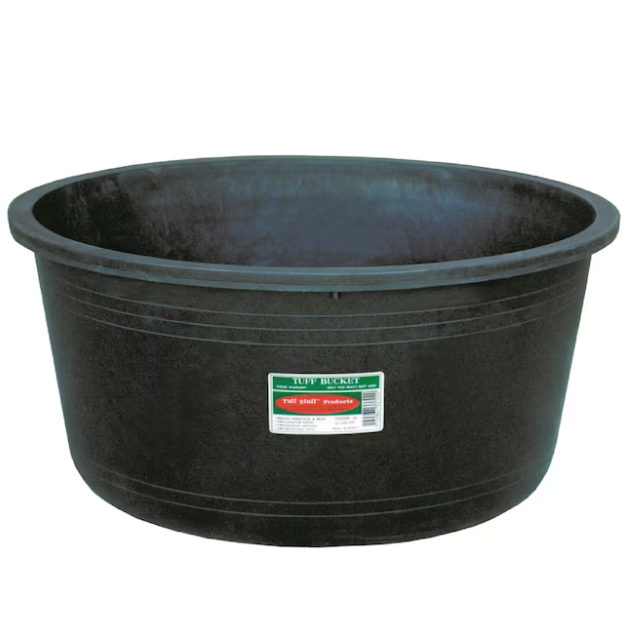 The Planter
Tuff Stuff 15 Gallon Polyresin Stock Tank
Meauring 26 inches wide and 8 inches deep, you’ll need to drill drainage holes in this heavy-duty stock tank.
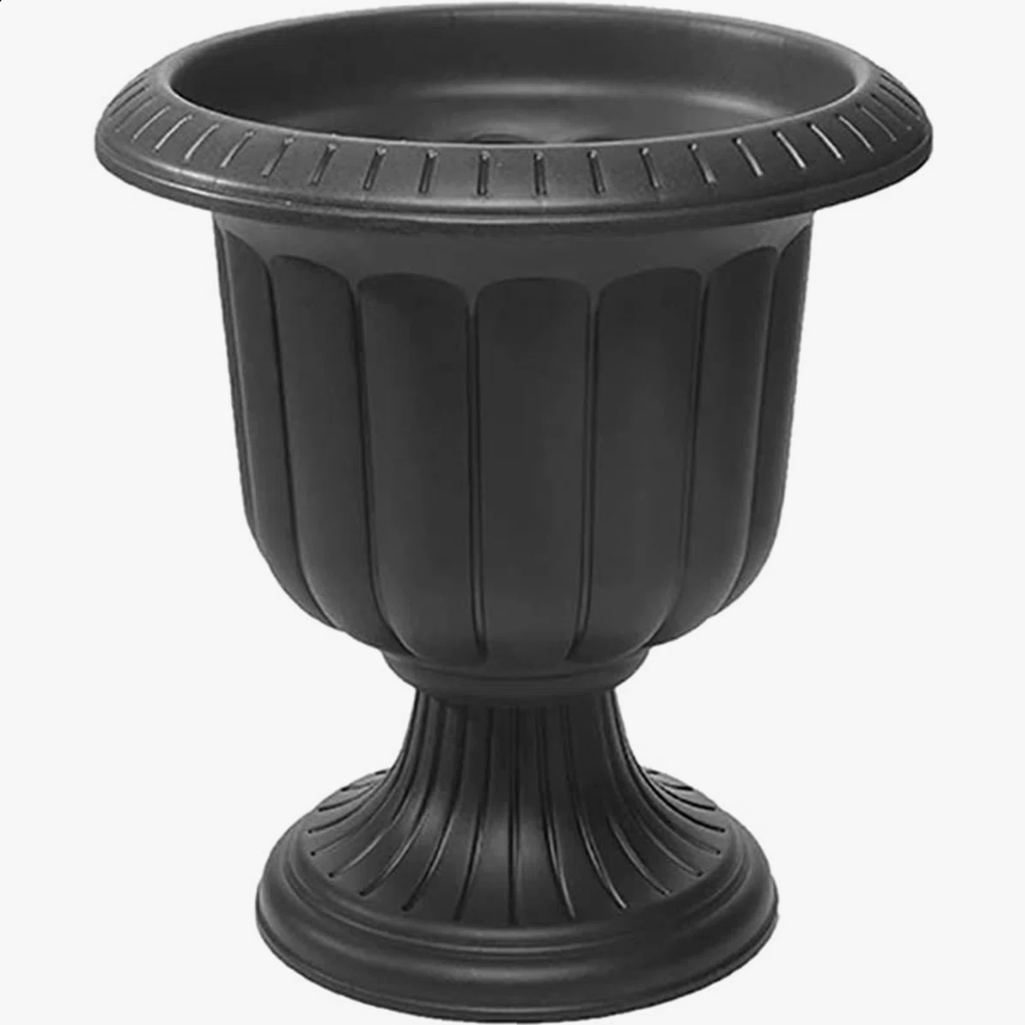 The Water Bowl
Charlton Home Tralee Neoclassic Resin Urn Planter
The 7-inch base of this 19-inch high and 14-inch wide urn is removable for a choice of heights.
Designer Look For Less
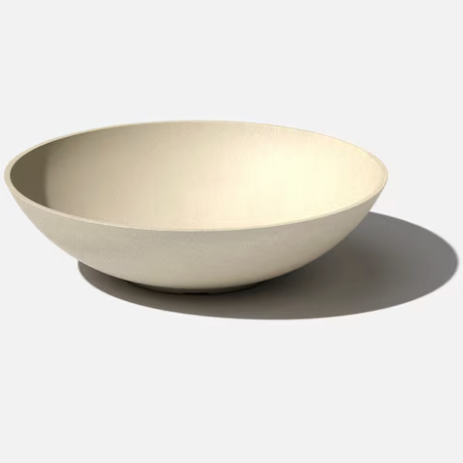 The Planter
Veradek Round Indoor/Outdoor Planter
This 24-inch wide high planter made from a plastic-stone composite in a sandy tone is 6.5 inches wide.
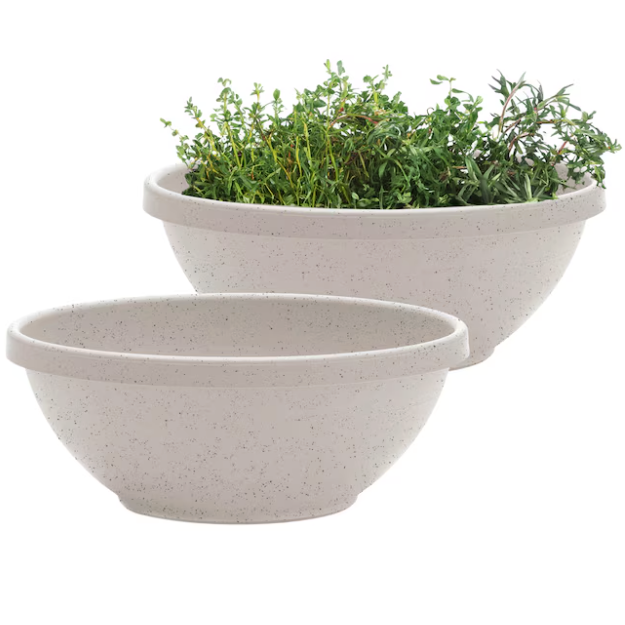 The Water bowl
Bloem Terra Plastic Plant Bowl in Vanilla Bean
Made for outdoor as well as indoor use, this 14-inch-wide plastic plant bowl with a sealed base is 7 inches high.
Rustic Charm
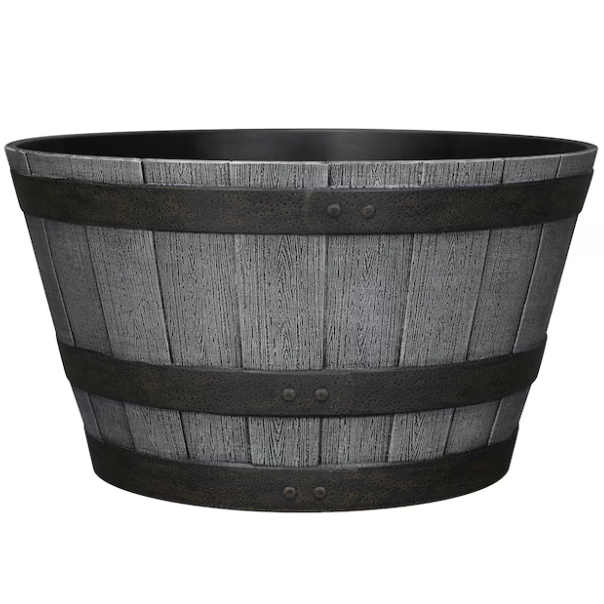 The Planter
Style Selections 22.28" Round Plastic Planter
This wooden-look half-barrel plastic planter measures 22.28 inches wide by 12.95 inches high with knock-out drainage holes.
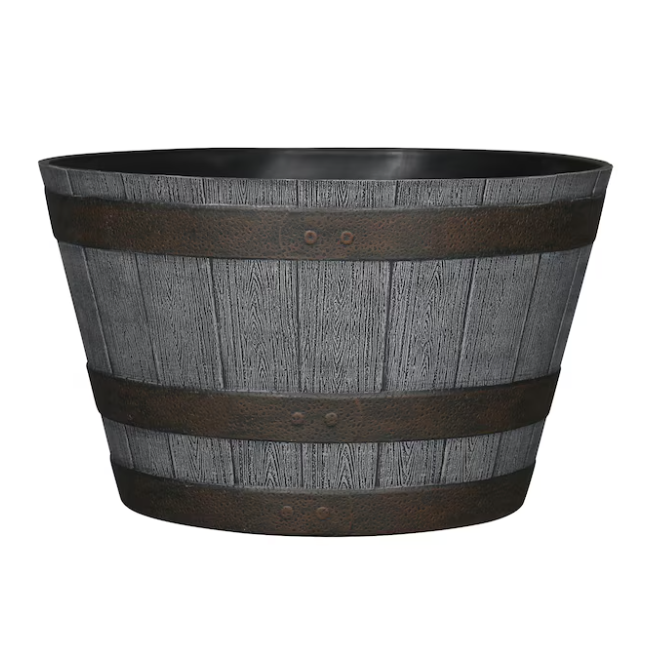 The Water bowl
Style Selections 14.73" Round Plastic Planter
The same planter is available in a smaller size measuring 14.73 wide and 9.17 inches high, and you may need to seal the holes.
2. Pick a Suitable Floating Solar Fountain
(Image credit: Getty Images)
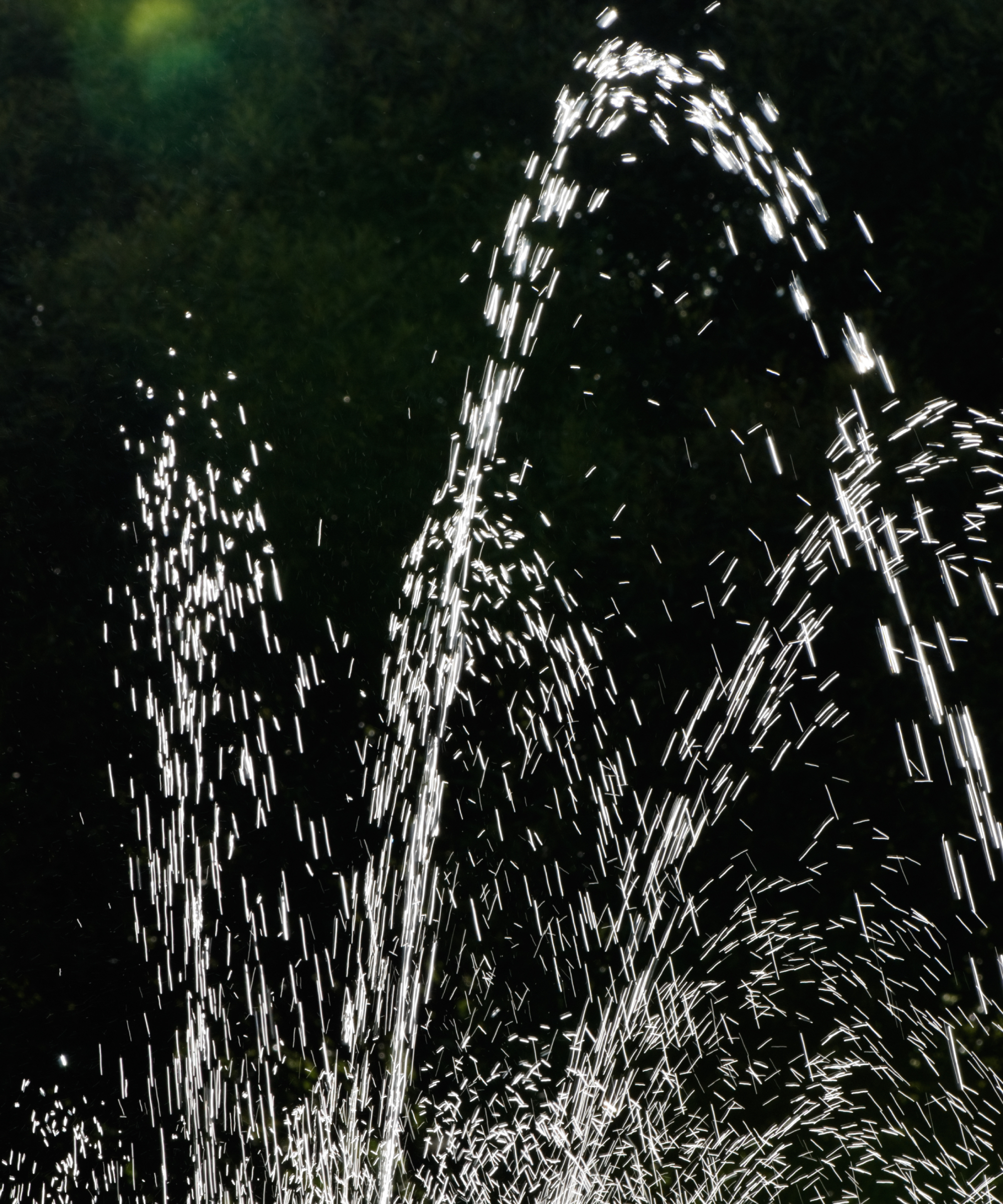
The amount of energy the solar panels of a floating fountain are capable of generating is measured in watts, which you’ll typically find in product descriptions as ‘W’. Many 1W fountains are designed for use in birdbaths so only produce a gentle water spray when the sun is shining directly on the solar panels. If you're using a similarly small, shallow container, that's fine. However, for a fountain that’s powerful enough to provide a decent-height fountain and a good flow of water in a larger container, look for a product that’s at least 2W.
If you want a fountain with LEDs, then the lights will use more power, so 3-4W is better. Don’t be tempted by more powerful 5-6W solar fountains when you're installing a water feature yourself, though, as these are more suited to bigger bodies of water. Too powerful, and the spray pattern will fall outside the container and you'll be forever topping up water levels.
A design with stabilising arms that prevent the fountain floating close to the container rim also helps minimize water loss.
If you want the fountain to operate on cloudy days and after dark, or if you want to position your water feature in partial shade, you’ll need a product that has a battery. A fountain with a 2000mAh battery will typically run for 3-4 hours without sun on a full charge.
For increased longevity, look for a fountain with run-dry protection so it automatically shuts down when there’s insufficient water, and a filter to prevent debris from entering the pump.
Our Pick of Floating Solar Fountains
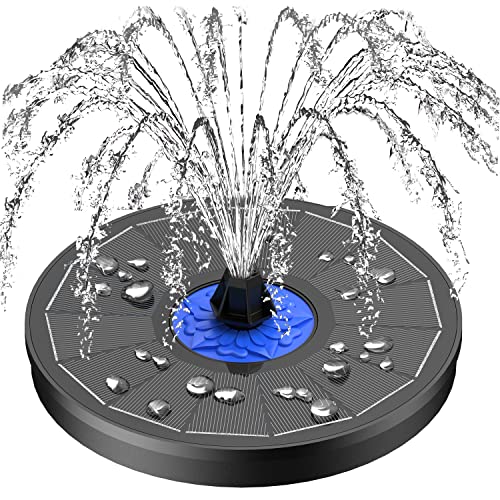 Best budget buy
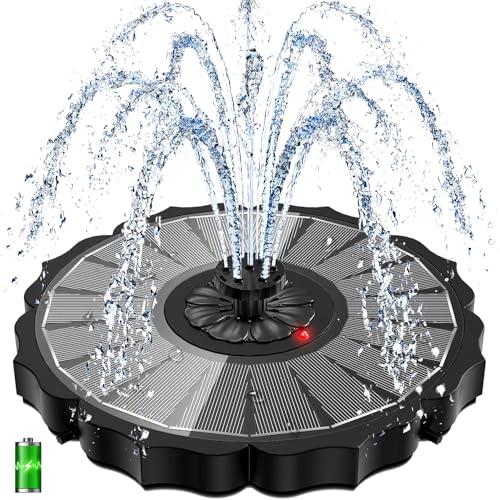
SZMP Solar Fountain Upgrade
This 3.5W solar fountain has efficient glass solar panels, stabilizing rods and a choice of eight spray patterns, though only works in direct sunlight.
 Best for shallow water
Yzert Solar Fountain With 2000mAh Battery
This 3.5W fountain automatically switches off if it senses insufficient water levels. Efficient solar panels and a battery means it’ll work in partial shade.
 Best for a light show
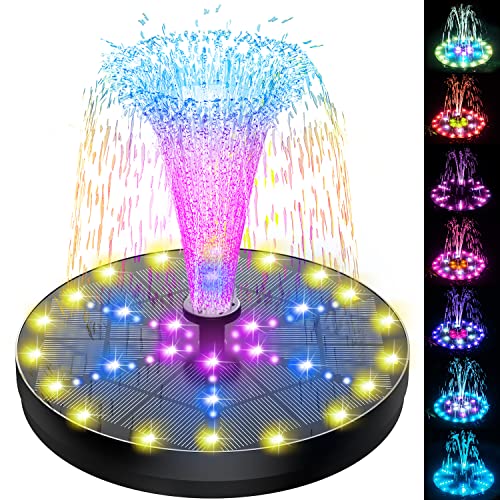
Floating Solar Fountain With 60 LED Lights
This 4W fountain has a 4000mAh capacity battery to power its 60 LED lights and color-cycling effects for 4-6 hours once the sun goes down.
3. Position Your Planter
Position your water feature before you begin planting. Any small body of water will heat up and evaporate more quickly than a larger area, so while you need sunlight to charge the solar panels and fuel plants, a little shade is a good idea. Around 6 hours of sunshine a day is the ideal compromise.
Consider what plants will be around and above your water bowl planter too, because you don’t want to be fishing out fallen leaves. Work out where your water feature will bring you the most enjoyment, too, to listen to as well as look at.
4. Plant Up The Outer Container
(Image credit: Shutterstock)
Because the plants are likely to get splashed, use a moisture-control potting mix such as Miracle-Gro Moisture Control Potting Mix, available from Amazon. If you’ve already got some potting mix, simply add some water-storing crystals such as these from Amazon or coconut coir, also available from Amazon, to enhance its ability to regulate moisture levels.
Position the water container as you’re filling the outer planter, making sure its rim is at least an inch higher than that of the outer vessel. It’s a smart move to put at least a thin layer of the potting mix beneath the base of the inner container, to give roots maximum growing room.
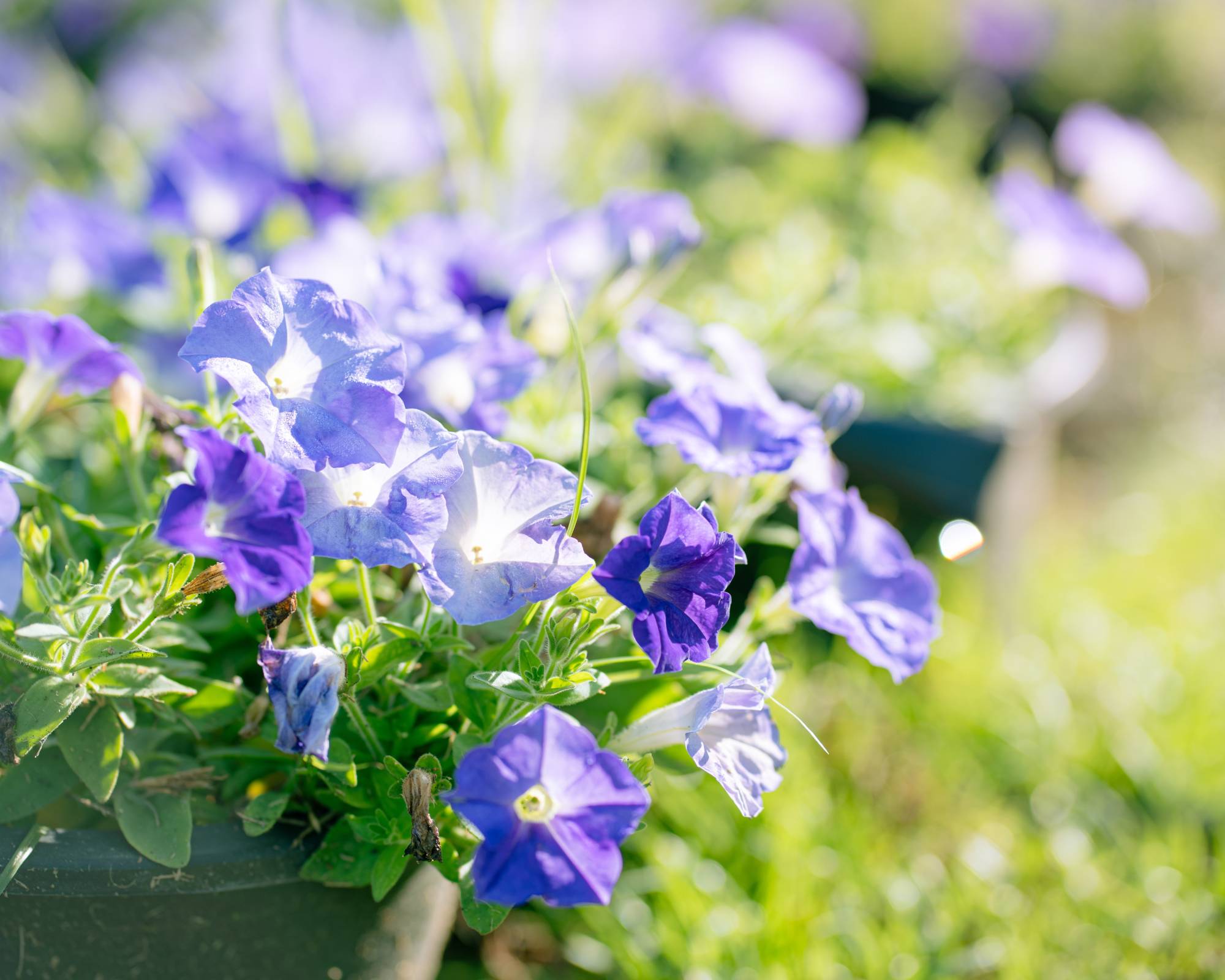
Then plant up the outer container, being careful to finish with the water bowl level. Any bedding plants suitable for hanging baskets are perfect for this project as they’re typically heat-tolerant low growers that bloom abundantly and enjoy sunny conditions. See what your local garden center has in stock, or you can plant pansies and violas in July that will last all through fall, and some are hardy enough to keep blooming in winter, too. Burpee currently has an excellent selection of pansy and viola varieties as young, ready-to-flower plants for a fast result.
A few easy-grow plants with trailing stems will add to the display.
Whatever you choose to plant, water them well, until it dribbles from the drainage holes, to settle the soil around the roots.
5. Fill With Water and Enjoy!
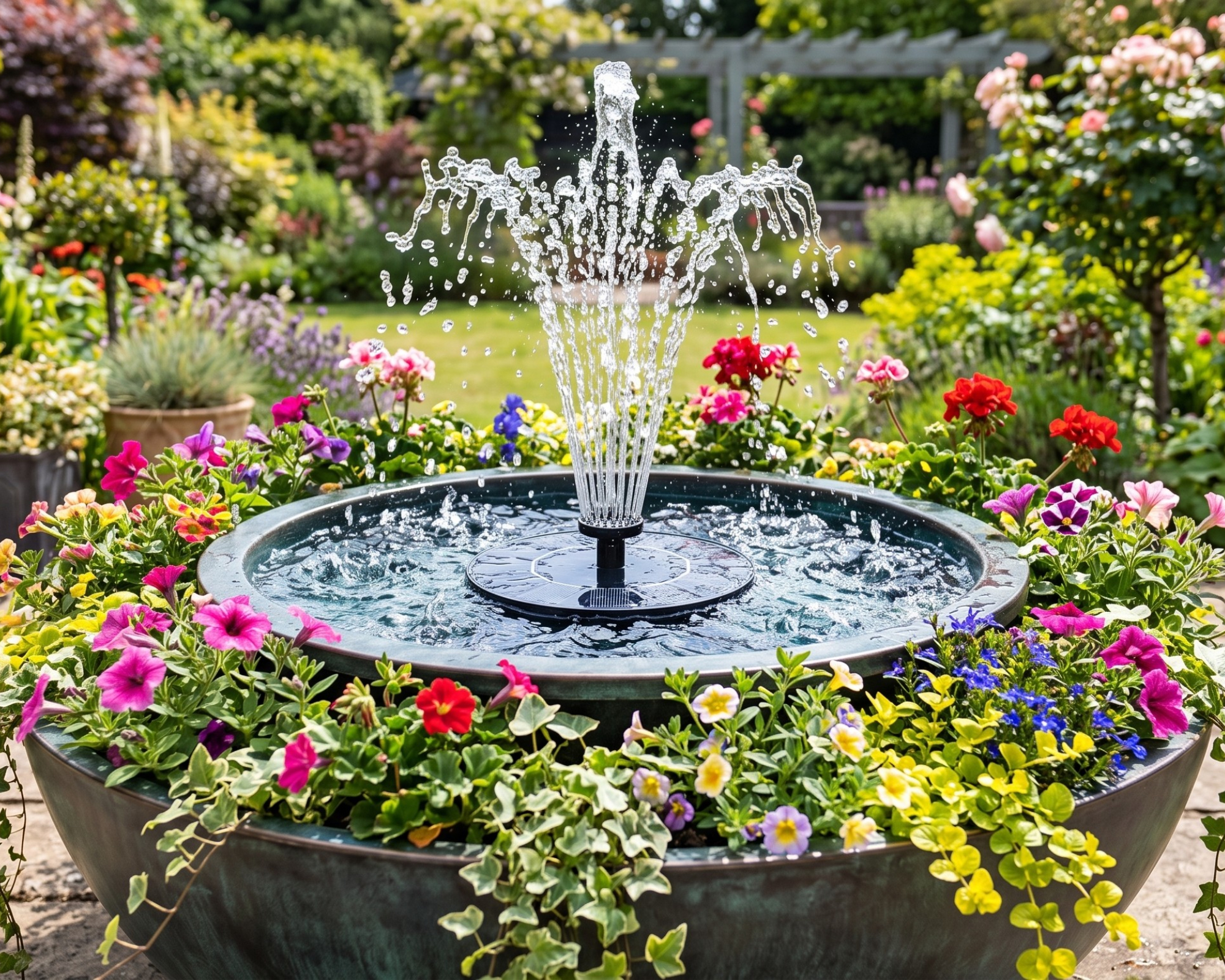
Now all that’s left to do is fill up the inner container with water, pop in the floating fountain, and enjoy your dazzling new water feature.
To enhance ripples and reflections, add a drop of pool colorant like this black pond dye from Amazon to the water.
(Image credit: Future/Emma Kendell/AI)














 English (US) ·
  French (CA) ·