

PROTECT YOUR DNA WITH QUANTUM TECHNOLOGY
Orgo-Life the new way to the future Advertising by AdpathwayA federal magistrate judge in Oklahoma has recommended suppressing evidence discovered during a post-fire investigation of a residence, concluding that federal prosecutors failed to establish that the warrantless search was justified under the Fourth Amendment.
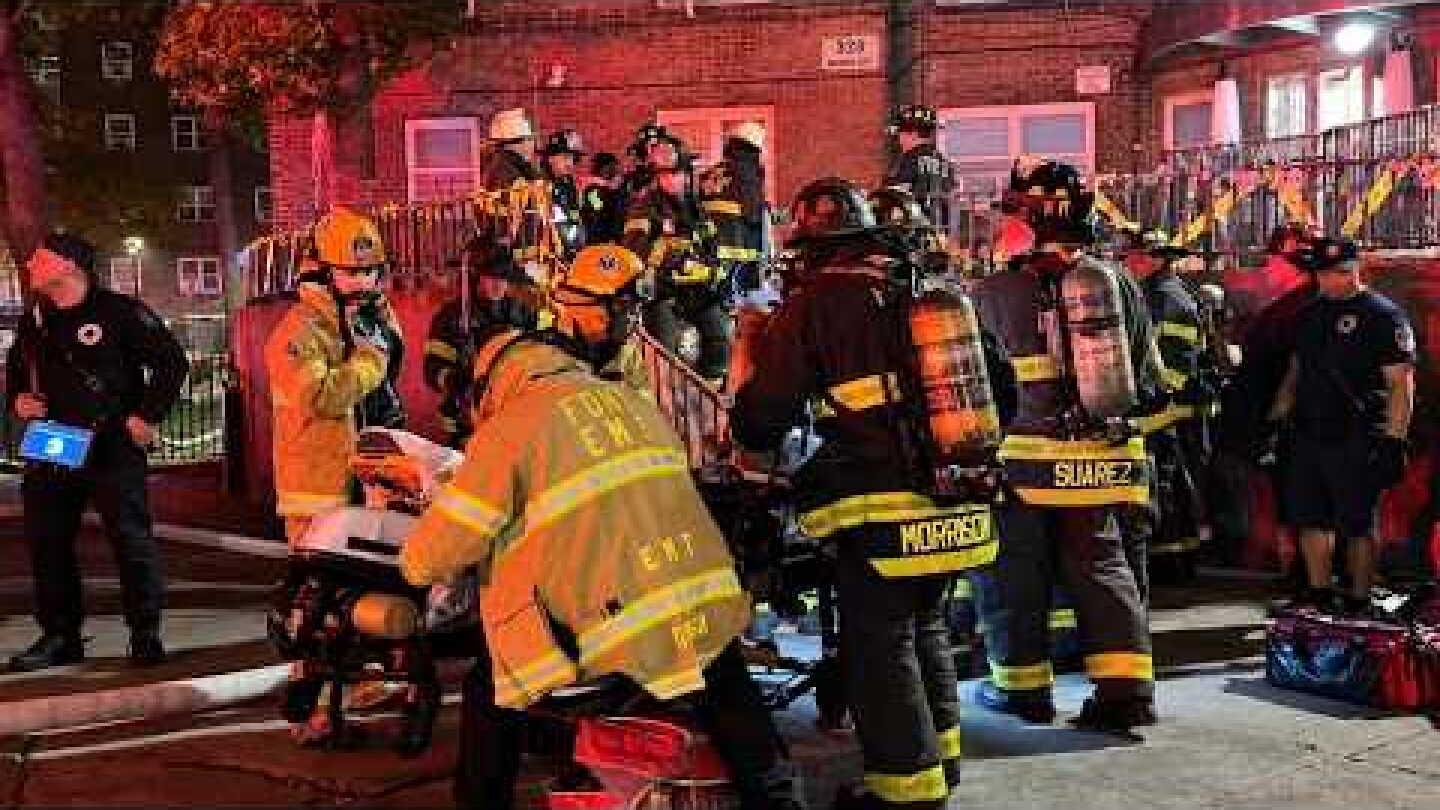
The case arose from a December 15, 2025, structure fire in Muskogee, Oklahoma. The facts were explained as follows:
- On December 15, 2025, the Muskogee Fire Department responded to a call of a structural fire at a residence in Muskogee, which they extinguished.
- Testimony established that the Fire Marshals contacted the ATF regarding some possible explosive devices in the wall of the residence.
- Testimony also established that while fire personnel were still at the residence, Defendant arrived at the scene.
- Law enforcement officers drew firearms, approached Defendant’s vehicle and placed him in handcuffs.
- Defendant was subsequently placed inside a law enforcement vehicle where he was read his Miranda rights and interviewed by Trooper Couch and ATF agent Meredith.
- Defendant consented to searching the house after he was read his Miranda rights.
- However, evidence at the hearing established only that the Fire Marshals located the explosive devices once the fire was extinguished.
- There was no evidence showing the length of time between extinguishing the fire and locating the explosive devices by the Fire Marshals, nor was there any evidence presented as to whether or not the Fire Marshals were present while the fire was actively being extinguished.
- Finally, there was scant evidence presented as to the purpose of the Fire Marshals’ search (cause or evidence gathering), just that it was part of a “post fire investigation.”
- The ATF agent simply entered the residence and the Fire Marshals pointed out the explosive devices in the wall.
- No search warrants were ever obtained.
Sholar challenged the search, arguing that the fire marshals and ATF violated his Fourth Amendment rights by searching his home without a warrant or his consent. Federal prosecutors maintained that the search was justified under the emergency exception to the warrant requirement and that Sholar had subsequently consented.
US Magistrate Judge D. Edward Snow examined the search under the principles established by the US Supreme Court in Michigan v. Tyler, 436 U.S. 499 (1978). Under Tyler, firefighters may enter a burning building without a warrant to extinguish a fire and may remain for a reasonable period afterward to investigate its cause. However, subsequent entries to investigate the cause of a fire generally require an administrative search warrant.
The problem for prosecutors was the lack of evidence establishing when and why the fire marshals entered the residence. There was no testimony establishing whether the fire marshals had been present during firefighting operations, whether they entered after the fire was extinguished, or whether they had left the premises and subsequently returned. There was also little evidence establishing whether their investigation was intended to determine the cause of the fire or to gather evidence.
Judge Snow explained:
- Here, the Court simply has no evidence regarding the time of Fire Marshals’ entry, whether that entry was during or after the fire, or how long their investigation lasted.
Based on the evidence presented, Judge Snow concluded that the government had failed to meet its burden of establishing that the warrantless search was lawful.
The government also argued that Sholar had consented to the search. However, the recorded interview established that his consent was obtained only after the fire marshals had discovered the devices, the ATF agent had entered the residence, and he personally observed them.
The judge acknowledged that consent obtained after an unlawful search can, under certain circumstances, be sufficient to overcome the constitutional violation. However, such consent must be voluntary and free from coercion.
During his interview, Sholar disclosed serious mental health problems, including hearing voices, experiencing delusions, and failing to take prescribed psychiatric medications. He was also handcuffed and detained in a law enforcement vehicle when officers requested his consent. By that time, officers had informed him of items they had already discovered inside his home.
Considering the totality of the circumstances, Judge Snow concluded:
- Under these circumstances, the undersigned Magistrate Judge cannot find Defendant’s consent was voluntary and free of coercion given Defendant’s blatant and serious mental health issues and the fact that he was made aware the ATF had already conducted their search.
Judge Snow recommended granting Sholar’s motion to suppress evidence obtained from the unlawful search, including evidence seized or obtained from the subsequent inventory search of the home or phone.
















 English (US) ·
 French (CA) ·