

 2 months ago
76
2 months ago
76
PROTECT YOUR DNA WITH QUANTUM TECHNOLOGY
Orgo-Life the new way to the future Advertising by AdpathwayEvacuations begin for some of Bordeaux's suburbs
French authorities evacuated thousands of people from suburbs near Bordeaux on Saturday as wildfires in areas around the city showed no signs of abating, the Reuters news agency reports.
Sophie Brocas, who heads the local administration of La Nouvelle-Aquitaine et de la Gironde, which covers the Bordeaux region, said on X that the areas of Le Haillan, Eysines and Merignac were being cleared out.
French Prime Minister Sebastien Lecornu said that more than 141,000 people had so far been evacuated from the Gironde and Landes regions which lie close to Bordeaux, and where the wildfires first broke out this week.
“The fires which are hitting our country have reached a level that has never been seen before,” Lecornu wrote on X on Saturday. The French army has also been drafted in to help.
Key events
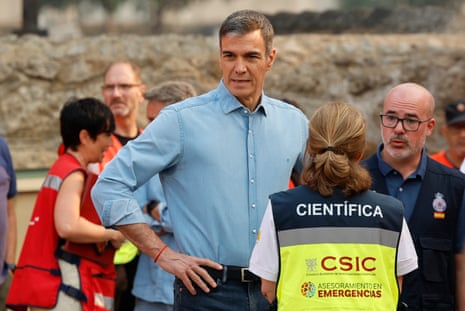
Sánchez visits areas affected by wildfires near Madrid
The Spanish prime minister, Pedro Sánchez, has visited areas affected by the wildfires near Madrid, which has burned nearly 25,000 hectares (62,000 acres) of land.


French prime minister requests deployment of military aircraft for firefighting mission
The French prime minister, Sébastien Lecornu, has requested the armed forces to deploy an Airbus A400M military transport aircraft earlier than originally planned to help tackle the major wildfires in Gironde, according to Le Monde.
The French newspaper reported the aircraft’s use was not originally expected until the end of the month due to the technical preparations and tests required beforehand.
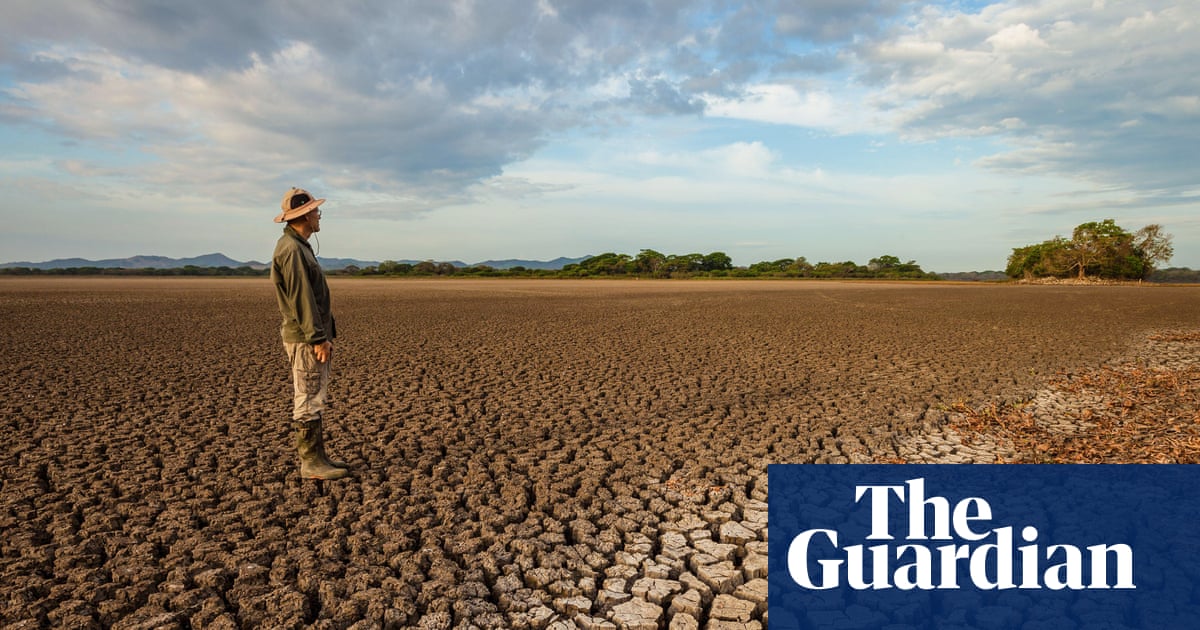
As Europe endures another summer of extreme heat, rivers across France are shrinking or drying up entirely, threatening wildlife and leaving volunteers racing to rescue fish stranded in dwindling stretches of water. My colleague Kim Willsher reports from France on how relentless heat and prolonged drought are transforming the country’s rivers and the ecosystems that depend on them.
While the fires raging across forests in France are a dramatic reminder of three successive heatwaves in as many months, the state of the country’s rivers provides another, no less worrying insight into the impact of extreme heat supercharged by the climate crisis.
The Loire, France’s longest river, is at a historical low, with the flow of some branches, including through the city of Orléans, reduced to a trickle between sandbanks. Two weeks ago, 16% of French rivers were reported to have dried up. A quarter of small streams were stagnant or had disappeared altogether, according to the national low water observatory. There has been little rain since.
Read more:
My colleague Helena Horton is in south-west France, in an area east of the Gironde region where wildfires are continuing to burn. She has reported the following:
The fire department of the Dordogne region has been in touch with the local mayors and hotel operators to reassure them after the smoke from wildfires over 100 miles away blew over and settled in the mountains and valleys.
The air is thick with smoke, but the fire department had said there is no cause for concern and that this is the smoke from the fires raging near Bordeaux. It seems much of France has woken up under a blanket of smoke this morning.

Scottish government holds emergency meeting as wildfire prompts evacuation of Cairngorms homes
In the UK, a major incident has been declared after a wildfire in the Cairngorms national park in Scotland forced the evacuation of hundreds of people.
Nethy Bridge, a village of about 600 people, was evacuated last night as a precaution and all access roads to the village have been closed, police said.
The Scottish government convened its emergency response committee – the Scottish government resilience room, known as SGORR – yesterday to the evacuation of Nethy Bridge, with the meeting chaired by first minister John Swinney.
“[Scottish Fire and Rescue Service] resources are focused on creating a fire break and additional police resources are being deployed to assist with the evacuation, including identifying vulnerable residents who may need extra support,” Swinney said in a statement.
The Scotsman newspaper reported the wildfire, which broke out in the Glenmore area of the Cairngorms national park more than a week ago, has prompted calls for military support after strong winds caused the blaze to spread despite a large-scale response involving more than 500 firefighters and other emergency personnel.
Supt Judy Hill of Police Scotland said: “The weather conditions experienced within the Cairngorms over the last 24 hours have added further complexities to this situation. With evidence suggesting the fire is spreading towards Nethy Bridge, the decision has been taken to declare a major incident and evacuate residents as a precaution.”
Official warns windy conditions could intensify Madrid wildfires
Authorities in Spain said weather conditions in the early hours of this morning offer “a real opportunity” for firefighters to control the blaze, but stronger winds later today could hamper efforts and intensify the fire.
Francisco Martín, the government delegate in Madrid, said the drop in temperature, easing winds and increase in humidity meant firefighters could tackle the wildfires near the Spanish capital “with some guarantee of success”.
But he warned “erratic gusts” forecast later today could make the situation “difficult”.
The Madrid regional government’s emergency management chief, Carlos Novillo, told reporters yesterday that the fire was “at its peak and … currently beyond the capacity of firefighters to contain”, AFP reported.
Here are some of the latest images from France and Spain:
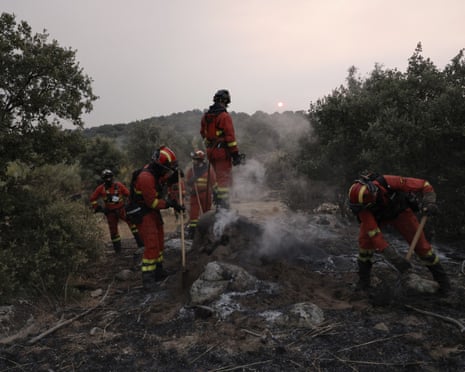
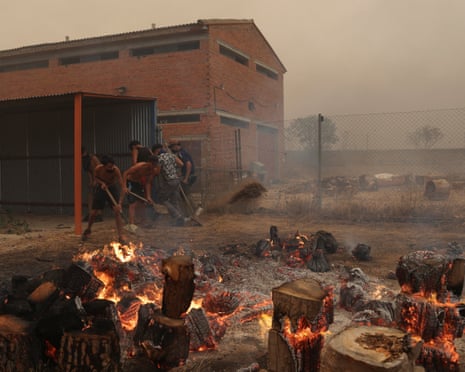
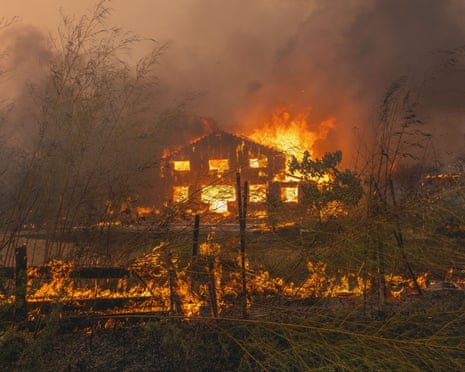
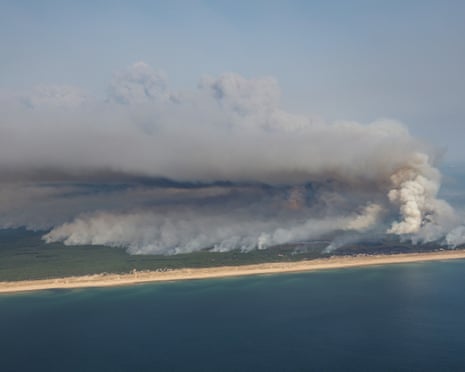
Evacuations begin for some of Bordeaux's suburbs
French authorities evacuated thousands of people from suburbs near Bordeaux on Saturday as wildfires in areas around the city showed no signs of abating, the Reuters news agency reports.
Sophie Brocas, who heads the local administration of La Nouvelle-Aquitaine et de la Gironde, which covers the Bordeaux region, said on X that the areas of Le Haillan, Eysines and Merignac were being cleared out.
French Prime Minister Sebastien Lecornu said that more than 141,000 people had so far been evacuated from the Gironde and Landes regions which lie close to Bordeaux, and where the wildfires first broke out this week.
“The fires which are hitting our country have reached a level that has never been seen before,” Lecornu wrote on X on Saturday. The French army has also been drafted in to help.
Spain's Sanchez due to visit affected areas today

Sam Jones
Spain’s government declared a national emergency on Thursday evening after wildfires threatened areas near the capital and in the neighbouring province of Ávila, leading to the evacuation or confinement of more than 63,000 people.
A national emergency, which allows central government to assume overall control of powers and responsibilities that are usually the domain of Spain’s self-governing regions, has only been declared once before, during the countrywide blackout of April 2025.
The regional government of Madrid requested assistance, describing the situation as one of “extreme gravity”. It said at least four active fires could advance “beyond current extinguishing capacity”. The fires remained uncontained on Friday.
Spanish authorities said on Friday afternoon there was “very little time left” before the blaze in Madrid, already made up of two merged fires, combined with the Ávila fire.
Madrid’s regional environment minister, Carlos Novillo, said the fire had reached “a critical moment” and was “beyond our extinguishing capability”. He added: “The priority at the moment is protecting people, helping those who have been evacuated, and making the most of windows of opportunity.”
Spain’s prime minister, Pedro Sánchez, chaired an emergency response meeting at the Moncloa palace on Friday morning as the state meteorological office warned that the danger of more fires remained very high.
He said the government had deployed “all available resources”, adding: “It will be by your side during the emergency and the recovery.”
The prime minister also thanked “all the emergency services that are fighting day and night”. Sánchez is due to visit the affected area on Saturday morning.
Macron seeks EU help with 32 fires across France

Jon Henley
On Friday, France’s president, Emmanuel Macron, said he had activated the EU’s civil protection mechanism as the country, which has endured three almost back-to-back heatwaves since May, battled numerous wildfires.
“We will soon be able to count on reinforcements from two Croatian aircraft, two Portuguese planes, as well as two heavy helicopters from the Czech Republic and Slovakia,” Macron said.
Meanwhile, France’s interior minister, Laurent Nuñez, said that 32 wildfires were burning, with 50,000 hectares scorched already so far this year – nearly four times the total by the same date last year.
Race to control wildfires in France and Spain
Hello and welcome back to our rolling coverage of the wildfires spreading through parts of Spain and France.
More than 200,000 people have been evacuated or locked down across both countries as firefighters battle to control the spread of the blazes.
Authorities in south-west France ordered the Cap Ferret peninsula on the Atlantic coast to be evacuated “village by village” in the face of an “intense, highly unpredictable” wildfire that has burned through more than 19,000 hectares (47,000 acres) of forest.
Spain’s government declared its first national emergency for a wildfire as two large blazes merged into one outside Madrid and a third was on the verge of joining them, amid searing heat and tinder-dry conditions across much of southern Europe.
Both countries sought EU help. “This is the worst wildfire in our region’s history,” said Madrid’s regional leader, Isabel Díaz Ayuso, describing “an unprecedented situation: a perfect storm of extremely high temperatures and relentless winds”.
Scientists say climate breakdown is triggering more frequent and more extreme weather events, evaporating soils and waterways, fuelling wildfires and leading to thousands of excess deaths. Europe is heating at about twice the global average rate.
You can read the full report from my colleagues in France and Spain, Jon Henley and Sam Jones, here:
We’ll bring you the latest updates throughout the days…















 English (US) ·
  French (CA) ·