

 3 months ago
94
3 months ago
94
PROTECT YOUR DNA WITH QUANTUM TECHNOLOGY
Orgo-Life the new way to the future Advertising by AdpathwayIn the realm of advanced materials science, metal-organic frameworks (MOFs) have garnered intense attention for their exceptional porosity and versatility. These hybrid materials, constructed from metal ions coordinated to organic ligands, have been cornerstone candidates in diverse applications such as gas storage, carbon dioxide capture, and targeted drug delivery. The impact of MOFs was so profound that it culminated in the awarding of the Nobel Prize in Chemistry in 2025, acknowledging their groundbreaking potential. Despite their significance, a crucial knowledge gap remained concerning the structural characterization of MOFs when fabricated as thin films, a form critical for integrating these materials into next-generation devices and microelectronics.
Traditionally, determining the atomic arrangement of MOFs involved analyzing large, well-formed crystals, where techniques like X-ray diffraction deliver relatively straightforward insights. However, thin films—necessary for technological applications—pose substantial challenges. Their reduced dimensionality and inherent complexity often render conventional characterization methods insufficient, resulting in significant ambiguities about their true structures. Such an uncertainty impedes the rational design and optimization of MOF-based thin films for specific functionalities, underscoring a persistent barrier in material science and engineering.
A research collaboration spearheaded by Roland Resel and Egbert Zojer at Graz University of Technology, in conjunction with Paolo Falcaro’s team at the Institute of Physical and Theoretical Chemistry and Christof Wöll’s group at Karlsruhe Institute of Technology, has resolved this longstanding conundrum. Their study, recently published in the highly regarded journal Advanced Functional Materials, meticulously reevaluates the canonical copper benzene dicarboxylate (Cu(bdc)) MOF thin film. This model system, historically assumed to be highly porous as per bulk MOF behavior, has now been revealed to defy such expectations fundamentally.
The team utilized a sophisticated amalgamation of quantum mechanical computational simulations alongside cutting-edge experimental techniques, chiefly the rotating grazing-incidence X-ray diffraction (rotating GIXD) method conducted at the Elettra synchrotron in Trieste. Unlike conventional single-angle GIXD, the rotating approach captures a near-complete three-dimensional reciprocal space representation of the film’s crystal lattice. This enhanced diffraction dataset, when combined with accurate density measurements via X-ray reflectometry, allowed the researchers to rigorously eliminate numerous previously proposed structural models.
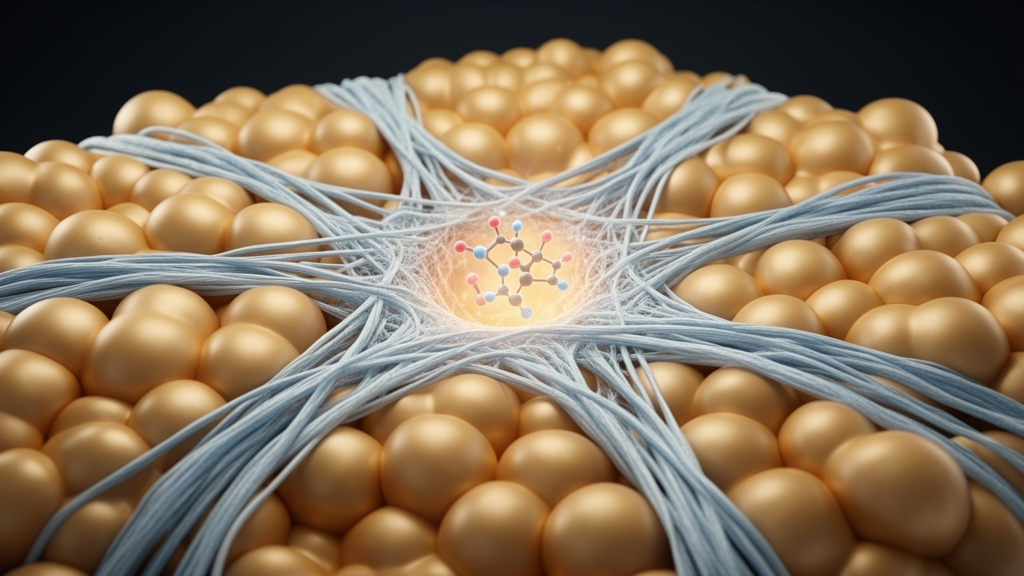
Contrary to a long-held consensus in the scientific literature, the new findings demonstrate that Cu(bdc) thin films are not intrinsically porous. Instead, the films exhibit a densely packed structure with additional hydroxide groups incorporated—a feature conspicuously absent from earlier models. This revelation resolves prior inconsistencies: the dense packing explains why guest molecules scarcely infiltrate the film, why it exhibits superior stability in aqueous environments, and why its unexpected magnetic properties were previously unaccounted for.
The identification of a ferromagnetic ground state in the Cu(bdc) thin films is particularly significant. Such magnetic ordering is incompatible with porous, open frameworks but aligns well with the densely packed architecture uncovered. This magnetic character opens the door to novel applications beyond classical MOF domains, potentially influencing sensor technologies, microelectronic devices, and magnetic data storage solutions. The presence of copper oxide layers reminiscent of those found in high-temperature superconductors further amplifies the scientific intrigue and application horizon.
This fundamental shift in understanding underscores a broader imperative for the MOF research community—the critical reassessment of structural interpretations of thin films. Given that prior assumptions may have been based on inadequate or incomplete data, the methodology developed at Graz University of Technology presents a breakthrough. By integrating advanced synchrotron-based rotating GIXD techniques with quantum mechanical modeling and density determination, the team has set a new gold standard for structural elucidation of these complex systems.
Moreover, these insights exemplify the importance of combining experimental precision with computational rigor. Theoretical simulations provided indispensable guidance, enabling the refinement of structural candidates against the comprehensive diffraction patterns acquired. This iterative loop between model prediction and experimental verification proved essential in demystifying the true film structure, paving the way for targeted synthetic strategies and the rational engineering of MOF thin films optimized for functional performance.
The implications of this work extend well beyond Cu(bdc). As MOFs continue to integrate into thin-film formats for commercial and technological utilization, accurate structural knowledge will be key to unlocking their full potential. The established diffraction and simulation framework can now be applied to interrogate other MOF systems, potentially revising prevailing assumptions and revealing untapped functionalities.
Ultimately, this research highlights an exciting frontier where chemistry, physics, and materials science converge. The newfound understanding of non-porous, magnetically ordered Cu(bdc) thin films blurs conventional distinctions and invites a reimagining of MOFs not just as storage or catalysis media but as platforms for intricate electronic and magnetic phenomena. This paradigm shift offers fertile ground for innovation in device fabrication, sensing mechanisms, and quantum materials research.
The team’s achievement also showcases the power of international collaboration and state-of-the-art infrastructure in advancing fundamental science. The utilization of the Elettra synchrotron’s rotating GIXD capabilities, alongside sophisticated computational resources, exemplifies the synergy needed to tackle complex materials questions that have persisted for decades. Their work stands as a definitive reference point that will inspire subsequent investigations aiming to harness the unique properties of MOF thin films tailored through atomic-level precision.
In summary, the longstanding assumption of Cu(bdc) MOF thin films as highly porous has been decisively overturned. Instead, these materials display a compact, hydroxide-incorporated structure with distinctive magnetic properties, challenging previous paradigms and expanding prospective applications. This breakthrough heralds a new era of structural clarity and functional design in MOF thin-film research, underscoring the indispensability of combined diffraction methodologies and computational modeling in materials science.
Subject of Research: Not applicable
Article Title: Resolving the Cu(bdc) Conundrum: Identifying Non-Porous Packing of Prototypical Coordination-Network Thin Films Combining Advanced Diffraction Techniques and Computational Modelling
News Publication Date: 19-Jun-2026
Web References: DOI: 10.1002/adfm.76075
Keywords
Metal-organic frameworks, MOF thin films, Cu(bdc), rotating grazing-incidence X-ray diffraction, rotating GIXD, quantum mechanical simulation, structural characterization, dense packing, ferromagnetism, synchrotron radiation, material stability, microelectronics, sensor technology, magnetic storage.
Tags: advanced materials science MOFscarbon dioxide capture MOF technologychallenges in MOF atomic arrangementGraz University of Technology materials researchmetal-organic frameworks thin filmsMOF thin films for microelectronicsMOFs for gas storage applicationsnext-generation MOF device integrationporosity in metal-organic frameworksstructural characterization of MOFstargeted drug delivery MOFsX-ray diffraction limitations MOFs
















 English (US) ·
  French (CA) ·