

 6 hours ago
1
PROTECT YOUR DNA WITH QUANTUM TECHNOLOGY
Orgo-Life the new way to the future Advertising by AdpathwayHeat killed a record 50,000 people in European cities this summer, new research suggests, with scientists blaming climate breakdown for two in every three of the deaths.
Morgues and funeral homes filled with bodies from June to August as the heat added by planet-baking pollution cut short an extra 32,000 lives in urban areas, the researchers found. Hot days pushed vulnerable bodies into overdrive and warm nights prevented them from recovering.
The “staggering” death toll, modelled using historical relationships between heat and health in 854 cities, was the worst on record, the study found. Hot weather marked by relentless heatwaves killed nearly twice as many people as it did in each of the two next most dangerous years.
“In some sense, the absolute numbers of the heat-related deaths estimated across the 854 urban areas are indeed staggering,” said Malcolm Mistry, a climate and health scientist at the London School of Hygiene & Tropical Medicine, who co-authored the study. “But perhaps what is even more alarming is the proportion of these deaths that we attribute to anthropogenic climate change.”
The share of deaths due to climate breakdown has risen from about 40% at the start of the century to 65% this summer, the study found.
People succumbed to heat at the highest rates in Malta, Italy and Hungary, while absolute death tolls were greatest in Italy, France, Spain, Germany and the UK. Because death certificates rarely record contributing factors – such as dangerous temperatures that push a stroke victim or lung cancer patient past their limits – families rarely know that heat and human activity hastened their relatives’ death.
“These shocking figures represent thousands of families who have lost a loved one this summer due to the climate crisis,” said Katie White, the climate transition minister for the UK, where scientists estimated 4,354 heat deaths this summer.”
In Naples, the hardest-hit city on the continent, 815 people per million died from the heat, according to the study’s age-standardised estimates. Mario Guarino, an emergency doctor at Ospedale CTO in the north of the city, said he witnessed a 15% increase in emergency room visits during the hottest weeks.

The “defining characteristic” of the period was the complexity of health problems exacerbated by heat, he added, with loneliness and poverty worsening the situation further.
“We took in a terminal cancer patient who lived in a hot attic simply because his family couldn’t find a company to install air conditioning during the summer,” said Guarino. “An elderly man with dementia was abruptly abandoned by his Ukrainian caregiver who returned home to say goodbye to her son, who had been called to war. Emergency services found [the man] lying on the floor one night with a fractured pelvis, desperately trying to call the tenant next door.”
The study found people over the age of 85 made up almost half of the death toll, though younger people were not immune, with 833 people between the age of 20 and 44 also thought to have died due to the heat. The scientists said the death toll from the cities studied, which account for about 40% of the European population, could not be easily extrapolated to estimate the full death toll including those in towns and villages.
after newsletter promotion
The scorching heat that persistently baked western Europe this summer was the worst on record, the EU’s climate monitoring service announced this month, with more than half the continent seared by “very strong” heat stress that felt hotter than 38C. Slightly less punishing temperatures in eastern Europe brought the continental average to its third-hottest level on record.
Greenhouse gases have warmed Europe about twice as fast as the global average, exposing more people to intolerably hot summers and fewer people to dangerously cold winters. While cold is a bigger killer than heat, scientists expect rising temperatures to claim more lives than they save, as heat deaths are projected to rise faster than cold deaths fall.
The study combined established relationships between heat and mortality with temperature data for 2026 to rapidly estimate the fallout from this summer’s heat. The death tolls for individual countries differ from what national public health agencies have calculated using their own methods.
David García-García, a researcher at the mortality monitoring system at the Carlos III health institute in Madrid, who was not involved in the study, said it was a “valuable contribution” that allowed for comparisons across the continent. “However, it is important to bear in mind that these are estimates based on observed temperatures and epidemiological models, which do not incorporate actual data on deaths occurring in the summer of 2026,” he said.
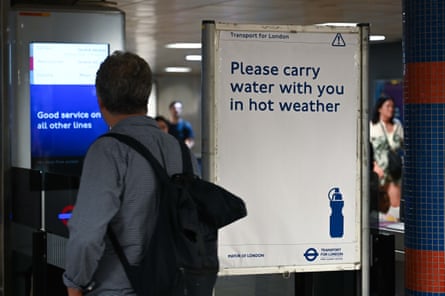
Doctors have urged governments to burn fewer fossil fuels – the core driver of rising temperatures – while bolstering health systems, greening cities, rolling out air conditioning and encouraging people to drink water and seek shade. They have also stressed the benefits of people checking in on vulnerable neighbours and family members so they can get help before tragedy strikes.
“The real epidemic these days is loneliness,” said Guarino. “Many elderly people are left alone during the summer, abandoned by their families, and due to their low income, they can’t afford air conditioning or, if they do have it, avoid turning it on because of the cost of electricity.”
















 English (US) ·
 French (CA) ·