

 2 months ago
98
2 months ago
98
PROTECT YOUR DNA WITH QUANTUM TECHNOLOGY
Orgo-Life the new way to the future Advertising by AdpathwayScientists at Nagoya University in Japan have identified a brain mechanism that helps animals continue working toward a reward even when the effort required keeps increasing. Their study, published in the Proceedings of the National Academy of Sciences, shows that orexin-producing neurons are essential for sustaining motivated behavior. The findings suggest that these cells do more than regulate sleep, appetite and energy balance: they may also help the brain convert expectations about a reward into persistent, goal-directed action.
Motivational failure is a feature of several psychiatric and neurological conditions, including depression, addiction and attention-deficit/hyperactivity disorder. People affected by these conditions may struggle to initiate tasks, persist when activities become difficult or maintain behavior directed toward a long-term goal. Although motivation depends on a broad network involving reward, emotion and decision-making, the specific neural processes that maintain effort have remained difficult to define. The Nagoya team focused on orexin neurons, which are located in the hypothalamus and send signals to many regions involved in arousal, reward processing and behavioral control.
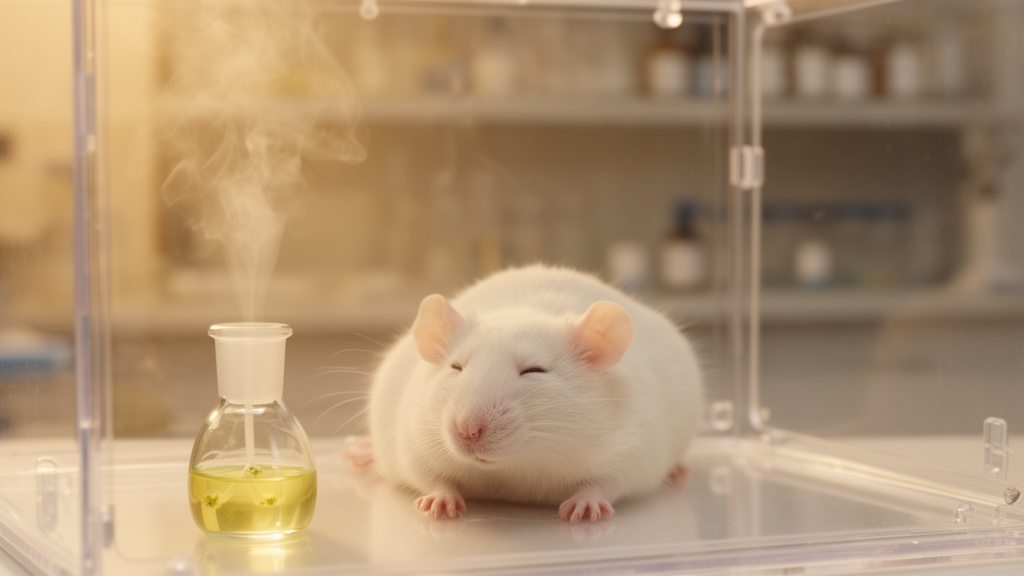
The researchers developed genetically modified “orexin-Cre” rats to manipulate and record activity specifically in orexin-producing neurons. Rats were chosen because they generally learn more effectively than mice in complex behavioral tests and can perform demanding tasks that require sustained effort. However, targeting defined neuronal populations in rats has historically been technically challenging. The new genetic model allowed the researchers to use chemogenetics, optogenetics and fiber photometry to examine how orexin neurons influence motivation and how their activity changes in real time during reward-seeking behavior.
To measure motivational intensity, the animals performed a progressive-ratio task. In this test, the number of touches required to receive a food reward increases after each successful trial. The animals must therefore decide whether the expected reward is worth the additional work. Researchers use the “breakpoint”—the point at which an animal stops responding—as an index of willingness to exert effort. When the team activated orexin neurons using chemogenetic methods, the rats reached higher breakpoints and continued working through more demanding trials. In contrast, rats in which orexin neurons had been selectively degenerated stopped earlier, indicating a substantial reduction in effort-based motivation.
The team next used fiber photometry to monitor calcium-related signals from orexin neurons while the rats anticipated and received food rewards. Neuronal activity rose before the reward became available, declined after the reward was delivered and remained elevated when an expected reward failed to appear. This pattern suggests that orexin neurons are particularly responsive to the relationship between expectation and outcome rather than simply to the sensory experience of eating. Their activity also increased as the required effort became greater, indicating that the neurons may encode not only the predicted value of a reward but also the cost of obtaining it.
The response to an omitted reward was especially revealing. If orexin activity merely reflected pleasure or the physical consumption of food, it would be expected to fall when no reward arrived. Instead, activity remained high, consistent with a role in maintaining arousal and continued action when an anticipated outcome is delayed or absent. The researchers propose that orexin neurons may function as part of a neural system that keeps an animal engaged when the goal remains important but the path to it becomes uncertain or demanding.
To test whether this activity was directly required for motivated behavior, the researchers used optogenetics, a technique that controls genetically targeted neurons with light. At the moment when the rats expected a reward, the team suppressed orexin neurons using an inhibitory light-sensitive protein. The animals then took longer to complete effort-based tasks and reached lower breakpoints. Temporarily interrupting orexin signaling at this critical stage therefore weakened the animals’ ability to sustain goal-directed behavior, providing causal evidence rather than merely showing a correlation between neural activity and motivation.
The researchers also attempted to increase motivation by stimulating orexin neurons at reward anticipation using an excitatory protein. Although the stimulation reliably activated the targeted cells, it did not produce a further increase in motivated behavior. This asymmetry—suppression impaired performance, while additional excitation did not enhance it—suggests that orexin neurons may be necessary but not independently sufficient for sustained motivation. Their natural activity could already be operating near an effective range, or the brain may require a specific timing, duration or firing pattern that artificial stimulation did not reproduce.
The findings point to orexin neurons as a possible bridge between reward prediction and persistent action. Rather than simply generating a stronger desire for food, these cells may help coordinate the arousal, effort allocation and behavioral persistence required to pursue an expected outcome. The researchers emphasize that the work was conducted in rats and does not yet establish how the same mechanism functions in humans. Future studies will map the circuits sending information to orexin neurons and the pathways through which they influence motivation-related brain regions. A clearer understanding of this system could eventually contribute to research on disorders involving reduced motivation or difficulty sustaining goal-directed behavior.
Subject of Research: Animals
Article Title: Reward prediction is encoded by orexin neuron activity during motivated behavior
Web References: Nagoya University Graduate School of Medicine: https://www.med.nagoya-u.ac.jp/medical_E/ ; DOI: https://doi.org/10.1073/pnas.2520677123
References: Dong Y, Rahaman SM, Zhu W, Inutsuka A, Ono D, Tanaka R, Matsuzaki T, Shibata E, Isobe M, Izawa S, Yamanaka A, Yamada K, Mizoguchi H. “Reward prediction is encoded by orexin neuron activity during motivated behavior.” Proceedings of the National Academy of Sciences of the United States of America. 2026. DOI: 10.1073/pnas.2520677123
Keywords: orexin neurons, motivation, reward prediction, effort-based behavior, neuroscience, hypothalamus, progressive ratio task, chemogenetics, optogenetics, fiber photometry, rats, goal-directed behavior, depression, addiction, ADHD
Tags: animal models of motivation and behaviorbrain mechanisms of motivationgenetic modification in neuroscience researchhypothalamus and orexin functionmotivated behaviorneural basis of persistenceneural circuits involved in sustained effortneurological basis of goal-directed actionsorexin neuronsorexin’s role in energy and arousal regulationpsychiatric conditions affecting motivationreward processing in the brain

















 English (US) ·
  French (CA) ·