

 4 hours ago
3
PROTECT YOUR DNA WITH QUANTUM TECHNOLOGY
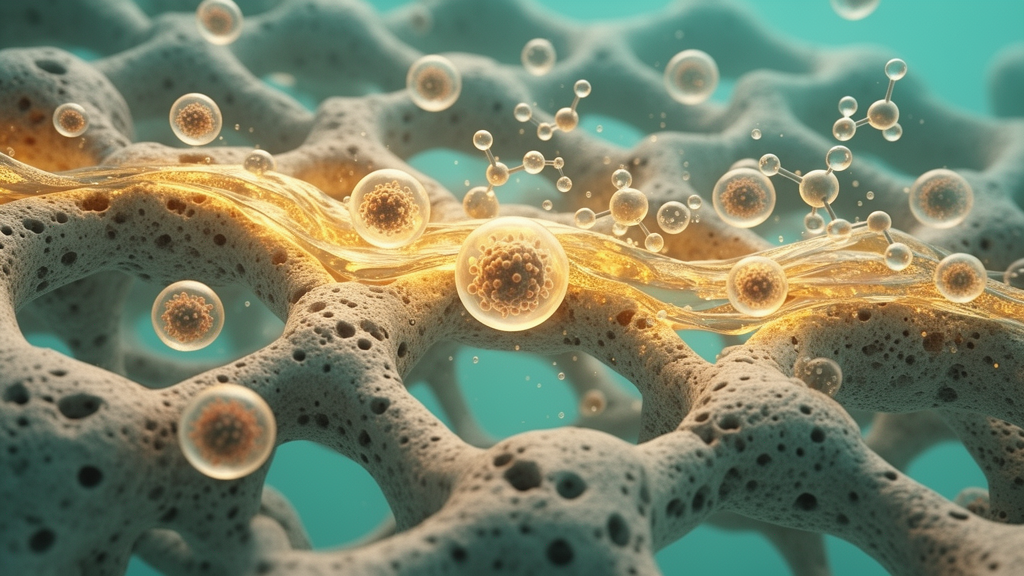
Orgo-Life the new way to the future Advertising by AdpathwayA computational study indicates that combining distinct nanoparticle shapes in a blood-based trihybrid suspension increases mean velocity and mean temperature within an idealized stenosed artery model. In a computational study published in Discover Nano, investigators Sakshi Kumari and Rajesh Bhatt analyzed how an engineered suspension of copper, aluminum oxide, and gold nanoparticles behaves within an idealized arterial stenosis. By moving beyond traditional single-morphology formulations to examine a mixed-shape configuration comprising spherical copper, spherical aluminum oxide, and cylindrical gold, the team uncovered marked improvements in transport dynamics. According to the numerical findings, the mixed-shape mixture increased profile-averaged dimensionless velocity by 0.56 to 6.18 percent and elevated mean dimensionless temperature by 0.49 to 12.88 percent compared to an entirely spherical nanoparticle suspension. When coupled with response surface methodology and artificial neural network surrogate prediction, the framework identified the high magnetic parameter, high volume fraction, and low radiation parameter region as favorable for local wall heat-transfer enhancement.
Arterial stenosis refers to the narrowing of arteries due to plaque deposition in the arterial lumen. Plaque accumulation restricts blood flow, increases flow resistance, modifies wall shear stress, and may increase the risk of stroke and other cardiovascular complications. Fluid mechanics researchers have long turned to mathematical simulations to analyze the intense mechanical stresses generated across stenosed arterial segments.
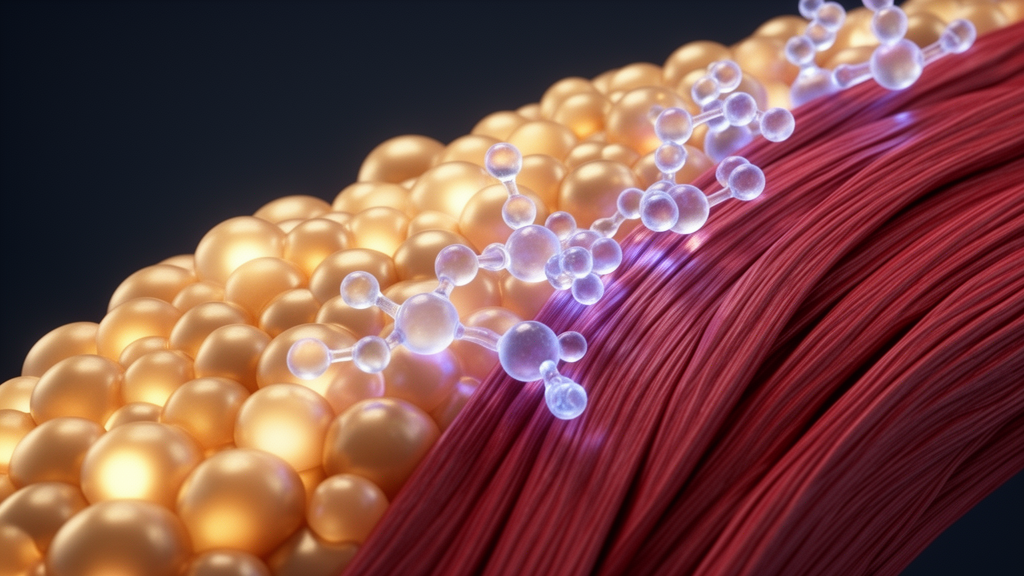
While earlier investigations predominantly focused on mono-nanoparticle or binary hybrid suspensions, the newly developed model leverages a trihybrid suspension that integrates copper, aluminum oxide, and gold to achieve synergistic physical benefits. Copper provides exceptionally high intrinsic thermal conductivity, substantially augmenting conductive heat transmission through the flowing medium. Aluminum oxide is a stable oxide nanoparticle that is frequently used in nanofluid formulations. Gold is relevant in biomedical thermal transport modeling due to its use in imaging, targeting, and thermally assisted therapeutic applications. Crucially, the authors evaluated particle geometry as an independent governing parameter rather than assuming all particles were uniform spheres. By introducing cylindrical gold particles with an empirical shape factor of 4.9 alongside spherical copper and aluminum oxide particles with a shape factor of 3.0, the formulation provided expanded interfacial contact area. This increased surface contact created preferential conductive pathways through the base fluid, markedly altering effective viscosity, electrical conductivity, and near-wall heat exchange.
To simulate this complex physiological environment, the authors formulated a multi-physics mathematical framework that integrates magnetohydrodynamics, Darcy-Forchheimer porous media resistance, thermal radiation, viscous dissipation, and Cattaneo-Christov non-Fourier heat conduction. The porous resistance of the medium is modeled using the Darcy–Forchheimer formulation, which accounts for both linear porous drag and nonlinear inertial resistance. An externally applied radial magnetic field interacts with the electrically conducting biofluid, creating a resistive Lorentz force while concurrently generating internal Joule heating. Viscous dissipation transforms kinetic energy into thermal energy through fluid shear, quantified by the dimensionless Eckert number. The model incorporates Cattaneo–Christov non-Fourier heat-flux effects, where a higher thermal relaxation time delays heat conduction and limits heat transfer between fluid layers.
Because the non-linear partial differential equations governing momentum and energy conservation cannot be solved analytically across intricate arterial boundaries, the researchers applied similarity transformations using an established stream function formulation. This mathematical reduction converted the governing partial differential system into a set of coupled non-linear ordinary differential equations defined at the throat of a cosine-profiled stenosis, where lumen constriction reaches its maximum height and hydrodynamic gradients are most extreme. The transformed boundary-value problem was resolved numerically using a collocation solver executed in MATLAB. Prior to full-scale parametric testing, the authors verified computational reliability through systematic mesh convergence experiments across grid densities spanning 100 to 800 nodes. Refinement beyond 500 nodes produced zero observable change in skin friction or conductive Nusselt number, demonstrating grid independence. The baseline model was validated against published benchmark literature, matching historical skin friction values within 0.039 percent and Nusselt number data within 0.021 percent under equivalent limiting conditions.
Comprehensive parametric evaluations across defined physical intervals clarified the distinct mechanisms driving blood velocity and temperature profiles throughout the stenotic throat. The magnetic parameter was varied from 0 to 3, the Eckert number from 0 to 1.5, the radiation parameter from 0 to 0.75, the porous Darcy parameter from 1 to 5, the thermal relaxation parameter from 0 to 0.1, and the total nanoparticle volume fraction from 0.03 to 0.10. The simulations revealed that strengthening the magnetic parameter or increasing the porous Darcy parameter diminished fluid velocity due to augmented electromagnetic drag and porous matrix resistance. However, this decelerated motion trapped internal heat and magnified Joule dissipation, thereby raising fluid temperatures across the constricted core. Increasing the thermal radiation parameter facilitated ambient radiative energy loss, thereby cooling the fluid layer, whereas increasing the Eckert number substantially amplified internal viscous heating. Across every tested parameter combination, the mixed-shape nanofluid sustained noticeably higher velocities and temperatures than the purely spherical mixture, demonstrating superior momentum and thermal retention.
The study also assessed the critical engineering trade-offs governing wall shear stress and interfacial heat transfer rates, represented by the skin friction coefficient and the conductive Nusselt number. Skin friction rose consistently with higher magnetic field strength, increased porous medium resistance, and greater nanoparticle loading, reflecting intensified near-wall momentum resistance. Because the cylindrical gold nanoparticles present a greater surface contact area, the mixed-shape formulation generated higher skin friction values than the spherical counterpart. For instance, raising the magnetic parameter from 0 to 0.4 increased skin friction from 1.6381 to 1.7048 in the spherical case, compared to an increase from 1.7134 to 1.7825 in the mixed-shape suspension. Conversely, one-factor-at-a-time evaluations showed that the conductive Nusselt number decreased with stronger magnetic fields and heavier porous resistance, as boundary-layer flow suppression thickened the thermal boundary layer and reduced conductive temperature gradients at the wall. This finding indicates that while mixed-shape particles optimize internal heat retention, spherical particles can maintain steeper conductive wall gradients under certain unoptimized conditions.
To resolve these competing physical trade-offs and map optimal multi-parameter conditions, the investigators implemented Response Surface Methodology using a three-factor, face-centered central composite design comprising 20 systematic simulation runs. Focusing on the bounded optimization domain encompassing magnetic parameter values between 0 and 3, nanoparticle volume fractions between 0.015 and 0.06, and radiation parameter values between 0 and 1, the response surface mapped the joint interactions governing the Nusselt number. Analysis of variance confirmed exceptional regression reliability, yielding a model F-value of 512.32, a p-value below 0.0001, a coefficient of determination of 0.9978, and an adjusted coefficient of 0.9959. The resulting quadratic design surfaces showed that while thermal radiation uniformly suppressed the conductive Nusselt number across all ranges, simultaneous increases in magnetic field strength and nanoparticle volume fraction drove steep gains in heat transfer. The steepest wall temperature gradients emerged within the corner region characterized by high magnetic intensity, elevated particle loading, and minimal thermal radiation.
Recognizing that dense parametric exploration with traditional boundary-value differential equation solvers is computationally expensive, the team deployed an artificial neural network to serve as a high-fidelity surrogate model. The researchers trained a feedforward multilayer perceptron consisting of two hidden layers with ten neurons each, utilizing the Levenberg-Marquardt backpropagation algorithm to predict the logarithm of the Nusselt number. Training data comprised the 20 central composite design evaluations augmented by Latin hypercube sampling to produce 160 solver-verified data points partitioned into training, validation, and testing subsets. The trained network converged at epoch 21 with a validation mean squared error of 7.9559 times ten to the negative fifth power. Evaluated against an independent withheld test set, the neural surrogate achieved a root mean square error of 0.0860754, a mean absolute error of 0.030361, and a coefficient of determination of 0.999085. A dense candidate scan identified an optimal operating point at a magnetic parameter of 2.9935, a volume fraction of 0.0525, and a radiation parameter of 0.00012. Direct re-evaluation with the numerical boundary-value solver confirmed a peak Nusselt number of 12.286, which closely matched the neural network prediction of 12.1721 within a relative deviation of only 0.93 percent.
Alongside heat transfer optimization, the authors performed thermal admissibility evaluations, confirming that the peak dimensionless temperature remained strictly bounded at the wall across all sampled cases, without exhibiting interior non-Fourier temperature overshoots. Despite these promising computational findings, the researchers emphasized crucial physiological and mathematical limitations inherent to their continuum formulation. The model utilized steady, laminar Newtonian flow assumptions localized strictly at the stenosis throat, omitting the pulsatile cycles of real cardiac pumping and the complex shear-thinning characteristics of non-Newtonian blood. Furthermore, the model treated the trihybrid nanofluid as a single-phase homogeneous suspension, noting that a two-phase model is needed to capture particle-scale effects such as deposition and margination. The investigators concluded that the reported optimal Nusselt values represent local dimensionless indicators rather than direct clinical measurements. Consequently, experimental microfluidic trials, two-phase non-Newtonian formulations, and full axial-radial geometry models will be essential before these trihybrid magnetic heating concepts can be translated into practical biomedical hyperthermia procedures.
Subject of Research: Thermal transport optimization and surrogate modeling of trihybrid nanofluids in stenosed arterial flow
Article Title: ANN validation and RSM optimization of Cattaneo-Christov heat flux in MHD stenotic artery trihybrid nanofluid flow
Article References: Kumari, S., & Bhatt, R. (2026). ANN validation and RSM optimization of Cattaneo-Christov heat flux in MHD stenotic artery trihybrid nanofluid flow. Discover Nano, 21(1), Article 595. https://doi.org/10.1186/s11671-026-05085-5
Image Credits: AI Generated
DOI: 10.1186/s11671-026-05085-5
Keywords: Trihybrid nanofluids, Arterial stenosis, Cattaneo-Christov heat flux, Magnetohydrodynamics, Thermal therapy, Nanoparticle morphology, Response surface methodology, Artificial neural networks, Nusselt number, Skin friction coefficient, Darcy-Forchheimer drag, Thermal radiation, Collocation solver, Joule heating, Viscous dissipation, Biomedical transport modeling















 English (US) ·
 French (CA) ·