

 4 hours ago
4
PROTECT YOUR DNA WITH QUANTUM TECHNOLOGY
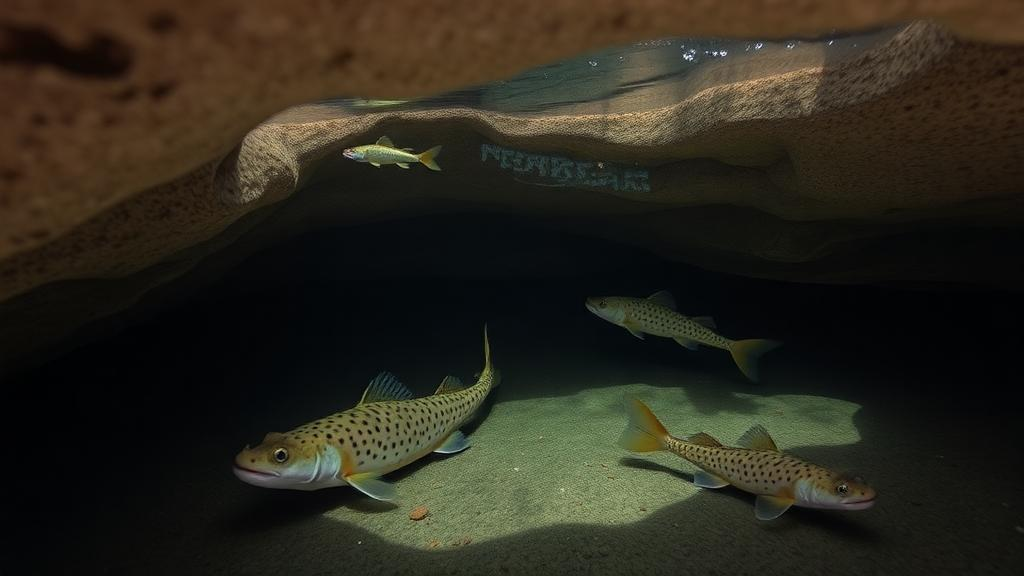
Orgo-Life the new way to the future Advertising by AdpathwayA new genus and species of cave-dwelling leech, Troglobdella guizhouensis, have been identified from shallow puddles inside a karst cave in Guizhou Province, southwestern China. The taxonomic study combined detailed observations of external form and internal anatomy with DNA analyses based on the mitochondrial COI and nuclear 18S rRNA genes, and it also produced a complete mitochondrial genome for the new species. Researchers collected 14 specimens in Chishui Cave on January 19, 2024, then selected one holotype and five paratypes for the formal type series.
The findings add a distinct subterranean lineage to Salifidae, a family of predominantly freshwater leeches, and show how morphology and molecular evidence jointly support the recognition of a new genus. The collecting site lies in the Yangjiao Group of Chishui Cave near Weining County at 26°53′42″N, 104°19′59″E and an elevation of 2,334 metres. The animals occurred in shallow puddles approximately 30–50 metres from the entrance.
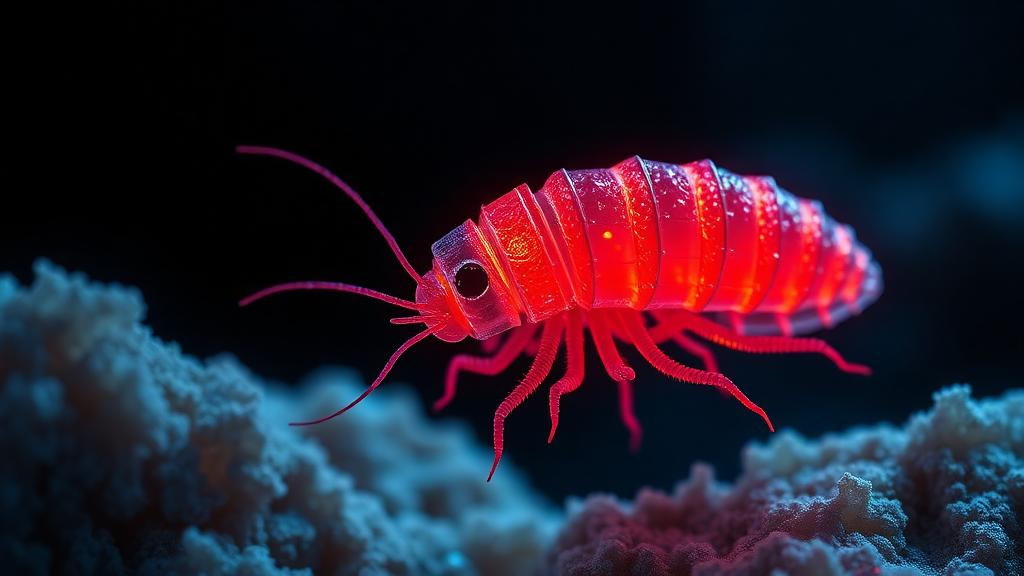
Six type specimens were measured with a digital caliper precise to 0.1 millimetre, and four specimens were dissected for anatomical examination. The species is described as an aquatic predator, although its suggested diet of small invertebrates such as insect larvae was not directly observed. Troglobdella guizhouensis is immediately recognizable by a milky-white body without pigment and the complete absence of eyespots.
Its oral sucker is well developed and expands distinctly to either side, while its broad posterior sucker provides another conspicuous feature. The first seven somites contain 15 annuli in total, somite VIII is five-annulate, and somites IX through XXIV are six-annulate. The final three somites have a more complex annulation pattern that the authors interpret tentatively.
The male gonopore occurs along the posterior margin of somite XII b2, and the female gonopore lies between somites XII and XIII. Four annuli separate the two openings. Numerous minute papillae run along the annuli, with two rows on annuli that have secondary furrows, providing one of the animal’s more detailed surface characteristics.
Internal anatomy supplied additional characters for the diagnosis. The leech has a strepsilaematous pharynx extending to somite XV b1. Within it are three myognaths separated by triangular paragnaths, and each myognath carries two minute stylets arranged longitudinally in tandem and parallel to the body axis.
The crop is tubular and acecate, reaching somite XIX b1, while the thin-walled intestine extends to somite XXIII b5. Multiple testisacs occur on both sides from somite XVII b5 to somite XXIV b2. The paired atrial cornua are conical and curve laterally, the atrium is short and globular, and the male reproductive ducts lack a preatrial loop.
A pair of thin-walled, folded ovisacs descends toward the anterior of somite XIV, turns repeatedly and forms globular masses. Taken together, these structures, the segmentation pattern, and the loss of eyes and pigmentation distinguish the animal from other salifid genera and species. Maximum-likelihood and Bayesian analyses of a concatenated 3,111-base-pair alignment, comprising 1,267 base pairs of COI and 1,844 base pairs of 18S rRNA, placed the new leech within the East Asian lineage of Salifidae.
The analysis separated the family into Afro-Asian, Barbronia and East Asian lineages, with bootstrap values of 100%, 98% and 63%, respectively, and corresponding Bayesian posterior probabilities of 1.0, 1.0 and 0.94. That internal relationship was not robustly supported, however: its bootstrap value was below 50% and its posterior probability was below 0.5. The trees therefore do not establish whether the Chinese cave leeches represent one colonization or multiple independent movements into subterranean habitats.
Researchers also assembled a complete, circular mitochondrial genome for Troglobdella guizhouensis using a hybrid workflow that combined Illumina second-generation reads with Nanopore third-generation sequencing. The finished genome was 15,732 base pairs long and contained 13 protein-coding genes, 22 transfer RNA genes and two ribosomal RNA genes. Its protein-coding complement included ATP6, ATP8, ND1–ND6, ND4L, COX1–COX3 and CYTB, consistent with the mitochondrial content reported for other members of Erpobdelliformes.
The gene order matched that of Barbronia weberi from China. By comparison, the Australian Barbronia cf. gwalagwalensis was described as having three putative heavy-strand replication origins. Codon analysis found relative synonymous codon usage values of 3.51 for leucine encoded by UUA and 2.55 for valine encoded by GUA, whereas the AUG start codon and UGG tryptophan codon showed no bias.
A neighbour-joining analysis of mitochondrial genome sequences supported the new taxon’s placement in Salifidae, where Troglobdella guizhouensis grouped with Barbronia yanyuanensis, Barbronia weberi and Barbronia cf. gwalagwalensis. The genome analysis also separated Erpobdelliformes into the families Salifidae and Erpobdellidae. The study notes that the genome’s size falls within the range observed in other erpobdelliform leeches and that its gene content and codon usage retain familiar features.
Whether the observed codon bias is connected to translation efficiency in a resource-limited environment remains unresolved, as the present study did not test that association. The milky-white body, lack of pigmentation and absence of eyes are consistent with features repeatedly observed among cave-adapted invertebrates. Such regressive traits are generally interpreted as convergent responses to dark, nutrient-limited subterranean conditions, but the anatomy of this leech alone cannot reveal when those changes arose or what adaptive functions they serve.
Cave-related leeches remain uncommon. Even with Troglobdella added to the family, the available molecular trees do not securely show whether these subterranean lineages share a single origin. The low support around the Chinese cave taxa leaves repeated cave colonization as a possibility rather than a demonstrated conclusion.
All 14 specimens in the study came from a single cave, and the leeches were found in puddles near its entrance rather than in a sampled deep-cave zone. The research did not estimate population size, geographic range, seasonal abundance or conservation status. The authors describe the elevation of more than 2,300 metres as likely a world record for a cave-dwelling leech, based on the reported collection site and currently known records.
Because the species occupies a specialized aquatic habitat, changes in cave water availability, pollution or tourism could affect it, but its sensitivity was not tested. The Yunnan-Guizhou Plateau is identified as a biodiversity hotspot with extensive karst systems, yet its leech fauna remains poorly documented. The discovery therefore adds both a distinct taxon and a localized record of salifid diversity to a region whose subterranean fauna remains incompletely sampled.
Erecting Troglobdella required agreement among several lines of evidence rather than reliance on a single unusual feature. External morphology established the animal’s pigmentation, segmentation, suckers and gonopore positions; dissection documented its pharynx and reproductive system; and two-locus phylogenetics identified it as a distinct East Asian salifid lineage. The complete mitochondrial genome supplied an additional genome-level view of its relationships and gene organization.
The study supports Troglobdella as a valid genus and Troglobdella guizhouensis as a new species, while leaving the finer evolutionary history of Chinese cave leeches uncertain. In particular, the weakly supported relationship among the new taxon and other Chinese cave-associated salifids prevents a firm conclusion about the number of transitions from surface or other habitats into caves.
Subject of Research: Taxonomic, phylogenetic and mitochondrial characterization of a new cave-dwelling salifid leech from Guizhou, China
Article Title: A new genus and species of cave-dwelling leech from China in the family Salifidae : taxonomy, phylogeny, and mitochondrial genome characterization
Article References: Liu, K., Li, Q., Wu, H., Lin, Y., Li, H., Nakano, T., & Liu, Z. (2025). A new genus and species of cave-dwelling leech from China in the family Salifidae: taxonomy, phylogeny, and mitochondrial genome characterization. Zoosystematics and Evolution, 101(4), 2123-2132. https://doi.org/10.3897/zse.101.168628
Image Credits: AI Generated
Keywords: cave leech, Troglobdella guizhouensis, Salifidae, new genus, mitochondrial genome, phylogenetics, karst cave, Guizhou Province, leeches, taxonomy, genus, species













 English (US) ·
 French (CA) ·