

 6 hours ago
1
6 hours ago
1
PROTECT YOUR DNA WITH QUANTUM TECHNOLOGY
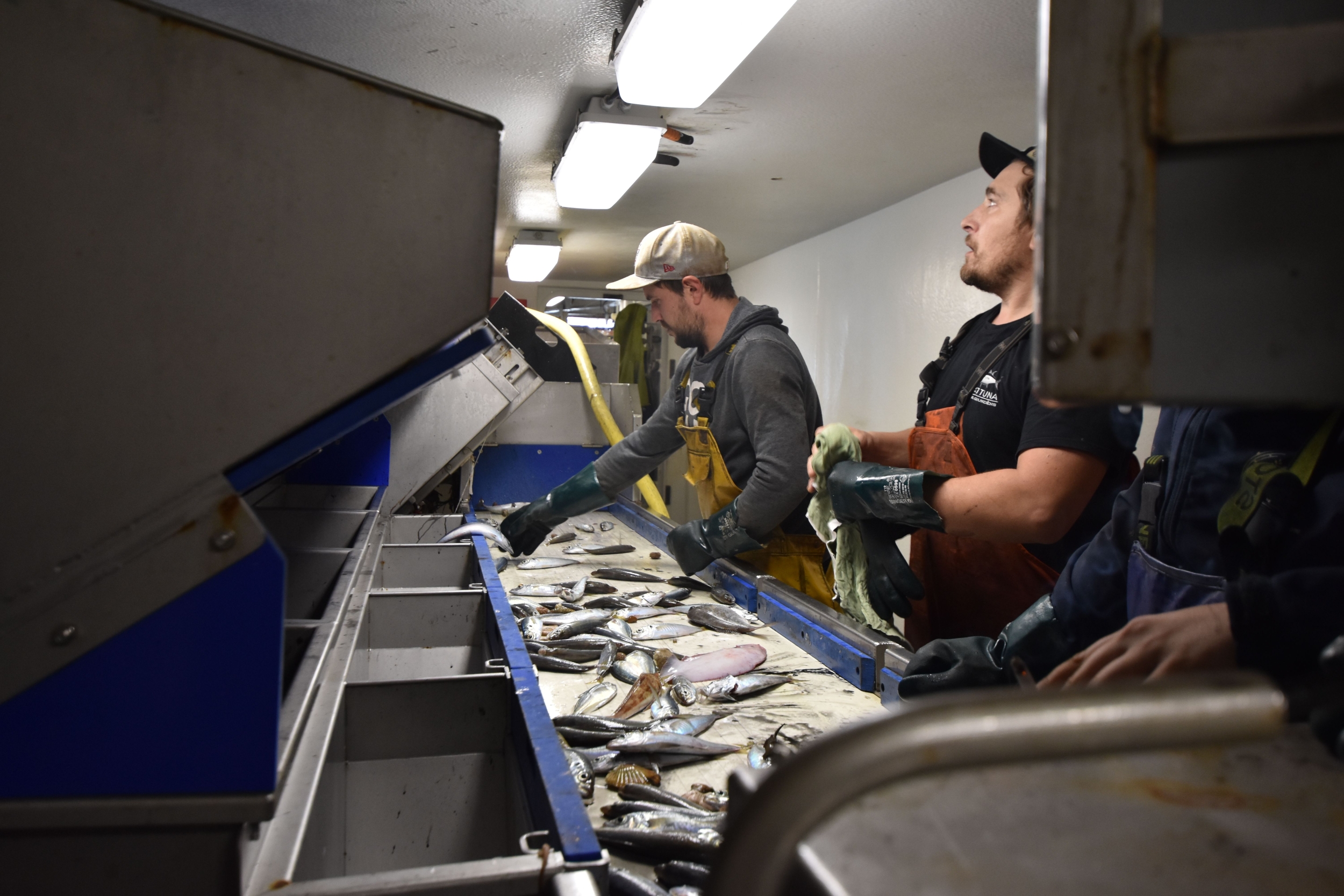
Orgo-Life the new way to the future Advertising by AdpathwayThe National Marine Fisheries Service will not raise the prices it charges seafood processors, importers and packers for federal inspection work in the coming fiscal year. In a notice published in the Federal Register on Friday, September 4, the agency told program participants that its fee schedule for fiscal year 2027 will remain as it was established on November 1, 2022.
The rates apply to services rendered as of October 1 and stay in place until the agency says otherwise.
That makes this a decision not to act rather than a rate increase, the opposite of how such filings are usually read. For seafood businesses budgeting for the coming year, the practical takeaway is straightforward: a cost line that many operators expected to climb is holding flat for another twelve months.
Inside the Rate Card Taking Effect in October
The structure separates customers who hold a service contract from those who do not, and the gap between the two is substantial.
Contract customers pay a base rate of $238 per hour for regular time, meaning services delivered during any eight-hour shift. Overtime runs $357 per hour. Sundays and holidays cost $476 per hour, exactly double the base rate.
Customers without a contract pay considerably more for the same work. Their regular-time rate is $357 per hour, which is what a contract holder pays for overtime, and it applies only within the inspector's normal Monday-to-Friday schedule. Non-contract overtime is $536 per hour, and Sundays and holidays reach $714 per hour, three times the contract base rate. Any work performed under a contract that exceeds the contracted hours is billed at the higher non-contract rate.
Several charges sit on top of the hourly figure. A night differential equal to 10 percent of the employee's hourly salary applies to each hour of service provided after 6 p.m. and before 6 a.m. Travel tied to a billable service is charged separately. Certificate requests carry a flat $97 fee each, and the notice is explicit that the charge applies whether or not a product inspection was actually conducted. Contract customers must also post a payment guarantee equal to three months of service or $10,000, whichever is larger.
A Voluntary Program That Functions as a Commercial Credential
The Seafood Inspection Program is not a food safety mandate, and that distinction is regularly misunderstood.
Participation is voluntary and paid for by the participant. Companies request the services and submit specific compliance information to take part. What the program offers in return is inspection, grading, and certification, including the use of official quality grade marks signaling that a specific product has been federally inspected. Since 1992 the agency has delivered those services using Hazard Analysis Critical Control Point methods, following guidelines recommended by the National Academy of Sciences.
The program draws its authority from the Agricultural Marketing Act of 1946, the Fish and Wildlife Act of 1956, and Reorganization Plan No. 4 of 1970, and its rules live at 50 CFR part 260. Because the service is elective, the hourly rate is not a tax or a penalty. It is a price, and processors weigh it against what the grade mark is worth to them in the marketplace.
Full Cost Recovery Meets a Long Rate Freeze
Here is where a fair question sits, and it is worth stating carefully, because the notice does not answer it.
The program is required to review fees at least annually to confirm that hourly charges are adequate to recover the cost of services rendered, with adjustments made under 50 CFR 260.30. The agency states plainly that fees must be set to promote "full cost recovery of the program absent other appropriations." Recoverable costs include inspector labor, facilities, information technology infrastructure, field operations, administrative overhead, and management.
The agency also describes forecasting demand using historical data on actual billed services, adjusted annually for inflation, for known events and for seasonality. Yet the rate itself has not moved since November 2022, a period during which federal salaries and operating costs generally rose.
The notice does not explain how a static rate continues to achieve full cost recovery against rising inputs. It may be that billable hours have grown, that overhead assumptions changed, or that the 2022 rate was set with headroom. None of that appears in the two-page filing, and nothing in the document suggests the program is failing to meet its obligation. It is simply a gap in the public record that the annual review is supposed to address, and it is the kind of detail a trade association or appropriations staffer would reasonably ask about.
Where Inspection Costs Reach the Seafood Counter
The pathway to household grocery bills is real but modest, and it should not be overstated.
Inspection is one input cost among many for a processor, sitting alongside fuel, labor, cold storage, freight and the price of the fish itself. A frozen hourly rate removes one source of upward pressure. It does not lower prices, and it will not be visible on a receipt.
The businesses most affected are those that use the service heavily or awkwardly. Small processors without a service contract pay half again as much per hour as contract holders for identical work, which is a meaningful disadvantage for an operation that cannot commit to the minimum guarantee. Facilities in remote fishing communities absorb travel charges that coastal plants near an inspector do not. Seasonal operations that need weekend or overnight coverage during a short run face the premium rates rather than the base.
For consumers, the more useful point is what the grade mark means. A federally inspected mark reflects a service the seller chose and paid for. Its absence does not indicate an unsafe product, since mandatory seafood safety oversight in the United States rests with the Food and Drug Administration under a separate seafood HACCP regulation.
Tracking the Next Review
The notice was signed by Alexa Cole, director of the Office of International Affairs, Trade, and Commerce at the National Marine Fisheries Service, and the agency lists Jenny Stephenson in that office as the contact for questions about services and applications.
No comment period applies, because this is a notification of an unchanged fee schedule rather than a proposed rule. The next opportunity for a change comes through the required annual review, which would produce a further Federal Register notice if the agency decides an adjustment is warranted.
Businesses that want the exact rate table can read the notice of fee schedule on the Federal Register site, the official printed version from the Government Publishing Office, or the public inspection copy posted the day before publication. Operators budgeting for the coming season should confirm which rate tier applies to them before October, since the contract and non-contract difference is the single largest variable in what they will pay.
What Readers Want to Know
Did NOAA raise seafood inspection fees? No. The agency notified participants that the fee schedule for fiscal year 2027 remains as established in November 2022. This is a notice of unchanged rates, not an increase.
When do the rates take effect? They apply to services rendered as of October 1 and remain in place until the agency issues further notice.
What are the main hourly rates? Contract customers pay $238 for regular time, $357 for overtime, and $476 on Sundays and holidays. Non-contract customers pay $357, $536, and $714 for the same categories.
Is seafood inspection required by law? No. This program is voluntary and paid for by the participant. Companies request the service and receive grading, certification, and the use of official federal quality grade marks.
Does an uninspected product mean unsafe seafood? No. Absence of the federal grade mark means the seller did not purchase this voluntary service. Mandatory seafood safety oversight is handled through separate authorities.
Will this change grocery prices? Not noticeably. Inspection is one input cost among many for processors, and holding the rate flat removes one source of upward pressure rather than reducing prices.
Is there a public comment period? No. The filing notifies participants of an unchanged schedule rather than proposing a rule, so no comment process applies.
© 2026 NatureWorldNews.com All rights reserved. Do not reproduce without permission.















 English (US) ·
  French (CA) ·