

PROTECT YOUR DNA WITH QUANTUM TECHNOLOGY
Orgo-Life the new way to the future Advertising by Adpathway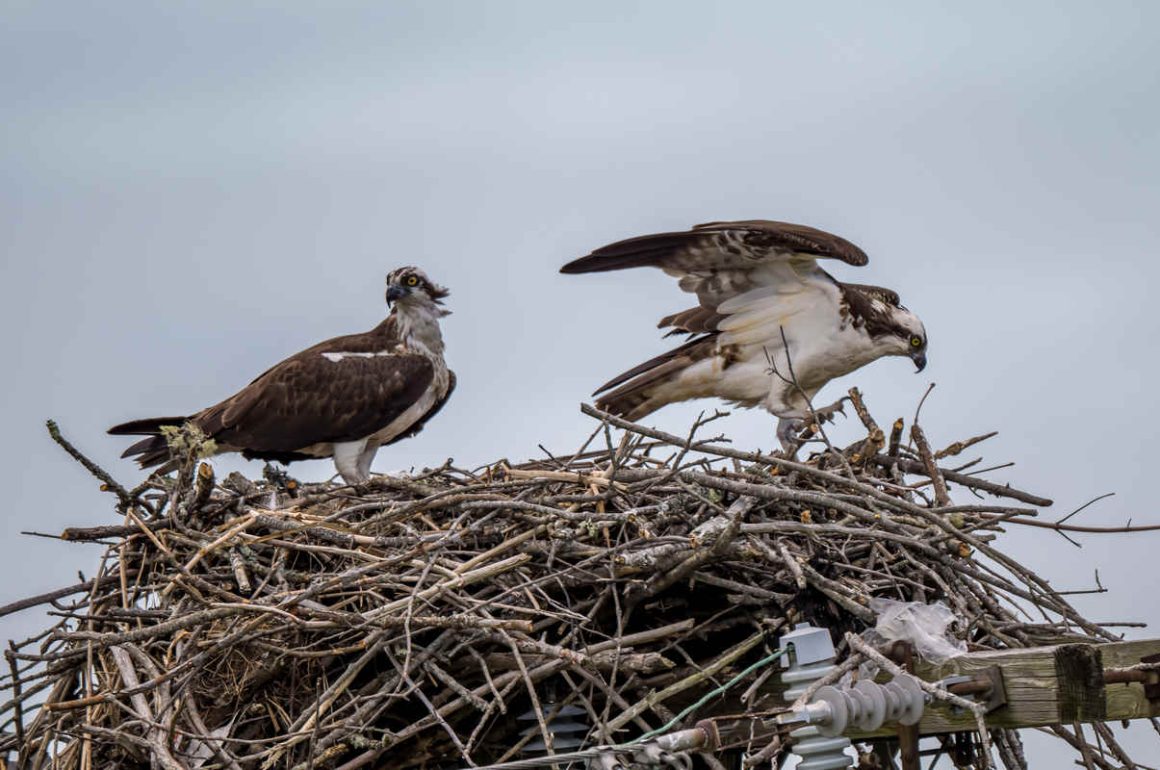
By Samantha Meheltz
Samantha is a young birder in Northeastern Pennsylvania. She took a huge interest in birds when she was 7 years old and stumbled into her neighbor’s yard, where they had many bird feeders! She loves and appreciates all birds, especially the Osprey and the Gray Catbird.
One of my favorite places to go see Ospreys (Pandion haliaetus) in Northeastern Pennsylvania is the Lackawanna State Park, especially during nesting season, when you can see the males flying over the lake for hours on end. Bullhead Bay Boat Launch, from what I’ve observed, is the most popular area on the lake to see and hear them. Standing right on the dock is where I saw my first Osprey. After that, I couldn’t stop seeing them and focusing on their high-pitched whistling calls. Lackawanna State Park is known mostly for camping, kayaking, and fishing, but I see it as the best place for Ospreys and other beautiful water birds.
I’ve spent many hours at Bullhead Bay Boat Launch, and my time has proven that seeing Ospreys across the park will most likely begin with your ears instead of your eyes. Ospreys are large apex predators with a 6-foot wingspan, and they have a very high-pitched, loud whistle call that is rhythmic and sharp. Hearing these calls and having a very visible area of the lake allows you to see these calls with their actual behaviors: either perched calling out to their mate at the nest, or soaring above the lake, about to do their iconic M-shaped dive for food.
Ospreys are different from your average birds of prey, which hunt small mammals, reptiles, and small birds. They have a diet that consists of 99% fish. When I saw them dive and grab a fish so accurately, I was confused about how they saw them through the murky water. I learned they have polarized vision that cuts down surface glare, the same concept as a fisherman’s glasses. Furthermore, their brains instantly calculate the way water bends, so they don’t dive where the fish looks like it is; they instinctively dive where the fish actually is, which makes their catch perfect almost every time. Though I have witnessed some of them come up soaking wet with no dinner!
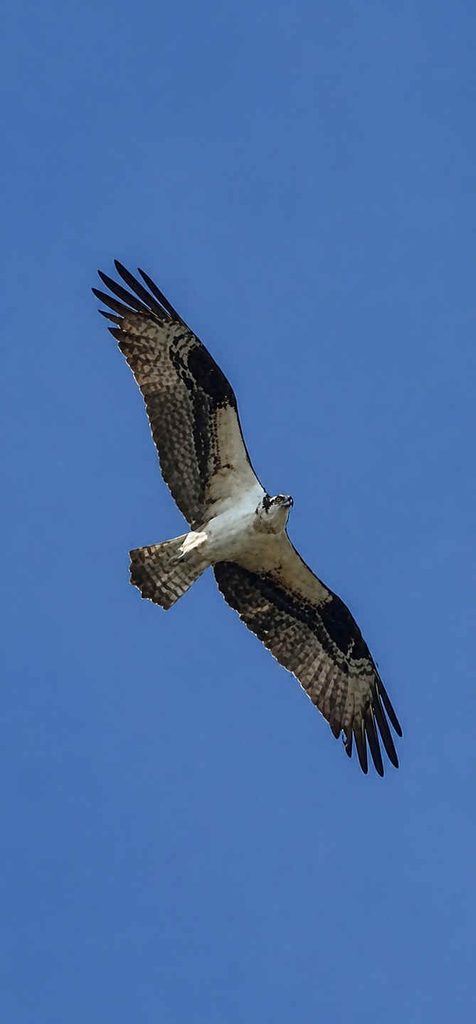
Something that first amazed me when I researched Ospreys was the photos I saw of their M-shaped dive. They can reach up to 40 miles per hour by folding their wings tightly along their sides and pinning them at the wrist joints to reduce wind resistance. At the absolute last second, before completely slamming themselves into the water, they swing their legs forward out past their heads. Their dive is much different than any other bird of prey; they completely submerge themselves into the water and have the strength to fly out even with a struggling, heavy fish in their hands.
Over the years of watching Ospreys, I’ve found that recently I’ve seen tons more than I used to! At the state park, I can usually see 2–4 over the water or perched up in just one single area! This is because Ospreys were officially declared extirpated (completely gone from the state) by 1979. The water in Pennsylvania was toxic because of a chemical called DDT, which was used in agriculture and built up inside fish. Because ospreys eat 99% fish, DDT disrupted their calcium production, weakening their eggs and causing them to break away as parents incubated them. Fortunately, the Game Commission introduced a huge effort to fix this. 265 baby Ospreys were transported from places like the Chesapeake Bay and New Jersey and placed into man-made towers. Lackawanna State Park has also played a huge role in keeping these birds safe and the population stable by using man-made nesting platforms, strict water and shoreline protections, and creating “no-wake” hunting zones, basically making an Osprey sanctuary. By 2017, the Osprey population in Pennsylvania was higher than it ever was! Learning this made me really appreciate Ospreys and the park more than I already did.
What makes this park a little more special to me is how these Ospreys coexist with the kayakers, fishers, and campers. I’ve noticed that the birds do not mind the company; it is not rare to see someone out on a boat fishing and an Osprey hovering a few hundred yards away. In my own experience, I have seen Ospreys flying right above me and looking directly at me when I make a little too much noise, move around, or am just watching them! Seeing how comfortable these Ospreys are has made me appreciate the work that goes into protecting them even more. The effort Lackawanna State Park has made and continues to make for these birds is remarkable, and thanks to them, I can happily watch my favorite bird!

Written by a Guest
We welcome guest writers with insights and excitement about conservation, wild birds and birding. Please contact us: [email protected]














 English (US) ·
 French (CA) ·