

 1 hour ago
10
PROTECT YOUR DNA WITH QUANTUM TECHNOLOGY
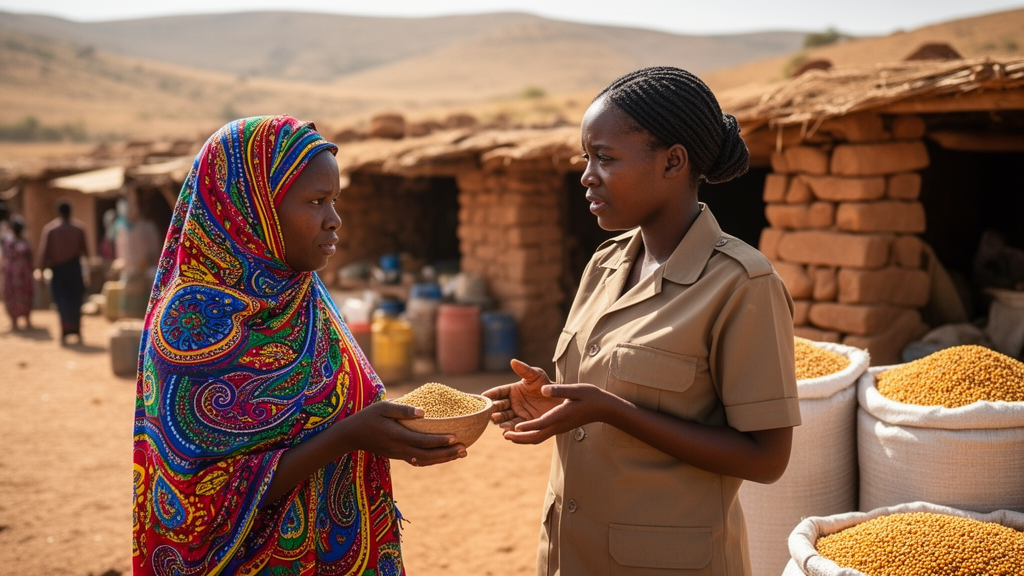
Orgo-Life the new way to the future Advertising by AdpathwayA survey of 366 randomly selected rural households in the Southwest Districts of South Wollo, Ethiopia, has found that just over half of them are severely food insecure. The study, published in BMC Nutrition, assessed food security using two internationally recognized indicators: the Household Food Insecurity Access Scale (HFIAS) and the Food Consumption Score (FCS).
According to the HFIAS measure, 51.09 percent of households were classified as severely food insecure, while only 14.48 percent were food secure. The FCS told a similar story: 57.11 percent of households fell within the poor or borderline food consumption categories, indicating that most families were not consuming an adequately diverse or sufficient diet.
The research was led by Tadsual Asfaw Dessie and Mulugeta Amsalu Mekonnen, who analyzed primary data collected from households across the district. Their assessment comes against a backdrop the authors describe as a severe national food crisis, in which conflict, drought, high living costs, and natural disasters have led to widespread acute food insecurity in Ethiopia.
The severity of food insecurity was not distributed evenly. Patterns varied across districts and household characteristics, particularly education level and the sex of the household head. Legambo district showed the highest vulnerability, as did households headed by people without education and households headed by women.
These differences matter for policy design. The authors argue that the findings demonstrate the need for geographically targeted and socially differentiated interventions, rather than uniform responses, to address chronic food insecurity and enhance rural household wellbeing in the region.
On the drivers of the crisis, the study concludes that food insecurity in the study area is driven largely by limited access to services, weak livelihood diversification, and structural socioeconomic constraints. In other words, the problem is not only a shortfall in food production but also a matter of whether households can obtain and use adequate food through their livelihoods and available services.
The authors note that the article is being shared early as a peer-reviewed, accepted version, subject to further edits before the final version of record.
Even so, the headline figures are stark: with roughly half of households severely food insecure and fewer than one in six food secure, the survey paints a picture of a rural population under sustained pressure, and it provides district-level evidence that could help direct assistance to the households and areas found to be most vulnerable.
Subject of Research: Household food insecurity measured by HFIAS and Food Consumption Scores in rural South Wollo, Ethiopia.
Article Title: Assessing the unfolding food crisis in rural South Wollo, Ethiopia: severity through HFIAS and food consumption scores
Article References: Dessie, T. A., & Mekonnen, M. A. (2026). Assessing the unfolding food crisis in rural South Wollo, Ethiopia: severity through HFIAS and food consumption scores. BMC Nutrition. https://doi.org/10.1186/s40795-026-01524-9
Image Credits: AI Generated
DOI: 10.1186/s40795-026-01524-9
Keywords: Ethiopia, food insecurity, South Wollo, HFIAS, Food Consumption Score, household survey, rural livelihoods, Amhara region, Legambo district, food access, nutrition security, BMC Nutrition

















 English (US) ·
 French (CA) ·