

 1 hour ago
10
1 hour ago
10
PROTECT YOUR DNA WITH QUANTUM TECHNOLOGY
Orgo-Life the new way to the future Advertising by AdpathwayThe platypus is one of evolution’s strangest experiments: a furry, duck-billed mammal that hunts underwater with its eyes, ears, and nostrils sealed shut. To find shrimp and insect larvae in murky Australian rivers, it relies on electroreception, detecting the faint electric fields generated by the muscle contractions of its prey through tens of thousands of sensory receptors embedded in its bill. That remarkable fusion of weak biological signals, combined with the animal’s spatial memory of productive foraging grounds, has now inspired a new computational tool. In a study published in Cluster Computing, Mohanad A. Deif of the University of Sharjah and Misr University for Science and Technology and Mohammad Khishe of the Applied Science Research Center in Amman introduce Platypus Electroreception Optimization, or PEO, a bio-inspired metaheuristic designed to tackle difficult mathematical optimization problems.
Metaheuristics are a family of search algorithms that explore vast solution spaces without requiring gradient information, making them invaluable when the underlying objective function is black-box, noisy, or computationally expensive to evaluate. The field traces its lineage to genetic algorithms, simulated annealing, particle swarm optimization, ant colony optimization, and differential evolution, and it has since proliferated into dozens of nature-inspired variants, from grey wolf optimizers to marine predators algorithms. Yet the field faces a persistent criticism: many new algorithms are little more than rebranded variations of older methods, with elaborate biological metaphors masking simple arithmetic. Deif and Khishe attempt to answer that criticism by grounding their algorithm in a specific, well-documented biological mechanism and by supplying a formal mathematical analysis of how the algorithm behaves.
The biological story begins with the platypus’s bill, which houses two distinct classes of electroreceptors arranged in stripes along its surface. When prey moves, the resulting electric field arrives at each receptor with a slightly different timing and strength, and the animal’s nervous system appears to integrate these signals into a directional estimate of where the prey lies. Because the signals are weak and noisy, the platypus does not commit to a single sensory channel; it fuses information across the array, and it also draws on memory of where successful catches occurred before. This combination of directional sensing, tolerance for noise, and memory-guided behavior forms the conceptual skeleton of the new algorithm.
PEO translates that story into three interacting search components. The first is directional sensing based on relative fitness differences: each candidate solution in the population evaluates its neighbors, and the relative quality of those neighbors produces a biased, directed step toward more promising regions of the search space, much as the platypus orients its bill toward the strongest prey signal. The second component is bounded stochastic perturbation, a controlled dose of randomness that keeps the population diverse and prevents the search from collapsing prematurely onto a single point. The third is memory-guided attraction toward the best solution found so far, mirroring the animal’s tendency to return to productive foraging locations. Together, these three forces pull, scatter, and anchor the population in a balance that the authors describe as sensor fusion in algorithmic form.
Crucially, the algorithm does not fix that balance in advance. A simple state-switching rule adaptively alternates between exploration and exploitation over the course of the run. Early in the search, when knowledge of the landscape is poor, the stochastic component dominates and candidates roam widely. As the best-so-far record improves and improvements become rarer, the rule shifts weight toward the directional and memory terms, concentrating effort around the most promising basin. This adaptive exploration-exploitation trade-off is the perennial holy grail of metaheuristic design, and PEO’s switching mechanism is deliberately kept simple so that its consequences can be analyzed rather than merely observed.
That analysis is one of the paper’s distinguishing contributions. The authors show mathematically that, under box constraints, the population dynamics form a bounded projected process, meaning candidate solutions remain within the feasible domain and cannot diverge to infinity. They also prove that the elitist best-so-far record is monotone nonincreasing for a minimization problem, so the algorithm’s reported best solution can never worsen from one iteration to the next. Beyond these guarantees, a smoothness-based expected-improvement bound clarifies the bias-variance trade-off induced by the search components: aggressive directional steps reduce variance but risk biasing the search toward local optima, while heavier perturbation increases variance at the cost of slower convergence. Formal results of this kind remain rare in the crowded metaheuristics literature, where most algorithms are validated purely empirically.
The experimental campaign was broad. The authors benchmarked PEO on unconstrained analytical test functions, on the CEC 2017 suite of constrained problems, which is a standard and demanding proving ground for numerical optimizers, and on classical engineering design tasks such as pressure vessel, welded beam, three-bar truss, speed reducer, and tension/compression spring design problems, each of which involves real physical constraints and has challenged optimizers for decades. Comparisons were made against representative metaheuristics spanning the field’s history, including particle swarm optimization, differential evolution, grey wolf optimizer, cuckoo search, salp swarm algorithm, equilibrium optimizer, and several newer entrants. Across these suites, PEO delivered competitive and often superior solution quality, convergence speed, and robustness across repeated independent runs.
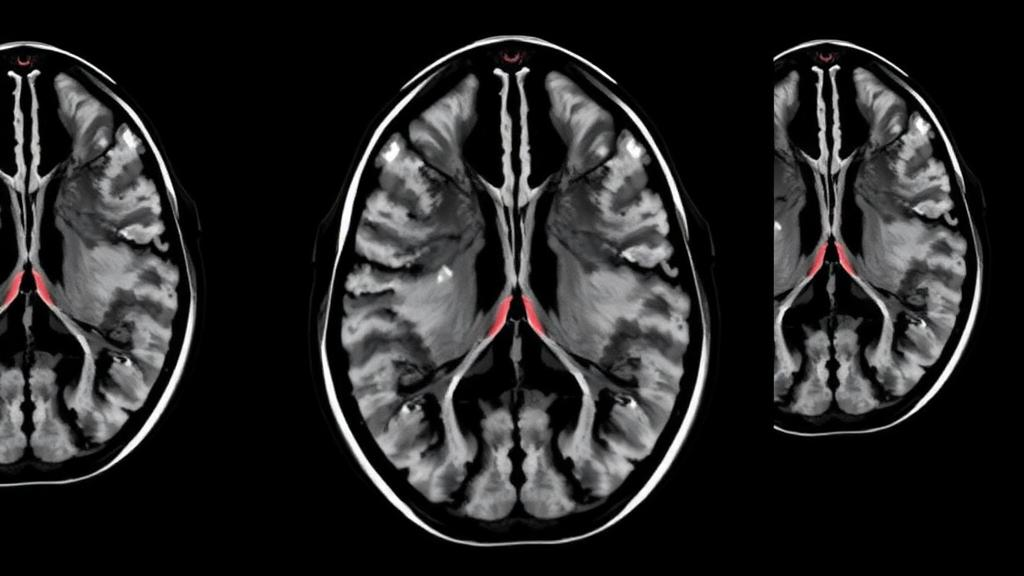
Perhaps the most striking application is a simplified radiation therapy case study. Treatment planning in radiotherapy requires optimizing beam configurations so that a tumor receives a lethal dose while surrounding healthy tissue is spared, a constrained optimization problem where even modest improvements in solution quality can translate into clinically meaningful differences. The authors cite the long-recognized importance of optimal treatment planning in radiation therapy and prior work on adaptive control of treatment planning as motivation. In the simplified setting studied, PEO’s ability to balance competing objectives and respect constraints made it a plausible candidate for such biomedical design problems, though the authors are careful to frame this as a case study rather than a validated clinical tool.
The paper’s provenance is also notable. Deif conceived the algorithmic framework, developed the PEO model, and conducted the experimental evaluations, while Khishe contributed to the mathematical formulation and statistical analysis. The work received no specific funding, the authors declare no competing interests, and the study used publicly available datasets and computational modeling frameworks, requiring no ethical approval. It appeared in Cluster Computing as volume 29, article 789, published on 24 September 2026, after being received in July 2025 and revised through March 2026.
Whether PEO will join the small canon of metaheuristics that endure, rather than the long tail of those that fade after their debut benchmarks, will depend on independent replication and adoption by practitioners. But the paper makes a case worth watching: it pairs an unusual and genuinely distinctive biological inspiration, the electroreceptive foraging of a monotreme that navigates a sensory world invisible to most mammals, with the kind of mathematical grounding and diverse empirical testing that the field’s critics have long demanded. If the platypus can teach engineers to fuse weak signals and balance curiosity against memory, the duck-billed mammal may have earned one more entry in its already improbable scientific rsum.
Subject of Research: A bio-inspired metaheuristic optimization algorithm based on platypus electroreception and memory-guided foraging behavior
Article Title: Platypus Electroreception Optimization (PEO): a bio-inspired metaheuristic based on sensor fusion and memory behavior
Article References: Deif, M. A., & Khishe, M. (2026). Platypus Electroreception Optimization (PEO): a bio-inspired metaheuristic based on sensor fusion and memory behavior. Cluster Computing, 29(14), Article 789. https://doi.org/10.1007/s10586-026-06396-z
Image Credits: AI Generated
DOI: 10.1007/s10586-026-06396-z
Keywords: platypus, electroreception, metaheuristic, bio-inspired optimization, sensor fusion, exploration-exploitation balance, constrained optimization, CEC 2017, engineering design, radiation therapy, Cluster Computing, swarm intelligence
















 English (US) ·
  French (CA) ·