

 2 months ago
81
2 months ago
81
PROTECT YOUR DNA WITH QUANTUM TECHNOLOGY
Orgo-Life the new way to the future Advertising by AdpathwayA new study published in Nature Communications reveals that Pseudomonas aeruginosa, a bacterium frequently associated with chronic and difficult-to-treat airway infections, may influence lung health through an unexpected route: the chemical vapors it releases. According to research by Kuo, Lew, Chong and colleagues, volatile organic compounds produced by the microbe can alter aryl hydrocarbon receptor signaling, a molecular pathway that helps regulate the airway’s mucus barrier. The findings suggest that bacterial gases may contribute to respiratory disease even when the microbes themselves are not directly invading every affected cell.
The discovery adds a new dimension to how scientists understand host–microbe interactions in the lungs. Much of the attention surrounding P. aeruginosa has focused on its toxins, surface structures, biofilms and resistance to antibiotics. The bacterium is especially important in people with cystic fibrosis, bronchiectasis, chronic obstructive pulmonary disease and weakened immune systems. In these conditions, persistent colonization can damage airway tissue and promote inflammation. The new work indicates that the chemical environment created by the bacterium may be just as important as physical contact between bacterial cells and airway surfaces.
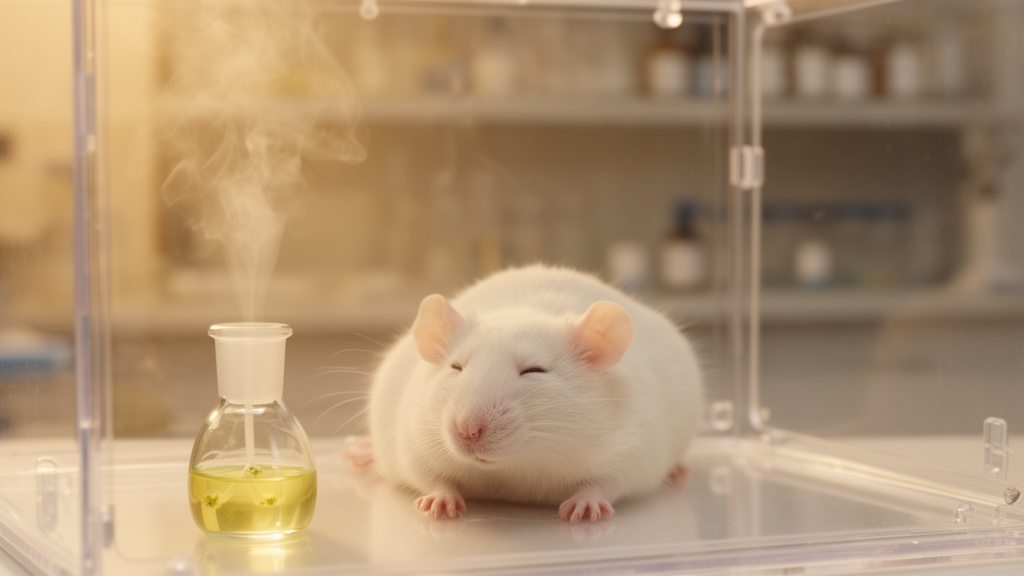
Volatile organic compounds are small, carbon-based molecules that readily evaporate and spread through air or the gas-filled spaces above biological fluids. Microorganisms generate these compounds as by-products of metabolism, signaling molecules or chemical responses to their surroundings. Because they can diffuse over distance, microbial volatiles may affect host cells that are not directly touched by bacteria. This property makes them potential long-range messengers within the airway, where mucus, oxygen gradients and microbial communities create a constantly changing biochemical landscape.
The study centers on the aryl hydrocarbon receptor, or AhR, a ligand-activated transcription factor found in many immune and epithelial cells. AhR responds to a broad range of environmental and microbial molecules. Once activated, it can move into the cell nucleus and interact with DNA-regulating proteins, changing the expression of genes involved in immunity, barrier maintenance, detoxification and tissue repair. AhR signaling is therefore highly context-dependent: the same pathway can support protective responses in one setting while contributing to dysfunction in another.
Airway mucus is a critical part of the respiratory defense system. A healthy mucus layer traps particles and microorganisms, while coordinated movement by ciliated epithelial cells transports this material toward the throat for removal. The mucus must be thick enough to capture threats but fluid enough to move. Specialized epithelial cells produce mucins, large glycoproteins that give mucus its gel-like structure. When mucin production or mucus hydration becomes unbalanced, secretions can become excessively dense, obstruct airways and create conditions that favor further bacterial growth.
Kuo and colleagues report that volatile compounds derived from P. aeruginosa interfere with this balance by modulating AhR activity in airway-related biological systems. The resulting changes affect the molecular programs that control mucus homeostasis. Rather than acting solely as conventional inflammatory toxins, the bacterial volatiles appear to reprogram how airway cells interpret their environment. This mechanism offers a possible explanation for why chronic infection can produce persistent mucus abnormalities even when inflammation and bacterial abundance fluctuate over time.
The findings are particularly significant because they point to a feedback loop between microbial metabolism and airway physiology. As mucus becomes less effectively regulated, bacteria may find additional nutrients and protected niches in which to survive. In turn, the altered microbial community could release a different mixture of volatile compounds, intensifying the disruption of epithelial signaling. Such a cycle could help explain why chronic respiratory infections are often difficult to break with antibiotics alone. Killing bacteria may remain essential, but controlling the chemical signals that sustain airway dysfunction could become another therapeutic goal.
The research also raises the possibility that volatile compounds could serve as biomarkers of respiratory disease. Because these molecules can be detected in exhaled breath, future studies may investigate whether specific chemical signatures correlate with P. aeruginosa colonization, mucus obstruction or the severity of lung damage. Breath-based analysis is attractive because it is noninvasive and could potentially provide rapid information about microbial activity without requiring repeated sputum cultures. However, researchers will need to determine which compounds are biologically active, how stable they are in patients and whether other microbes produce similar chemicals.
The study does not mean that every odor associated with bacterial growth directly causes disease, nor does it establish that volatile compounds alone account for the complex pathology of chronic lung conditions. Airway health is shaped by immune responses, genetics, oxygen availability, medication, microbial competition and the physical properties of mucus. The significance of the work is that it identifies an underappreciated communication channel linking bacterial metabolism to human gene regulation. Further research in animal models and clinical samples will be needed to confirm how strongly this pathway operates in patients.
By showing that P. aeruginosa-derived volatile organic compounds can influence AhR signaling and disrupt mucus homeostasis, the researchers broaden the definition of a respiratory pathogen’s impact. A bacterium may affect the lung not only through infection, inflammation or antibiotic resistance, but also through airborne chemistry occurring at microscopic scale. The discovery could inspire new approaches that combine antimicrobial treatment with therapies designed to restore AhR balance, normalize mucus production and protect the airway barrier. In the long-term, the chemistry of microbial breath may become an important frontier in understanding—and treating—chronic lung disease.
Subject of Research: The effects of Pseudomonas aeruginosa-derived volatile organic compounds on AhR signaling and airway mucus homeostasis.
Article Title: Pseudomonas aeruginosa-derived volatile organic compounds modulate AhR signaling to dysregulate airway mucus homeostasis.
Article References: Kuo, S.H., Lew, S.Q., Chong, S.Y. et al. Pseudomonas aeruginosa-derived volatile organic compounds modulate AhR signaling to dysregulate airway mucus homeostasis. Nature Communications (2026). https://doi.org/10.1038/s41467-026-76190-3
Image Credits: AI Generated
DOI: 10.1038/s41467-026-76190-3
Keywords: Pseudomonas aeruginosa, volatile organic compounds, AhR signaling, airway mucus, respiratory disease, microbial metabolites, lung infection, airway homeostasis
Tags: aryl hydrocarbon receptor signaling in respiratory healthbacterial gas influence on mucus barrier regulationchemical communication between bacteria and lung tissuehost-microbe interactions in lung immunityimpact of P. aeruginosa on airway mucus balanceinfluence of bacterial gases on cystic fibrosis lung pathologymicrobial volatile compounds in lung infectionsmicrobial volatile organicnovel mechanisms of P. aeruginosa pathogenicityPseudomonas aeruginosa airborne volatile organic compoundsrole of bacterial vapors in respiratory disease

















 English (US) ·
  French (CA) ·