

 1 day ago
10
PROTECT YOUR DNA WITH QUANTUM TECHNOLOGY
Orgo-Life the new way to the future Advertising by AdpathwayResearchers aboard RV SONNE are spending 54 days checking a Pacific seafloor scraped by a nodule collector in 2021. The expedition's chief scientist expects little recovery.
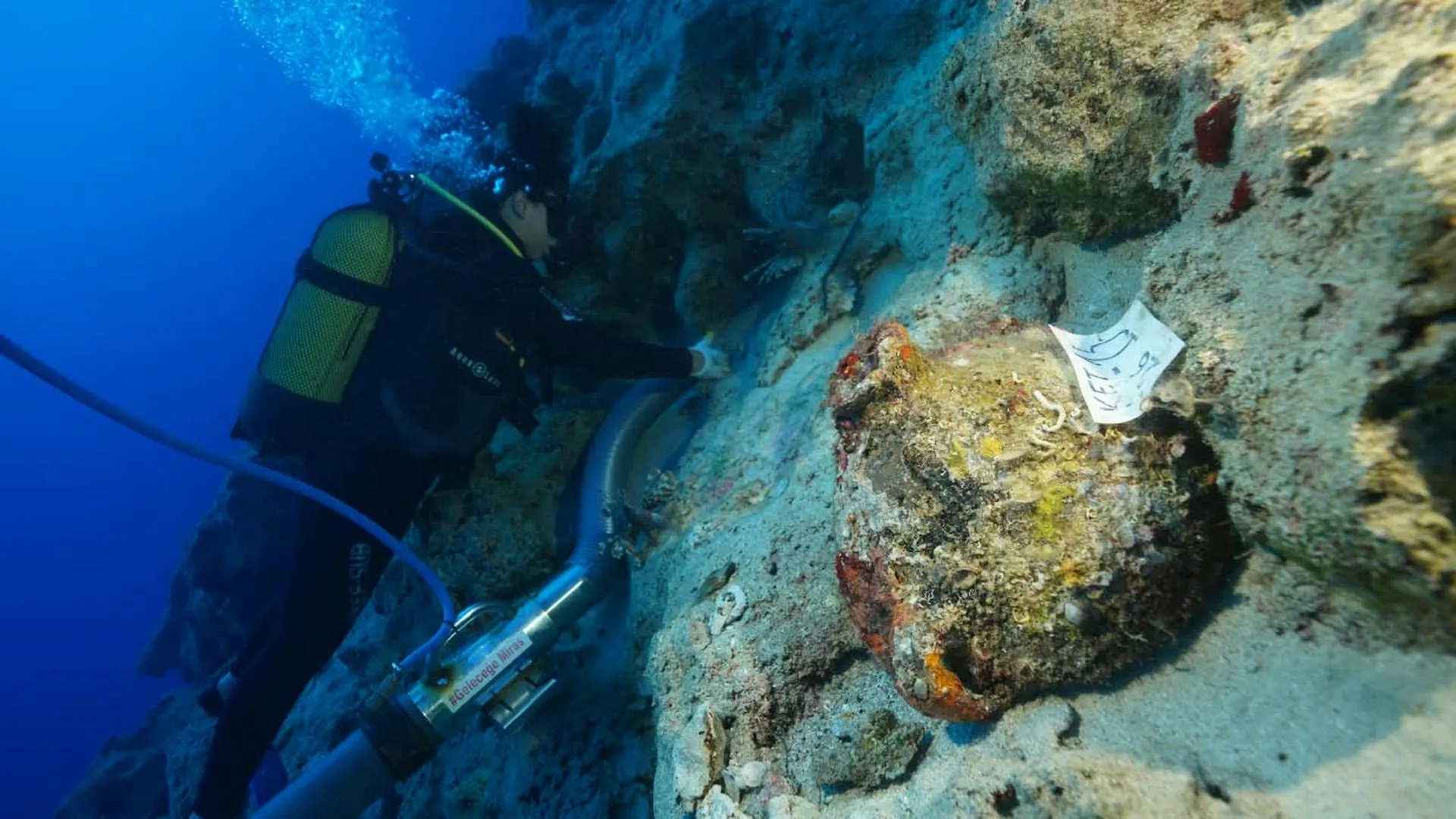
A team of 39 scientists from 17 European institutions has set out from San Diego to answer one of the most practical questions in ocean policy: does the deep seafloor heal after it is mined? The research vessel SONNE is scheduled to spend Oct. 17 through Dec. 9 in the Pacific's Clarion-Clipperton Zone, revisiting tracks left by a mining machine test five and a half years ago, according to GEOMAR Helmholtz Centre for Ocean Research Kiel, which leads the expedition.
The timing matters for U.S. readers — and for anyone following the global debate over seabed metals. The National Oceanic and Atmospheric Administration is reviewing several company applications to explore or mine the same region under U.S. law, and a public comment period on The Metals Company's consolidated application closed Oct. 19.
That means evidence gathered on this voyage could arrive as regulators decide whether, and how, commercial mining begins on a seafloor that most Americans will never see but whose metals could end up in batteries and electronics.
A Return Trip to a 2021 Collector Test
In spring 2021, Belgian company Global Sea Mineral Resources (GSR) tested a remotely controlled pre-prototype nodule collector at depths of more than 4,000 meters (about 13,100 feet). Over 74 hours, the vehicle drove about 32 kilometers (20 miles) and harvested nodules from roughly 54,000 square meters (about 13 acres), an area GEOMAR compares to seven soccer fields — small by commercial standards.
The expedition, called SO322, is part of the MiningImpact project, which has studied deep-sea mining effects since 2015. Researchers will measure how seafloor communities have changed, how long sediment plumes stirred up by the collector affected nearby areas, and whether artificial hard surfaces could help animals recolonize where nodules were removed.
The voyage is a long one. The ship will not enter port for 54 days, the maximum time at sea it was built for, GEOMAR said.
Life on Nodules That Grow a Millimeter Per Million Years
The Clarion-Clipperton Zone stretches across the Pacific between Mexico and Hawaii and holds the largest known deposits of polymetallic nodules, potato-sized lumps rich in metals. Those nodules are also habitat, the only hard surfaces on an otherwise muddy abyssal plain.
"Typically, we find two to three small organisms on each nodule," said Matthias Haeckel, the GEOMAR biogeochemist serving as chief scientist. Where nodules are removed, he said, animals such as sea anemones, soft corals and giant stalked sponges are absent.
Much of that life is still unknown to science. "About ninety percent of the species that we have sampled so far are still unidentified and have no name," Haeckel said. A 2023 analysis counted more than 5,000 species in the region that had never been named, Scientific American reported.
Recovery is the central issue, and the expedition's leader is blunt about it. Nodules grow only about 1 to 2 millimeters per million years, so a harvested area cannot simply regrow its habitat. "Likely, we will not see any recovery," Haeckel said. "The benthic ecosystem will not recover on human time scales."
Washington and Kingston Weigh Mining Rules
Two rulebooks are now in play. The International Seabed Authority, based in Kingston, Jamaica, governs mining in international waters for its member countries, but its session ended March 19 without agreement on a mining code, and more than 30 countries have called for a moratorium or pause, Global Mining Review reported. Its autumn meeting is provisionally set for Oct. 28 through Nov. 6.
The United States, which is not a party to the Law of the Sea Convention, issues licenses under its own Deep Seabed Hard Mineral Resources Act. NOAA's tracker, last updated Oct. 16, shows The Metals Company USA's consolidated exploration and commercial recovery application held a virtual hearing Oct. 13. A separate exploration license request from Eco Minerals is open for comment from Oct. 13 through Dec. 14, with a virtual hearing Nov. 16.
Industry argues the metals are needed. "Today's certification of our USA B exploration license application marks another important milestone," The Metals Company CEO Gerard Barron said after NOAA certified one of its applications in May, according to Oceanographic Magazine. Certification accepts an application for review and does not grant a license.
The Evidence So Far, and Its Limits
The new expedition is not the first look at mining effects. A study in Nature Ecology & Evolution, led by Eva Stewart of London's Natural History Museum and the University of Southampton, found that macrofaunal density in a separate test collector's tracks fell 37% and species richness fell 32% over a two-year sampling period, MINING.COM reported. That study was requested by Nauru Ocean Resources, a subsidiary of The Metals Company, a funding tie readers should weigh.
"Finally, we have good data on what the impacts of a modern commercial deep-sea mining machine might be," Stewart said.
The SO322 results will add a longer time window, but limits remain. The 2021 test covered a small area compared with commercial operations, which would run for years over thousands of square kilometers. Findings from one site may not apply across the whole zone, and results will take months to analyze and publish after the ship returns Dec. 9.
Comment Windows and Next Steps
Most readers will never visit the abyss, but they can still take part. NOAA's deep seabed mining page lists each application, its comment deadline and hearing dates, and the Eco Minerals comment period runs through Dec. 14. Comments that address specific environmental review questions are generally the most useful to reviewers.
The groups with the most at stake include scientists and conservation groups concerned about lasting damage, researchers racing to describe unnamed species, and companies and investors betting on new metal supplies. Consumers have an indirect stake through the battery and electronics supply chains these metals could feed.
What happens next: SONNE returns to San Diego Dec. 9, the ISA meets in late October, and NOAA continues reviewing U.S. applications. The bottom line is that this voyage is a real-world test of recovery, and its own chief scientist expects the answer to be measured in thousands of years, not decades.
What Readers Want to Know
What is the SO322 expedition?
A GEOMAR-led voyage aboard RV SONNE, scheduled Oct. 17 to Dec. 9, to study a Pacific seafloor area where a nodule collector was tested in 2021.
Where is the Clarion-Clipperton Zone?
It is a vast area of the Pacific seafloor between Mexico and Hawaii with the largest known deposits of polymetallic nodules.
Does the deep seafloor recover after mining?
The expedition's chief scientist, Matthias Haeckel, expects little or no recovery on human time scales because nodules grow only 1 to 2 millimeters per million years.
Is deep-sea mining allowed now?
No commercial mining is underway in the zone. The ISA has not finished its mining code, and NOAA is still reviewing U.S. applications.
Can the public comment on U.S. applications?
Yes. NOAA lists open comment periods, including one for Eco Minerals' exploration license running through Dec. 14.
When will results be available?
Analysis begins after the ship returns on Dec. 9, and peer-reviewed results typically take months or longer.
© 2026 NatureWorldNews.com All rights reserved. Do not reproduce without permission.














 English (US) ·
 French (CA) ·