

 1 hour ago
8
PROTECT YOUR DNA WITH QUANTUM TECHNOLOGY
Orgo-Life the new way to the future Advertising by AdpathwayA comprehensive narrative review published in the Journal of Agriculture and Food Research synthesizes current evidence on the agricultural applications of seaweed-derived products across plant, livestock, and aquaculture systems. Authored by Kavya Bhaskar and Jagan M. Obbineni, the study examines how macroalgae-based biostimulants and feed additives influence soil properties, plant physiology, and animal performance. The review draws on 171 sources published between 1982 and 2026, with a priority given to primary studies that reported quantitative outcomes against untreated controls. By integrating data from diverse cropping and animal production systems, the authors provide a detailed overview of the bioactive compounds in seaweeds and their proposed mechanisms of action in sustainable agriculture.
Seaweeds, also known as macroalgae, are large, multicellular, photosynthetic organisms found in coastal marine areas worldwide. Scientists have identified approximately 11,500 species, which are commonly grouped into brown, red, and green lineages based on their evolutionary history and characteristic pigments. Brown seaweeds, such as Ascophyllum nodosum and Ecklonia maxima, contain fucoxanthin and are prominent raw materials for agricultural biostimulant extracts. Red seaweeds, including Kappaphycus and Eucheuma, supply hydrocolloids like carrageenan and agar, while green seaweeds like Ulva lactuca are being explored for their protein content and elicitor properties. The composition of these organisms varies significantly with species, harvest conditions, and extraction methods, leading to diverse bioactive profiles.
The bioactive components of seaweeds fall into four main groups: polysaccharides, phytohormones, phenolic compounds, and mineral elements. Polysaccharides such as alginates, fucoidans, and laminarin play key roles in soil conditioning and plant defense. For instance, alginate hydrogels improve soil aggregate stability and water retention, while laminarin triggers oxidative bursts and defense-gene expression in plants. Phytohormones, including cytokinins, auxins, and abscisic acid, have been identified in commercial extracts and are proposed to mediate growth and stress responses. Phenolic compounds like phlorotannins, unique to brown seaweeds, exhibit antifungal and antibacterial properties, contributing to the elicitation of plant defense mechanisms.
In plant agriculture, seaweed extracts have been shown to mitigate various abiotic stresses, including drought, salinity, and heavy metal contamination. In a drought-stress field trial, foliar application of Ascophyllum nodosum extract increased sugarcane stalk yield by up to 3.08 Mg ha⁻¹ and improved sugar quality. Under salinity stress, Ecklonia maxima extract applied to zucchini squash increased shoot growth by 17% and fruit yield by 12%. A meta-analysis of 73 field studies in China found that seaweed fertilizer raised crop yield by an average of 15.17%, with the largest gains observed in root and tuber crops. These effects are attributed to enhanced antioxidant enzyme activity, improved water relations, and modulation of the rhizosphere microbiome.
The review also highlights the role of seaweed in modulating soil microbial communities. Foliar application of Kappaphycus alvarezii biostimulant to maize increased urease activity and shifted the relative abundance of specific bacterial taxa, such as Cyanobacteria and Actinobacteriota. In lettuce, co-application of Ascophyllum nodosum extract with arbuscular mycorrhizal fungi resulted in the highest growth and quality values, with leaf number rising by approximately 44%. These findings suggest that seaweed inputs can reshape the root zone environment, potentially enhancing nutrient availability and pathogen suppression, although the specific mechanisms remain to be fully established.
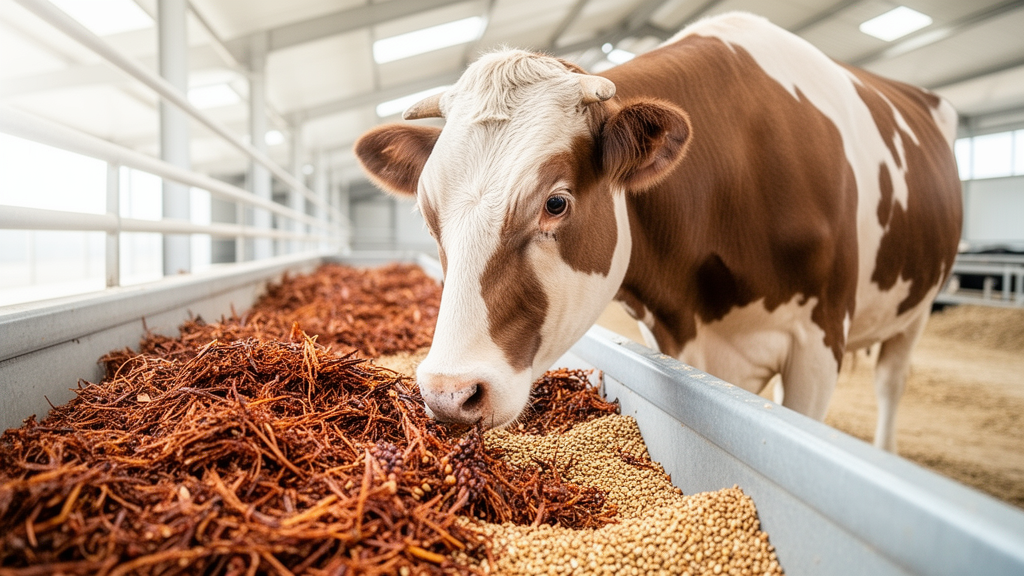
In livestock production, seaweed supplementation has demonstrated immunomodulatory and metabolic benefits across poultry, swine, and ruminant species. In dairy cows, dietary inclusion of Asparagopsis taxiformis reduced enteric methane production by 60% while altering the rumen microbiome. This methane-mitigating effect is largely attributed to bromoform, a naturally occurring constituent in Asparagopsis. In broiler chickens, substitution of corn with Ulva lactuca improved dressing percentage and breast muscle yield while reducing serum lipid and cholesterol levels. In swine, dietary supplementation with Laminaria digitata enriched beneficial gut bacteria and elevated colonic butyric acid levels, supporting intestinal epithelial integrity.
Aquaculture systems have also benefited from seaweed-derived feed supplements. Atlantic salmon smolts fed with Laminaria sp. meal exhibited increased final weight, sustained growth rate, and improved hepatic antioxidant status. In juvenile grouper, polysaccharide-rich extracts of Ulva prolifera increased feed efficiency and elevated serum immunoglobulin M levels. The synbiotic approach, which combines seaweed-derived prebiotics with probiotic organisms, has shown promise in improving weight gain and immune indices in Asian seabass while reducing pathogenic Vibrio counts. These applications highlight the potential of seaweeds to enhance growth performance and disease resistance in farmed fish species.
Despite these promising findings, the widespread adoption of seaweed-based products faces several challenges. A fundamental issue is the inherent variability in extract composition, which depends on factors such as geographic origin, season of harvest, and extraction method. This variability complicates the formulation of reliable application recommendations and requires the development of standardized quality control metrics. Additionally, the absence of internationally recognized standards for seaweed-based biostimulants limits grower confidence. Regulatory frameworks vary significantly across jurisdictions, with different classification and registration requirements for these products.
The efficacy of seaweed biostimulants is also highly dose-dependent, with optimal concentrations varying by crop species, growth stage, and application method. At excessively high concentrations, extracts can become phytotoxic or produce neutral-to-negative effects. A persistent concern is the discrepancy between controlled-environment results and field-level performance, as many studies are conducted under tightly controlled conditions that may not reflect real-world agricultural variability. Long-term field trials are needed to understand the cumulative effects of repeated seaweed application on soil health and crop productivity.
Economic and ecological considerations also play a crucial role in the scalability of seaweed-based agriculture. The costs associated with harvesting, transportation, and processing can be substantial, potentially limiting adoption among smallholder farmers. Furthermore, the environmental sustainability of seaweed sourcing is a critical concern. Unsustainable wild harvesting can damage coastal ecosystems, while large-scale aquaculture carries risks of genetic contamination and competition for coastal space. Ensuring ecologically responsible supply chains is essential for the long-term viability of this approach.
Future research should focus on chemically characterizing seaweed biomass and formulated products to improve study-to-study comparability. Mechanistic elucidation of bioactive compound–plant interactions remains a fundamental gap, requiring transcriptomic and metabolomic approaches to map signaling cascades. Systematic dose-response studies across major crops and agroecological zones are urgently needed to establish robust agronomic recommendations. Additionally, the synergistic potential of seaweed extracts with other biological inputs, such as plant growth-promoting rhizobacteria and mycorrhizal fungi, represents a high-potential research frontier.
Advances in processing and delivery technologies, including fermentation and nano-formulation, could improve the consistency and efficacy of seaweed-based products. The integration of these inputs into digital and precision agriculture frameworks offers opportunities to optimize application timing and dosage. In the livestock and aquaculture domain, further evaluation of long-term effects on animal health and consumer safety is required. Life cycle assessments and techno-economic analyses are needed to quantify the true environmental and economic value proposition of seaweed-based agricultural systems relative to conventional inputs.
Laboratory evaluations detailed in the review highlight experimental applications of seaweed extracts as insecticidal and repellent agents against agricultural pests. For example, ethanolic preparations from the green alga Caulerpa sertularioides, the red alga Laurencia johnstonii, and the brown alga Sargassum horridum exhibited dose-dependent insecticidal activity against the Asian citrus psyllid, Diaphorina citri. In cotton pest models, extracts from brown macroalgae, including Sargassum wightii and Sargassum tenerrimum, caused nymphal mortality and altered development in the cotton stainer, Dysdercus cingulatus. Similarly, solvent extracts derived from the green seaweeds Ulva fasciata and Ulva lactuca exerted nymphicidal and reproductive effects on the same insect, while Ulva lactuca extracts demonstrated insecticidal activity against the cotton leafworm, Spodoptera littoralis, illustrating candidate bio-insecticides across macroalgal phyla.
Direct application of raw and processed seaweed biomass also provides distinct physicochemical modifications to agricultural soils. In acidic paddy soils, an organic amendment of Sargassum wightii raised soil pH, improved physical structure, and enhanced nitrogen phytoavailability while alleviating hydrogen-ion toxicity in rice. In sandy soils, incorporating chopped Laminaria digitata biomass increased pore volume and aggregate stability after 90 days. For soils contaminated with heavy metals, pot trials testing dried Sargassum lacerifolium and Ulva fasciata demonstrated measurable reductions in extractable soil concentrations of copper, lead, zinc, nickel, chromium, cadmium, manganese, and iron, accompanied by increases in organic matter. Additionally, vermicomposting drift seaweeds increased bacterial taxonomic diversity by approximately 32 percent relative to raw biomass, enriching metabolic pathways involved in amino-acid, antibiotic, and phytohormone synthesis.
The nutritional value of macroalgae in animal feeding exhibits notable elemental trade-offs and species-specific responses. Mineral profiling across fifteen Portuguese seaweed species showed that while macroalgae serve as rich sources of magnesium, iron, copper, selenium, and manganese, they remain generally deficient in zinc and phosphorus compared to conventional feedstuffs. High iodine accumulation, particularly in brown seaweeds like Ascophyllum nodosum, transfers directly into milk in dairy systems, creating a requirement for consumer-exposure monitoring. Furthermore, methane-mitigating interventions present physiological complexities: while bromoform from Asparagopsis taxiformis fed to young bulls effectively decreased enteric emissions without leaving detectable meat residues, all treated animals developed rumen lesions. Feeding trials with the red alga Laurencia snackeyi in lactating cows reduced enteric methane emissions by 37 percent, but this was accompanied by a 12 percent decline in dry matter intake and a 7 percent decrease in milk protein, underscoring that anti-methanogenic efficacy can coincide with dietary trade-offs.
Subject of Research: Seaweed-based biostimulants in sustainable agriculture: Bioactive compounds, mechanisms, and applications across plant, livestock, and aquaculture systems
Article Title: Seaweed-based biostimulants in sustainable agriculture: Bioactive compounds, mechanisms, and applications across plant, livestock, and aquaculture systems
Article References: Bhaskar, K., & Obbineni, J. M. (2026). Seaweed-based biostimulants in sustainable agriculture: Bioactive compounds, mechanisms, and applications across plant, livestock, and aquaculture systems. Journal of Agriculture and Food Research, 32, Article 103436. https://doi.org/10.1016/j.jafr.2026.103436
Image Credits: AI Generated
DOI: 10.1016/j.jafr.2026.103436
Keywords: Seaweed-based, biostimulants, sustainable, agriculture, Bioactive, compounds, mechanisms, applications, across, plant, livestock, aquaculture, systems
















 English (US) ·
 French (CA) ·