

PROTECT YOUR DNA WITH QUANTUM TECHNOLOGY
Orgo-Life the new way to the future Advertising by Adpathway






Latest Posts
- Skeptical Science New Research for Week #45 2026
- Mitch McConnell’s climate legacy
- Climate change helps insects devour more crops even as farmers spray more pesticides
- Off-grid data centers have 60-80% higher emissions
- 2026 SkS Weekly Climate Change & Global Warming News Roundup #44
- Skeptical Science New Research for Week #44 2026
- Climate change plus a super El Niño could add up to a record-wet winter for California
- Fact brief - Do nearby wind turbines decrease home values by an average of 75%?
- How not to detect warming acceleration
- 2026 SkS Weekly Climate Change & Global Warming News Roundup #43
- Skeptical Science New Research for Week #43 2026
- As El Niño fuels drought in Panama, trees help ranchers maintain their water supply
- Climate Trunk - Daily Life
- The strongest El Niño in a thousand years?
- 2026 SkS Weekly Climate Change & Global Warming News Roundup #42
- Skeptical Science New Research for Week #42 2026
- Climate Trunk - Governance
- Fact brief - Does onshore wind power need subsidies to compete with fossil fuels?
- How Hurricane Isaias broke through to become the first Atlantic hurricane in an extremely quiet 2026 season
- 2026 SkS Weekly Climate Change & Global Warming News Roundup #41
- Skeptical Science New Research for Week #41 2026
- Scientists link fossil fuel producers to the West’s worsening water shortages
- The world without solar and wind?
- America is hurtling toward a power grid crisis
- 2026 SkS Weekly Climate Change & Global Warming News Roundup #40
- Skeptical Science New Research for Week #40 2026
- The impacts of this year’s record-shattering El Niño
- The Worst Case Is Still on the Table
- Scientists link fossil fuel producers to the West’s worsening water shortages
- 2026 SkS Weekly Climate Change & Global Warming News Roundup #39

Skeptical Science New Research for Week #45 2026
Posted on 5 November 2026 by Doug Bostrom, Marc Kodack
Open access notables

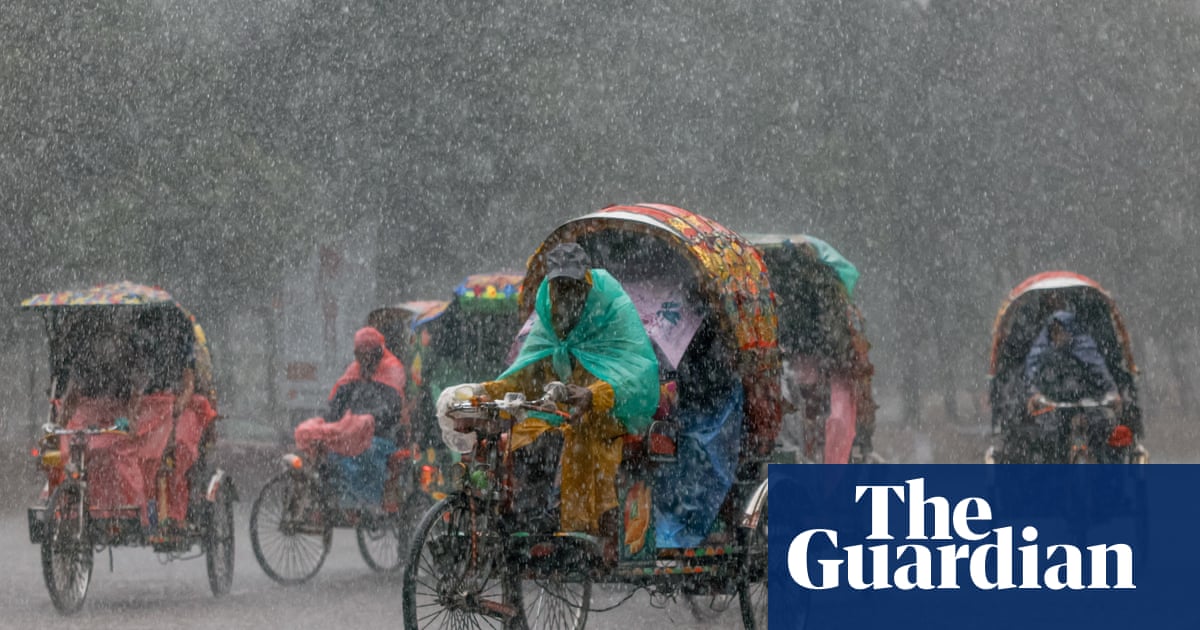
Evidence from 2024 Storm Boris indicates anthropogenic climate change amplifies floods more than extreme precipitation, Miersch et al., Science Advances
Anthropogenic climate change intensifies extreme precipitation, but how it affects flood hazards remains uncertain. In September 2024, Storm Boris triggered catastrophic flooding across central Europe, underscoring the need to quantify the contribution of human-caused climate change to flood intensity for effective risk management. Using a storyline approach, we show that precipitation associated with Storm Boris would have been 6 to 9% lower in the absence of anthropogenic climate change, whereas flood peaks would, on average, have been reduced by 14 to 22%. Our estimates are based on nudged simulations from two climate models coupled with two hydrological models across hundreds of affected catchments. The results imply that anthropogenic forcing amplified flood peaks by a factor of 2.1 to 2.9 relative to the increase in event precipitation. Overall, we demonstrate that attributing precipitation alone would substantially underestimate flood hazard amplification from climate change—an effect that should inform future risk assessments and loss estimates.
Increase of tropical cyclone-induced coastal flooding due to historical sea level rise, Mengel et al., Environmental Research Letters
Surges from tropical cyclones (TCs) cause significant damage in coastal areas. However, the contribution of historical sea level rise (SLR) to surge heights and thus the flooded areas has not been quantified on a global scale. Here, we use an open-source shallow water equation solver to estimate the impact of historical SLR on coastal flooding induced by all historical TCs with landfall from 1950 to 2025, according to the International Best Tracks Archive. We isolate the SLR effect through the comparison of factual simulations accounting for observed changes in sea level to counterfactual simulations without long term trends in sea levels. Results show that SLR has steadily increased the coastal area affected by TC-induced surges, from about 5% in 1950–1954 assuming mean tide levels (7% and 5% for minimum and maximum tide levels, respectively) to about 18% in 2021–2025 (22% and 13% for minimum and maximum tide levels, respectively) in comparison to the areas affected without SLR. The increase differs along coastlines, with maxima in relative increases of surge flooding along the North American Atlantic coastline and the Southeast Asian coastline. To put the numbers into perspective, we also estimate the associated increases assuming 1 m of local SLR and no changes in TC tracks and wind fields, reaching 146% under mean tide assumptions (192% for minimum tide levels and 92% for maximum tide levels). Results show that this is higher than expected assuming a linear relationship between SLR and relative increases in flood extents. Our analysis demonstrates the significant increase in flood extent induced by SLR already today. The generated data sets of factual and counterfactual coastal flooding extend ISIMIP3a climate-related forcing data, allowing for the evaluation and attribution of additional coastal impacts.
Incivility in public health policy discussions spills over to public engagement with climate issues: evidence from English-language social media, Narimanzadeh et al., Environmental Research Letters
Affective polarization and political sorting drive public antagonism around climate change and other issues at the science-policy nexus. We study cross-domain spillover of incivility in public engagements with climate change and public health on English-language Twitter and Reddit using the COVID-19 period as a case study. To assess whether spillover exists between these two policy domains, we examined how the incivility of climate discussions on social media varied by their co-occurrence with COVID-19 content and temporal coincidence with pandemic events. We find strong evidence of the signatures of affective polarization surrounding COVID-19 spilling into the climate change domain. Across different social media systems, COVID-19 content is associated with incivility in climate discussions. These patterns of increased antagonism were responsive to pandemic events that made the link between science and public policy more salient. We also looked at how climate discussions about international organizations and elites changed with the pandemic’s onset to show that the observed incivility spillover activated along overlapping pre-pandemic political cleavages, specifically anti-internationalist populist beliefs that linked climate policy opposition to vaccine hesitancy. Our findings show how affective polarization in public engagement with science becomes entrenched across policy domains, which has implications for how the public engages with and communicates about issues such as climate change and public health.
Public support for net-zero climate policy packages under political party cues, Hoyle et al., Environmental Politics
Despite widespread climate change mitigation pledges, effective policy implementation faces persistent political opposition. This study investigates how political party cues shape public support for multi-sectoral climate policy mixes, and whether distinct audience segments and levels of issue salience moderate these effects. We conducted a conjoint experiment with 1,201 Canadian adults who evaluated policy packages varying across regulations and support policies for transportation and housing, and party endorsements. Latent class analysis identified five distinct audience segments. Three main findings emerged. First, party cues were more influential than the contents of proposed policy packages. Second, despite heterogeneity across segments, rejection of government inaction and broad support for ‘bridge policies’ revealed unexpected consensus. Third, issue salience provided minimal insulation against party cue effects. Results suggest that in Canada’s polarized context, political messenger strategy may prove as consequential as policy design for building public support.
The cultural politics of risk: egalitarian civil society opposition to solar radiation modification, Guivant et al., Environmental Research Climate
Solar radiation modification (SRM) has become a focus of climate research and governance debate. While much of the governance literature addresses scientific assessment, responsible research, participation, and multilateral oversight, less attention has been paid to how civil society actors shape what counts as legitimate governance. This article examines how the ETC Group and allied actors construct opposition to SRM. Drawing on Cultural Theory of Risk, sociotechnical imaginaries, and interpretive discourse analysis of public materials from 2008 to 2025, it reconstructs a predominantly egalitarian repertoire organized around the vulnerability of nature and affected communities, distrust of concentrated expertise and corporate power, and claims concerning consent, sovereignty, and environmental justice. Hierarchical, individualist, and fatalist registers are incorporated into this repertoire in distinct ways: authority is affirmed when it supports limits, private initiative marks the adversary, and lock-in supplies the warning scenario. Three practices give this politics of refusal coherence: translating soft law into non-use, contesting field experiments as steps toward normalization, and constructing counter-expertise. The analysis shows that this position has political force because it exposes risks of normalization and concentrated authority. It also has crucial governance limits, narrowing the space in which research, assessment, participation, and Southern agency can be distinguished and debated.
From this week's government/NGO section:
Planetary Power: Geoengineering and the New Geopolitics of Climate Intervention, Olivia Lazard, editor, Carnegie Endowment for International Peace
Geoengineering is becoming a geopolitical question as much as a climate one. The way states and the private sector pursue these technologies, assess risks, and drive research increasingly appears focused on gaining a strategic edge. In a field where governance in lagging behind, Europe should keep track of the geopolitical implications if it is to develop effective regulatory frameworks. This compilation seeks to shift the focus away from evaluating hypothetical technologies and stylized strategic dilemmas and toward an understanding of the countries and actors that are developing, might use, and will have to govern these technologies. As such, the series is an important addition to existing analysis of climate intervention. The six articles ask what several key actors—nation-states and globally influential industries—think of geoengineering. How do they categorize the various approaches? What are their interests in having these still-hazy technological capabilities available for their own use or that of others? What are their goals and concerns? What interests and abilities do they have as developers, decisionmakers, or instigators of technologies, institutions, or governance approaches?Coal Costs Americans: Tracking expensive giveaways to coal plants, Environmental Defense Fund
The Trump administration is propping up aging and unreliable coal plants that emit vast amounts of harmful air pollutants – even as it attempts to slow or block the construction of cleaner and more affordable sources of power. Americans are paying with their wallets and their health. The U.S. still has 184 coal-fired power plants operating across 39 states. Coal plants release mercury, heavy metals, and soot into the air, water, and food. The Trump administration is exploiting a variety of federal mechanisms to prop up 90 coal plants (189 units) in the U.S. That’s almost half of all grid-connected coal plants in the country. In 2025, the Trump administration handed out unlawful Clean Air Act exemptions to 154 units across 70 coal plants. The Department of Energy has committed $950 million in taxpayer dollars to prop up 24 coal plants, including helping finance two new plants and helping bring one retired plant back online. Under a Federal Power Act provision meant for true emergencies, the Department of Energy has repeatedly ordered 6 coal plants to keep operating past their retirement dates, in some cases for over a year.Most voters believe climate change threatens the American Dream, Data for Progress, Grist
Voters view climate change itself as a problem for their aspirations. Fifty-eight percent of likely U.S. voters believe that the warming climate will hinder their ability to achieve or maintain the American Dream over the next 20 years — including 42 percent of Republicans. The typical elements of the American Dream — owning a home and a new car, raising kids, and other milestones — now add up to a price tag of $5.3 million per household. Why do so many people think climate change will hurt the American Dream, if it’s so close to the bottom of the list of their concerns today? One likely reason is that people are making the connection between climate change and the rising cost of living. More than half of voters are very worried about climate change making life more expensive over the next 20 years, according to the Data for Progress poll. That’s higher than the share of voters who are worried about warmer temperatures, extreme weather, crop failures, and degraded natural areas.140 articles in 63 journals by 921 contributing authors
Physical science of climate change, effects
Climate-Driven Straightening of Western North Pacific Tropical Cyclone Trajectories, Wang et al., Earth s Future Open Access pdf 10.1029/2026ef008511
Global warming and the Pacific Decadal Oscillation drive seasonally varying increases in extreme fire weather over the southwestern US, Lou et al., Communications Earth & Environment Open Access pdf 10.1038/s43247-026-04188-2
Phenology and surface energy balance changes across northern lands, Hau et al., Biogeosciences Open Access 10.5194/bg-23-7705-2026
Solar Heating of the Arctic Ocean Driven by Changes to Sea Ice Albedo, Siddiqui & Horvat, Geophysical Research Letters Open Access pdf 10.1029/2026gl123085
Most cited from this section, published 2 years ago: Fast-get-faster explains wavier upper-level jet stream under climate change, Communications Earth & Environment, 10.1038/s43247-024-01819-4 8 cites.
Observations of climate change, effects
Climate-Driven Straightening of Western North Pacific Tropical Cyclone Trajectories, Wang et al., Earth s Future Open Access pdf 10.1029/2026ef008511
Detecting acceleration in global mean temperature using supralinear trends, Vera-Valdés, Environmental Research Letters Open Access pdf 10.1088/1748-9326/aeb55e
Evidence from 2024 Storm Boris indicates anthropogenic climate change amplifies floods more than extreme precipitation, Miersch et al., Science Advances Open Access 10.1126/sciadv.aef7703
Expansion of the Wave Action Season Across Alaska's Marginal Seas, Miesse et al., Journal of Geophysical Research Oceans Open Access pdf 10.1029/2025jc023800
Fingerprints of anthropogenic climate change in multi-season precipitation patterns across Sub-Saharan Africa, Rigden et al., Environmental Research Climate Open Access pdf 10.1088/2752-5295/aea9be
Increase of tropical cyclone-induced coastal flooding due to historical sea level rise, Mengel et al., Environmental Research Letters Open Access pdf 10.1088/1748-9326/ae962b
Observed sub-surface warming in Northern Eurasia (1963–2022), Son & Kam, Environmental Research Letters Open Access pdf 10.1088/1748-9326/aeb0b8
Thermal amplification of drought and hydroclimatic regime shift in the Pantanal wetland, Santos et al., Environmental Research Climate Open Access pdf 10.1088/2752-5295/aead0e
Most cited from this section, published 2 years ago: Intensified Western Pacific Convection Increases the Probability of Hot Extremes in the Middle East During the Boreal Spring, Journal of Geophysical Research Atmospheres, 10.1029/2024jd042048 6 cites.
Instrumentation & observational methods of climate change, effects
A global inventory of rock glaciers, Jones et al., Scientific Reports Open Access pdf 10.1038/s41598-018-21244-w
Climate-driven spatial variability of height growth revealed by bitemporal airborne laser scanning data in dry conifer forests, Riofrío et al., Agricultural and Forest Meteorology Open Access pdf 10.1016/j.agrformet.2026.111569
Early Climate Impact Assessments Targeted 2025—How Did They Perform for Global Water Resources?, Conway et al., Wiley Interdisciplinary Reviews Climate Change Open Access pdf 10.1002/wcc.70091
The Standardized Soil Moisture-Temperature Compound Index (SSTCI): daily scale global data set and event catalogue for compound dry-hot extremes (1961–2023), Aftab et al., Earth system science data Open Access 10.5194/essd-18-7981-2026
Most cited from this section, published 2 years ago: Continuity in Top-of-Atmosphere Earth Radiation Budget Observations, Journal of Climate, 10.1175/jcli-d-24-0180.1 37 cites.
Modeling, simulation & projection of climate change, effects
Evaluation of high-resolution river discharge over Europe based on the ICON-CLM climate ensemble simulations, Hagemann et al., KITopen Open Access 10.5445/ir/1000198252
Evaluation-Constrained Projections Reveal a Potentially Navigable Arctic by the 2030s, ZHANG et al., Geophysical Research Letters Open Access pdf 10.1029/2026gl123566
Fire-weather extremes over the Iberian Peninsula: Intensification and seasonal reorganization in deep-learning downscaled projections, Mirones et al., Weather and Climate Extremes Open Access 10.1016/j.wace.2026.100970
Imminent Emergence of Permanent Surface Marine Heatwave States Across Global Oceans, Khan et al., Earth s Future Open Access pdf 10.1029/2026ef008642
Regional Pathways and Impacts of Greenland Ice Sheet Meltwater Simulated in a Sea Ice?Ocean Model, Kusahara et al., Journal of Geophysical Research Oceans Open Access 10.1029/2025jc022467
Shortened Wet Seasons in the Southern Hemisphere Land under Global Warming, Guo et al., Journal of Climate 10.1175/jcli-d-25-0439.1
Zero emissions commitment depends on warming level, Gibbs et al., Nature Climate Change Open Access 10.1038/s41558-026-02776-w
Most cited from this section, published 2 years ago: Land Processes Can Substantially Impact the Mean Climate State, Geophysical Research Letters, 10.1029/2024gl108372 21 cites.
Advancement of climate & climate effects modeling, simulation & projection
Coarse climate model grids underestimate coastal humid-heat extremes, Carniel et al., Science Advances Open Access 10.1126/sciadv.ael4020
Deploying machine learning components coupled to Earth System Models with OASIS3-MCT (v6) and Eophis (v1.1), Barge et al., Geoscientific model development Open Access pdf 10.5194/gmd-19-10345-2026
Does higher-resolution climate forcing improve impact model performance?, Malle et al., Environmental Research Letters Open Access pdf 10.1088/1748-9326/aeb279
Emergent constraints improve near-term temperature projections over China: evaluations against observations based on the preindustrial baseline, Fan et al., Environmental Research Letters Open Access pdf 10.1088/1748-9326/aeb559
Evaluation of CMIP6 models in reproducing spatially averaged historical temperature and precipitation, Özcan et al., Global and Planetary Change 10.1016/j.gloplacha.2026.105783
Using a two-stage Rosenbrock solver to increase computational efficiency in the DOE's Exascale Earth System Model version 1 (E3SMv1), Chien & Fu, Geoscientific model development Open Access pdf 10.5194/gmd-19-10309-2026
Why Icebergs and Their Interactions with Sea Ice Should Be Included in Earth System Models, Vancoppenolle et al., Bulletin of the American Meteorological Society Open Access 10.1175/bams-d-25-0322.1
Most cited from this section, published 2 years ago: Effects of urban areas on the diurnal cycle of temperature and precipitation in a global climate simulation, Quarterly Journal of the Royal Meteorological Society, 10.1002/qj.4847 6 cites.
Cryosphere & climate change
Atmospheric stabilization of the East Antarctic ice sheet under warming, Yun & Timmermann, Nature Climate Change Open Access pdf 10.1038/s41558-026-02791-x
Contrasting regional trends in interannual variability of Antarctic winter sea ice and their atmospheric teleconnections, Yu et al., Environmental Research Letters Open Access pdf 10.1088/1748-9326/aeb437
Drivers of 2024 Record Low Sea Ice in Eastern Hudson Bay: A Satellite Era Perspective, Dworak et al., Journal of Geophysical Research Atmospheres Open Access pdf 10.1029/2026jd047706
Empirical evidence of overestimated Ku-band sea ice radar freeboards in satellite altimetry, Taelman et al., The Cryosphere Open Access pdf 10.5194/tc-20-6181-2026
Evaluation of sea ice variability in three ocean reanalyses and two regional models in the Barents and Kara Seas in 1991–2020, Äijälä et al., Ocean science Open Access 10.5194/os-22-3537-2026
Rate-induced tipping of ice sheets due to visco-elastic Earth response under idealized conditions, Feldmann et al., The Cryosphere Open Access pdf 10.5194/tc-20-6131-2026
Regional Pathways and Impacts of Greenland Ice Sheet Meltwater Simulated in a Sea Ice?Ocean Model, Kusahara et al., Journal of Geophysical Research Oceans Open Access 10.1029/2025jc022467
Reversal of Antarctic Intermediate Water trends triggered by sea ice decline, Mishra et al., Nature Climate Change 10.1038/s41558-026-02758-y
Temperature extremes accelerate cryospheric degradation and alter hydrological processes in the source region of the Yangtze River, Cheng et al., Advances in Climate Change Research Open Access pdf 10.1016/j.accre.2026.10.009
Most cited from this section, published 2 years ago: Assessing the impact of artificial geotextile covers on glacier mass balance and energy fluxes, Advances in Climate Change Research, 10.1016/j.accre.2024.10.007 21 cites.
Sea level & climate change
A century of sea-level change in Ireland (1925–2024), McLoughlin et al., Ocean science Open Access pdf 10.5194/os-22-3499-2026
Increase of tropical cyclone-induced coastal flooding due to historical sea level rise, Mengel et al., Environmental Research Letters Open Access pdf 10.1088/1748-9326/ae962b
Projected Changes in Extreme Sea Level and Sea-Level Distribution in the China Marginal Seas Using Dynamical Downscaling, Jin et al., Journal of Geophysical Research Oceans Open Access pdf 10.1029/2026jc024403
Sea-level rise and coastal hazards expose critical infrastructure vulnerabilities across O‘ahu, Mikkelsen et al., Environmental Research Climate Open Access pdf 10.1088/2752-5295/aeab02
Sea-level rise drives unequal erosion of global ecosystem service value, Hu et al., PNAS Nexus Open Access 10.1093/pnasnexus/pgag339
Paleoclimate & paleogeochemistry
Glacial CO2 drawdown by plankton metabolic balance, Cael et al., Nature Communications Open Access 10.1038/s41467-026-78422-y
The Artinskian Warming Event: A global perspective on a resilient Earth system tipping point and the onset of the transition out of the Late Paleozoic Icehouse, Li et al., Earth-Science Reviews 10.1016/j.earscirev.2026.105751
Biology & climate change, related geochemistry
Accelerating anthropogenic influence on annual peak wood density and associated carbon accumulation across northern conifers, Wang et al., Communications Earth & Environment Open Access 10.1038/s43247-026-04198-0
Climate and Other Human Causes of Spatial Variation in Mallard Mortality and Population Dynamics, Lohman et al., Ecology and Evolution Open Access pdf 10.1002/ece3.74596
Climate-Driven Distribution Modeling of the Glacial Apollo Butterfly (Parnassius glacialis) for Biodiversity Conservation, Wang et al., Ecology and Evolution Open Access 10.1002/ece3.74412
Conservative Spruce Outperforms Acquisitive Larch Under Warming and CO2, Song et al., Global Change Biology Open Access pdf 10.1111/gcb.71157
Contrasting responses of copepods and jellyfish to hydroclimatic change in the coastal waters of northern Taiwan in the southern East China Sea, Lee et al., Marine Environmental Research 10.1016/j.marenvres.2026.108530
Divergent climate signals in growth of adjacent Larix sibirica forests: the role of microsite conditions, Wu et al., Dendrochronologia 10.1016/j.dendro.2026.126626
Effects of ocean acidification on benthic colonization and ecological succession on carbonate stones used in cultural heritage at the CO2 vent system of Castello Aragonese, Marchettoni et al., Marine Environmental Research Open Access 10.1016/j.marenvres.2026.108526
Elevating resilience: a multi-site synthesis of sediment placement as a lifeline for saltmarsh sparrows (Ammospiza caudacuta), Raposa et al., Frontiers in Environmental Science Open Access pdf 10.3389/fenvs.2026.1910874
Evaluating the Potential of Four Native Ziziphus Species for Restoring Savanna-Like Habitats in Jinsha River Under Climate Change, Xu et al., Ecology and Evolution Open Access pdf 10.1002/ece3.74531
Feedbacks between natural climate solutions and plant invasions, Beaury & Levine, Environmental Research Letters Open Access pdf 10.1088/1748-9326/aeb0b9
Impacts of weather events on the effectiveness of climate adaptation interventions for threatened species, Luo et al., Bulletin of the Ecological Society of America 10.1890/0012-9623(2008)89[467:stef]2.0.co;2
Interacting Effects of Climate and Land Use on Biodiversity: A Guide to What They Are and Why They Matter, Arnell et al., Global Ecology and Biogeography Open Access pdf 10.1111/geb.70322
Regeneration beyond the treeline: Seed and seedling performance of the Himalayan birch tree under climate warming, Dar et al., Journal of Ecology Open Access pdf 10.1111/1365-2745.70466
Research on urban landscape ecological restoration and spatial renewal in the context of climate change, Liu, Discover Environment Open Access pdf 10.1007/s44274-026-01171-8
Widening asynchrony between canopy greening and carbon uptake phenology across the Northern Hemisphere, Chen et al., Agricultural and Forest Meteorology 10.1016/j.agrformet.2026.111556
Most cited from this section, published 2 years ago: Additionality in Blue Carbon Ecosystems: Recommendations for a Universally Applicable Accounting Methodology, Global Change Biology, 10.1111/gcb.17559 27 cites.
GHG sources & sinks, flux, related geochemistry
Accelerating anthropogenic influence on annual peak wood density and associated carbon accumulation across northern conifers, Wang et al., Communications Earth & Environment Open Access 10.1038/s43247-026-04198-0
Atmospheric Evidence of CO2 Fertilization Enhancing Arctic CO2 Seasonal Cycle Amplitude, Hu et al., Global Biogeochemical Cycles Open Access pdf 10.1029/2026gb009375
Carbon Processing Domains: Seasonal and Spatial Controls on Dissolved Organic Carbon in a Montane River, Young et al., Journal of Geophysical Research Biogeosciences Open Access pdf 10.1029/2025jg009488
Contrasting Responses of Carbon Dioxide and Methane Fluxes Following Thermokarst Erosion Across Tundra-Lake Interfaces in the Western Canadian Arctic, Bennett et al., Journal of Geophysical Research Biogeosciences Open Access 10.1029/2026jg009893
Direct Flux Measurements Reveal CO2 Sinks in Icelandic Glacial Streams Driven by Weathering and Hydrological Mixing, Wild et al., Journal of Geophysical Research Biogeosciences Open Access 10.1029/2026jg010081
Erosion carbon dynamics extend beyond carbon accounting to ecological significance, Xiao, Communications Earth & Environment Open Access pdf 10.1038/s43247-026-04203-6
Impacts of shrub coverage for arctic ecosystem carbon uptake and storage, Emmerichs et al., Biogeosciences Open Access pdf 10.5194/bg-23-7609-2026
Monthly-updated territorial fossil CO2 emissions estimates for Japan, Kunimitsu & Andrew, Earth system science data Open Access 10.5194/essd-18-8003-2026
Quantifying and attributing CO emissions over Central Asia using TROPOMI and explicit observational uncertainty, Feng et al., Atmospheric chemistry and physics Open Access pdf 10.5194/acp-26-15139-2026
Satellite-Based Assessment Reveals Patterns of Coastal Marsh Carbon Sequestration Along the U.S. East and Gulf Coasts, Yang et al., Earth s Future Open Access pdf 10.1029/2026ef008763
Sector-detailed urban greenhouse gas emission futures derived from the ScenarioMIP-CMIP7 ensemble, Luderer et al., Environmental Research Letters Open Access pdf 10.1088/1748-9326/aea34f
Spatiotemporal dynamics of carbon sources and sinks and driving mechanisms of net carbon emissions: a case study of the Yangtze River Economic Belt, Tan et al., Frontiers in Environmental Science Open Access pdf 10.3389/fenvs.2026.1917084
Surface Subsidence as an Effective Indicator of Methane Emissions From Underground Coal Mines, He et al., Journal of Geophysical Research Atmospheres Open Access pdf 10.1029/2025jd045292
Synthesis of greenhouse gas emission factors for forest organic soils in the Köppen–Geiger Dfb climate zone, Butlers et al., Biogeosciences Open Access pdf 10.5194/bg-23-7559-2026
The uncertain impacts of an 1.5 °C overshoot-and-decline scenario on carbon stocks and productivity in terrestrial ecosystems, Boeschoten et al., Environmental Research Letters Open Access pdf 10.1088/1748-9326/aeb4cc
Wildfire severity reshapes soil organic carbon fractions and stabilization pathways in a subalpine forest, Peng et al., Frontiers in Forests and Global Change Open Access pdf 10.3389/ffgc.2026.1991068
Most cited from this section, published 2 years ago: Aridity-Driven Change in Microbial Carbon Use Efficiency and Its Linkage to Soil Carbon Storage, Global Change Biology, 10.1111/gcb.17565 56 cites.
CO2 capture, sequestration science & engineering
Carbon-Based Adsorbents for CO2 Capture: Mechanism-Guided Material Design and Data-Driven Optimization, Cai et al., Carbon Neutralization Open Access pdf 10.1002/cnl2.70211
Global dynamics and governance implications of forest carbon projects in the voluntary carbon market: Evidence from Verra, Bayssi et al., Anthropocene 10.1016/j.ancene.2026.100595
Initial affect shapes risk-benefit information processing and public support for carbon dioxide removal technologies, Helm et al., Environmental Research Letters Open Access pdf 10.1088/1748-9326/aeb81e
Modeling afforestation suitability in the Cross-Niger transition forest through remote sensing and analytical hierarchy process to advance global goals, Enoh et al., Scientific Reports Open Access pdf 10.1038/s41598-026-77144-x
When carbon counts differ: the complexities of biogenic carbon accounting in BECCUS and why accounting choices matter, Gomez et al., Figshare Open Access 10.6084/m9.figshare.34874979
Most cited from this section, published 2 years ago: Afforestation Reduces Deep Soil Carbon Sequestration in Semiarid Regions: Lessons From Variations of Soil Water and Carbon Along Afforestation Stages in China's Loess Plateau, Journal of Geophysical Research Biogeosciences, 10.1029/2024jg008287 18 cites.
Decarbonization
Dynamics of acceptance and domestication of residential solar photovoltaics: insights from Lisbon households, Ribeiro, Environmental Sociology 10.1080/23251042.2026.2754118
Enabling vehicle-grid interaction through carbon credit trading for renewable energy integration in China, Lin et al., Energy Policy 10.1016/j.enpol.2026.115699
Global warming intensifies compound renewable energy droughts, Aminimehr et al., Communications Earth & Environment Open Access pdf 10.1038/s43247-026-04183-7
Towards European hydrogen market design: Perspectives from transmission system operators, Saretta et al., Energy Policy Open Access 10.1016/j.enpol.2026.115634
Translating sulfur flow batteries into deployable systems, Ai et al., Nature Energy 10.1038/s41560-026-02152-0
Most cited from this section, published 2 years ago: Renewable energy quality trilemma and coincident wind and solar droughts, Communications Earth & Environment, 10.1038/s43247-024-01850-5 52 cites.
Geoengineering climate
The cultural politics of risk: egalitarian civil society opposition to solar radiation modification, Guivant et al., Environmental Research Climate Open Access pdf 10.1088/2752-5295/aea58c
Most cited from this section, published 2 years ago: A fully coupled solid-particle microphysics scheme for stratospheric aerosol injections within the aerosol–chemistry–climate model SOCOL-AERv2, Geoscientific model development, 10.5194/gmd-17-7767-2024 18 cites.
Aerosols
Distinct climate responses to regional aerosol reductions: an overview of the regional aerosol model intercomparison project, Wilcox et al., Environmental Research Climate Open Access pdf 10.1088/2752-5295/aeb71a
Observing formation and early evolution of contrails formed by IAGOS aircraft using high-resolution LEO satellite imagery, Woldhuis et al., Atmospheric measurement techniques Open Access 10.5194/amt-19-6891-2026
Most cited from this section, published 2 years ago: Data collation for climate-cooling gas dimethylsulfide in Antarctic snow, sea ice and underlying seawater, Scientific Data, 10.1038/s41597-024-04038-w 2 cites.
Climate change communications & cognition
Decoding climate anomalies—From scientifically sound to societally relevant, Brown et al., Proceedings of the National Academy of Sciences Open Access pdf 10.1073/pnas.2321154122
Environmental Motivation’s Relevance to CO2 Emissions, Neef et al., Journal of Environmental Psychology Open Access 10.1016/j.jenvp.2026.103275
Evaluating the effectiveness of climate change communication to young people across Southern Africa, Gamede, Frontiers in Climate Open Access 10.3389/fclim.2026.1927889
Feeling less rushed by seeing more green: How passive green space exposure reduces perceived time poverty through sense of control, Liu et al., Journal of Environmental Psychology 10.1016/j.jenvp.2026.103272
Heterogeneous impacts of temperature extremes on climate attitudes and Green voting, Bassetto et al., Proceedings of the National Academy of Sciences Open Access 10.1073/pnas.2321153122
Incivility in public health policy discussions spills over to public engagement with climate issues: evidence from English-language social media, Narimanzadeh et al., Environmental Research Letters Open Access pdf 10.1088/1748-9326/aeb682
Public support for net-zero climate policy packages under political party cues, Hoyle et al., Environmental Politics Open Access pdf 10.1080/09644016.2026.2752535
The carbon divide: exploring economic and cultural dimensions of climate change attitudes and climate policy support in the Netherlands, Slageren et al., Environmental Politics Open Access pdf 10.1080/09644016.2026.2752537
The Climate Change Conspiracy Belief Scale: Development and Validation of a Multidimensional Measure, Gourville et al., Journal of Environmental Psychology 10.1016/j.jenvp.2026.103276
The Emotional Profiles of Climate Audiences: Mapping Climate Emotions Across the Six Americas, Ma?ecki et al., Journal of Environmental Psychology 10.1016/j.jenvp.2026.103269
Uncivil climate: the politicization of environmental discourse on Reddit (2008–2025), Lun et al., Environmental Sociology 10.1080/23251042.2026.2754063
Who Acts on Climate Concern? Socio-Demographic Patterns of the Concern–Behaviour Gap in Hungary, Bodor et al., Climate Resilience and Sustainability Open Access pdf 10.1002/cli2.70073
Most cited from this section, published 2 years ago: Do You See What I See? Emotional Reaction to Visual Content in the Online Debate About Climate Change, Environmental Communication, 10.1080/17524032.2024.2420787 8 cites.
Agronomy, animal husbundry, food production & climate change
Agriculture and food systems at a critical climate juncture, Nguyen, Tap chi Moi truong Open Access pmh:oai:vjol.info.vn:article/122059
Integrating climate change into pattern-based modelling of agricultural and forest land dynamics in Romania, Kucsicsa et al., Scientific Reports Open Access pdf 10.1038/s41598-026-75331-4
Intensification and Spatial Reorganization of Drought Risks for Global Rainfed Crops Under Climate Change, Wang et al., Global Change Biology Open Access pdf 10.1111/gcb.71164
Spatiotemporal Propagation and Future Risks of Agricultural Drought in Response to Meteorological Drought Across Asia, Lu et al., Earth s Future Open Access pdf 10.1029/2026ef008228
Synergistic Management of Abandoned Cropland Mitigates Trade-Offs Between Food Security and Climate Mitigation in Hilly and Mountainous Areas, Bai et al., Earth s Future Open Access pdf 10.1029/2026ef008062
The role of climate information in enhancing household food security in rural northern Ghana, Zakaria & Alhassan, Frontiers in Climate Open Access pdf 10.3389/fclim.2026.1992976
Most cited from this section, published 2 years ago: Past and future impacts of marine heatwaves on small-scale fisheries in Baja California, Mexico, Communications Earth & Environment, 10.1038/s43247-024-01696-x 21 cites.
Hydrology, hydrometeorology & climate change
A Satellite-Based Analysis of Changes in Extreme Precipitation over West Africa, Klutse et al., Earth Systems and Environment Open Access pdf 10.1007/s41748-021-00203-y
Anthropogenic climate change intensifies rainfall in extreme compound rainfall-wave events in the NW Mediterranean, Aguilera-Vidal et al., Environmental Research Letters Open Access pdf 10.1088/1748-9326/aebaa0
Early Climate Impact Assessments Targeted 2025—How Did They Perform for Global Water Resources?, Conway et al., Wiley Interdisciplinary Reviews Climate Change Open Access pdf 10.1002/wcc.70091
Enhanced Sensitivity of the Asian Water Tower to La Niña in the 21st Century, Wu et al., Geophysical Research Letters Open Access pdf 10.1029/2026gl125445
Evidence from 2024 Storm Boris indicates anthropogenic climate change amplifies floods more than extreme precipitation, Miersch et al., Science Advances Open Access 10.1126/sciadv.aef7703
Recent Slowing Arctic-Amplified Warming Drives an Unprecedented Water Recovery in the World's Most Voluminous Freshwater Lake, Wang et al., Geophysical Research Letters Open Access 10.1029/2026gl124400
Robust Increase in Extreme Future Precipitation in the Lake Victoria Basin Based on Kilometer-Scale Regional Climate Projections, Sunguti et al., Journal of Climate 10.1175/jcli-d-25-0682.1
Temperature extremes accelerate cryospheric degradation and alter hydrological processes in the source region of the Yangtze River, Cheng et al., Advances in Climate Change Research Open Access pdf 10.1016/j.accre.2026.10.009
The flip side of destructive wildfires: a water supply buffer to climate change, Zamora-Reyes et al., Environmental Research Climate Open Access pdf 10.1088/2752-5295/aea9bf
Thermal amplification of drought and hydroclimatic regime shift in the Pantanal wetland, Santos et al., Environmental Research Climate Open Access pdf 10.1088/2752-5295/aead0e
Most cited from this section, published 2 years ago: Anthropogenic warming has ushered in an era of temperature-dominated droughts in the western United States, Science Advances, 10.1126/sciadv.adn9389 70 cites.
Climate change economics
Governing global capital: How state capacity and climate policy credibility attract sustainable investment, Zheng, PNAS Nexus Open Access pdf 10.1093/pnasnexus/pgag315
Is there an environmental Kuznets curve in Saudi Arabia? cointegration and decoupling evidence, Muneer et al., Frontiers in Environmental Science Open Access pdf 10.3389/fenvs.2026.1955888
The finance sector should capture the full range of climate change risks, Gambhir et al., Communications Earth & Environment Open Access pdf 10.1038/s43247-026-04160-0
Most cited from this section, published 2 years ago: Promoting low-carbon energy transition through green finance: New evidence from a demand-supply perspective, Energy Policy, 10.1016/j.enpol.2024.114376 49 cites.
Climate change mitigation public policy research
Assessing processes and evidence for highest possible ambition in Nationally Determined Contributions under the Paris Agreement, Schönfeld et al., Environmental Research Letters Open Access pdf 10.1088/1748-9326/aeb55f
Enabling climate change action in cities: a systematic assessment of conditions, Burch et al., Environmental Research Letters Open Access pdf 10.1088/1748-9326/aea4c8
Mitigation justice, Reich et al., Proceedings of the National Academy of Sciences Open Access pdf 10.1073/pnas.2411231122
Most cited from this section, published 2 years ago: A globally just and inclusive transition? Questioning policy representations of the European Green Deal, Global Environmental Change, 10.1016/j.gloenvcha.2024.102946 36 cites.
Climate change adaptation & adaptation public policy research
Assessing household resilience to climate change using resilience index approach in southwest Ethiopia, Abafogi et al., Scientific Reports Open Access pdf 10.1038/s41598-026-78210-0
Climate change and cultural resources: assessing exposure to impacts of climate change in New Mexico and Arizona, Maerhofer, Journal for the Study of Radicalism 10.14321/jstudradi.17.2.0083
Equity dimensions of future vulnerabilities to climate hazards: Long-term spatial population projections for New York City consistent with Shared Socioeconomic Pathways, Balk et al., Proceedings of the National Academy of Sciences Open Access pdf 10.1073/pnas.2407568122
Fire risk to U.S. structures nearly triples by mid-century, Iglesias et al., Nature Communications Open Access 10.1038/s41467-026-78904-z
Inclusivity of climate services in climate-resilient urban planning: A policy analysis of Ghana's National Frameworks, Nortey et al., Urban Climate 10.1016/j.uclim.2026.103208
Opportunities for Increasing Resilience to Changing Severe Weather in Southern Africa: “Early Action and Enhanced Adaptive Capacity for All”, Kendon et al., Bulletin of the American Meteorological Society Open Access 10.1175/bams-d-25-0196.1
Sea-level rise and coastal hazards expose critical infrastructure vulnerabilities across O‘ahu, Mikkelsen et al., Environmental Research Climate Open Access pdf 10.1088/2752-5295/aeab02
The resilience contract: Comparing climate resilience planning and community realities in Dominica, Nicholas et al., Global Environmental Change Open Access 10.1016/j.gloenvcha.2026.103254
Most cited from this section, published 2 years ago: Plant traits, microclimate temperature and humidity: A research agenda for advancing nature-based solutions to a warming and drying climate, Journal of Ecology, 10.1111/1365-2745.14313 57 cites.
Climate change impacts on human health
Heat Force: A new operational 0–10 scale for environmental heat stress, Marghidan et al., Temperature Open Access 10.1080/23328940.2026.2755199
Humid-heat shifts conceptions and increases pregnancy termination risks in Nigeria, Brooks et al., Proceedings of the National Academy of Sciences Open Access 10.1073/pnas.2321152122
Indoor temperatures above 26 °C impose disproportionate cardiovascular strain on older adults, O’Connor et al., Temperature Open Access pdf 10.1080/23328940.2026.2750778
Loss and damage as mental health policy: Valuing what cannot be replaced, Kumar, PLOS Climate Open Access 10.1371/journal.pclm.0001100
Projecting potential population exposure to the invasive malaria vector Anopheles stephensi, Sun et al., Environmental Research Letters Open Access 10.1088/1748-9326/aeb558
Most cited from this section, published 2 years ago: Atmospheric health burden across the century and the accelerating impact of temperature compared to pollution, Nature Communications, 10.1038/s41467-024-53649-9 35 cites.
Climate change & geopolitics
Climate security narratives in transboundary river basins: the discursive politics of the Helmand River Basin, Nofeli & Mianabadi, Environmental Politics 10.1080/09644016.2026.2745335
Pushing for more: Policy norms and climate clubs in global politics, Reischl et al., Energy Research & Social Science Open Access pdf 10.1016/j.erss.2026.105049
Other
Important but Overlooked Reactive Organic Carbon (ROC) Air Pollution From Permafrost Wildfires in Canada, Liu et al., Geophysical Research Letters Open Access pdf 10.1029/2026gl124165
Spring Greenland–Kara sea-ice dipole preconditions the development of the 2020 record marine heatwave in the Eurasian Arctic marginal seas, Fan et al., Atmospheric Research 10.1016/j.atmosres.2026.109428
Two large unstable slopes in West Greenland illustrates an emerging Arctic tsunami hazard, Keiding et al., Communications Earth & Environment Open Access pdf 10.1038/s43247-026-04175-7
Urban Climate Risks and Corporate Green Innovation: Evidence from China, Gao & Zhang, Sustainability Open Access 10.3390/su18178804
Most cited from this section, published 2 years ago: Expanding European fossil-based plastic production in a time of socio-ecological crisis: A neo-Gramscian perspective, Energy Research & Social Science, 10.1016/j.erss.2024.103759 13 cites.
Informed opinion, nudges & major initiatives
Fossil-fuel subsidy reform as a step towards a just transition: a litmus test for COP31, Haksal, Frontiers in Climate Open Access pdf 10.3389/fclim.2026.1998936
How democracy depends on science — and must protect it, Kahanec et al., Nature 10.1038/d41586-026-03510-4
Southeast Asian voices on climate change, Eng et al., Nature Climate Change 10.1038/s41558-026-02783-x
Strategic science is needed to mitigate warming-induced emissions and bioclimate feedbacks effectively and efficiently, Buma et al., Environmental Research Letters Open Access pdf 10.1088/1748-9326/aeafc0
The overshoot integral can inform climate science and policy beyond 1.5 °C of warming, Dyke et al., Environmental Research Letters Open Access 10.1088/1748-9326/aeb55a
Time to drop the no-policy business-as-usual baselines, George & Patwardhan, Nature Climate Change 10.1038/s41558-026-02787-7
Most cited from this section, published 2 years ago: Forest canopies as nature-based solutions to mitigate global change effects on people and nature, Journal of Ecology, 10.1111/1365-2745.14345 52 cites.
Articles/Reports from Agencies and Non-Governmental Organizations Addressing Aspects of Climate Change
Coastal Flooding Risks for California, Fraser Shilling, Road Ecology Center; University of California, Davis
Coastal areas in California are likely to face enhanced flooding and erosion risk this winter from a combination of sea level rise and El Nino. All the problems that are occurring now were predicted years ago and people should not be surprised when they start happening.The Opportunity for Heat Pumps to Put Downward Pressure on Electricity Rates, Shea et al., RMI
The authors identify residential heat pumps as an overlooked opportunity to further improve grid use by strategically adding additional electricity sales within available winter headroom — the available winter generation capacity after reserves above winter peak demand. In doing so, heat pumps can simultaneously put downward pressure on electric rates, i.e., lower rates relative to what they otherwise would be, and reduce greenhouse gas emissions.Coal Costs Americans: Tracking expensive giveaways to coal plants, Environmental Defense Fund
The Trump administration is propping up aging and unreliable coal plants that emit vast amounts of harmful air pollutants – even as it attempts to slow or block the construction of cleaner and more affordable sources of power. Americans are paying with their wallets and their health. The U.S. still has 184 coal-fired power plants operating across 39 states. Coal plants release mercury, heavy metals, and soot into the air, water, and food. The Trump administration is exploiting a variety of federal mechanisms to prop up 90 coal plants (189 units) in the U.S. That’s almost half of all grid-connected coal plants in the country. In 2025, the Trump administration handed out unlawful Clean Air Act exemptions to 154 units across 70 coal plants. The Department of Energy has committed $950 million in taxpayer dollars to prop up 24 coal plants, including helping finance two new plants and helping bring one retired plant back online. Under a Federal Power Act provision meant for true emergencies, the Department of Energy has repeatedly ordered 6 coal plants to keep operating past their retirement dates, in some cases for over a year.North Carolina Power Pathways: A stakeholder-Directed Scenario Analysis, Energy Futures Group, North Carolina Office of the Governor
The authors created a stakeholder-driven modeling exercise to inform engagement and action on a wide range of questions pertaining to the North Caroli's electricity system. The modeling included the development of a Base Case scenario representing Duke Energy and replicated the utility’s assumptions wherever they were made publicly available. The authors also ran six scenarios and two sensitivities for comparison against the Base Case, representing alternate policy, technology, or cost futures that the Subcommittee deemed most important for assessment. All scenarios were run across a modeling period from 2026 to 2050. The authors present the results of the scenario assessment. The magnitude, timing, and expected operation of new large load customers together, along with planned fossil retirements, will require construction of new gas-fired generation as part of a portfolio of other generating resources across all scenarios. In the Base Case, large load customers are responsible for 5.8 GW of increased demand by 2035. Load forecasting based on actual committed customer demand is a critical tool to mitigate the high risk associated with over-forecasting and large percentage of load growth driven by large customers. The Path to Net Zero Case indicates that beginning the transition to net zero emissions earlier and modifying certain assumptions about technology cost and availability, given supportive policies, may reduce overall costs.The Good Anthropocene: The Science, Community and Art of Hope, Benedict Dempsey and Lindsey Gillson, University of York and WWF-UK
The authors explore the issue of positive futures in the context of three areas of the UK – Pembrokeshire, Norfolk and the Firth of Forth. In these locations, WWF-UK is running ‘Wholescape’ projects designed to enable communities to work together in ways that benefit climate, nature and people together. People were asked in those places to imagine positive futures over the lifetime of a child born today and further, seven generations into the future. In ways uniquely suited to their areas, people imagined greater connection with nature, increased community connectedness, and happier and healthier lifestyles. They envisioned transformed food, transport, education, energy and housing. They imagined productive landscapes managed for the good of people and nature, where a sense of stewardship and connection replaced today’s fragmented and frenetic lifestyles. The futures people imagined felt more secure and less precarious, where the pace of change is less breakneck. Life is quieter and greener – seeing not only technological change, but changes to everyday life so that fulfilment is found through meaningful connections to people, place and nature. In these imagined futures, innovation blends with tradition to create visions that are at the same time different and familiar.Methane Made in America_, N/A, Law (UCLA)
The authors spotlight 15 of the highest-emitting methane sources in the three U.S. oil and gas basins that export the most LNG to Europe: the Permian, Appalachian,?and Haynesville basins. They also assess, for the first time, what is known — and not known — about potentially responsible operators for these sites and for other large methane plumes throughout those basins. As U.S. natural gas production grows, the goal with the report is to shed further light on super-emitting sources of methane, one of the most potent heat-trapping greenhouse gases. The authors provide a user-friendly ranking of the top 10 oil and gas sites in those three basins, as seen by one of the most sophisticated methane-detection satellites in the world. They authors define the top 10 sites as those with the highest average methane emission rate observed from January 1,?2025, to June 1,?2026, by the Tanager-1 satellite, excluding sources with two or fewer detected plumes.Electric Vehicle Fires: What the Data Sources Tell Us, Jess Senger, Plug In America
Electric vehicles are less likely to catch fire than gas vehicles. This finding is replicated in six major studies worldwide. Electric vehicles present a lower fire risk than gas vehicles: for every 100,000 vehicles, gas car fires were more frequent. Further research can investigate the causes of vehicle fires and the relationship between fire incidents and vehicle age. Long-term data is needed to research these topics.Data centres for grids: the potential impact of flexibility, Elisabeth Cremona, Ember
The author explores how much data centers could alleviate stress on power grids during peak events through two mechanisms: shifting consumption to other hours/locations or switching to onsite generators. With limited data on data centers, the analysis draws on assumptions from available literature. An interactive calculator lets readers test these ranges. Data centers could account for 25% of peak demand by 2030 in certain markets. Only 3% of data center capacity is estimated to be available for load shifting in 2030. Onsite generation could offer nearly five times more grid relief than load shifting - but this flexibility mechanism also brings risks.Most voters believe climate change threatens the American Dream, Data for Progress, Grist
Voters view climate change itself as a problem for their aspirations. Fifty-eight percent of likely U.S. voters believe that the warming climate will hinder their ability to achieve or maintain the American Dream over the next 20 years — including 42 percent of Republicans. The typical elements of the American Dream — owning a home and a new car, raising kids, and other milestones — now add up to a price tag of $5.3 million per household. Why do so many people think climate change will hurt the American Dream, if it’s so close to the bottom of the list of their concerns today? One likely reason is that people are making the connection between climate change and the rising cost of living. More than half of voters are very worried about climate change making life more expensive over the next 20 years, according to the Data for Progress poll. That’s higher than the share of voters who are worried about warmer temperatures, extreme weather, crop failures, and degraded natural areas.Estimating the US Energy System Impacts of the Bipartisan American Affordability and Jobs Act, King et al., Rhodium Group
The Bipartisan American Affordability and Jobs Act (BAAJA) is currently under consideration in the US Senate. If passed, the bill makes substantial changes to federal environmental permitting laws and how electric power transmission lines are planned, permitted, and paid for. The authors modeled key components of the initial version of BAAJA, introduced on September 30, focused on reducing barriers to building linear infrastructure, i.e., transmission lines and gas pipelines, and on protecting ratepayers from higher grid costs due to AI data center buildout. The results reflect the additional effects of the BAAJA provisions beyond a baseline of current policy without BAAJA. The authors project that the combined effect of these provisions would reduce household electricity bills by $50-78 per year in 2040 compared to without BAAJA, both because easier permitting would allow lower-cost resources to connect to the grid and because the bill explicitly prohibits charging non-data center customers for data center costs. The transmission provisions of the bill enable accelerated average interregional transmission build rates nearly triple that of the last decade or more and drive an additional 17-249 GW of clean resources to be built through 2040. The bill as a whole increases liquefied natural gas (LNG) export levels by 8-15% beyond a 76-145% increase already happening under current policy. Taken together, these provisions uniformly reduce economy-wide greenhouse gas (GHG) emissions by 5-148 million metric tons annually in 2040 and as much as 1.5 gigatons cumulatively, compared to without BAAJA.Planetary Power: Geoengineering and the New Geopolitics of Climate Intervention, Olivia Lazard, editor, Carnegie Endowment for International Peace
Geoengineering is becoming a geopolitical question as much as a climate one. The way states and the private sector pursue these technologies, assess risks, and drive research increasingly appears focused on gaining a strategic edge. In a field where governance in lagging behind, Europe should keep track of the geopolitical implications if it is to develop effective regulatory frameworks. This compilation seeks to shift the focus away from evaluating hypothetical technologies and stylized strategic dilemmas and toward an understanding of the countries and actors that are developing, might use, and will have to govern these technologies. As such, the series is an important addition to existing analysis of climate intervention. The six articles ask what several key actors—nation-states and globally influential industries—think of geoengineering. How do they categorize the various approaches? What are their interests in having these still-hazy technological capabilities available for their own use or that of others? What are their goals and concerns? What interests and abilities do they have as developers, decisionmakers, or instigators of technologies, institutions, or governance approaches?Overshoot and the Cryosphere: Averting Global Meltdown, Kirkham et al., International Cryosphere Climate Initiative
Exceeding the 1.5°C Paris Agreement target will bring large and in many cases irreversible effects from the Earth’s melting ice sheets, permafrost, glaciers, sea ice and polar oceans. These losses can still be limited if overshoot is kept to a minimum by deep emissions reductions followed by scaled-up carbon drawdown. The authors set out the global effects of ice loss with overshoot, exploring which ones are locked in – and how more urgent climate action can still stop or slow the worst of this damage, delivering vital evidence ahead of COP31 in Türkiye. The authors lay out out actionable solutions to bring temperatures back down from overshoot. Renewable energy and battery technologies are booming, reliance on coal and oil is slowing, and climate policies have cut emissions in many places. Successful policies now need to be scaled up to reduce emissions by at least 5% per year, starting now, reaching net zero greenhouse gas emissions by mid-century. The authors emphasize that there can be no delay in phasing out fossil fuels to retain the possibility of bringing temperatures down in the future by drawing down carbon.State of the Cryosphere 2026: The Cost of Overshoot, Pearson et al., International Cryosphere Climate Initiative
Overshooting the 1.5°C Paris Agreement target will bring large-scale, and in many cases irreversible, impacts from the Earth’s melting ice sheets, permafrost, glaciers, sea ice and polar oceans. This will bring a catalogue of dangerous global risks. Many are already visible today, including the devastating floods on the Nepal-China border in August that killed thousands, accelerating sea-level rise that threatens hundreds of millions of people globally and potentially irreversible disruption to the planet’s oceans and weather systems. Overshoot must be kept to the absolute minimum and temperatures returned to below 1.5°C as quickly as possible.About New Research
Click here for the why and how of Skeptical Science New Research.
Suggestions
Please let us know if you're aware of an article you think may be of interest for Skeptical Science research news, or if we've missed something that may be important. Send your input to Skeptical Science via our contact form.
Previous edition
The previous edition of Skeptical Science New Research may be found here.
 0
 0






THE ESCALATOR
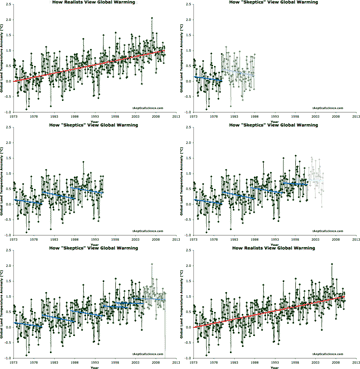
(free to republish)












 English (US) ·
 French (CA) ·