

PROTECT YOUR DNA WITH QUANTUM TECHNOLOGY
Orgo-Life the new way to the future Advertising by Adpathway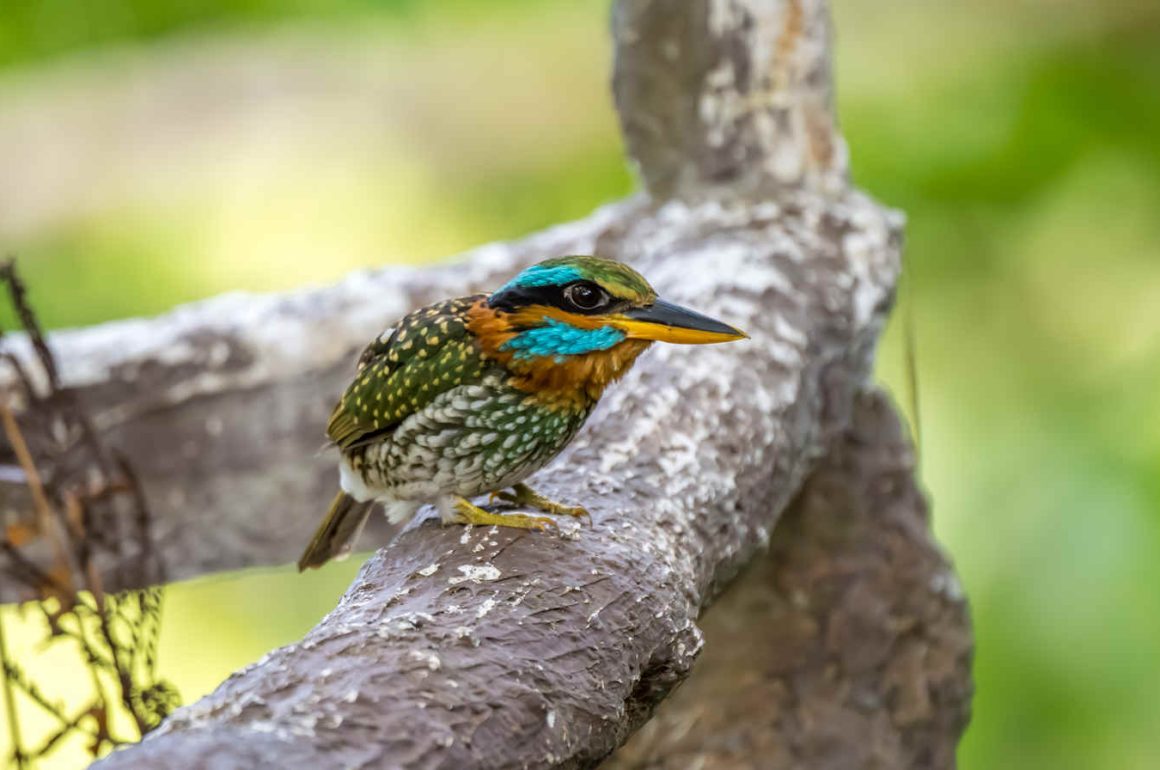
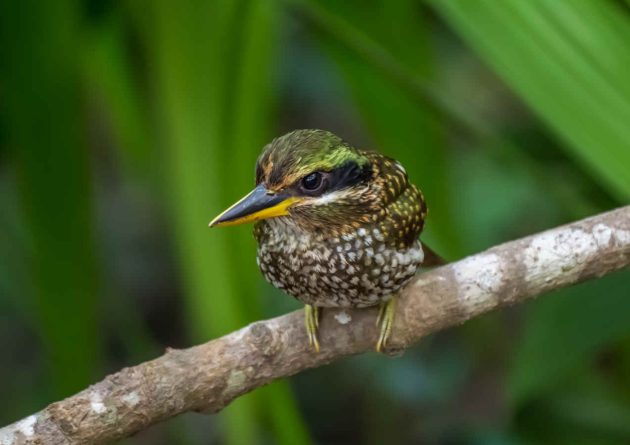
This was the other bird I really wanted to see in the Philippines, apart from the Azure-breasted Pitta in Mindanao, and the main reason to include Luzon in the trip.
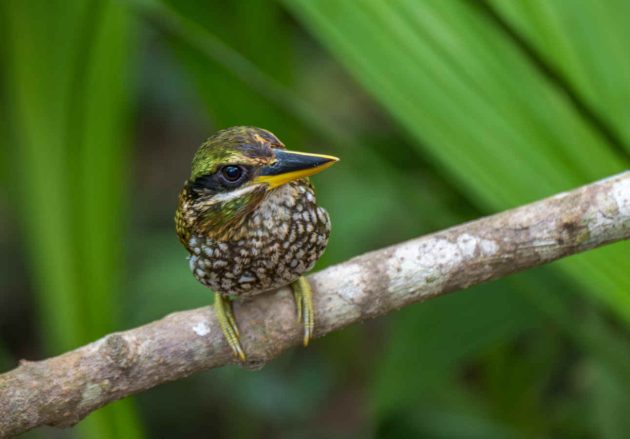
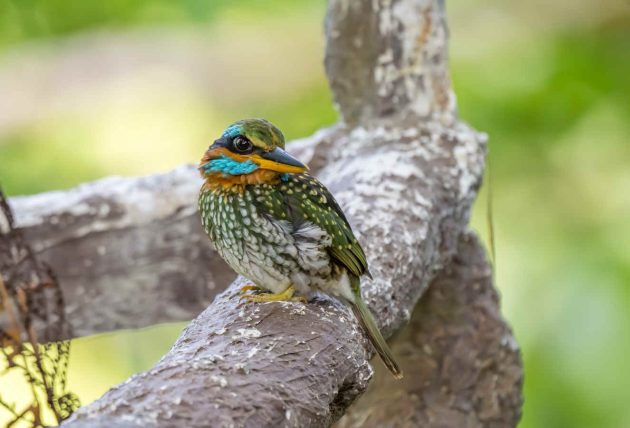
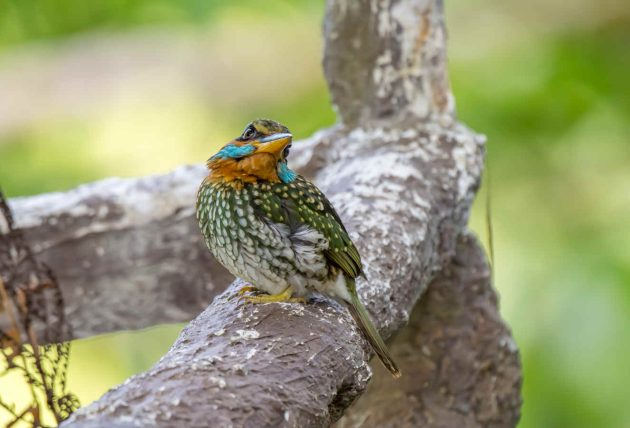
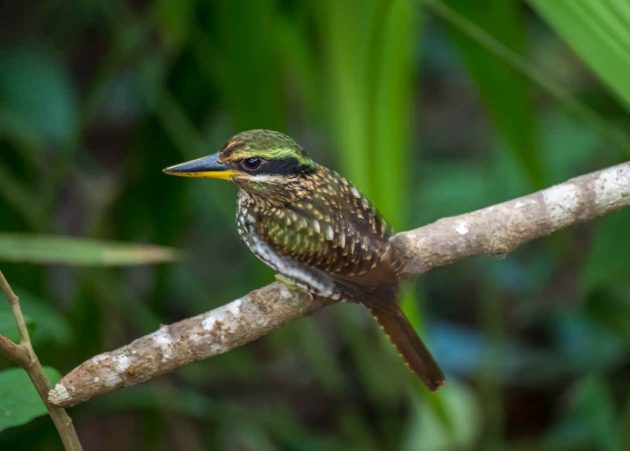
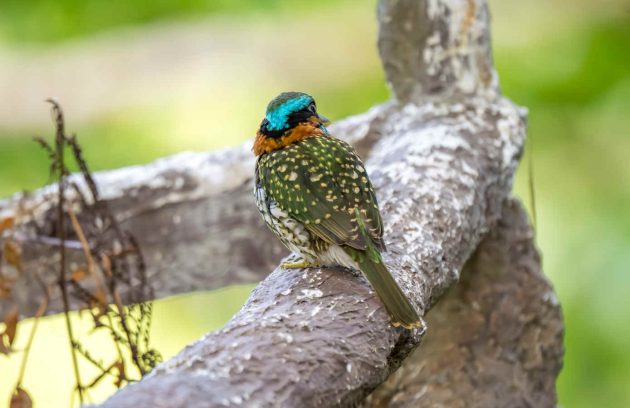
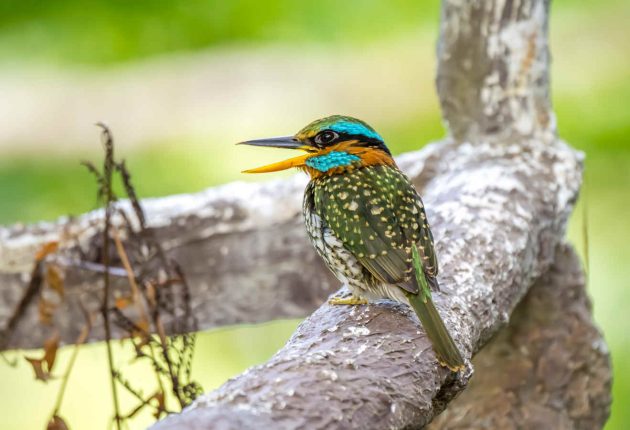
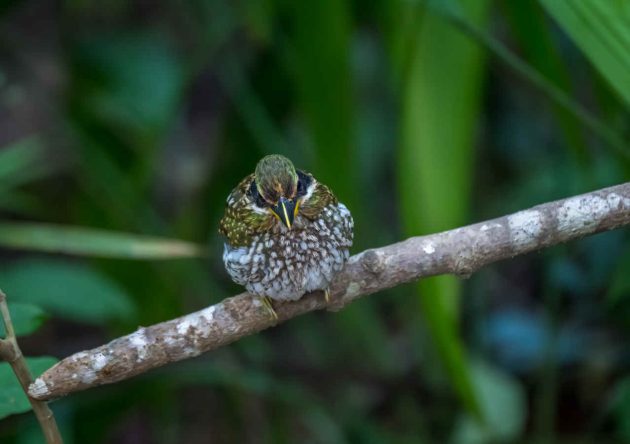
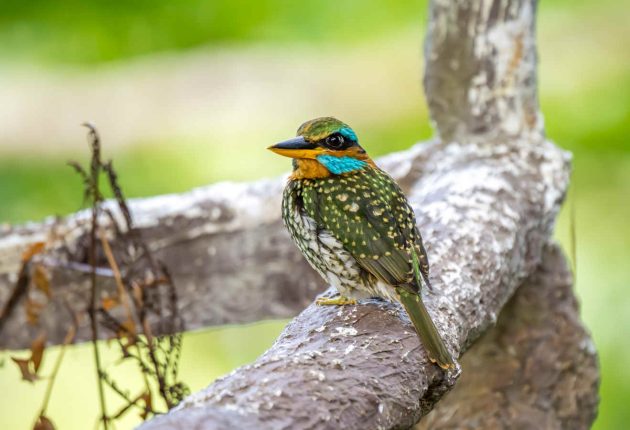
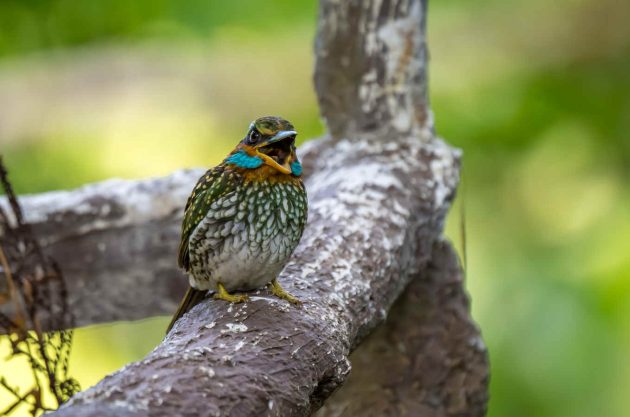
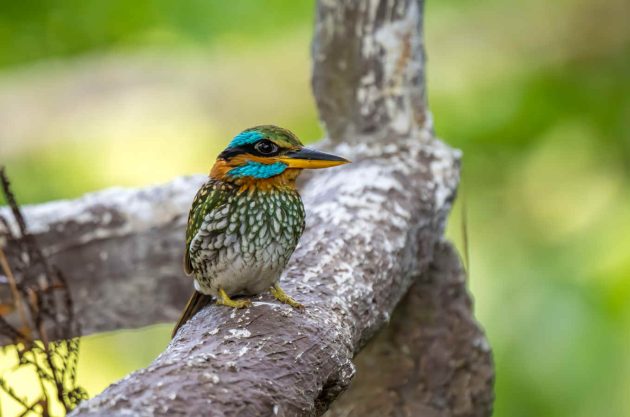
The Spotted Wood Kingfisher is a tree kingfisher endemic to the Philippines.
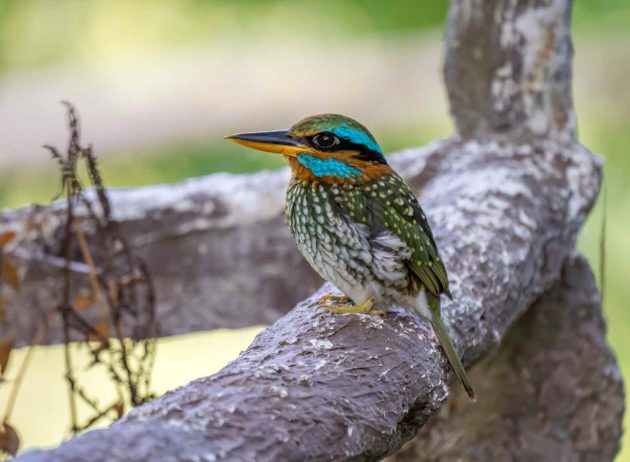
Even the usually rather subdued HBW calls it “distinctive,” while eBird instead opts for “striking” and describes it as unmistakable within its range.
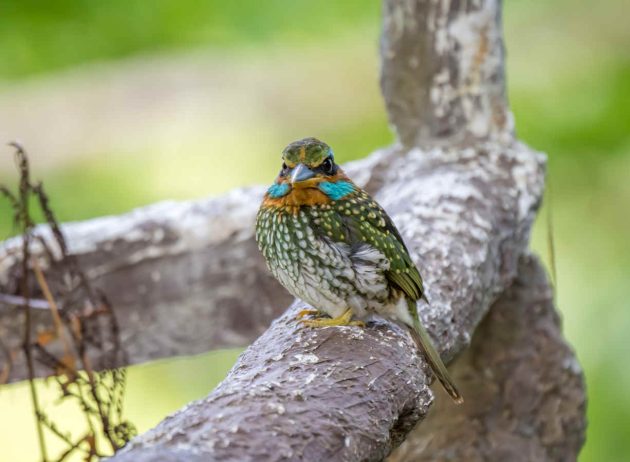
Seeing the male and female of the species, one instinctively thinks “sexual dimorphism” or a variation thereof. In this species, the female is distinctive enough on her own despite lacking the prominent blue and yellow parts of the male.
The scientific name Actenoides lindsayi commemorates the British Member of Parliament Hugh Hamilton Lindsay (1802–1881), who was also a civil servant, politician, naturalist, and collector.
Interestingly for me as a Shanghai resident, Lindsay had a strong China connection. His Wikipedia entry describes him as “a businessman with interest in China, perhaps the first British person to visit Shanghai.”
Despite speaking Chinese fluently, he was not exactly a friend of the country. On the contrary, Wikipedia describes him as a “vociferous supporter of war against Qing China to advance business interests.”
Similar to some currently successful politicians, he also seems to have been a fairly unsuccessful businessman, despite what he may publicly have claimed. One of his companies was “wound up in 1858,” while another “was bankrupted in 1865”. As a result, the kingfisher described in this post may have inherited a somewhat questionable financial legacy.
When writing a post on a species, I usually look for specific research on it, trying to understand the bird better and extract potentially interesting bits. However, I did not get very far reading a paper in the INTERNATIONAL JOURNAL OF ADVANCED MULTIDISCIPLINARY STUDIES (conveniently abbreviated as IJAMS, which immediately made me think of the MC5 song “Kick Out the Jams.” If you know the line most associated with that song, you will also understand why I am not quoting it here on this family blog).
Why did I not get far? The abstract begins as follows: “This study is anchored on Rosenzweig-MacArthur equations to explore trophic behavior between Alcedinidae kingfishers …” and continues “Two scenarios were considered, namely, (i) unbounded growth under free-lunch hypothesis and (ii) resource partitioning to assess population trajectories, displacement risks, and coexistence potential.”
At that point, I began to think that the paper and I might not have much of a future together.
Another paper mentioning the species is much more concrete, describing a Spotted Wood Kingfisher preying on and killing the nestling of a Yellow-breasted Fruit-Dove: “The kingfisher finally took on the nestling, biting its head and pulling it downwards, out from the nest.” For a more detailed description, see a previous post.
While the species is currently listed as Least Concern, the trend does not look particularly encouraging. One paper on the decline of understory bird diversity at Mt. Makiling, Luzon, highlights “the massive alteration of forest communities and their large-scale conversion to agricultural areas and human settlement,” and the HBW also warns that the species could become threatened in the future.
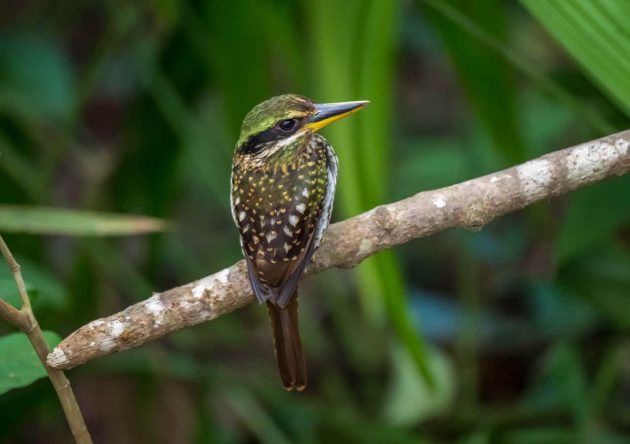
A final finding — somewhat counterintuitive given how complex the plumage of this kingfisher looks to me — is that insular bird species such as this one apparently do not, in general, evolve more complex plumages than their continental relatives (source).

Written by Kai Pflug
Kai has lived in Shanghai for 22 years. He only started birding after moving to China, so he is far more familiar with Chinese birds than the ones back in his native Germany. As a birder, he considers himself strictly average and tries to make up for it with photography, which he shares on a separate website. Alas, most of the photos are pretty average as well. He hopes that few clients of his consulting firm—focused on China’s chemical industry—ever find this blog, as it might raise questions about his professional priorities. Much of his time is spent either editing posts for 10,000 Birds or cleaning the litter boxes of his numerous indoor cats. He occasionally considers writing a piece comparing the two activities.

















 English (US) ·
  French (CA) ·