

 12 hours ago
2
12 hours ago
2
PROTECT YOUR DNA WITH QUANTUM TECHNOLOGY
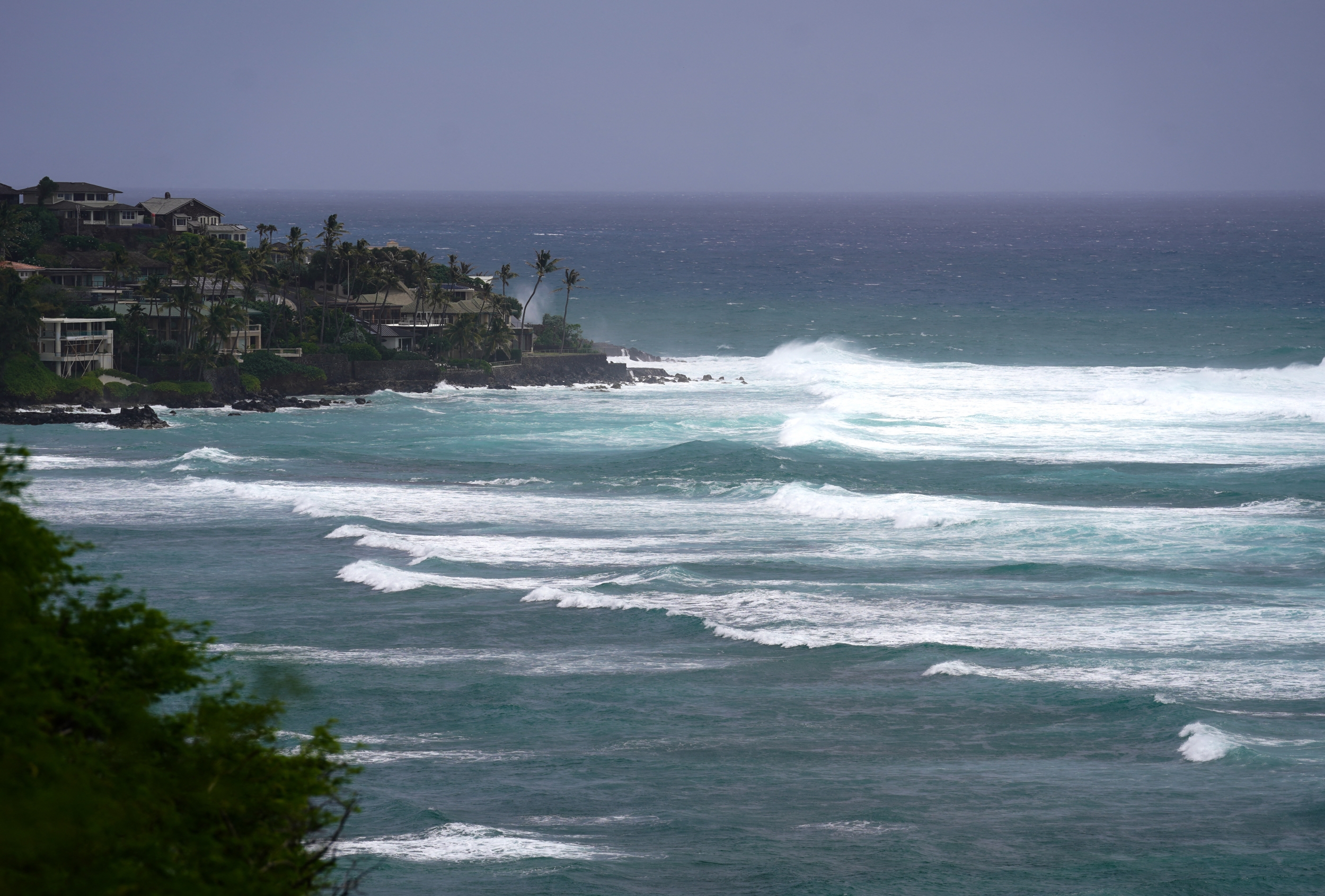
Orgo-Life the new way to the future Advertising by AdpathwayTwo Hawaii hazards collided this week in a way that made one harder to watch. As Hurricane Lowell passed west of the islands, rain, cloud, and steam blanketed the summit of Kilauea at the moment scientists most wanted eyes on the vent, forcing the U.S. Geological Survey to track a sequence of lava overflows using seismic tremor and thermal imagery rather than ordinary camera views.
In its daily update issued at 8:38 a.m. Hawaii Standard Time on Tuesday, the Hawaiian Volcano Observatory reported that "Webcam views have been mostly obscured by heavy rain, clouds, and steam" from Lowell. Ten precursory overflows had occurred from the north vent inside Halemaumau crater between 12:45 p.m. HST Monday and 1:23 a.m. HST Tuesday. An eleventh, described as highly degassed, began at 9:28 a.m. HST Tuesday, according to a short observatory message.
For residents on Hawaii Island, the practical consequence is a monitoring picture that is thinner than usual heading into a possible fountaining episode. It does not mean the volcano is unmonitored. Tilt, tremor, gas, and earthquake instruments continued to operate, and the observatory used drops in background tremor to time the start and end of individual overflows when cameras could not see them.
Tremor Readings Stood In for Blocked Camera Views
The overflows themselves are the signal that matters, because they are the behavior that has preceded past episodes. The observatory describes them as precursory activity. The first flow was sluggish with no dome fountain. Later ones were fed by dome fountains reaching 15 to 30 feet, roughly 5 to 10 meters, above the crater floor. Two main lava lobes formed, one reaching about half a mile southwest of the north vent and the other slightly less than that to the northeast.
Gas piston activity at roughly five-minute intervals continued through Tuesday morning HST. Eleven small earthquakes were recorded beneath the summit region over the preceding 24 hours. Ground tilt at the Uekahuna instrument had recovered about 12.3 of the 12.7 microradians lost during the previous episode, though the observatory described reinflation since late August as very unsteady and interrupted by repeated deflations.
The observatory's stated forecast window for the start of episode 55 was September 8 to 10, conditional on inflation resuming and following prior patterns. It also stated that a longer stall or a significant deflation could push onset to September 11 through 13. This is a scientific forecast with explicit conditions attached, not a scheduled event, and eruption timing cannot be predicted with certainty.
Alert Level and Aviation Color Code as Issued
Kilauea's Volcano Alert Level stood at WATCH and its Aviation Color Code at ORANGE as of the Tuesday daily update. Both were raised from the previous levels when the precursory overflows began the day before.
Under the USGS alert framework, WATCH indicates heightened or escalating unrest with increased potential for eruptive activity, and ORANGE indicates a volcano exhibiting heightened unrest with increased likelihood of eruption or an eruption underway with limited ash emission. Neither is the highest level. Readers should not treat this as an evacuation situation, because it is not one, and no evacuations have been ordered.
Kilauea has been erupting episodically since December 23, 2024, from two vents in Halemaumau. Fountaining episodes generally last under 12 hours and are separated by pauses of two or more weeks. The most recent, episode 54, ran about nine hours on August 25, producing a maximum fountain height of about 500 feet, or 150 meters, and a plume reaching approximately 17,000 feet above sea level. A timeline of eruption episodes is maintained by the survey.
Vog and Pele's Hair Downwind of the Summit
All vents and lava flows remain inside a closed area of Hawaii Volcanoes National Park, and the caldera rim around Halemaumau has been closed to the public since late 2007. The hazard that reaches people living outside the park is airborne.
During inter-episode pauses, sulfur dioxide emissions from the summit typically vary between 1,000 and 5,000 tonnes per day. Sulfur dioxide reacts in the atmosphere to form vog, the volcanic haze that can cause respiratory and other problems downwind at high concentrations. Trade winds were weak Tuesday morning HST, pushing the degassing plume toward public overlooks along the north and northeast rims. The observatory said south winds were expected to pick up later that morning, which could carry volcanic gases, fine ash, and Pele's hair toward the north side of the caldera and toward downwind communities if episode 55 begins.
Pele's hair is thin volcanic glass spun by lava fountains. It is light enough to travel on wind and can cause skin, eye, and respiratory irritation. During episode 54, most tephra fall was restricted to the closed park area, but the observatory received a report of trace Pele's hair falling in the Kau district. Residents downwind should minimize exposure and follow tephra fall guidance from Hawaii Sea Grant. People with asthma or other respiratory conditions face the highest risk, and current vog information is published by the International Volcanic Health Hazard Network.
Monitoring Gaps and the Next Official Update
The observatory noted separately that its monitoring network is mostly recovered from recent power- and storm-related outages, but that several summit stations remain offline while instruments are repaired and connections restored. That is the second monitoring limitation disclosed in the same update, alongside the weather-blocked cameras.
Several things are unresolved. Whether episode 55 begins within the forecast window is not settled. Whether wind direction shifts enough to carry tephra beyond the park is not known. Damage or delay to summit instruments from Lowell has not been fully characterized in a public report.
The observatory issues daily updates and posts short messages between them, and operates three summit livestream cameras that will show fountaining when weather allows. Residents of the Kau and Volcano communities are the audience with the most immediate stake, and the reasonable action now is to monitor official updates and air quality rather than to change plans.
What Readers Want to Know
Is Kilauea erupting right now?
The summit eruption in Halemaumau was paused as of the most recent daily update. Precursory lava overflows had occurred, but lava fountaining episode 55 had not begun.
What alert level is Kilauea under?
The Volcano Alert Level is WATCH and the Aviation Color Code is ORANGE, both raised when precursory overflows began on Monday.
When will episode 55 start?
The observatory forecast a window of September 8 to 10 if summit inflation resumes and follows prior patterns, and said a stall or deflation could push onset to September 11 through 13. Eruption timing cannot be predicted with certainty.
Why were the webcams not working?
Heavy rain, clouds, and steam associated with Hurricane Lowell passing west of the islands obscured summit camera views. Scientists used seismic tremor and thermal camera images instead.
Is any community in danger from lava?
No. All vents and flows remain inside a closed area of Hawaii Volcanoes National Park, and no evacuations have been ordered.
What should downwind residents watch for?
Thickening haze, a sulfur odor, and reports of ashfall or Pele's hair. People with asthma or other respiratory conditions should limit outdoor exertion when vog is heavy.
Where can the public follow live updates?
The Hawaiian Volcano Observatory provides daily updates and short messages, and the USGS summit livestream cameras.
© 2026 NatureWorldNews.com All rights reserved. Do not reproduce without permission.











 English (US) ·
  French (CA) ·