

 13 hours ago
4
PROTECT YOUR DNA WITH QUANTUM TECHNOLOGY
Orgo-Life the new way to the future Advertising by AdpathwayOn the Greek island of Syros, the amphibians and reptiles that once thrived in its wetlands are disappearing at an alarming rate. A new field survey, published in the journal Herpetozoa, provides the first dedicated update on the island’s herpetofauna in nearly fifty years, and the findings are sobering. The Balkan Water Frog and the Balkan Terrapin, both recorded on Syros in the nineteenth century, have now vanished entirely. The European Green Toad survives at only a single known breeding site, and the status of the Grass Snake remains uncertain. The study’s author, who conducted an intensive two-week survey in April 2024, concludes that the situation for the island’s wetlands and their fauna is nothing short of alarming.
Syros lies at the heart of the Cyclades archipelago and covers 84 square kilometres, with its highest point, Pyrgos peak, reaching 442 metres above sea level. With roughly 21,500 inhabitants recorded in 2011, it is the most populous island in the Cyclades and hosts Ermoupoli, the administrative capital of the southern Aegean region. The island is sharply divided: the northern half is largely uninhabited, treeless and dominated by dry Phrygana vegetation, while the southern half is intensively farmed and urbanised. This split landscape shapes the distribution of the island’s reptiles and amphibians, which depend heavily on the scarce water bodies found mainly in the cultivated south.
The historical record for Syros begins with Theodor Erhard’s Fauna of the Cyclades, published in 1858, although Bedriaga later criticised Erhard’s work as riddled with errors, claiming he confused species and islands. Bedriaga himself documented the Balkan Terrapin and the Balkan Water Frog on Syros in 1882, noting that he found adult tadpoles of the Green Toad there as early as mid-March 1880. Werner recorded eight species in 1938, but the most intensive herpetological work was carried out by Frör and Beutler, who visited the island in 1974 and 1977 and evaluated museum collections from Bonn, Munich and Vienna. Their 1980 overview listed thirteen species for Syros, placing its herpetofauna within the Central Cyclades group.
During the 2024 survey, conducted from 3 to 16 April with daytime temperatures between 18 and 21 degrees Celsius and windy conditions throughout, the team could confirm only six of the thirteen previously recorded species. The Kotschy’s Gecko proved widespread, found more than twenty times in stone walls, under rocks and in fountains, particularly in the north of the island. The Aegean Wall Lizard was omnipresent and emerged as the most common reptile. The European Snake-eyed Skink appeared several times in the leaf litter of the northern Phrygana. The Large Whip Snake was confirmed at two northern sites, validating Clark’s original 1969 discovery, while four relatively small Nose-horned Vipers, measuring between 35 and 45 centimetres, were encountered across the island, including one fresh roadkill victim.
Several species proved conspicuously absent. The Mediterranean House Gecko, previously recorded around Ermoupoli and near Kini, was not found despite extensive searches of wells, stone walls and buildings. The Balkan Green Lizard, described by earlier researchers as rare due to intensive agriculture and heavy traffic, was observed only once, when a single individual crossed the road near the pass between Ermoupoli and Kini on 15 April. The Leopard Snake and the European Cat Snake, both historically documented, were neither seen by the previous surveyors nor by the current team. The Grass Snake, recorded by Beutler and Frör at Posidonia, Kini and Galissas in 1980, was entirely absent, although a local landowner recalled seeing snakes in a spring catchment near Aghios Athanasios ten to fifteen years ago, suggesting a possible former occurrence.
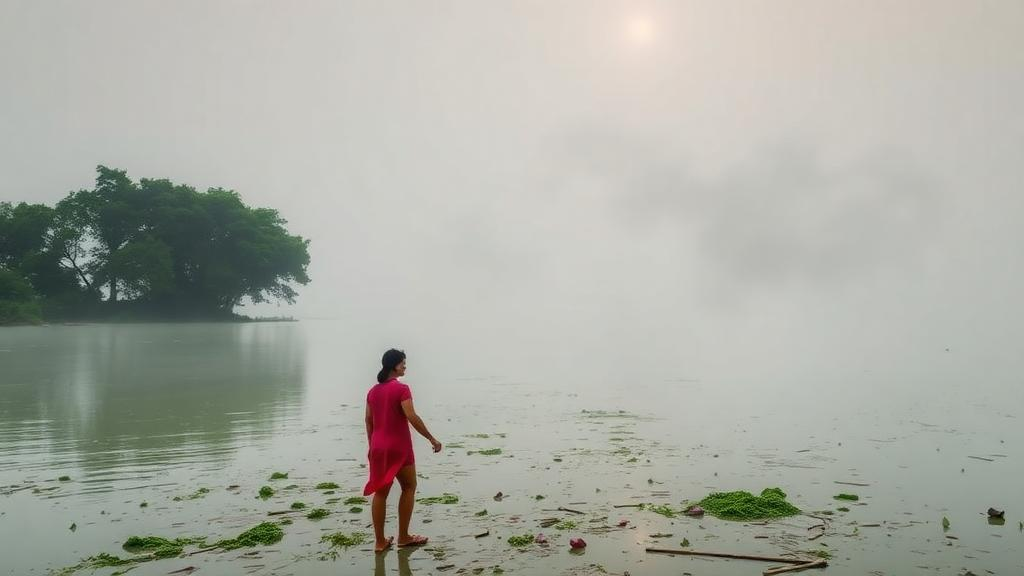
A central focus of the survey was the search for wetlands, which are naturally rare on Cycladic islands smaller than 100 square kilometres because they lack substantial hydrological catchment areas. The WWF Greece wetland inventory designates only two sites on Syros. At the estuary of Varvaroussa Beach near Kini, only a remnant of a brackish backwater measuring approximately 10 square metres remained on 12 April. At Ghalissas Bay, which should encompass a brackish backwater of 1.18 hectares, there was no surface water at all during the site visit on 5 April, only remnants of a reed bed. Every spring location marked on the Skai map was either captured or dried up, and flowing water was observed only in a short open sewer in the southern industrial area of Ermoupoli.
The water scarcity on Syros reflects both human pressure and climate change. The southern half of the island demands enormous quantities of water for intensive vegetable and horticultural cultivation, and no other Cycladic island has had such a dense network of cisterns and groundwater wells. Yet many open cisterns have fallen into disuse, and groundwater in abandoned wells now sits at an estimated depth of eight to ten metres. During the summer tourist season, the island’s population temporarily doubles, and drinking water comes overwhelmingly from the sea, with 95 percent treated in desalination plants. Meteorological data from the ERAS fifth-generation atmospheric reanalysis, covering 1979 to 2021, show that the average temperature on Syros has risen by 1.6 degrees Celsius since 1979, while average annual precipitation between 1979 and 2023 was just 289 millimetres, with conditions growing consistently drier since 2020.
These drying trends have devastating consequences for the Green Toad, which has historically benefited from anthropogenic spawning grounds in the form of open cisterns, a relationship also documented on the Cycladic island of Kythnos. The three locations where Beutler and Frör recorded the species in 1980 were searched intensively, especially during an overnight stay in Kini. Only two open cisterns filled with water were identified as possible spawning sites, but both contained Goldfish, which devour amphibian spawn, particularly in the absence of protective vegetation. Goldfish were also found in several other cisterns in the south of the island, where any benefit to humans is difficult to conceive while the harm to amphibians is immense. The intensive search on 10 April led to a single open cistern in Posidonia, roughly 12 by 12 metres in size, where well-developed Green Toad tadpoles were found. This remained the only island record, and the species must now be considered threatened with extinction on Syros.
The same conditions explain the disappearance of the Balkan Water Frog, which Bedriaga described as present on Syros in 1882 but which Beutler and Frör already considered questionable in 1980. The Balkan Terrapin presents a more intriguing case. In the village of Hartiana, two local residents recounted that a friend had seen turtles in a body of water in Sykaminia Bay below the hamlet of Kambos, marking the location on a map several hundred metres above the shoreline, which ruled out confusion with sea turtles. A search the following day found no indication of a suitable habitat, and geologists working in the area confirmed they had never seen surface water there. The study’s author concludes that suitable habitats for the terrapin are lacking across the island and that its local extinction must be confirmed for Syros.
Four interlocking conclusions emerge from the survey regarding the state of the hygrophilous herpetofauna. First, wetlands on small Cycladic islands are inherently vulnerable, supporting relictual animal and plant populations with virtually no possibility of genetic exchange. Second, these fragile aquatic habitats face mounting conflicts of use with agriculture, which cultivates areas where watercourses flow into the sea and channels winter water through hoses into reservoirs and cisterns, while pumping lowers the groundwater table, and with tourism, which seeks to exploit sandy beaches at estuary mouths. Third, while the hygrophilous herpetofauna once benefited from anthropogenic structures such as open cisterns, ongoing structural change in agriculture has led to the abandonment of these complex irrigation regimes, rendering sub-optimal habitats unavailable and introducing the additional threat of Goldfish stocking. Fourth, climate change manifests through marked temperature increases and drier winter months lacking the usual heavy rainfall, massively reducing suitable habitats and preventing amphibian reproduction. Across the Cyclades, species such as the Balkan Water Frog, the Green Toad, the Common Toad and the Tree Frog are particularly affected, while among the reptiles the Balkan Terrapin, the Grass Snake and the Dice Snake face the greatest risks, with the Nose-horned Viper and the Balkan Green Lizard, which also prefer humid structures, suffering to a lesser extent. Without urgent intervention to protect and restore the island’s remaining water bodies, Syros risks losing what little remains of its wetland-dependent herpetofauna within a generation.
Subject of Research: Update on the herpetofauna of Syros (Cyclades, Greece) and current land-use and climate change threats
Article Title: Update on the herpetofauna of Syros (Cyclades, Greece) and current land-use and climate change threats
Article References: Broggi, M. F. (2024). Update on the herpetofauna of Syros (Cyclades, Greece) and current land-use and climate change threats. Herpetozoa, 37, 339-346. https://doi.org/10.3897/herpetozoa.37.e129656
Image Credits: AI Generated
DOI: 10.3897/herpetozoa.37.e129656
Keywords: Update, herpetofauna, Syros, Cyclades, Greece, current, land-use, climate, change, threats, scientific research














 English (US) ·
 French (CA) ·