

PROTECT YOUR DNA WITH QUANTUM TECHNOLOGY
Orgo-Life the new way to the future Advertising by AdpathwayForeign Laboratories Have Tormented and Killed Animals for Decades—And You’ve Paid for It
These are details about just a few experiments at overseas institutions funded by the NIH.
Year after year, the National Institutes of Health (NIH) has sent taxpayer dollars to laboratories around the world to confine, torment, and kill thousands of animals in experiments that do nothing to advance human health. The Cease Animal Research Grants Overseas (CARGO) Act (HR 1085/S 1802) would save millions of dollars and spare countless animals suffering and death.
Australia
Experimenters infected animals with the parasite that causes toxoplasmosis, a disease characterized by fever, diarrhea, and seizures, among other symptoms.
Institution: The Walter and Eliza Hall Institute of Medical Research, funded by the National Institute of Allergy and Infectious Diseases
Price Tag: $1,546,428
Year:
Experimenters used 1,485 mice, 314 rats, and 80 beagles to test a molecule supposed to treat opioid withdrawal. Most of these animals were forced to become addicted to opioids.
Institution: Kinoxis Therapeutics, funded by the National Institute on Drug Abuse
Price Tag: $5,952,408
Year:
Experimenters infected bats with a highly harmful virus.
Institution: Commonwealth Scientific and Industrial Research Organization, funded by the National Institute of Allergy and Infectious Diseases
Price Tag: $296,288
Year:
Experimenters infected monkeys with tuberculosis.
Institution: University of Sydney, funded by the National Institute of Allergy and Infectious Diseases
Price Tag: $8,164,476
Year:
Experimenters injected monkeys with influenza vaccines.
Institution: Vaxine Pty Ltd, funded by the National Institute of Allergy and Infectious Diseases
Price Tag: $6,368,354
Year:
Canada
Experimenters injected mice with cancerous cells to produce tumors.
Institution: University Health Network, funded by the National Cancer Institute
Price Tag: $1,462,261
Year:
Experimenters subjected pigs to lung transplants.
Institution: University Health Network, funded by the National Institute of Allergy and Infectious Diseases
Price Tag: $1,190,652
Year:

 In an experiment similar to those funded by NIH, a “donor” pig is cut open, and their lungs removed. Then, a “recipient” pig is cut open, his lungs removed, and the lungs from the “donor” pig are transplanted. Experiments like these are advertised as the necessary path to convert pigs into spare parts for humans. Besides their profound cruelty, these experiments have proved useless since every attempt at xenotransplantation has failed.
 Three days after the transplant surgery, experimenters kept the “recipient” pig alive while they took images and samples, cut him open, and removed his bowels and stomach contents as well as tissues and organs, and finally let him bleed to death. NIH’s continued funding of experiments like this is a waste of American taxpayers’ money.
Figures 1, 2, 3 | Pig lung transplant survival model. | Mariscal, A., Caldarone, L., Tikkanen, J. et al. Pig lung transplant survival model. Nat Protoc 13, 1814–1828 (2018). https://doi.org/10.1038/s41596-018-0019-4
Experimenters cut the vocal cords of 12 rabbits and inserted a spatula “several times to exacerbate inflammation and scarring to ensure adequate injury.”
Institution: McGill University, funded by the National Institute on Deafness and Other Communication Disorders
Price Tag: $6,512,269
Year:
 In this disturbing and scientifically pointless experiment funded by the U.S. government, experimenters cut the vocal cords of rabbits and used a spatula “to ensure adequate injury.”
Institution: University of Western Ontario, funded by the NIH Office of Director
Price Tag: $970,720
Year:
Experimenters injected cancer cells into immunocompromised female mice to develop tumors (pointed by white arrows).
Figure 4 | Imaging CAR-NK cells targeted to HER2 ovarian cancer with human sodium-iodide symporter-based positron emission tomography. | Nourhan Shalaby, Ying Xia, John Kelly, Rafael Sanchez-Pupo, Francisco Martinez, Matthew Fox, Jonathan Thiessen, Justin Hicks, Timothy Scholl, John A Ronald | http://creativecommons.org/licenses/by/4.0/
Experimenters manipulated cats’ genes to create leg deformities.
Institution: University of Calgary, funded by the Eunice Kennedy Shriver National Institute of Child Health and Human Development
Price Tag: $107,946
Year:
Experimenters caused strokes in rats and monkeys. Some animals died within 18 to 24 hours, and others suffered brain hemorrhages.
Institution: University Health Network, funded by the National Institute of Neurological Disorders and Stroke
Price Tag: $3,771,814
Year:
Chile
Experimenters injected alcohol into mice’s bellies and subjected them to behavioral tests. In other procedures, experimenters forced mice to drink alcohol, injected viral substances into their brains, and killed them.
Institution: Universidad de Concepción, funded by the National Institute on Alcohol Abuse and Alcoholism
Price Tag: $2,380,836
Year:

Mice are grabbed by their tails and suspended upside down after being administered alcohol, as if their panicked response to this cruel test could explain anything about human addiction to alcohol.
Associated data: Characterization of the behavior of the KI α2 mice | Reduced sedation and increased ethanol consumption in knock-in mice expressing an ethanol insensitive alpha 2 subunit of the glycine receptor. | S Gallegos, L San Martin, A Araya, DM Lovinger, GE Homanics, LG Aguayo | © The Author(s), under exclusive licence to American College of Neuropsychopharmacology 2020
Colombia
Experimenters infected monkeys and mice with the parasite that causes malaria. The animals were abandoned to die in filthy cages and denied veterinary care.
Institution: Caucaseco Scientific Research Center and Malaria Vaccine and Development Center, funded by the National Institute of Allergy and Infectious Diseases and the National Heart, Lung, and Blood Institute
Price Tag: $17,649,491
Year:


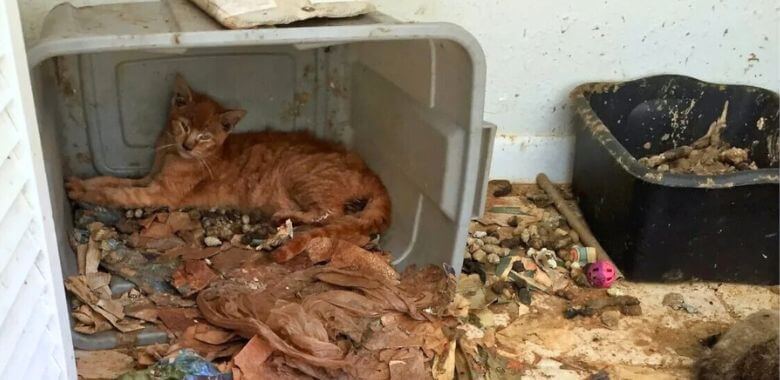
Owl monkeys and mice were confined to filthy cages and abandoned to die without veterinary care at an NIH-funded facility in Colombia.
Finland
Experimenters restrained fully awake rats, implanted more than 500 electrodes in their brains, and forced the animals to live like this for months.
Institution: University of Helsinki, funded by the National Institute of Neurological Disorders and Stroke
Price Tag: $422,943
Year:
Germany
Experimenters infected monkeys with simian immunodeficiency virus and other viruses.
Institution: Universitätsklinikum Erlangen, funded by the National Institute of Allergy and Infectious Diseases
Price Tag: $277,064
Year:
India
Experimenters genetically modified mice and made them suffer from diarrhea and gut inflammation.
Institution: Indian Institute of Science, funded by the National Institute of Allergy and Infectious Diseases
Price Tag: $241,992
Year:
Kenya
Experimenters infected hamsters with a parasite that causes the devastating disease schistosomiasis, whose symptoms include fever, chills, and muscle aches.
Institution: Kenyatta University, funded by the National Institute of Allergy and Infectious Diseases
Price Tag: $629,696
Year:
Nigeria
Experimenters gave rats high-fat, high-carbohydrate, and high-protein diets, killed the animals, and removed their bladders.
Institution: The Federal University of Technology, funded by the John E. Fogarty International Center
Price Tag: $393,634
Year:
St. Kitts, West Indies
Experimenters infected monkeys with the bacteria that cause typhus, whose symptoms include fever, muscle and joint pain, rash, headache, and fatigue.
Institution: Ross University School of Veterinary Medicine, funded by the National Institute of Allergy and Infectious Diseases
Price Tag: $104,932
Year:
South Africa
Experimenters destroyed mice’s immune system and infected the animals with a parasite that causes malaria.
Institution: University of Cape Town, funded by the National Institute of Allergy and Infectious Diseases
Price Tag: $1,567,031
Year:
Sweden
Experimenters injected substances into mice’s brains to induce inflammation, exposed the animals to noise, and killed them.
Institution: Karolinska Institute, funded by the National Institute on Deafness and Other Communication Disorders
Price Tag: $149,716
Year:
Experimenters administered aspartame to mice young and old mice and killed them at four or 22 months of age.
Institution: Karolinska Institute, funded by the National Institute on Aging
Price Tag: $2,051,061
Year:
Experimenters surgically implanted electrodes in eight rabbits’ legs and cut their spinal cords.
Institution: Karolinska Institute, funded by the National Institute of Neurological Disorders and Stroke
Price Tag: $3,482,020
Year:
“Then, experimenters cut the cerebrums from some rabbits’ brains, fixed the rabbits to a platform by their heads and vertebral columns, and tilted the platform to observe the rabbits’ muscle response.“
Tunisia
Experimenters used rabbits as bait for sandflies.
Institution: Institut Pasteur de Tunis, funded by the National Institute of Allergy and Infectious Diseases
Price Tag: $249,977
Year:
U.K.
Experimenters subjected mice to procedures to develop abnormal proteins in the animals’ brains.
Institution: University College London, funded by the National Institute on Aging
Price Tag: $799,700
Year:
Experimenters surgically implanted electrodes in monkeys’ arms and then damaged their brains to cause strokes.
Institution: Newcastle University, funded by the National Institute of Neurological Disorders and Stroke
Price Tag: $1,819,429
Year:
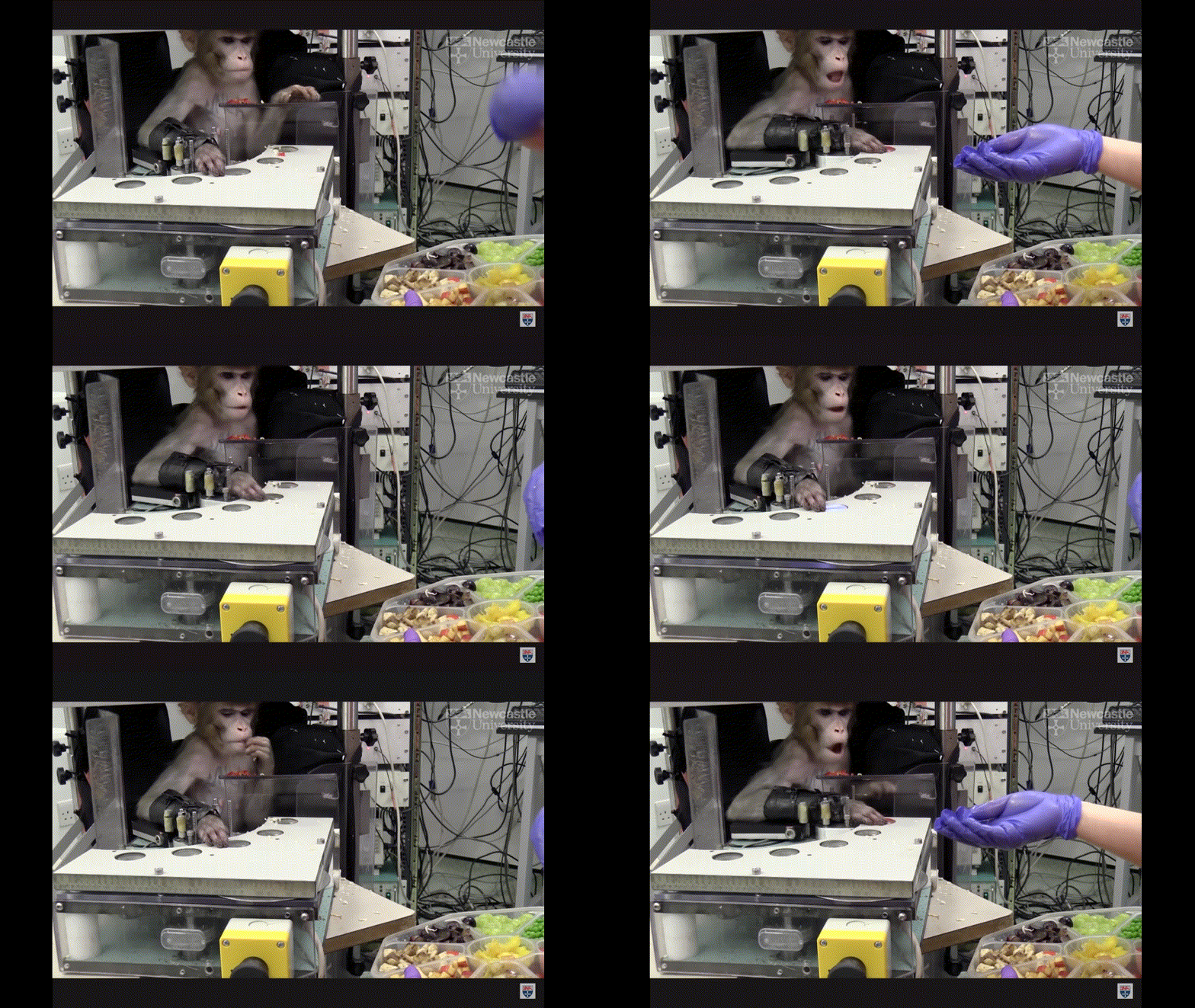 Monkeys like this one are confined at Newcastle University and tormented in stroke experiments. 1:41 | Device to help stroke patients recover hand movement | Newcastle University
Experimenters addicted rats to cocaine.
Institution: C4X Discovery Holdings PLC, funded by the National Institute on Drug Abuse
Price Tag: $476,025
Year:














 English (US) ·
  French (CA) ·