

 6 hours ago
11
China is home to some of the world’s most remarkable historical landmarks, ancient cities, architectural masterpieces, and natural wonders. From the historic Great Wall and the Terracotta Army to the breathtaking landscapes of Zhangjiajie and Jiuzhaigou, the country offers extraordinary destinations that showcase thousands of years of history, culture, and natural heritage.

Best UNESCO World Heritage Sites in China
Recognized by UNESCO for their outstanding universal value, these destinations preserve important chapters of human civilization and some of the planet’s most exceptional natural environments.
This guide explores 17 outstanding UNESCO World Heritage Sites in China, combining internationally recognized landmarks, ancient architectural treasures, spectacular natural landscapes, and lesser-known cultural destinations. Each destination includes its historical significance, major attractions, recommended experiences, transportation options, visitor information, and practical travel advice.
Whether you are planning your first trip to China, researching its cultural heritage, or building an itinerary around remarkable destinations, these UNESCO sites offer an excellent starting point.
Understanding China’s UNESCO World Heritage Sites
UNESCO World Heritage Sites are places recognized for their exceptional cultural, historical, scientific, or natural importance. They are considered valuable not only to the countries where they are located but also to humanity as a whole.
China has an extensive collection of World Heritage properties, ranging from ancient imperial palaces and archaeological discoveries to mountain landscapes, forests, caves, and historic settlements.
These properties fall into three categories:
- Cultural Heritage: Places that demonstrate human creativity, historical achievements, architecture, religious traditions, and important cultural developments.
- Natural Heritage: Landscapes, ecosystems, geological formations, and habitats with exceptional natural value.
- Mixed Heritage: Places recognized for both their cultural and natural significance.
The following destinations represent a selection of China’s most remarkable UNESCO World Heritage properties.
Ancient History and Archaeological Wonders
1. Great Wall of China
 Great Wall of China Sunset
UNESCO Category: Cultural Heritage
Year Inscribed: 1987
Location: Northern China
The Great Wall of China is among the world’s most recognizable historical landmarks and one of the country’s most important cultural treasures. Stretching across northern China, the wall represents centuries of military planning, engineering, and imperial history.
Rather than a single continuous structure built at one time, the Great Wall consists of fortifications, defensive walls, watchtowers, and other military structures constructed and expanded by different Chinese states and dynasties.
Defensive walls existed before the Qin Dynasty, but later dynasties, particularly the Ming Dynasty, built many of the stone-and-brick sections visitors see today.
The Great Wall was built to defend territory, control frontier movement, and protect key agricultural settlements and trade routes. Its construction reflects the changing political and military priorities of China’s successive rulers.
What to See and Experience
- Mutianyu: A popular section known for restored walls, mountain scenery, and accessible visitor facilities.
- Badaling: One of the most visited and accessible sections, with substantial restoration and visitor infrastructure.
- Jinshanling: A scenic section known for its watchtowers, steep stairways, and photography opportunities.
- Simatai: Known for its dramatic mountain setting and sections that retain a more rugged appearance.
Walking along the Great Wall is the main experience. Visitors can climb watchtowers, photograph the surrounding mountains, and appreciate the scale of the defensive system.
How to Get There: Most international visitors begin in Beijing. You can reach Mutianyu and Badaling through organized tours, private transfers, or public transportation connections. Jinshanling and Simatai require longer journeys.
Recommended Visit: Allow half a day for a single section. A full day suits visitors who want to explore farther.
Best Time to Visit: Spring (April to May) and autumn (September to October) generally offer comfortable temperatures and attractive mountain scenery.
Travel Tips: Entrance fees, cable car tickets, shuttle services, and operating schedules vary by section. Check current arrangements before visiting. Wear comfortable walking shoes, bring drinking water, and prepare for steep steps and uneven surfaces.
2. Imperial Palaces of the Ming and Qing Dynasties
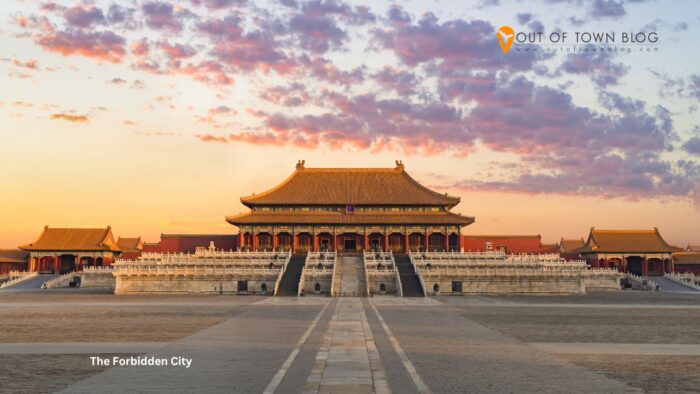 The Forbidden City in Beijing
UNESCO Category: Cultural Heritage
Year Inscribed: 1987
Location: Beijing and Shenyang
The Imperial Palaces of the Ming and Qing Dynasties preserve the architectural and political legacy of two of China’s most influential imperial dynasties. The property includes the Forbidden City in Beijing and the Imperial Palace in Shenyang.
The Forbidden City, now home to the Palace Museum, served as the principal imperial residence and administrative center for emperors of the Ming and Qing dynasties.
Built beginning in 1406 and completed in 1420, the enormous palace complex contains ceremonial halls, residential buildings, courtyards, gardens, and gates arranged according to traditional Chinese architectural principles.
The layout reflects imperial hierarchy, Confucian principles, and the emperor’s symbolic importance. Its monumental halls, golden roofs, red walls, and carefully planned courtyards demonstrate the sophistication of traditional Chinese architecture.
The Shenyang Imperial Palace provides another perspective on Qing history. Built before the Qing court moved to Beijing, it preserves distinctive architectural influences associated with Manchu traditions.
What to See and Experience
- Hall of Supreme Harmony: The Forbidden City’s largest and most important ceremonial hall.
- Palace of Heavenly Purity: An important imperial residential and administrative building.
- Imperial Garden: A landscaped retreat featuring traditional pavilions, ancient trees, and decorative rock formations.
- Treasure Gallery: A collection of imperial artifacts, decorative objects, and historical treasures.
- Shenyang Imperial Palace: A separate palace complex showcasing early Qing architecture and court history.
How to Get There: The Forbidden City is in central Beijing and is easily reached by the city’s subway and public transportation network. You can reach the Shenyang Imperial Palace by local transportation from Shenyang Railway Station and other parts of the city.
Recommended Visit: Plan for four to six hours at the Forbidden City. Allow at least two to three hours for the Shenyang Imperial Palace.
Best Time to Visit: Spring and autumn offer pleasant sightseeing conditions.
Travel Tips: The Palace Museum operates a controlled-entry system, and advance reservations are important. Check ticketing arrangements, visitor identification requirements, and opening schedules. Large bags may be restricted, and visitors should expect security checks.
3. Mausoleum of the First Qin Emperor and Terracotta Army
 Terracotta Warriors by Aaron Greenwood via Unsplash
UNESCO Category: Cultural Heritage
Year Inscribed: 1987
Location: Lintong, Xi’an, Shaanxi Province
The Terracotta Army is one of China’s most extraordinary archaeological discoveries. Near Xi’an in Shaanxi Province, this monumental burial complex was built for Qin Shi Huang, the first emperor to unify China.
The emperor began building his mausoleum after ascending the throne as a young ruler. The massive project employed thousands of workers and craftsmen and reflected the emperor’s belief that imperial authority would endure beyond death.
The complex’s most famous feature is its collection of life-size terracotta soldiers, horses, and chariots arranged in military formations.
Discovered by local farmers in 1974, the figures offer valuable insight into Qin Dynasty military organization, clothing, weapons, artistic techniques, and craftsmanship.
One of the collection’s most remarkable features is the individuality of the figures. Their facial features, hairstyles, armor, and positions vary considerably.
What to See and Experience
- Pit 1: The largest and most famous excavation hall, containing thousands of terracotta figures.
- Pit 2: Features different military formations, along with a variety of soldiers and chariots.
- Pit 3: A smaller excavation area believed to have served as a military command center.
- Bronze Chariots Exhibition: Displays remarkable bronze chariots and horses associated with the imperial mausoleum.
- Mausoleum Mound: The burial mound associated with Qin Shi Huang, which remains largely unexcavated.
How to Get There: Xi’an connects to major Chinese cities by high-speed rail and air. From central Xi’an, visitors can take public buses, tourist transportation, private transfers, or organized tours to the museum complex.
Recommended Visit: Allow three to five hours for the archaeological museum and associated exhibitions.
Best Time to Visit: Spring and autumn are generally comfortable. Arriving early can help avoid peak visitor crowds.
Travel Tips: Ticket prices and reservation arrangements are subject to change. Use official ticketing channels and bring the identification required for entry. The museum grounds are extensive, so wear comfortable shoes and allow enough time to explore the excavation halls.
4. Mogao Caves
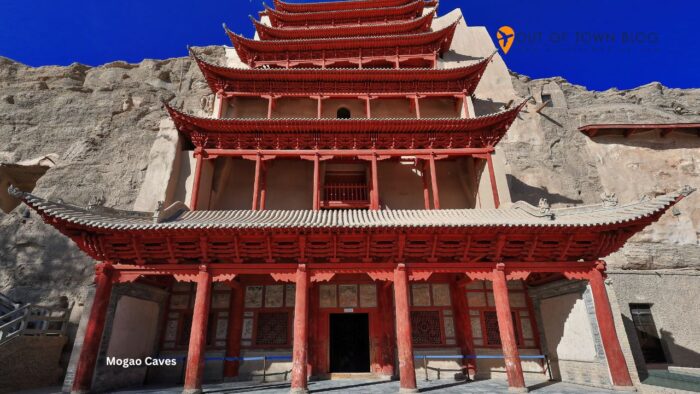 Mogao Caves
UNESCO Category: Cultural Heritage
Year Inscribed: 1987
Location: Dunhuang, Gansu Province
The Mogao Caves, also known as the Thousand Buddha Grottoes, are among the world’s most important collections of Buddhist art. Located near Dunhuang in Gansu Province, the caves preserve an extraordinary record of religious, artistic, and cultural exchange along the ancient Silk Road.
The cave complex developed over approximately a millennium, beginning in the fourth century. Buddhist monks, patrons, merchants, and travelers contributed to its expansion, creating a remarkable collection of painted murals, sculptures, inscriptions, and architectural features.
The caves contain thousands of Buddhist figures and extensive murals illustrating religious stories, historical events, daily life, musical performances, and international cultural connections.
Their artistic styles reflect influences from different periods and regions. Mogao’s location made it a key cultural meeting point between China, Central Asia, and other parts of the ancient trading world.
What to See and Experience
- Buddhist Cave Murals: Discover paintings depicting Buddhist teachings, celestial figures, and historical scenes.
- Painted Sculptures: Examine clay sculptures representing Buddhas, bodhisattvas, and other religious figures.
- Library Cave History: Learn about the discovery of an important collection of ancient manuscripts and documents.
- Digital Exhibition Center: Explore audiovisual presentations that introduce the caves and their artistic significance.
- Dunhuang Cultural Experiences: Combine the visit with the region’s Silk Road history and desert attractions.
How to Get There: Dunhuang has an airport and railway connections. From the city, visitors can reach the Mogao Caves through designated shuttle services, organized tours, or approved transportation.
Recommended Visit: Set aside half a day, including the visitor center and cave tour.
Best Time to Visit: April to October is generally suitable for visiting Dunhuang, although summer can be very hot.
Travel Tips: Cave access is regulated to protect the murals and sculptures. Visitors generally follow assigned routes and guided arrangements, and photography inside the caves is restricted. Book in advance, especially during holidays and peak travel periods.
5. Peking Man Site at Zhoukoudian
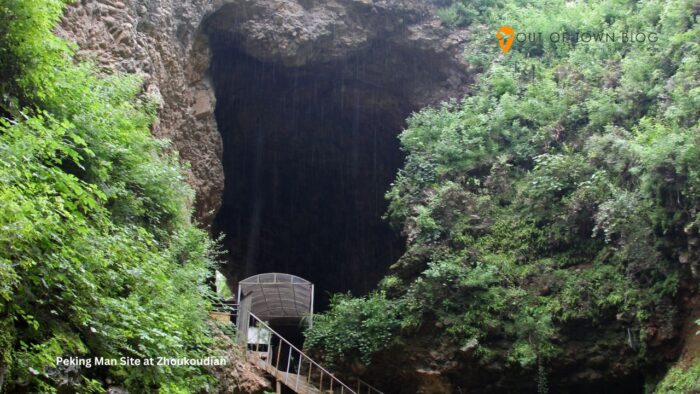 Peking Man Site at Zhoukoudian
UNESCO Category: Cultural Heritage
Year Inscribed: 1987
Location: Zhoukoudian, Fangshan District, Beijing
For travelers interested in archaeology and human evolution, the Peking Man Site at Zhoukoudian offers an important look into prehistoric life.
Located southwest of central Beijing, this archaeological property is associated with discoveries of Homo erectus fossils and evidence of early human activity.
Excavations at Zhoukoudian began in the early 20th century and yielded fossil remains, stone tools, and other evidence that significantly advanced research into human evolution in East Asia.
The discoveries helped researchers study early human anatomy, behavior, subsistence, and adaptation to changing environments.
Although the Second World War destroyed some original fossils, the site remains an important archaeological and scientific landmark.
What to See and Experience
- Peking Man Excavation Areas: Explore the archaeological locations associated with the original discoveries.
- Zhoukoudian Museum: Learn about prehistoric human development through exhibits, fossil replicas, archaeological findings, and educational displays.
- Fossil and Stone Tool Exhibitions: Discover evidence of early human activity and the scientific methods used to study it.
- Archaeological Landscape: Understand the relationship between the caves, surrounding terrain, and prehistoric settlement.
How to Get There: Visitors can travel from central Beijing by public transportation, taxi, private transfer, or organized historical tours. Allow additional travel time because the site is outside the city center.
Recommended Visit: Two to three hours.
Best Time to Visit: Spring and autumn are comfortable for exploring the outdoor archaeological areas.
Travel Tips: Check the museum’s latest operating schedule and admission arrangements before traveling. Some archaeological areas may have limited access, so follow designated visitor routes.
Religious Heritage and Historic Architecture
 Potala Palace
6. Historic Ensemble of the Potala Palace
UNESCO Category: Cultural Heritage
Year Inscribed: 1994, extended in 2000 and 2001
Location: Lhasa, Tibet Autonomous Region
The Potala Palace is one of China’s most impressive architectural landmarks and a defining symbol of Tibetan cultural and religious heritage. Rising above Lhasa, the palace sits on Marpo Ri, or Red Hill.
Its origins are often traced to the seventh-century Tibetan ruler Songtsen Gampo, though the current palace complex largely reflects construction and expansion in the 17th century under the Fifth Dalai Lama.
The enormous structure contains thousands of rooms, chapels, prayer halls, residential quarters, and important religious treasures. Its white and red sections have distinct functions and architectural significance.
Historically, the White Palace served as a residential and administrative area, while the Red Palace contains important religious spaces and stupas associated with successive Dalai Lamas.
The wider UNESCO property includes the Potala Palace, the historic Jokhang Temple, and Norbulingka, the former summer residence of the Dalai Lamas.
What to See and Experience
- White Palace: Explore the historical residential and administrative sections.
- Red Palace: Discover religious halls, chapels, murals, and elaborate stupas.
- Jokhang Temple: Visit one of Lhasa’s most important Tibetan Buddhist religious sites.
- Norbulingka: Explore the historic summer palace and its landscaped gardens.
- Potala Square: Enjoy panoramic views of the palace and its impressive architectural profile.
How to Get There: Reach Lhasa via Lhasa Gonggar International Airport and the Qinghai-Tibet Railway. Visitors can use taxis and local transportation to reach the palace.
Recommended Visit: Allow two to three hours for the Potala Palace itself, with additional time for Jokhang Temple and Norbulingka.
Best Time to Visit: April to October generally offers favorable sightseeing conditions, though weather varies considerably with altitude and season.
Travel Tips: Foreign visitors must follow applicable Tibet travel permit and tour arrangements. Palace entry is controlled, and visitor numbers and visiting times may be restricted. Book through authorized arrangements and follow local rules on photography and religious etiquette.
7. Longmen Grottoes
 Longmen Grottoes in China
UNESCO Category: Cultural Heritage
Year Inscribed: 2000
Location: Luoyang, Henan Province
The Longmen Grottoes are among China’s most important collections of Buddhist stone carvings. Located along the Yi River near Luoyang in Henan Province, the site features thousands of caves, niches, inscriptions, and sculptures carved into limestone cliffs.
Construction began around the late fifth century during the Northern Wei Dynasty and continued through several subsequent dynasties. The grottoes reflect the development of Buddhist art in China and show how religious beliefs shaped architecture and sculpture.
The sculptures range from small Buddhist figures to monumental statues. Their styles, expressions, clothing, and decorative details provide valuable evidence of changing artistic traditions and cultural influences.
One of the most famous attractions is the Fengxian Temple, where the enormous Vairocana Buddha dominates the surrounding cliffside complex.
What to See and Experience
- Fengxian Temple: Admire the monumental Vairocana Buddha and its surrounding sculptures.
- Guyang Cave: Examine early Buddhist carvings and inscriptions.
- Binyang Caves: Explore important examples of Northern Wei Buddhist sculpture.
- Yi River Views: Photograph the grottoes from different points along the river.
- Night Illumination: Check whether evening viewing is offered during your travel dates.
How to Get There: Luoyang connects to major Chinese cities by high-speed rail. From the city center, take a taxi, local bus, or organized tour to the Longmen Grottoes.
Recommended Visit: Three to four hours.
Best Time to Visit: Spring and autumn offer comfortable temperatures for walking around the archaeological complex.
Travel Tips: Admission arrangements and access to particular caves may change. Wear comfortable walking shoes and allow time for the riverside paths and stairways. Avoid touching the carvings, as they are vulnerable to deterioration.
8. Classical Gardens of Suzhou
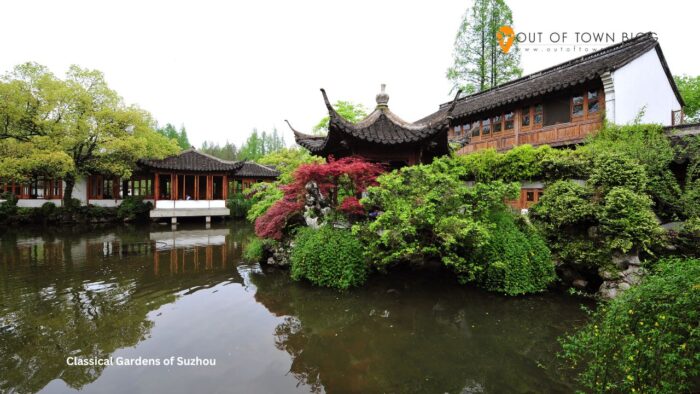 Classical Gardens of Suzhou
UNESCO Category: Cultural Heritage
Year Inscribed: 1997, extended in 2000
Location: Suzhou, Jiangsu Province
The Classical Gardens of Suzhou are among the finest examples of traditional Chinese landscape design. These gardens demonstrate how architecture, water, rocks, plants, and carefully arranged viewpoints can create a harmonious environment.
Many of Suzhou’s historic gardens were developed as private retreats for scholars, officials, and wealthy families. Their designs reflected traditional Chinese philosophy, literature, painting, and ideas about the relationship between humans and nature.
Rather than relying on enormous landscapes, the gardens use carefully controlled spaces to create the impression of a much larger natural environment. Small ponds, bridges, pavilions, corridors, and rockeries are arranged to reveal different views as visitors move through the grounds.
Several gardens make up the UNESCO property, with the Humble Administrator’s Garden and the Lingering Garden among the best-known.
What to See and Experience
- Humble Administrator’s Garden: Explore one of Suzhou’s largest and most celebrated classical gardens.
- Lingering Garden: Admire its intricate spatial arrangement, corridors, and decorative rock formations.
- Master of the Nets Garden: Discover a smaller garden known for its carefully designed spaces.
- Lion Grove Garden: See its unusual rock formations and winding passages.
- Traditional Architecture: Photograph moon gates, wooden pavilions, covered walkways, and ornamental windows.
How to Get There: You can easily reach Suzhou by high-speed train from Shanghai and other major cities. From Suzhou Railway Station, visitors can use taxis, buses, or local transportation to reach the gardens.
Recommended Visit: One full day is enough to explore several gardens without rushing.
Best Time to Visit: March to May and September to November are generally pleasant. Spring is particularly attractive when flowers are in bloom.
Travel Tips: Each garden has its own admission arrangements and opening hours. Check current schedules before visiting. Go early in the morning to enjoy the gardens before the largest tour groups arrive.
9. Old Town of Lijiang
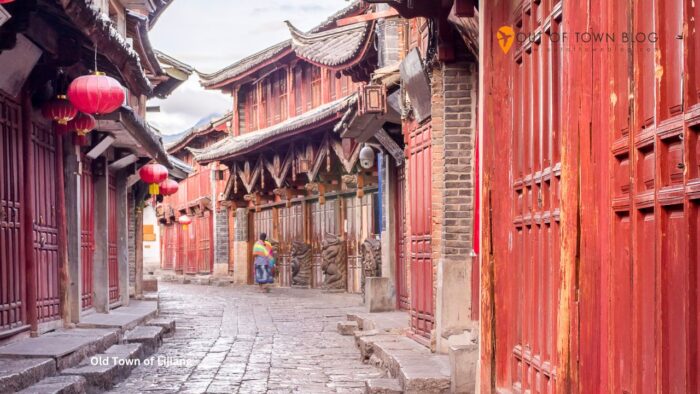 Old Town of Lijiang
UNESCO Category: Cultural Heritage
Year Inscribed: 1997
Location: Lijiang, Yunnan Province
The Old Town of Lijiang is a historic settlement in Yunnan Province known for its traditional architecture, winding cobblestone streets, waterways, and distinctive Naxi cultural heritage.
Unlike many planned imperial cities, Lijiang developed organically around its natural environment. Its traditional buildings, courtyards, canals, and bridges demonstrate how local communities adapted their settlement to the surrounding mountains and water systems.
Historically, the town served as an important commercial and cultural center along regional trading routes connecting Yunnan with Tibet and other parts of Asia.
Its architecture reflects a blend of Naxi traditions and influences from other communities that participated in regional trade. Traditional wooden houses, decorative courtyards, and narrow streets remain defining features of the old town.
What to See and Experience
- Sifang Street: Explore the historic central square, surrounded by shops and traditional buildings.
- Mu Family Mansion: Discover the influential Mu family’s history and its role in local administration.
- Black Dragon Pool Park: Photograph traditional pavilions and mountain scenery reflected in the water.
- Waterways and Stone Bridges: Walk along the historic canals and explore quieter lanes.
- Naxi Cultural Experiences: Learn about traditional music, architecture, crafts, and local customs.
How to Get There: Lijiang has an airport and high-speed rail connections. Visitors can travel from Kunming by train or plane, then use local transportation to reach the old town.
Recommended Visit: Two to three days, particularly if combining the historic town with nearby mountain attractions.
Best Time to Visit: Spring and autumn are popular because the weather is relatively comfortable. Winter can offer clear mountain views but colder temperatures.
Travel Tips: The old town has stone-paved streets and some uneven surfaces, so comfortable walking shoes are essential. Some historic areas and attractions charge separate admission. Respect residential areas and local cultural practices, particularly when photographing residents.
10. Fujian Tulou
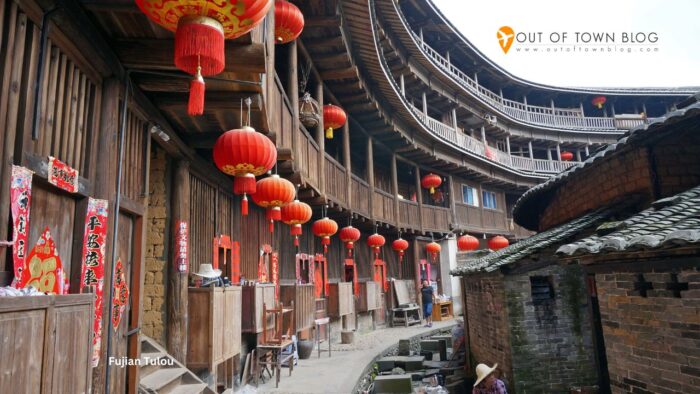 Fujian Tulou
UNESCO Category: Cultural Heritage
Year Inscribed: 2008
Location: Fujian Province
Fujian Tulou is a remarkable collection of traditional earthen buildings in southeastern China. These large communal structures were designed to house extended families and protect them in rural settlements.
Built mainly between the 15th and 20th centuries, the tulou buildings demonstrate an extraordinary combination of traditional architecture, social organization, and environmental adaptation.
Many structures have circular or rectangular layouts, thick rammed-earth walls, central courtyards, and multiple residential floors. Their design allowed families to live together, share communal facilities, and maintain a strong sense of community.
The UNESCO property includes 46 tulou buildings across Fujian Province. The architecture is particularly interesting because the buildings were designed to respond to local climate, available materials, and historical security concerns.
What to See and Experience
- Tianluokeng Tulou Cluster: See the famous group of earthen buildings arranged across a hillside.
- Chuxi Tulou Cluster: Explore a picturesque collection of traditional structures surrounded by mountains.
- Hongkeng Tulou Cluster: Discover historic communal buildings and local Hakka culture.
- Interior Courtyards: Learn how families organized shared spaces, kitchens, and living areas.
- Traditional Hakka Cuisine: Sample regional dishes and local specialties.
How to Get There: Xiamen is a common starting point. Visitors can take trains to nearby towns and continue by local buses, private transfers, or organized countryside tours.
Recommended Visit: One to two days, depending on the number of clusters visited.
Best Time to Visit: Spring and autumn are generally comfortable for exploring the rural areas.
Travel Tips: Individual tulou clusters may have separate ticketing arrangements. Some buildings remain residential, so visitors should ask permission before entering private areas or photographing residents. Staying overnight in a traditional guesthouse can offer a deeper look into local life.
Spectacular Natural Wonders and Cultural Landscapes
China’s natural heritage is just as impressive as its historic architecture. Mountain ranges, limestone formations, turquoise lakes, waterfalls, forests, and sacred landscapes make the country an exceptional destination for nature lovers and outdoor enthusiasts.
11. Mount Huangshan (Yellow Mountain)
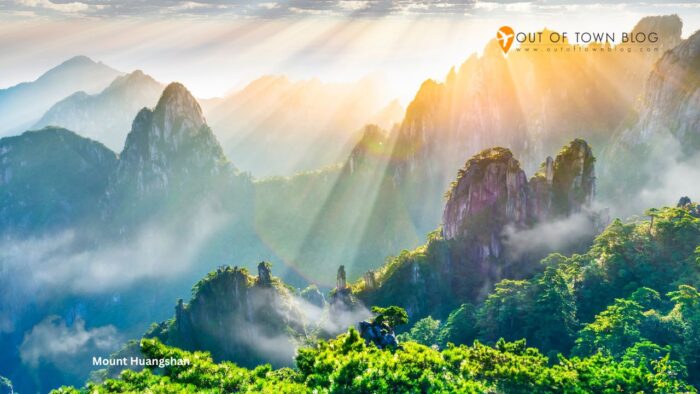 Mount Huangshan
UNESCO Category: Mixed Heritage
Year Inscribed: 1990
Location: Anhui Province
Mount Huangshan, commonly called Yellow Mountain, is one of China’s most celebrated natural landscapes. Famous for its dramatic granite peaks, ancient pine trees, unusual rock formations, and spectacular sea of clouds, it is located in Anhui Province.
The mountain has inspired generations of Chinese artists, poets, and landscape painters. Its scenery is closely associated with traditional Chinese landscape painting, particularly the mist-covered peaks and twisted pine trees that create an almost surreal mountain environment.
Mount Huangshan is not simply a natural attraction. It also has a strong cultural identity connected to Chinese philosophy, literature, and artistic traditions. Its recognition as a mixed World Heritage property reflects both its exceptional natural beauty and its cultural significance.
The mountain has numerous scenic viewpoints, walking trails, stone stairways, and cable car routes. Visitors can explore different peaks and enjoy changing scenery throughout the day.
What to See and Experience
- Bright Summit Peak: One of the best-known viewpoints for panoramic mountain scenery.
- Beginning-to-Believe Peak: Famous for its dramatic granite formations and pine trees.
- Flying-over Rock: A distinctive rock formation popular with photographers.
- West Sea Grand Canyon: A scenic hiking area with impressive cliffs and mountain views, subject to access and weather conditions.
- Sea of Clouds: Watch clouds gather around the peaks, especially on clear, calm days.
- Sunrise and Sunset: Stay overnight on the mountain to see the landscape change as the light shifts.
How to Get There: Take a high-speed train to Huangshan North Railway Station or fly to Huangshan Tunxi International Airport. From there, tourist buses and private transfers connect to the mountain’s entrance areas.
Recommended Visit: One to two days. Overnight stays are recommended to experience sunrise and sunset.
Best Time to Visit: April to May and September to November generally offer pleasant hiking conditions. Summer is greener but can be humid and crowded.
Travel Tips: Admission, cable car service, and access to certain trails vary by season and weather. Book accommodation early if you plan to stay overnight. Bring warm clothing because temperatures at higher elevations can be significantly lower than in the surrounding city.
12. Jiuzhaigou Valley Scenic and Historic Interest Area
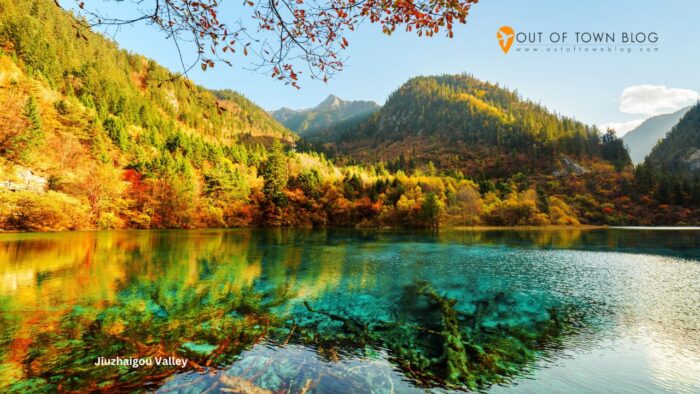 Jiuzhaigou Valley
UNESCO Category: Natural Heritage
Year Inscribed: 1992
Location: Aba Tibetan and Qiang Autonomous Prefecture, Sichuan Province
Jiuzhaigou Valley is one of China’s most spectacular natural destinations. Located in northern Sichuan Province, this protected landscape is famous for its clear alpine lakes, waterfalls, snow-capped mountains, forests, and colorful mineral-rich waters.
Jiuzhaigou means Nine Village Valley, referring to the region’s traditional Tibetan villages. Its natural environment reflects the interaction of geological processes, forest ecosystems, and high-altitude water systems.
The valley’s most recognizable features are its lakes, many of which display different shades of blue, turquoise, green, and emerald depending on water depth, mineral content, vegetation, and lighting conditions.
Jiuzhaigou is particularly popular with photographers because its landscapes change dramatically throughout the year. Autumn is especially attractive, when the surrounding forests display vibrant shades of yellow, orange, and red.
What to See and Experience
- Five Flower Lake: One of the valley’s most famous lakes, known for its vivid colors and submerged tree formations.
- Five Color Pond: A small but striking lake with exceptionally clear water.
- Nuorilang Waterfall: A wide waterfall surrounded by forested mountain scenery.
- Long Lake: The largest lake in the scenic area, set against an impressive alpine backdrop.
- Shuzheng Lakes: A series of connected lakes and waterfalls that offer beautiful photo opportunities.
- Tibetan Villages: Learn about the area’s traditional communities and cultural heritage.
How to Get There: Visitors can fly from Chengdu (where available), take organized road transfers, or take long-distance buses. Chengdu is the usual gateway for international visitors.
Recommended Visit: One full day is the minimum, though two days allow a more relaxed experience if current visitor arrangements permit.
Best Time to Visit: September and October are particularly popular for autumn foliage. Spring and summer offer greener landscapes and flowing waterfalls.
Travel Tips: Ticketing, visitor capacity, shuttle bus services, and access restrictions can change. Check current park arrangements before visiting. Stay on designated paths, protect the lakes and forests, and prepare for cold temperatures because the area is at high elevation.
13. Huanglong Scenic and Historic Interest Area
 Huanglong Scenic and Historic Interest Area
UNESCO Category: Natural Heritage
Year Inscribed: 1992
Location: Songpan County, Sichuan Province
Huanglong is one of China’s most visually distinctive natural attractions. Famous for its colorful travertine pools, limestone terraces, waterfalls, forests, and surrounding snow-capped mountains, it is located in Sichuan Province.
The destination gets its name from the yellowish mineral terraces that resemble a golden dragon winding through the valley. Over thousands of years, mineral-rich water has deposited calcium carbonate, creating natural pools and cascading formations.
The most famous attraction is the Five-Color Ponds, where mineral deposits and different water depths create striking shades of blue, turquoise, green, and yellow.
The area also contains ancient forests, waterfalls, and mountain scenery that support a diverse natural environment. Its geological formations make it one of China’s most interesting places for nature photography and landscape exploration.
What to See and Experience
- Five-Color Ponds: The main attraction, featuring a spectacular collection of colorful natural pools.
- Huanglong Temple: A historic religious site within the scenic area.
- Golden Sand Pavement: Observe the distinctive mineral formations along the valley.
- Waterfalls and Forest Trails: Explore the natural landscape through designated walking routes.
- Mountain Viewpoints: Photograph the surrounding alpine scenery and changing weather conditions.
How to Get There: Most visitors arrive via Chengdu or as part of a combined Jiuzhaigou itinerary. Visitors can travel by road from Jiuzhaigou, Songpan, or other regional transport hubs.
Recommended Visit: Four to six hours, depending on walking speed and operating conditions.
Best Time to Visit: June to October is generally popular, with summer and early autumn offering favorable opportunities to see the pools.
Travel Tips: Huanglong is situated at high altitude. Visitors should walk slowly, stay hydrated, and avoid strenuous activity immediately after arriving. Weather may affect cable car operations and walking routes. Bring warm clothing and check current park announcements before departure.
14. Wulingyuan Scenic and Historic Interest Area
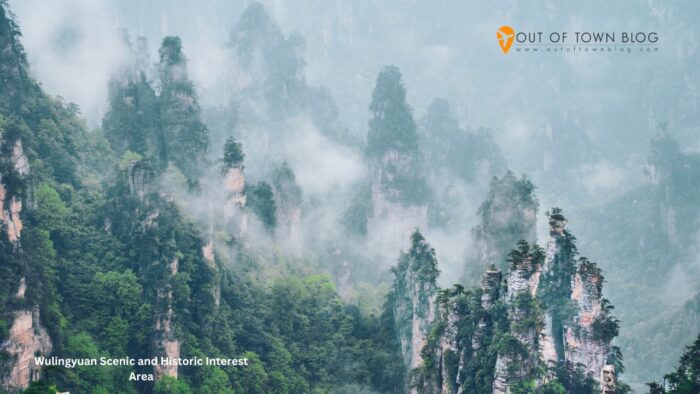 Wulingyuan Scenic and Historic Interest Area
UNESCO Category: Natural Heritage
Year Inscribed: 1992
Location: Zhangjiajie, Hunan Province
Wulingyuan is one of China’s most extraordinary natural landscapes. In Hunan Province, it is famous for towering sandstone pillars, deep valleys, natural bridges, forests, caves, and waterfalls.
The area includes several scenic zones, most notably Zhangjiajie National Forest Park, Suoxiyu, and Tianzi Mountain. Its dramatic rock formations create an unusual landscape that has gained international recognition through travel photography and popular culture.
Long-term geological processes, including weathering and erosion, shaped the sandstone pillars. Many rise dramatically above the surrounding forest, creating a spectacular mountain landscape.
Wulingyuan is also widely associated with the floating mountain scenery featured in the film Avatar. Although the film’s fictional landscapes don’t exactly match the park, the resemblance has helped boost international interest in Zhangjiajie.
What to See and Experience
- Yuanjiajie Scenic Area: Explore famous sandstone formations and panoramic viewpoints.
- Tianzi Mountain: Admire dramatic peaks, forests, and mist-covered valleys.
- Golden Whip Stream: Walk along a beautiful valley trail surrounded by towering rock formations.
- Bailong Elevator: Experience the large outdoor elevator built against a sandstone cliff.
- Ten-Mile Gallery: Discover scenic rock formations and mountain views.
- Zhangjiajie Grand Canyon: Visit the nearby canyon and its glass bridge, which is a separate attraction outside the core UNESCO property.
How to Get There: Zhangjiajie has an airport and railway connections. High-speed trains connect it to several major cities. From Zhangjiajie city, visitors can take local buses, taxis, or organized tours to the Wulingyuan entrance areas.
Recommended Visit: Two to three days to explore the major scenic zones.
Best Time to Visit: April to June and September to November generally offer comfortable conditions. Misty weather can create dramatic scenery, although visibility may be reduced.
Travel Tips: The park is extensive, and some attractions require shuttle buses, cable cars, or elevators. Check current admission validity and transport arrangements before purchasing tickets. Wear shoes with good grip and avoid visiting exposed viewpoints during severe weather.
15. South China Karst
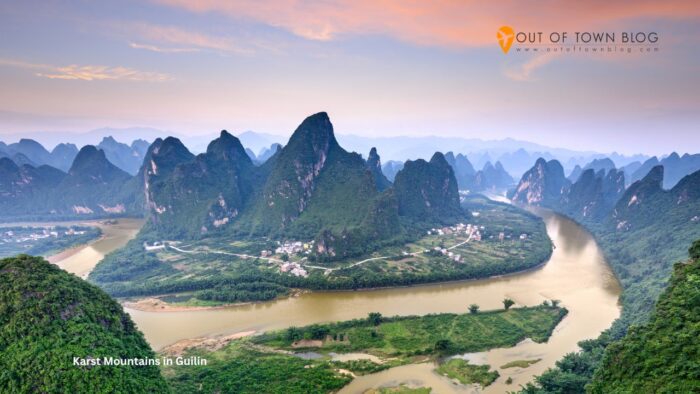 Karst Mountains in Guilin
UNESCO Category: Natural Heritage
Year Inscribed: 2007, extended in 2014
Location: Yunnan, Guangxi, Guizhou, and Chongqing
South China Karst is a vast and geographically diverse World Heritage property recognized for its exceptional limestone formations and geological features.
Unlike a single national park, South China Karst is a serial property comprising several protected areas across Yunnan, Guangxi, Guizhou, and Chongqing. It includes diverse karst landscapes, such as limestone pinnacles, tower formations, caves, gorges, and enormous natural sinkholes.
The property demonstrates the extraordinary geological processes that have shaped southern China’s landscapes over millions of years. Its formations are among the most significant examples of humid tropical and subtropical karst landscapes.
Yunnan’s Stone Forest is especially famous for its towering limestone formations, while Wulong in Chongqing is known for its natural bridges and giant sinkholes.
What to See and Experience
- Shilin Stone Forest: Walk among spectacular limestone pinnacles that resemble a stone forest.
- Wulong Three Natural Bridges: Explore massive natural limestone bridges and deep karst formations.
- Libo Karst: Discover forests, clear rivers, waterfalls, and dramatic limestone landscapes.
- Xiaoqikong Scenic Area: Enjoy natural bridges, turquoise water, and forest scenery in Guizhou.
- Karst Caves: Explore selected caves and accessible underground geological formations.
How to Get There: Access depends on the specific component visited. Kunming is a convenient gateway for Shilin, while Chongqing is a suitable starting point for Wulong. You can reach Libo by regional flights, trains, and road transfers.
Recommended Visit: Two to four days for a selected area. Exploring several separate components requires additional travel time.
Best Time to Visit: Spring and autumn are generally comfortable. Summer can be rainy, which may affect hiking and access to caves.
Travel Tips: South China Karst isn’t a single ticketed destination. Admission, opening schedules, and transportation arrangements differ among its component attractions. Plan around one geographic cluster rather than attempting to cover the entire UNESCO property in one trip.
16. Three Parallel Rivers of Yunnan Protected Areas
UNESCO Category: Natural Heritage
Year Inscribed: 2003
Location: Northwestern Yunnan Province
The Three Parallel Rivers of Yunnan Protected Areas is one of China’s most important natural heritage landscapes. Located in northwestern Yunnan, the property protects an exceptional mountainous region where three major rivers flow in parallel through deep valleys.
These rivers are the Jinsha, Lancang, and Nujiang, known internationally as the upper Yangtze, Mekong, and Salween rivers.
The protected region is notable for its dramatic elevation changes, deep gorges, snow-covered mountains, forests, and rich biodiversity. Its geography supports a wide range of habitats and plant and animal species.
The area also has significant cultural importance. Several ethnic communities live in and around the protected landscape, maintaining traditional settlements, agricultural practices, and cultural identities.
What to See and Experience
- Tiger Leaping Gorge: Explore one of the region’s most famous natural landscapes, with steep cliffs and the powerful Jinsha River.
- Meili Snow Mountain: Admire a dramatic mountain range that is particularly significant in local religious traditions.
- Nujiang Valley: Discover scenic river landscapes, traditional settlements, and mountain roads.
- Lancang River: Explore landscapes along the upper Mekong River.
- Traditional Ethnic Villages: Learn about local communities, architecture, crafts, and regional food traditions.
- Outdoor Adventures: Enjoy trekking, nature photography, and scenic road trips where permitted.
How to Get There: Kunming is Yunnan’s main international gateway. From there, visitors can fly or take the train to Lijiang, Shangri-La, and other regional centers, then arrange local transportation.
Recommended Visit: Plan for three to five days for selected destinations, with longer stays for trekking and remote-area exploration.
Best Time to Visit: April to June and September to October are generally popular for outdoor travel, although conditions vary by altitude.
Travel Tips: This is a large protected landscape rather than one centralized visitor attraction. Research road conditions, accommodation, weather, and local access requirements before traveling. Some remote areas require experienced guides and additional preparation.
17. Mount Emei Scenic Area and Leshan Giant Buddha
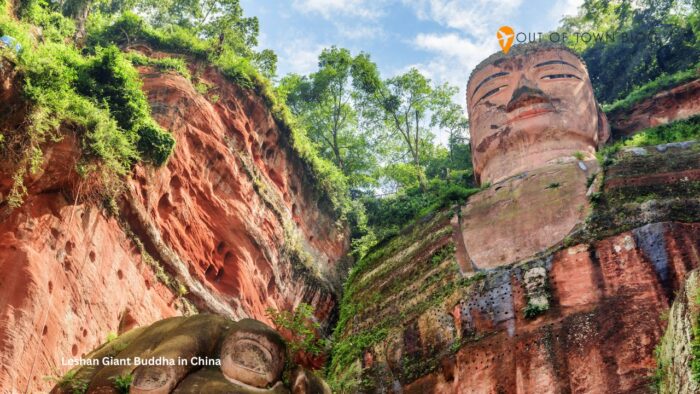 Leshan Giant Buddha in China
UNESCO Category: Mixed Heritage
Year Inscribed: 1996
Location: Emei City and Leshan City, Sichuan Province
Mount Emei and the Leshan Giant Buddha form one of China’s most remarkable combinations of natural scenery and Buddhist heritage. The site includes a sacred mountain with historic temples and an enormous stone Buddha carved into a cliff overlooking the confluence of three rivers.
Mount Emei is one of China’s Four Sacred Buddhist Mountains and is closely associated with the bodhisattva Samantabhadra. Its slopes contain ancient temples, monasteries, forests, and pilgrimage routes.
The Leshan Giant Buddha is an extraordinary feat of engineering and religious devotion. Carved into a sandstone cliff during the Tang Dynasty, the monumental statue overlooks the river system and was intended to provide spiritual protection for the area.
Together, the mountain and Buddha represent the relationship between religious belief, artistic achievement, and the natural environment.
What to See and Experience
- Golden Summit: Enjoy panoramic mountain views and visit important Buddhist structures.
- Baoguo Temple: Explore one of the mountain’s historic Buddhist temples.
- Wannian Temple: Discover religious architecture and important Buddhist sculptures.
- Leshan Giant Buddha: Admire the enormous seated Buddha carved into the cliffside.
- Lingyun Temple: Visit the temple complex near the giant statue.
- Mountain Wildlife: Observe the area’s rich vegetation and wildlife, including its well-known macaques, while keeping a safe distance.
How to Get There: Take a high-speed train from Chengdu to Emei or Leshan. Local buses, taxis, and organized tours connect the railway stations to the mountain and Buddha attractions.
Recommended Visit: Plan for two to three days to cover both Mount Emei and Leshan.
Best Time to Visit: March to May and September to November generally offer comfortable sightseeing conditions.
Travel Tips: Mount Emei is extensive, and reaching the Golden Summit may require a combination of shuttle buses, cable cars, and walking. You can view the Leshan Giant Buddha via designated walking routes or boat services, depending on operating conditions. Check separate admission and transportation arrangements for both areas.
Comparison of the 17 UNESCO World Heritage Sites in China
Use this table to compare the destinations and identify which ones best match your interests and travel schedule.
| Great Wall of China | Northern China | Cultural | Half to 1 day |
| Imperial Palaces | Beijing and Shenyang | Cultural | 1–2 days |
| Terracotta Army | Xi’an, Shaanxi | Cultural | Half day |
| Mogao Caves | Dunhuang, Gansu | Cultural | Half day |
| Peking Man Site | Beijing | Cultural | Half day |
| Potala Palace | Lhasa, Tibet | Cultural | 1 day |
| Longmen Grottoes | Luoyang, Henan | Cultural | Half day |
| Classical Gardens of Suzhou | Suzhou, Jiangsu | Cultural | 1 day |
| Old Town of Lijiang | Yunnan | Cultural | 2–3 days |
| Fujian Tulou | Fujian | Cultural | 1–2 days |
| Mount Huangshan | Anhui | Mixed | 1–2 days |
| Jiuzhaigou Valley | Sichuan | Natural | 1–2 days |
| Huanglong | Sichuan | Natural | Half to 1 day |
| Wulingyuan | Zhangjiajie, Hunan | Natural | 2–3 days |
| South China Karst | Southern China | Natural | 2–4 days |
| Three Parallel Rivers | Yunnan | Natural | 3–5 days |
| Mount Emei and Leshan Giant Buddha | Sichuan | Mixed | 2–3 days |
Suggested visiting durations are planning estimates, not official recommendations. Travel time between destinations is not included.
Suggested China UNESCO World Heritage Travel Itineraries
China is enormous, and visiting all 17 destinations in one trip requires considerable time and planning. Instead of traveling back and forth across the country, organize your itinerary by geographical region.
Here are three suggested itineraries for different travel durations.
7-Day China Heritage Itinerary
This itinerary suits first-time visitors who want to experience China’s imperial history and archaeological heritage.
| 1 | Beijing | Explore the Forbidden City and surrounding historic district |
| 2 | Great Wall | Visit Mutianyu or Badaling |
| 3 | Zhoukoudian | Discover the Peking Man archaeological site |
| 4 | Beijing to Xi’an | Travel by high-speed train |
| 5 | Xi’an | Visit the Terracotta Army |
| 6 | Xi’an to Luoyang | Travel to Luoyang and explore the city |
| 7 | Luoyang | Visit Longmen Grottoes |
10-Day China Nature and Culture Itinerary
This itinerary combines natural scenery, mountain landscapes, and cultural experiences.
| 1 | Chengdu | Arrival and city exploration |
| 2 | Leshan | Visit the Leshan Giant Buddha |
| 3 | Mount Emei | Explore temples and mountain viewpoints |
| 4 | Chengdu to Jiuzhaigou | Transfer to the Jiuzhaigou region |
| 5 | Jiuzhaigou | Explore the major lakes and waterfalls |
| 6 | Huanglong | Visit the colorful travertine pools |
| 7 | Travel to Zhangjiajie | Connect through a suitable flight or rail route |
| 8 | Wulingyuan | Explore Yuanjiajie and Tianzi Mountain |
| 9 | Zhangjiajie | Visit Golden Whip Stream and other scenic areas |
| 10 | Departure | Return to your departure city |
This itinerary requires careful coordination of flights and rail travel. Allow extra days if you prefer a slower pace.
14-Day China Heritage and Scenic Wonders Itinerary
For travelers with two weeks, this itinerary combines several major UNESCO destinations across eastern, northern, and central China.
| 1–3 | Beijing | Forbidden City, Great Wall, Zhoukoudian |
| 4–5 | Xi’an | Terracotta Army and Qin Dynasty history |
| 6 | Luoyang | Longmen Grottoes |
| 7–8 | Suzhou | Classical Gardens of Suzhou |
| 9–10 | Huangshan | Mountain trekking and sunrise |
| 11–12 | Zhangjiajie | Wulingyuan scenic areas |
| 13–14 | Chengdu and Leshan | Leshan Giant Buddha and regional sightseeing |
This route is ambitious. Some intercity connections involve flights or long train journeys, so consider extending the trip to 16–18 days for a more relaxed pace.
How Much Does It Cost to Visit China’s UNESCO World Heritage Sites?
The cost of visiting UNESCO World Heritage Sites in China depends on the destination, travel season, accommodation standards, transportation choices, and activities.
Major destinations such as the Forbidden City, Great Wall, and Terracotta Army have established visitor infrastructure, while remote natural attractions may require additional transportation, accommodation, and guided services.
Here are the main expenses to consider.
1. Entrance Fees and Attraction Tickets
Most major heritage destinations charge admission fees, although ticket structures vary.
Some attractions charge separately for cable cars, shuttle buses, special exhibitions, and guided tours.
Before visiting, check:
- Standard admission prices.
- Foreign visitor booking requirements.
- Cable car and shuttle bus charges.
- Special exhibition tickets.
- Seasonal discounts and reservation restrictions.
Don’t rely on old travel blogs for ticket prices, as fees and visitor arrangements can change.
2. Transportation
China has an extensive high-speed rail network that connects many major tourist destinations.
For long-distance travel, consider:
- High-speed trains for routes between major cities.
- Domestic flights for distant destinations.
- Airport transfers for remote scenic areas.
- Local buses and taxis for sightseeing.
- Private vehicles for destinations with limited public transportation.
3. Accommodation
Accommodation ranges from budget hostels and guesthouses to international luxury hotels and mountain resorts.
For a heritage-focused trip, choose accommodation based on proximity to the attraction rather than simply selecting the cheapest available option.
For example, staying near the Wulingyuan entrance can reduce travel time when exploring Zhangjiajie, while an overnight stay on Mount Huangshan provides opportunities to photograph sunrise.
4. Food and Dining
China offers a wide range of dining experiences, from affordable local restaurants to fine-dining establishments.
Try regional specialties when visiting each destination. Xi’an is famous for noodles and roujiamo, Sichuan for spicy cuisine, and Yunnan for distinctive mushroom dishes and regional rice noodles.
5. Tour Guides and Organized Excursions
Hiring a local guide can help you navigate destinations with complex histories, archaeological significance, and cultural traditions.
Guided tours are especially valuable at the Mogao Caves, Terracotta Army, and Potala Palace, where historical context greatly enhances the experience.
Essential Travel Tips for Visiting UNESCO World Heritage Sites in China
A successful heritage trip requires more than choosing attractions. International travelers should also prepare for China’s transportation systems, entry requirements, payment platforms, and regional travel conditions.
1. Check China’s Visa and Entry Requirements
Before booking your trip, verify the current Chinese visa requirements based on your nationality, passport, purpose of travel, and length of stay.
Visa-free arrangements and transit policies can change. Do not assume that another traveler’s eligibility applies to your passport.
For Filipino travelers, consult the Chinese Embassy in the Philippines and the relevant Chinese visa application channels for the latest requirements.
2. Book High-Speed Train Tickets in Advance
High-speed trains are among the most convenient ways to travel between major Chinese cities.
China Railway’s official 12306 English website and app support ticket purchases using valid foreign passports.
Remember to:
- Carefully check the departure and arrival stations.
- Book popular routes ahead of holidays.
- Use the same passport for booking and boarding.
- Arrive at the station early for security screening.
- Allow enough time for station transfers.
3. Prepare Alipay and WeChat Pay
Mobile payments are widely used throughout China.
International visitors can register for supported payment services and link eligible foreign bank cards.
Before departure, consider setting up:
- Alipay.
- WeChat.
- An eligible international credit or debit card.
- A backup payment method.
- Some Chinese yuan in cash.
Not every merchant accepts every payment method, particularly in smaller communities and remote destinations.
4. Download Useful Travel Applications
Prepare your smartphone with useful apps before you arrive.
Consider installing:
- Navigation and map applications.
- Translation applications.
- Railway booking applications.
- Airline applications.
- Hotel booking applications.
- Payment applications.
- Ride-hailing applications.
Check whether your chosen applications and services are accessible in mainland China. Some international websites and platforms may be restricted or unavailable.
5. Prepare for Language Differences
Mandarin is the main language used throughout much of mainland China, although many regional languages and minority languages are also spoken.
English is commonly understood in some major hotels and international tourist areas, but communication may be more challenging in rural communities.
Download an offline translation tool and save the Chinese names of your hotels and destinations.
6. Dress Appropriately for Religious Sites
When visiting Buddhist temples, monasteries, and other religious landmarks, dress respectfully and observe local customs.
Follow posted instructions regarding photography, footwear, restricted areas, and religious ceremonies.
At the Potala Palace and Mount Emei, remember that these are active religious and cultural sites, not simply tourist attractions.
7. Prepare for Different Weather Conditions
China has diverse climates, ranging from humid subtropical regions to cold northern provinces and high-altitude mountain environments.
Pack according to your destinations.
- Beijing and the Great Wall: Prepare for seasonal temperature changes.
- Huangshan: Bring warm layers, even during warmer months.
- Jiuzhaigou and Huanglong: Prepare for cold weather and high altitude.
- Zhangjiajie: Pack rain protection and hiking-appropriate shoes.
- Tibet: Prepare for high-altitude conditions and strong sunlight.
8. Allow Extra Time for Mountain Destinations
Natural heritage destinations often require extensive walking, shuttle transfers, and cable car journeys.
Do not underestimate the time needed to explore large scenic areas.
For Huangshan, Wulingyuan, and Jiuzhaigou, plan at least one full day and consider staying nearby.
9. Respect Cultural and Environmental Heritage
UNESCO sites are protected because of their exceptional historical, cultural, and natural importance.
Visitors should:
- Avoid touching ancient carvings and murals.
- Never remove stones, plants, or other natural materials.
- Stay on designated trails.
- Avoid feeding wildlife.
- Dispose of rubbish properly.
- Respect residents and religious communities.
- Follow photography restrictions.
Responsible tourism helps preserve these destinations for future generations.
10. Purchase Travel Insurance
Travel insurance is useful for international trips involving multiple cities, domestic flights, mountain activities, and remote destinations.
Choose a policy that covers medical emergencies, trip interruptions, cancellations, and eligible outdoor activities.
Carefully review the policy exclusions, especially for high-altitude activities and trekking.
Frequently Asked Questions About UNESCO World Heritage Sites in China
1. How many UNESCO World Heritage Sites are there in China?
China has an extensive collection of UNESCO World Heritage properties, including cultural, natural, and mixed sites. The official UNESCO country listing is the best source for the current total because the World Heritage Committee can approve new properties and extensions during its sessions. This guide’s 17 destinations are a curated selection of notable attractions, not a complete inventory. Travelers who want to explore beyond the famous landmarks can research additional sites throughout the country.
2. What is the most famous UNESCO World Heritage Site in China?
The Great Wall of China is arguably the country’s most internationally recognized World Heritage landmark. Its enormous scale, historical importance, and distinctive architecture make it one of the world’s most recognizable attractions. Other internationally famous sites include the Forbidden City, Terracotta Army, Potala Palace, and Jiuzhaigou Valley. The best destination ultimately depends on your interests. History enthusiasts may prefer Beijing and Xi’an, while nature lovers may find Zhangjiajie, Huangshan, and Jiuzhaigou more appealing.
3. What is the best time of year to visit UNESCO World Heritage Sites in China?
Spring and autumn are generally excellent seasons for exploring many of China’s cultural and natural attractions. April and May offer comfortable temperatures in several regions, while September and October are particularly attractive for mountain scenery and autumn foliage. However, the best travel season varies by destination. Jiuzhaigou is popular in autumn, Huangshan offers different experiences year-round, and northern China can be very cold in winter. Check regional weather forecasts and attraction operating schedules before finalizing your itinerary.
4. Can tourists visit all 17 UNESCO World Heritage Sites in China in one trip?
Visiting all 17 destinations in one trip is possible with extensive planning, but it is not recommended for travelers with limited vacation time. The sites span different provinces, and some require long-distance flights, train journeys, or private road transfers. A realistic itinerary should prioritize destinations within the same geographic region. For a more enjoyable experience, spend at least two to three weeks exploring selected sites rather than rushing between attractions. Travelers who want to visit all 17 should consider a much longer multi-region journey.
5. Are China’s UNESCO World Heritage Sites suitable for family travel?
Many UNESCO destinations in China suit families, though the experience varies with children’s ages and physical abilities. The Forbidden City, Terracotta Army, and classical gardens offer accessible cultural experiences, while Jiuzhaigou and Zhangjiajie provide opportunities for outdoor exploration. Mountain destinations such as Huangshan may involve steep stairs and extensive walking. Families should check shuttle services, accessibility, toilet facilities, weather, and visitor restrictions before booking. Choose accommodation near attraction entrances to reduce unnecessary travel and make sightseeing more comfortable.
6. Do foreign tourists need to book UNESCO attractions in advance?
Advance reservations are advisable for several popular attractions, particularly the Palace Museum in Beijing, the Terracotta Army, Mogao Caves, and Potala Palace. Some sites use visitor quotas, timed entry, passport verification, or assigned tour schedules. Booking arrangements can change by season and local regulations. Use official ticketing channels whenever possible, and verify the identification documents required for entry. During Chinese public holidays and peak travel seasons, plan ahead because popular attractions and nearby accommodation can sell out.
7. Are there UNESCO World Heritage Sites in China that are free to visit?
Some heritage locations and individual public areas may offer free admission, but many major attractions charge entrance fees. Even when the surrounding landscape or historic district is freely accessible, museums, protected scenic areas, cable cars, special exhibitions, and guided tours may require separate tickets. Prices also vary by season, visitor category, and local policies. Always confirm admission arrangements before traveling, rather than assuming UNESCO designation means free entry. Budget for transportation, additional visitor services, and the standard entrance ticket.
8. What is the easiest way to travel between UNESCO World Heritage Sites in China?
The high-speed railway network is one of the most convenient ways to connect major cities and heritage destinations. Beijing, Xi’an, Luoyang, Suzhou, and several other cities have extensive rail connections. Domestic flights are useful for longer journeys, especially when traveling between distant regions such as Gansu, Sichuan, and Yunnan. For remote scenic areas, you may need private transfers, organized excursions, or local buses. Plan transportation around each attraction and allow extra time for transfers between railway stations, airports, and scenic entrances.
9. What should international travelers prepare before visiting China?
International travelers should check visa eligibility, passport validity, accommodation requirements, and entry procedures before departure. It is also helpful to prepare mobile payment apps, international bank cards, offline translation tools, navigation apps, and railway booking services. Keep digital and printed copies of important travel documents. Research local transportation and cultural etiquette, especially when visiting religious landmarks and rural communities. Travelers should also verify mobile connectivity and access to essential online services before arriving, as some international platforms may not work normally in mainland China.
10. Which UNESCO World Heritage Sites in China are best for photography?
China offers exceptional photography opportunities for different interests. The Great Wall provides dramatic mountain and architectural compositions, while the Forbidden City is ideal for traditional imperial architecture. Jiuzhaigou is particularly attractive for turquoise lakes, waterfalls, and autumn foliage. Zhangjiajie’s sandstone pillars create distinctive mountain landscapes, and Huangshan is famous for its sea of clouds and unusual pine trees. For cultural photography, consider the Mogao Caves, Longmen Grottoes, Fujian Tulou, and Lijiang Old Town. Always follow photography restrictions, particularly inside museums, caves, temples, and religious buildings.
Final Thoughts
China’s UNESCO World Heritage Sites reveal the country’s extraordinary combination of ancient civilization, artistic achievement, religious traditions, and natural beauty.
From the monumental Great Wall and the archaeological treasures of the Terracotta Army to the colorful lakes of Jiuzhaigou and the sandstone pillars of Zhangjiajie, every destination offers a different perspective on China’s heritage.
History enthusiasts can explore key chapters of Chinese civilization in Beijing, Xi’an, Luoyang, and Dunhuang. Nature lovers can focus on Huangshan, Jiuzhaigou, Huanglong, and Wulingyuan, while travelers interested in traditional communities and architecture will appreciate Lijiang and the Fujian Tulou.
You do not need to visit all 17 destinations to appreciate China’s remarkable heritage. Choose a region that matches your interests, allow enough time to explore, and include opportunities to experience local culture beyond the main tourist attractions.
A journey through China’s UNESCO World Heritage Sites is ultimately an opportunity to understand the history, traditions, landscapes, and communities that have shaped one of the world’s most fascinating travel destinations.
Beijing Travel Tour Packages You Should Try
Follow and subscribe to OutofTownBlog.com on Facebook, Twitter, Instagram, Pinterest, and YouTube for more Travel-related updates.
Also read:














 English (US) ·
 French (CA) ·