

 1 month ago
69
1 month ago
69
PROTECT YOUR DNA WITH QUANTUM TECHNOLOGY
Orgo-Life the new way to the future Advertising by Adpathway Beef cattle indoors (photo from Compassion in World Farming on Flickr)
4 September 2026
Harmful algal blooms have become a regular feature of western Lake Erie’s summer water quality. Though they can occur as early as June, the worst of them are in late August and early September. This summer the bloom was 40 miles long on 26 August.
Today the bloom is not quite as long but it has been hard to quantify because clouds covered the western end of lake in the past couple of days. Clouds are the white blanket in the lefthand image and gray on the right.
 Harmful Algal Bloom satellite imagery and analysis 4 Sep 2026 (from Lake Erie Harmful Algal Bloom Forecast historical images)
Yesterday the Lake Erie Harmful Algal Bloom Forecast said: “The cyanobacteria bloom in western Lake Erie has an approximate area of 180 square miles, which is a decrease in area since Aug 28. Clouds have partially obscured recent satellite imagery, but it appears the cyanobacteria bloom is present in the western basin from the Pointe Moullie State Game Area, MI to the Magee Marsh Wildlife Area, OH. During low wind, patches of scum may be present from Cedar Point, OH to Monroe, MI. (emphasis added)
The scum is Microcystis algae that blooms in the presence of phosporus and produces toxins which kill fish and harm humans. The algal bloom was so bad in 2014 that the Toledo Water Authority told their 500,000 customers not to drink the water and not to wash dishes with it.
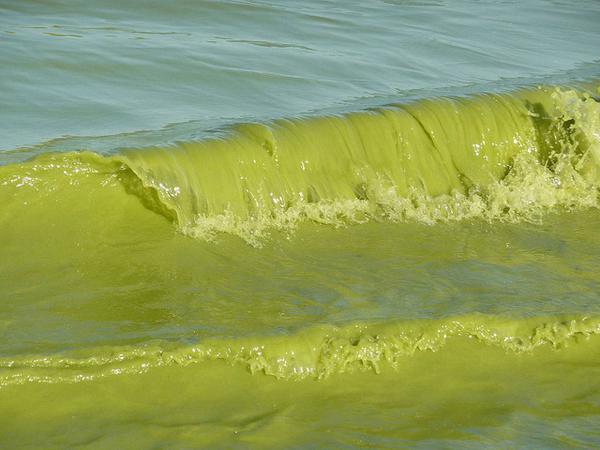 Harmful Algal Bloom on Lake Erie at Point Pelee, June 2011 (photo by NOAA Great Lakes Environmental Research Lab)
After Toledo’s water supply was compromised, Ohio made a plan to reduce phosporus flowing into the Lake from the Maumee River watershed. The project’s goal was to reduce the phosphorus by 40% by 2025. But that didn’t happen.
Why is it so bad? More than 85% of the phosporus comes from agricultural runoff. The runoff comes from manure, a byproduct of intensive cattle farming.
June 2026 video embedded from Corey O’Leary on YouTube
Cattle crowding is the link. Agriculture has changed in the Maumee River watershed and we can see it in Lake Erie.













 English (US) ·
  French (CA) ·