

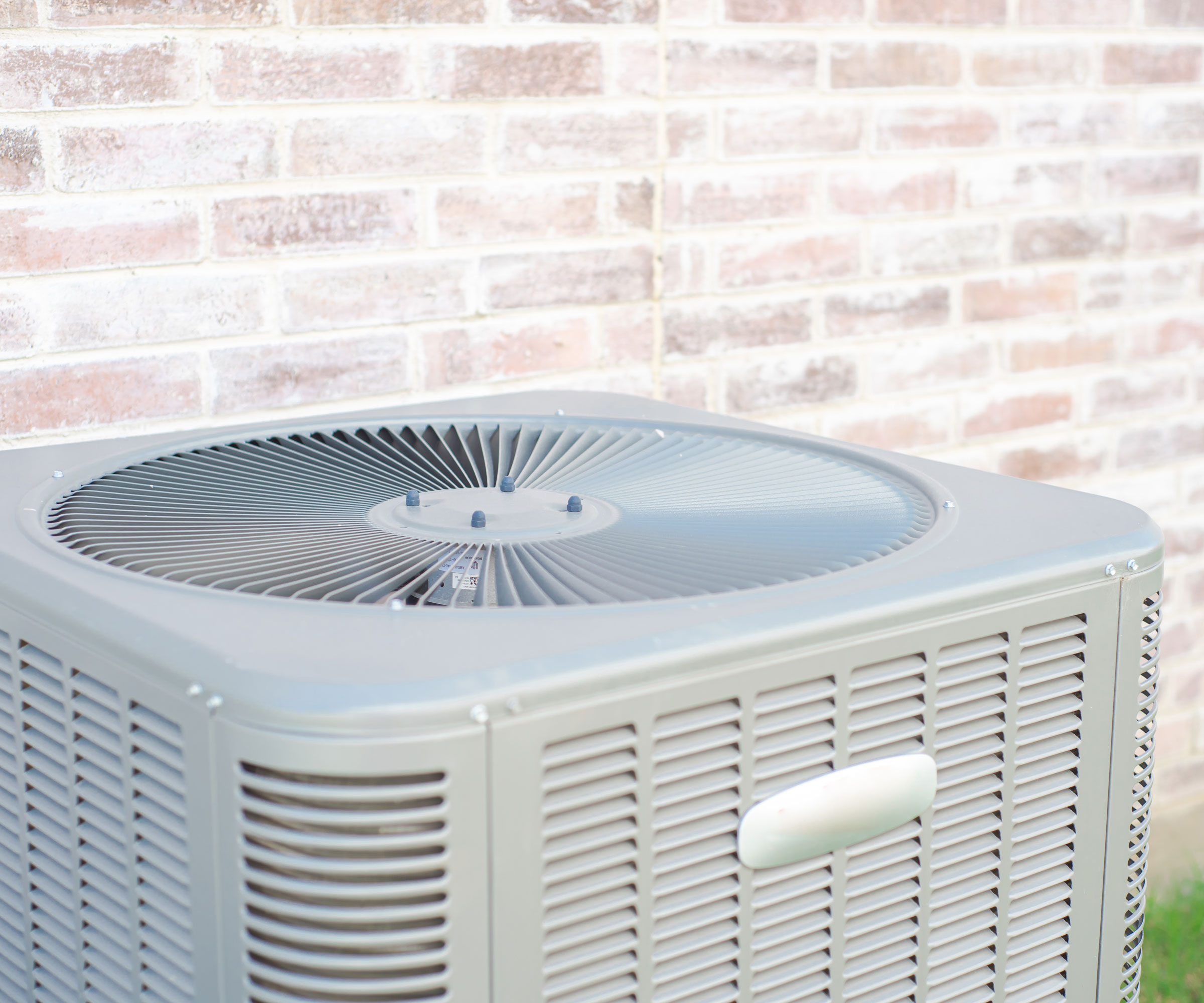
Ah, air conditioners. They are sort of like compost piles: useful, even essential, but pretty darned unappealing to look at. So no wonder you fancy hiding them behind a couple of better-looking plants. Trouble is, most AC units are picky about what gets close to them. If you are thinking of hiding your unit with leafy plants, be on notice: if you restrict the airflow to the air conditioner, you may lose that cold air entirely.
Beyond the obvious visual frustration of an industrial metal box ruining your patio view, there is also the hum-and-buzz of the compressor running all summer long. If this is all sounding like a bit of a nightmare, take heart. If you choose the right types of shrubs, hiding the AC unit is possible. You just have to select the appropriate plants for the purpose, and grow them at an appropriate distance.
Fortunately, evergreen shrubs offer a brilliant workaround. Their dense foliage doesn't just block line of sight: the thick leaves and woody stems naturally muffle high-frequency sound waves, creating a quieter backyard vibe. Planted correctly during late summer, these robust specimens establish quickly in warm ground, concealing a noisy eyesore behind a lush, gentle living screen that requires minimal long-term care and maintains its soothing presence all year round.
Best Shrubs to Conceal AC Units
Selecting plants to screen that bulky AC unit involves some of the same criteria you might apply to making friends in the office. You want to pick individuals that are steady, stable, and know how to be friendly, without encroaching on precious space. In the case of shrubs and AC units, you’ll want a clearance of 3 feet (1 m) on all sides of the unit, and twice that above it. The shrubs in this selection have dense foliage to block the view and muffle noise, and they hold onto that foliage all year long. They also have roots that don’t spread enough to impede the machine.
Before planting these low maintenance shrubs, assess your unit's layout and service access needs. HVAC technicians need clear access to electrical panels and service valves, so never plant a solid wall on all four sides. Leave a removable decorative trellis or a 3-foot (90 cm) clearance path for maintenance. With the practical requirements of the technicians sorted, you can focus on the needs of the plant.
(Image credit: TrongNguyen / Getty Images)
These shrubs are fine for summer planting, but consider your hardiness zone and existing soil conditions before planting. Soil right next to house foundations and heat-venting AC fan exhausts dries out twice as fast. Check soil moisture before planting to ensure long-term survival. Use a good soil diagnostic tool, such as the XLUX Soil Moisture Meter from Amazon. This gives you real-time moisture readouts to see whether the soil near those hot AC exhaust vents is drying out.
Where conditions are heavy clay or sand, blend a little organic matter (such as aged compost) into the planting hole to help with drainage. It’s also a good idea to add a little biochar, such as Wakefield Premium Biochar Soil Conditioner from Lowe’s to protect soil nutrients and help with moisture retention. Add a couple of inches of a light organic mulch, such as a shredded hardwood bark or composted leaf mold. Then water shrubs deeply. Keep watering through the growing season, to help these shrubs develop strong, deep roots.
1. Boxwood
(Image credit: Jacky Parker Photography / Getty Images)
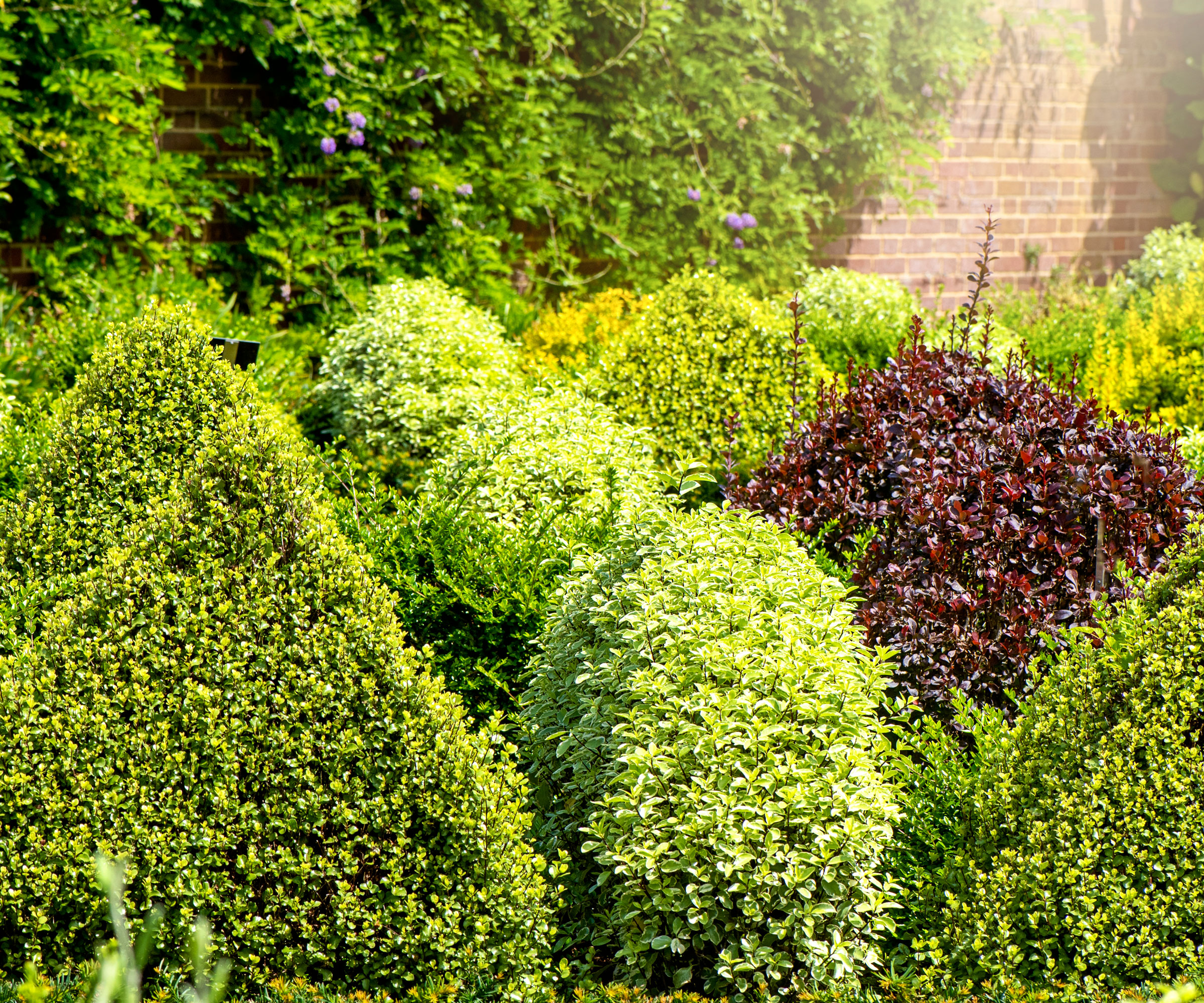
Your best bet when trying to mask an ugly AC unit (and that’s pretty much all of them) is to select evergreen shrubs with a compact habit. These are easier to maintain than sprawling types. For this, the quintessential evergreen is boxwood (Buxus spp). These are self-contained evergreens and will grow in sun, partial sun or even deep shade. They are drought tolerant and thrive in hardiness zones 5-9. You can choose from a range of boxwood shrubs at Nature Hills, such as Green Velvet, Sprinter and Calgary Boxwood.
They are great for structural screening, thanks to their small, leathery leaves that form a living wall of green. This thick canopy acts as an effective acoustic barrier. Boxwoods flourish in container gardening schemes if you choose a weather-resistant planter with drainage holes. Add a little Espoma Organic Plant-tone from Walmart for a slow release of microbes that promotes steady root growth and vibrant foliage.
Boxwoods grow up at around 6in (15 cm) growth per year. While this doesn’t sound all that astonishing, these shrubs rapidly fill out their dense interior leaves, giving you a solid green acoustic wall faster than almost any other structural shrub. Perfect if you want a set-it-and-forget-it shape that won't sprint into your AC clearance zone.
2. Arborvitae
(Image credit: Klaus Steinkamp / Alamy)
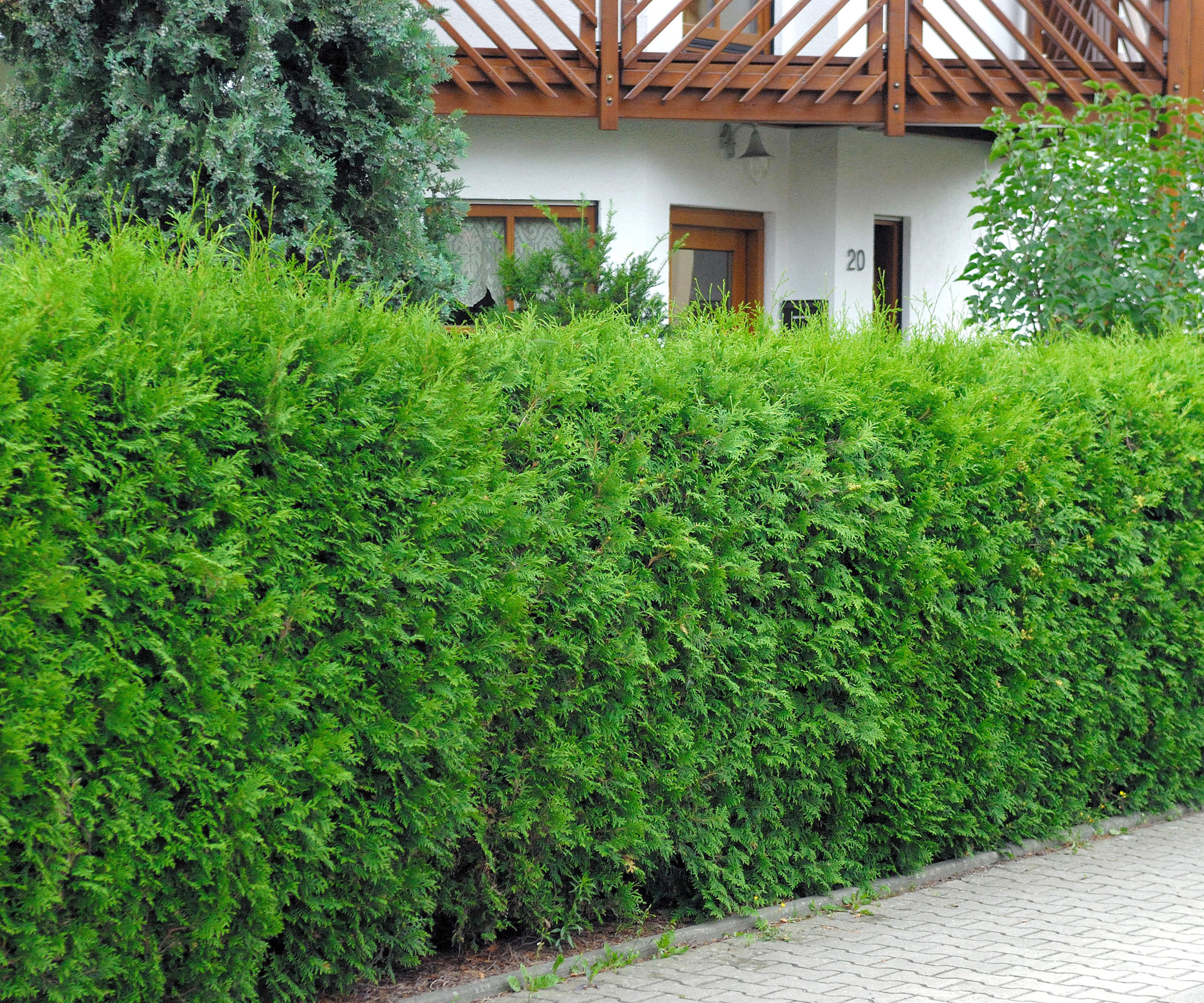
If you’re like me, you’ve planted arborvitae plants (Thuja spp.) like Green Giant that shoot up quickly, creating a tall, deep wind break. But these are not the best options to put on AC duty. Instead, use narrow varieties like Emerald Green (T. occidentalis). They top out at 10 feet (3 m) and maintain a narrow 3-foot (1 m) spread, offering year-round color in zones 2-7. Buy Emerald Green Arborvitae from Fast Growing Trees. Their soft, scale-like foliage traps ambient mechanical noise very well.
Dwarf globe cultivars like Fire Chief or Mr. Bowling Ball reach 3-4 feet (0.9-1.2 m) tall and wide without requiring heavy pruning. They prefer full sun to partial shade and moist, well-draining soil. Just avoid planting them directly in the blast path of hot AC exhaust air. Acid-loving arborvitae shrubs benefit from a sprinkling of Espoma Organic Holly-Tone Fertilizer, available from Lowe’s. This organic feed supplies essential sulfur and iron to keep needles rich and vibrant.
With arborvitae shrubs, you can expect fast vertical screening. This evergreen shoots up at a steady 12 inches (30 cm) per year in its early years, making it one of the quickest ways to build a tall, narrow sightline barrier without invading your AC unit's footprint.
3. Mediterranean Cypress
(Image credit: Grace Cary / Getty Images)
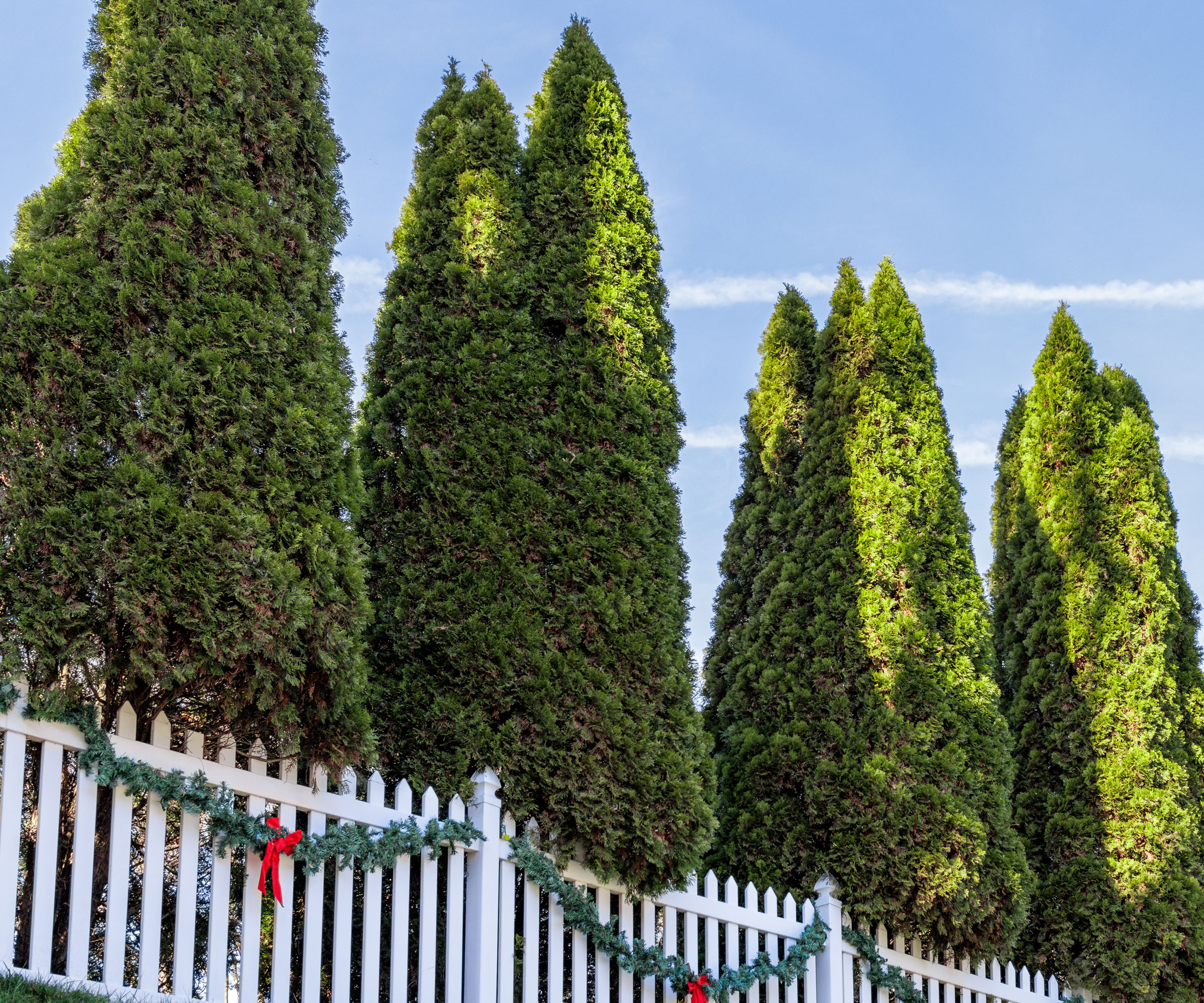
Narrow cypress varieties are a top choice for hiding an outdoor AC unit, with their dense, evergreen foliage and narrow waistline. A line of regular Mediterranean cypress (aka Italian cypress) grows like a row of 50 feet (15 m) tall exclamation points with 5 foot spread, narrowing at the crown. This will hide your AC, but may be too tall to make the cut for this gig. Instead, pick a dwarf cultivar like Tiny Tower (C. s. 'Monshel') that tops out at 10 feet (3m) tall. They thrive in zones 7-10. Buy Italian Cypress from Nature Hills for mass planting.
Thriving in full sun and heat, this tough fast-growing evergreen tolerates drought once settled. Just don’t allow them to sit in soggy soil. If your soil is clay-based, it’s a good idea to blend a few scoops of coarse sand, a grit-rich soil, or a cactus mix such as Hoffman Organic Cactus and Succulent Soil Mix from Walmart into the planting hole. This will prevent waterlogging and root rot.
Dwarf Italian cypress shoots up quickly, although it’s fair to say that its dwarf habit keeps its footprint narrow. That said, it gains 2 feet (60 cm) of height per year when young. While it is one of the fastest choices on the list, it also manages to keep a neat 2-foot (60 cm) waistline.
4. Inkberry Holly
(Image credit: Diane Labombarbe / Getty Images)
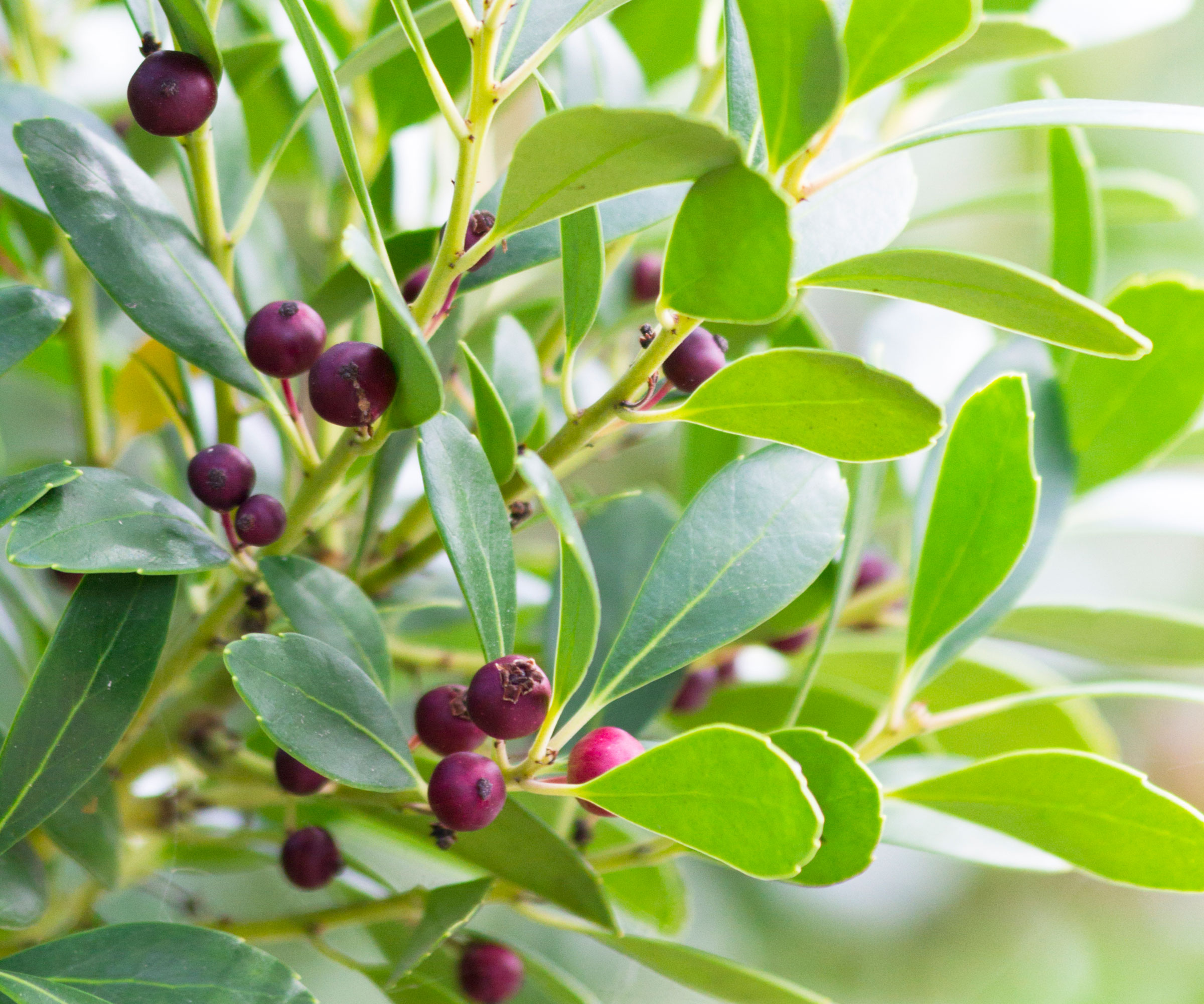
Inkberry holly (Ilex glabra) is a broadleaf evergreen. Unlike close relatives, its leaves are not prickly but smooth, and its fruit is dark. It prefers damp acidic soil and full sunshine. Inkberry holly can grow to 10 feet (3 m) tall and about half that wide in zones 4-11. For something smaller, look at cultivars like 'Densa' that grow to 6 feet (2 m) in height, or 'Compacta' that stop at 4 feet (1 m) tall. These shrubs thrive in USDA hardiness zones 4-11. You can buy Proven Winners Gem Box Inkberry Holly Live Plants from Walmart for low hedges, small specimens, and containers.
As a native, inkberry holly supports local pollinators while offering year-round cover. It thrives in damp, acidic soils and tolerates partial shade. If your utility area sits in a low-lying spot that collects rainwater, this moisture-tolerant shrub is ideal. You can give your inkberry a boost by treating it to a little seaweed or kelp feed. Buy GS Plant Foods Organic Concentrated Liquid Kelp from Amazon. This feed is packed with vitamins and minerals to help hollies resist heat stress and transplant shock.
Your inkberry will fill out steadily, growing into a dense acoustic screen without requiring constant pruning. It offers fast visual fill, adding 12 inches (30 cm) per year, quickly knitting its fine branches together into a thick, sound-dampening screen that looks complete in just a couple of seasons.
5. Skip Laurel
(Image credit: Bildagentur Online McPhoto / Alamy)
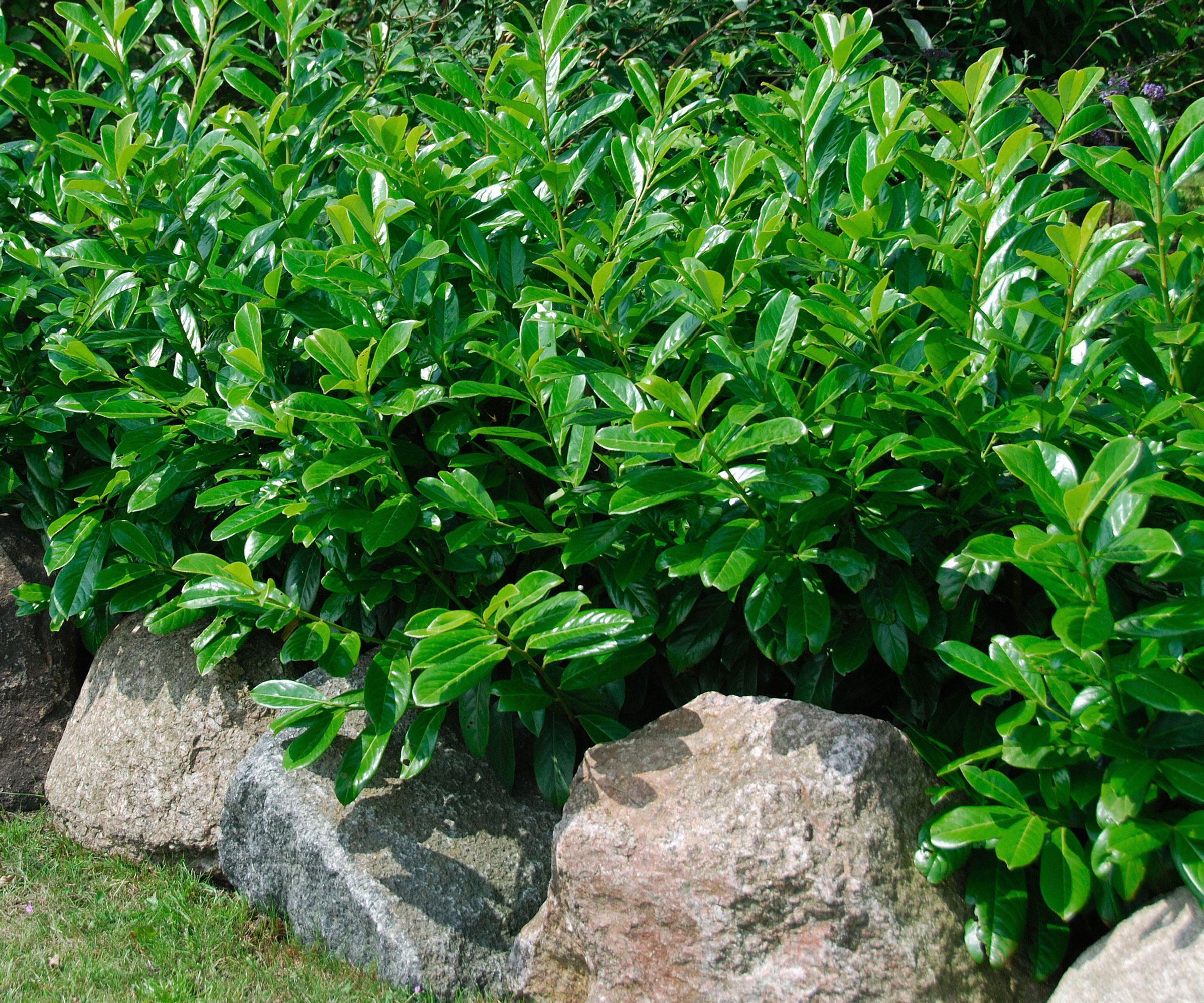
Skip or schip laurel (Prunus laurocerasus 'Schipkaensis') is a broadleaf evergreen. This cherry laurel is known for its narrow habit, while reaching 10-18 feet tall (3-6 m). It makes an excellent, low-maintenance privacy hedge with its upright growth habit and dense foliage. It is also cold hardy, thriving in zones 5-9. These shrubs shrug off urban pollution and salt spray, and thrive in most soils, as long as they offer good drainage. You can buy Skip Laurel Shrubs from Fast Growing Trees.
If your outdoor AC unit is located under a deck or high tree canopy, this is ideal. Its large, glossy leaves reflect light and provide superior acoustic dampening. Delicate white spring flower spikes add seasonal interest. It grows vigorously, so trim away any stray branches drifting toward your AC unit. A little fungicide, such as Arber Organic Bio-Fungicide Concentrate from Walmart, protects these laurels against powdery mildew and leaf spot. This is the quickest grower on the list if you need to block a loud AC unit ASAP, putting on 2 feet (24 inches) per year. However, it will need some annual summer trimming to maintain good flow around the unit.
(Image credit: Jacky Parker Photography / Getty Images)
Summer Shrub Essentials
Planting a container-grown evergreen near your AC unit during late summer is a brilliant way to address a visual bugbear in the yard, and you don’t have to give your shrub loads of constant care. Warm soil temperatures encourage roots to anchor quickly before winter arrives. However, these essential soil care products will help to ensure your living AC screen stays healthy, dense, and vibrant season after season.
 Moisture Retention
Back to the Roots
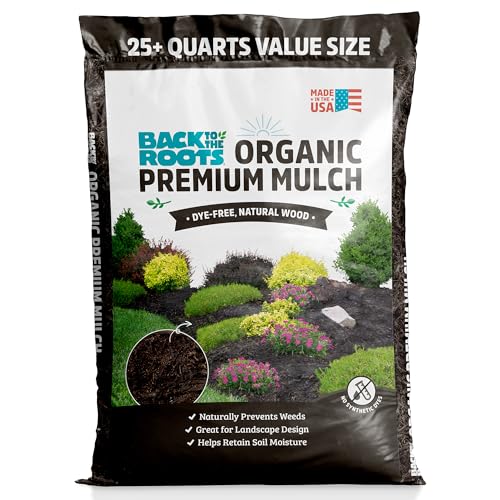
Back to the Roots 25.7qt (1 Cubic Ft) Organic Premium Mulch
A rich, dark wood mulch that insulates young roots from hot AC exhaust air and conserves ground moisture. Spreading a layer around the base of your newly planted shrubs prevents heat stress, reduces watering frequency, and stops stubborn summer weeds from competing for essential nutrients.
 Soil Booster
Plantonix
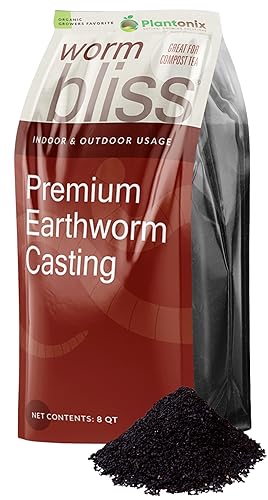
Worm Bliss Premium Earthworm Castings
You can count on worms (and their casts) to help improve soil texture! This blend boosts water retention and delivers gentle nutrients. It's packed with natural microbial life to help young evergreens build strong roots.
 Foliage Health
Arber
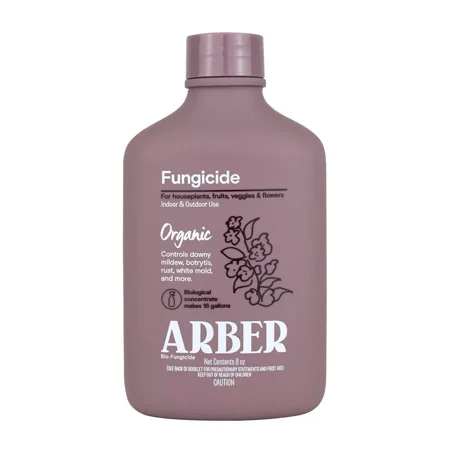
Arber 8oz Organic Bio Fungicide Concentrate
This biological spray protects dense evergreen foliage from common midsummer threats like powdery mildew, black spot, and leaf rust. Applying this planet-safe formula proactive shield helps broadleaf evergreens like skip laurel and inkberry holly stay lush and disease-free during sticky, humid heatwaves.
Need more ideas for getting the most from your plants, indoors and out, and looking for the best seasonal expert advice delivered straight to your inbox? Sign up for the free Gardening Know How Newsletter!















 English (US) ·
  French (CA) ·