

 9 months ago
154
9 months ago
154
PROTECT YOUR DNA WITH QUANTUM TECHNOLOGY
Orgo-Life the new way to the future Advertising by AdpathwayBy the time Liberal MPs filed out of last Friday’s meeting on energy policy, many had accepted the party’s promise to achieve net zero emissions by 2050 – made under Scott Morrison and retained by Peter Dutton – was all but dead.
But there was a similar expectation that the party would remain loosely committed to carbon neutrality at some fixed point in time, even if not by mid-century.
Just a week later, even that bare minimum pledge is set to be jettisoned after support for net zero emissions in Sussan Ley’s leadership team evaporated in the wake of the Nationals’ move to abandon the climate target.
The country party’s decision to announce an explicit position in advance of their Coalition partner incensed pro-net zero Liberals, who are now in a fight against time and internal momentum to salvage the policy.
Once the Liberal position is settled next week, the Coalition partners will negotiate a single policy, which sources expect will involve dumping the target and adopting a Nationals-inspired approach that aligns the pace of Australia’s emissions reduction with that of other countries.
Sign up: AU Breaking News email
The deal would keep the Liberals and Nationals together (for now), shield Ley’s leadership from a challenge by either Angus Taylor or Andrew Hastie (for now) and possibly win back some of the conservative vote that is fleeing to One Nation.
But some Liberals fear the latest attempt to quell the latest climate policy conflict could inflict lasting electoral pain.
‘Poisoned’
The party’s position on net zero emissions will be formalised at a meeting of the Liberal shadow ministry in Canberra next Thursday, which will follow a party room meeting the day before to endorse a “set of principles” on climate and energy.
Three senior Liberals and Nationals will then thrash out a joint position, which will be put to a virtual Coalition meeting on Sunday 16 November.
Ahead of those crunch meetings, MPs including shadow ministers who spoke to Guardian Australia on the condition of anonymity, are convinced net zero emissions is now “dead” as Coalition policy.
“I think it is now a majority – a clear majority – of the party room that support getting out of net zero,” a senior Liberal source said.
As Guardian Australia reported last month, senior Liberals had canvassed options to water down the Scott Morrison-era commitment – including delaying the 2050 deadline – with the hope of winning majority support in a deeply divided party room.
But the prospects of a compromise diminished as a review led by the shadow energy minister, Dan Tehan, dragged on, creating time for opponents including Matt Canavan, Barnaby Joyce and Andrew Hastie to mobilise against the target.
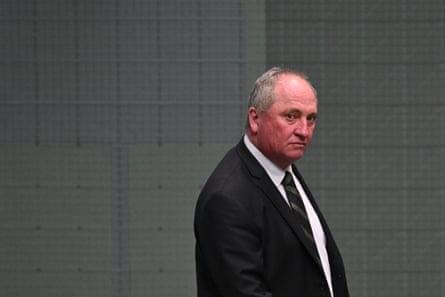
“We should have expected them to mobilise because there is a pathological hatred of the environment,” said one pro-net zero emissions MP, who regrets that the Nationals were allowed to front-run the policy debate.
Senior Liberals close to Ley believe voices on the “populist” right, which include Sky News, 2GB and News Corp, have effectively “poisoned” the term net zero in the political debate.
One rightwing power broker said news of the potential closure of the Tomago aluminium smelter, an uptick in inflation and recent comments from billionaire Bill Gates that climate change “will not lead to humanity’s demise” has hardened internal opposition.
Gates’ comments were widely noted among Liberals, given it was his book How to Avoid a Climate Disaster that inspired Morrison to commit to the 2050 target in late 2021.
Factional shifts
The Nationals’ decision to dump the target following its own review had “altered the landscape”, another senior source said, forcing the Liberals to fall into line to keep the Coalition together.
In the hours after Littleproud announced the Nationals’ position on Sunday, Ley discussed the decision with senior colleagues including Ted O’Brien, Angus Taylor, Michaelia Cash, Anne Ruston, James Paterson, Jonno Duniam, Alex Hawke and James McGrath.
Members of the group met again on Monday morning, where a firm view crystallised.
Three sources familiar with the discussions confirmed Ruston was the only member of the leadership team to speak against ditching net zero emissions, reportedly telling colleagues that the Nationals had, once again, put a “gun” to the head of their Coalition partner.
after newsletter promotion
That the South Australian senator was the lone voice advocating for a firm climate target highlights the waning influence of the moderates, a faction that has been smashed at the past two elections by teal independents, Labor and Greens.
Ruston is not a Liberal moderate in the vein of Christopher Pyne, George Brandis, Malcolm Turnbull or Julie Bishop.
But after Simon Birmingham’s retirement, Jane Hume’s demotion to the backbench and David Coleman’s defeat at the May election, Ruston was thrust into the factional leadership role.
The faction – which includes NSW power brokers Andrew Bragg and Maria Kovacic – helped Ley defeat the right faction-backed Taylor in the post-election leadership ballot but appears set to lose the argument on net zero emissions.
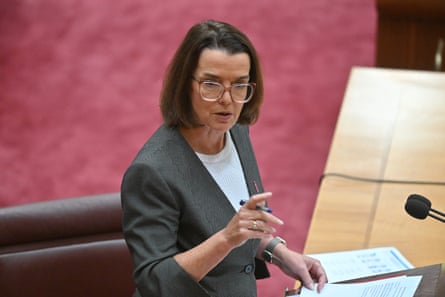
“It doesn’t surprise me given the balance of the party room,” one moderate figure said of the expected decision to dump the policy.
“When you have lost so many of those moderate MPs and party members, it is unsurprising that the balance is more titled to conservative perspectives.”
One Liberal argued Peter Dutton had played the final card in the fight to keep sceptics on board with net zero emissions: the promise it could be reached with nuclear power.
But once that policy was secured, the hard right simply wanted more.
‘They don’t want to see us give up’
Bragg put himself forward for a press conference, television or radio interview on every sitting day in parliament this week, notionally to discuss his housing portfolio but really to make a point on net zero emissions.
The media appearances are part of a public and private campaign from mostly moderate MPs to rescue the policy, amid fears that abandoning it would erode the party’s already decimated standing in the cities and with women and young people.
The moderates are willing to concede the 2050 deadline to preserve some commitment to net zero emissions this century. But Bragg has made clear the target cannot be abandoned entirely.
“Australians want to see a target. They want to see us work toward that target and they don’t want to see us give up,” he told reporters on Wednesday.
“I think it would be a very bad message for Australia to give up on climate action. I don’t think that’s what the community wants. That’s not leadership.”
Fellow moderate Dave Sharma has revived the prospect of splitting from the Nationals if the country party refuses to give ground, and other colleagues are rumoured to be open to relegating themselves to the backbench if net zero emissions was dumped entirely.
Such drastic actions are considered unlikely.
But the fact they are being canvassed provides a window in the fury among moderates as the rightwing Nationals once again dictate their party’s position.
Senior Liberals are already planning how to communicate the anticipated new position, which will aim to assure voters, particular those in city seats, that the party has not capitulated on cutting emissions.
Tony Barry, a former Liberal strategist now with Redbridge Group, said the perception of the Coalition as a party of “climate change deniers” meant that message would be difficult to sell.
“What makes the communication challenge more difficult is that even if the Liberal party are right about the physics of energy transition, they are at risk of losing the politics of energy by effectively adopting Barnaby Joyce’s position and that’s going to be very hard to overcome in those urban seats where they’re currently not competitive,” he said.
“Because Barnaby is box-office poison in urban seats and with younger voters in particular.”














 English (US) ·
  French (CA) ·