

 3 hours ago
6
PROTECT YOUR DNA WITH QUANTUM TECHNOLOGY
Orgo-Life the new way to the future Advertising by AdpathwayThe study, published in Discover Nano, describes how polyethylene terephthalate collected from waste bottles was transformed through catalytic graphitization and then oxidized into graphene oxide, a carbon-rich material whose surface chemistry allows it to bind carbon dioxide released during heating.
PET bottles were gathered from the institute’s own premises, sorted by type and colour, washed to remove contaminants, dried in a covered environment, and chopped by hand into small chips. After weighing, the chips entered the first chemical transformation. One gram of chips was mixed with three grams of the iron-based catalyst iron nitrate nonahydrate, along with seven to eight millilitres of ethanol and seventy to eighty millilitres of deionized water. A magnetic stirrer running at 240 to 300 revolutions per minute at 40 degrees Celsius distributed the catalyst evenly, allowing it to form a layer over the plastic chips.
Once the liquid had evaporated to half its volume, the mixture was transferred to a silica crucible and placed in a sealed muffle furnace. There it was heated at a rate of 10 degrees Celsius per minute until the temperature reached 750 degrees Celsius, held at that temperature for half an hour, and then allowed to cool. The result was a mixture of graphitic carbon and catalyst. An acid wash removed the catalyst and other contaminants: the char was sonicated for one hour in 0.1 molar hydrochloric acid and then stored for 24 hours in 0.1 molar sodium hydroxide, a procedure that removes excess iron ions. From one gram of char, the team obtained 0.8 grams of graphitic carbon suitable for the next conversion step.
That conversion relied on the Modified Hummer’s method, the most widely used technique for turning graphite into graphene oxide. The graphitic carbon was combined with 0.8 grams of sodium nitrate, 2.4 grams of potassium permanganate, and 36 millilitres of 0.1 molar sulfuric acid. After an hour and a half of stirring at 250 to 300 revolutions per minute, the temperature was raised to 35 to 40 degrees Celsius for another half hour. The addition of hydrogen peroxide produced a yellow colour change that signalled oxidation of the graphite. The mixture was diluted with water, stirred, treated with dilute hydrochloric acid to balance the pH, and centrifuged into a paste-like product. Drying in an oven for 24 hours at 60 degrees Celsius removed residual moisture, leaving roughly 0.7 grams of polyethylene terephthalate graphene oxide, which the authors describe as a satisfactory yield.
Characterization of the product began with Fourier transform infrared spectroscopy, which identifies functional groups and bonding patterns. The graphite precursor showed a flat, featureless spectrum consistent with inert pure carbon. The synthesized graphene oxide, by contrast, displayed a broad band between 3300 and 3370 reciprocal centimetres corresponding to hydroxyl stretching from water molecules and possibly carboxylic groups, a sharp band at 1629 reciprocal centimetres from carbon-oxygen double bonds in ketonic groups, and bands at 1135 and 1029 reciprocal centimetres indicating carbon-oxygen single-bond stretching from ester and epoxy groups. Additional bands at 882, 702, 569, and 510 reciprocal centimetres reflected carbon-hydrogen bending vibrations. Together these features confirmed that oxidation had introduced the oxygen-bearing groups characteristic of graphene oxide.
Images taken at magnifications from 2500 to 10000 times showed a sponge-like surface full of pores, tiny plate-like formations hinting at carbon sheet structures, and layered, flaky sheets that were slightly disordered, giving the material its porous surface. Energy-dispersive X-ray spectroscopy confirmed that carbon and oxygen dominated the elemental composition, as expected for the basic structure of graphene oxide. Trace amounts of gold, sulfur, and manganese were also detected; the gold came from the conductive coating applied for analysis, while the sulfur and manganese were residues of the oxidation reagents. The composition data supported the formation of graphene oxide with a considerable degree of oxidation.
Thermogravimetric testing showed an initial mass loss beginning at approximately 115 degrees Celsius as water content evaporated, followed by a second degradation episode between roughly 850 and 936 degrees Celsius, attributed to the breakdown of oxygen functional groups within the base structure. Across the rest of the temperature range the material remained stable, a behaviour the authors attribute to the highly oxidized carbon plane. Differential scanning calorimetry, run from 26 to 400 degrees Celsius at 10 degrees Celsius per minute, revealed a broad endothermic peak at around 94 degrees Celsius that the authors identify as the glass transition temperature of the material. That value sits above the roughly 79 degrees Celsius reported for the parent PET polymer, which the authors take as validation of the transformed composition, though it is lower than the approximately 200 degrees Celsius reported for conventional graphene oxide, a difference they attribute to the waste-derived raw material.
Electron paramagnetic resonance spectroscopy added a magnetic dimension to the characterization. The spectra showed curve shapes and singlet lines consistent with magnetic behaviour arising from radicals formed by the oxygen functional groups. The authors note that the material consists of a combination of oxidized graphite and non-oxidized graphene oxide, and that because of the waste-derived raw materials it does not display the perfect curve expected of ideal paramagnetism.
The application test focused on carbon dioxide. In the experiment, carbon dioxide was adsorbed onto the PET-derived graphene oxide for 30 minutes at normal temperature. The temperature was then raised in regular increments to 700 degrees Celsius while released gas was monitored in a temperature-programmed desorption measurement performed on a chemisorption catalyst analyser. The desorption curve showed a peak at around 305 degrees Celsius, which the authors interpret as evidence of a stable bond between the material and the gas, indicating chemisorption on the surface. The intensity of the peak indicated that a high quantity of carbon dioxide had been adsorbed, and the area under the desorption graph was converted into a quantitative value in millimoles. A high amount of desorbed carbon dioxide, the authors conclude, points to a high reaction surface area and electronic interaction between the gas and the material.
Plastic production has surged since the 1970s, and statistics cited in the study indicate that only 9 percent of plastic has been recycled since 1950. Millions of plastic bags and bottles are used every minute, and single-use items make up the majority of plastic waste. PET bottles are particularly attractive as a feedstock because they are readily available and contain a high percentage of carbon. Previous research has explored converting plastic waste into carbon nanotubes using d-block element catalysts, which reduces the extreme temperature and pressure requirements of natural carbonization, and other teams have shown that both the catalyst type and the plastic type influence the carbon material produced. Graphene oxide and reduced graphene oxide have also been reported as efficient materials for carbon dioxide capture and as components in carbon dioxide sensors.
Subject of Research: Upcycling waste PET plastic bottles into graphene oxide and evaluating the material for carbon dioxide adsorption
Article Title: Upcycling of polyethylene terephthalate sourced from waste plastic bottles into graphene oxide and its evaluation for CO2 absorption
Article References: Shukla, S., & Kamal, M. (2026). Upcycling of polyethylene terephthalate sourced from waste plastic bottles into graphene oxide and its evaluation for CO2 absorption. Discover Nano, 21(1), Article 584. https://doi.org/10.1186/s11671-026-04876-0
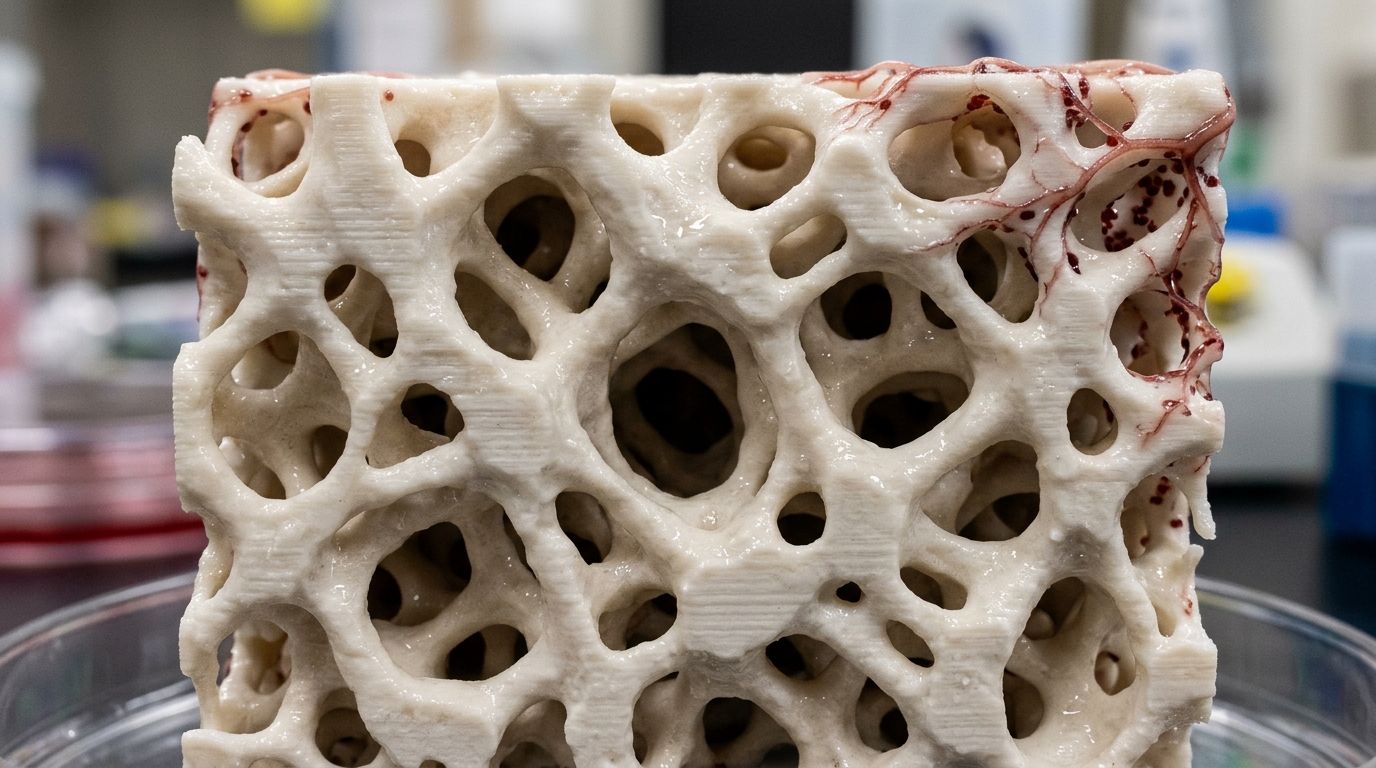
Image Credits: AI Generated
DOI: 10.1186/s11671-026-04876-0
Keywords: PET plastic, graphene oxide, plastic waste, upcycling, carbon dioxide adsorption, catalytic graphitization, Modified Hummer's method, chemisorption, FTIR spectroscopy, thermal analysis, waste recycling, carbon materials













 English (US) ·
 French (CA) ·