

 5 hours ago
6
5 hours ago
6
PROTECT YOUR DNA WITH QUANTUM TECHNOLOGY
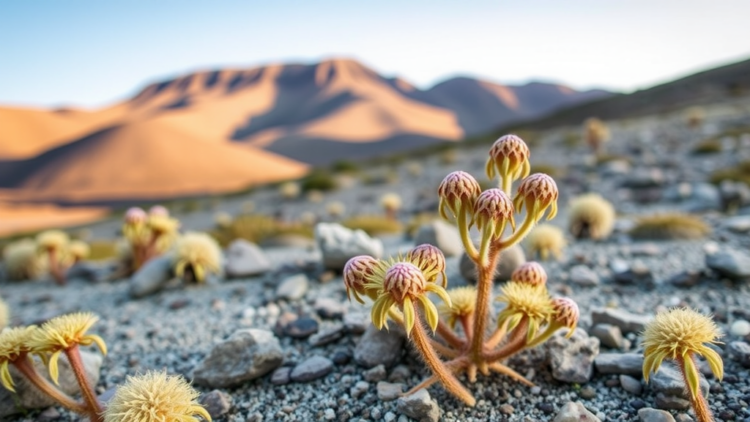
Orgo-Life the new way to the future Advertising by AdpathwayHigh in Colombia’s Chingaza páramo, at 3,300 meters above sea level, a small, ground-hugging rosette plant is revealing how age can rewrite the rules of survival. A new study of Paepalanthus alpinus, an acaulescent rosette in the Eriocaulaceae family, shows that juvenile and adult plants of the same species run their water economies in strikingly different ways, and that those differences could determine whether future generations of páramo plants can establish themselves at all as the climate warms.
The research, conducted in Páramo Grande within the Chingaza complex in Cundinamarca, Colombia, tracked leaf water potential and gas exchange in ten tagged individuals, five juveniles and five adults, across the wet season from September to December 2023 and the dry season from January to February 2024. Adults were defined as rosettes at least 25 centimeters in diameter with inflorescences or peduncle traces, while juveniles were 15 centimeters or smaller and lacked reproductive structures. The team measured midday leaf water potential with a pressure chamber and morning gas exchange, including stomatal conductance, transpiration, and net carbon dioxide assimilation, using a portable photosynthesis system, alongside detailed microclimate recordings.
The seasonal contrast was dramatic. Soil water content averaged 73.8 percent during the wet season but collapsed to 21.9 percent in the dry season, while relative humidity fell from 72.8 to 56.3 percent and mean air temperature climbed from 15.9 to 19.8 degrees Celsius. The leaf-to-air vapor pressure deficit, or VPD, a key driver of water loss, rose from around 1.3 kilopascals in the wet season to a maximum of 3.2 kilopascals in February. These shifts in the physical environment translated directly into plant stress: leaf water potential declined sharply in both stages during the dry months, with juveniles reaching approximately minus 2.7 megapascals in January compared with minus 1.8 megapascals in adults, a statistically significant difference.
That juvenile dehydration reflects a deeper physiological strategy. During the wet season, juveniles consistently opened their stomata wider than adults, with stomatal conductance peaking at 171 millimoles per square meter per second in December, while adults remained below 100 throughout the study. Juveniles also transpired at higher and more stable rates when water was abundant. Yet this aggressive gas exchange came at a cost: when the dry season arrived and atmospheric demand surged, juveniles proved more vulnerable, dropping to significantly lower water potentials and closing their stomata almost completely, with conductance falling below 10 millimoles per square meter per second in both stages by February.
Carbon gain told a different story. Despite the juveniles’ higher conductance and transpiration, net carbon dioxide assimilation varied primarily with season rather than developmental stage. Assimilation peaked during the wet season, reaching maximum rates of about 6 micromoles per square meter per second in adults and slightly above 4 in juveniles in October, then fell below 2 micromoles per square meter per second in both stages by February. Light response curves showed a photosynthetic saturation point near 500 micromoles per square meter per second, with a light compensation point of roughly 24 micromoles of photons and a respiration rate averaging about 0.2 micromoles of carbon dioxide per square meter per second.
The most striking technical finding is the tight hydraulic-stomatal coupling that governs the species. Across all sampling dates, stomatal conductance was inversely related to VPD, following a power-law relationship that explained roughly two-thirds of the variance. When the atmosphere pulled harder on leaf water, stomata closed; when demand eased, they opened. This regulation minimizes water loss at the expense of carbon assimilation under dry conditions, a classic trade-off in water-limited environments, but here it operates with stage-specific intensity.
Why would juveniles run riskier water budgets than adults? The authors point to ontogeny: differences in whole-plant hydraulic architecture, rooting depth, biomass allocation, and leaf functional traits that shift as plants mature. Adults likely benefit from greater hydraulic capacitance and more developed root systems, buffering their water relations and allowing a more conservative stomatal posture. Juveniles, smaller and closer to the ground where near-surface microclimates swing more extreme, appear to follow an opportunistic strategy, maximizing carbon gain when conditions permit but absorbing greater hydraulic risk when they do not. The researchers also note that because all adults in the study were reproductive, some of the observed differences may reflect reproductive investment as well as ontogenetic effects.
The comparison with other páramo rosettes adds nuance. In the caulescent giant rosette Coespeletia moritziana, juveniles similarly showed stronger stomatal closure and greater reductions in assimilation during drought. But in some Colombian páramo species studied previously, assimilation actually increased during the dry season, apparently because persistent wet-season cloudiness, rather than water limitation, constrains carbon gain in those systems. Paepalanthus alpinus bucks that pattern, suggesting that growth form matters: low, acaulescent rosettes may be more sensitive to dry-season soil and atmospheric water stress than taller species that ride above the boundary layer.
The implications stretch beyond one species. Global assessments show that VPD has already increased in recent decades and is projected to keep rising as warming outpaces changes in relative humidity, and elevated VPD is known to suppress stomatal conductance and photosynthesis worldwide. Regional projections for the tropical Andes point to robust warming with heterogeneous, and in some northern sectors decreasing, precipitation. For a species whose juveniles already sit at the physiological edge during the dry season, these trends could disproportionately hit early life stages, reducing recruitment and threatening long-term population stability. Microsites that buffer atmospheric demand, such as shaded areas, moist depressions, and soils rich in organic matter, may become critical refugia for juvenile survival.
The study, published open access in Discover Plants, underscores a broader conservation message: preserving the full diversity of microhabitats within páramo landscapes is essential for endemic species like P. alpinus. Understanding physiological thresholds across growth stages, the authors argue, is essential for predicting species resilience and informing management strategies in one of the world’s most important alpine biodiversity hotspots, an ecosystem that also supplies water to millions of people downstream.
Subject of Research: Ontogenetic variation in water relations and gas exchange of the páramo rosette Paepalanthus alpinus in the tropical high Andes
Article Title: Water relations and gas exchange across developmental stages in the páramo rosette Paepalanthus alpinus Körn. (Eriocaulaceae) in the tropical high Andes
Article References: Water relations and gas exchange across developmental stages in the páramo rosette Paepalanthus alpinus Körn. (Eriocaulaceae) in the tropical high Andes. (n.d.). https://doi.org/10.1007/s44372-026-00829-0
Image Credits: AI Generated
DOI: 10.1007/s44372-026-00829-0
Keywords: Paepalanthus alpinus, páramo, tropical alpine, stomatal conductance, vapor pressure deficit, leaf water potential, ontogeny, gas exchange, hydraulic-stomatal coupling, Chingaza, drought stress, plant ecophysiology
Cite Scienmag News
APA MLA Chicago
Copy citation Download RIS
Tags: Andean páramo plant adaptationChingazaclimate change impact on páramo vegetationdrought resilience of juvenile vs. mature plantsdrought stressgas exchangehigh-elevation plant reproductive developmenthydraulic-stomatal couplingimplications for páramo biodiversityjuvenile vs. adult water use in high-altitude plantsleaf water potentialmicroclimate effects on páramo plant physiologyontogenyPaepalanthus alpinusPaepalanthus alpinus survival strategiespáramopáramo ecosystem response to warming temperaturesplant ecophysiologyplant water economy in extreme environmentsseasonal water availability in Colombian páramostomatal conductancetropical alpineVapor Pressure Deficitwater potential and gas exchange in alpine plants

















 English (US) ·
  French (CA) ·