

 11 months ago
280
11 months ago
280
PROTECT YOUR DNA WITH QUANTUM TECHNOLOGY
Orgo-Life the new way to the future Advertising by AdpathwayPrairies occur across most regions of North America and provide ecosystem benefits like biodiversity, soil stabilization, and pollinator and wildlife resources. Prairie landscapes are resilient, consisting of plants with extensive root systems that handle variable conditions.
In our home gardens, we can build our own prairie by relying on native plants, durable and well-suited to our growing areas, that grow without the need for extra resources.
With vibrant blooms, grasses, and multi-season appeal, prairie garden flowers are easy-going once established. They offer essential food and shelter sources for bees, butterflies, birds, and mammals. The compositions buzz and sway in the landscape with reduced need for supplemental irrigation, fertilizers, and extra maintenance.
Milkweed/Butterfly Flower

Milkweed/Butterfly Flower Seeds
Rocky Mountain Blue Columbine

Rocky Mountain Blue Columbine Seeds

What is a Prairie Garden?
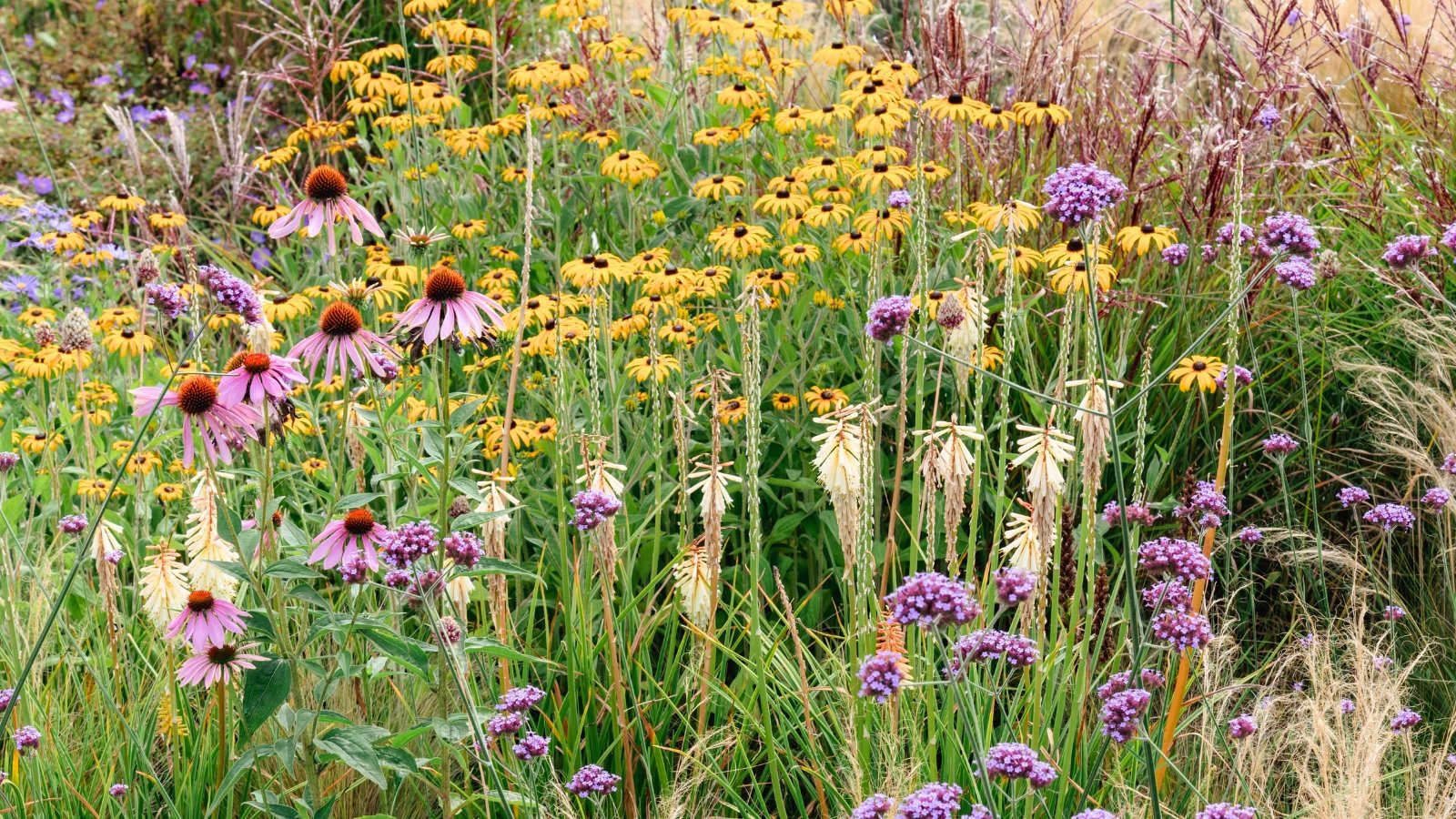 Watch blooms change with each passing warm and cold season.
 Prairie gardens are distillations of the large, naturally occurring landscapes. Prairie ecosystems vary by region and often have hot summers, cold winters, and receive limited rainfall.
Grasses and wildflowers dominate the landscape. They are tough, hardy, and tolerant of fluctuating conditions. In the home garden, we can build our prairies based on the scale of our site.
Whether converting a lawn, restoring an existing site, or adding prairie “pockets” to our gardens, they become part of the larger landscape fabric. The bigger, the better, in terms of biodiversity and services, but even incorporating some prairie garden flowers and grasses boosts our garden corners.
When it comes to honing in on prairie garden flowers for your area, look to the growing zone to ensure hardiness. Sun exposure and soil moisture are also key cultural conditions.
When creating a prairie garden:
- Site it in a full sun location, with six or more hours of sunlight daily.
- Prep the site, clearing existing vegetation, for the best weed-free foundation.
- Source flowers with staggered bloom times and extended seasons to support insects and provide lasting color.
- Start with seeds, nursery plants, or both. Fall is prime for sowing many of our favorite natives.
- Plant in groups for cohesion in the design and plant community (e.g., a drift of rudbeckia, a stand of big bluestem). Those that perform best in a site will naturally colonize and reseed, adding to the excitement of the prairie dynamic.
- Know your soil type. A soil test helps determine the type and nutrient levels to tailor plant selection and growing conditions.
Aster
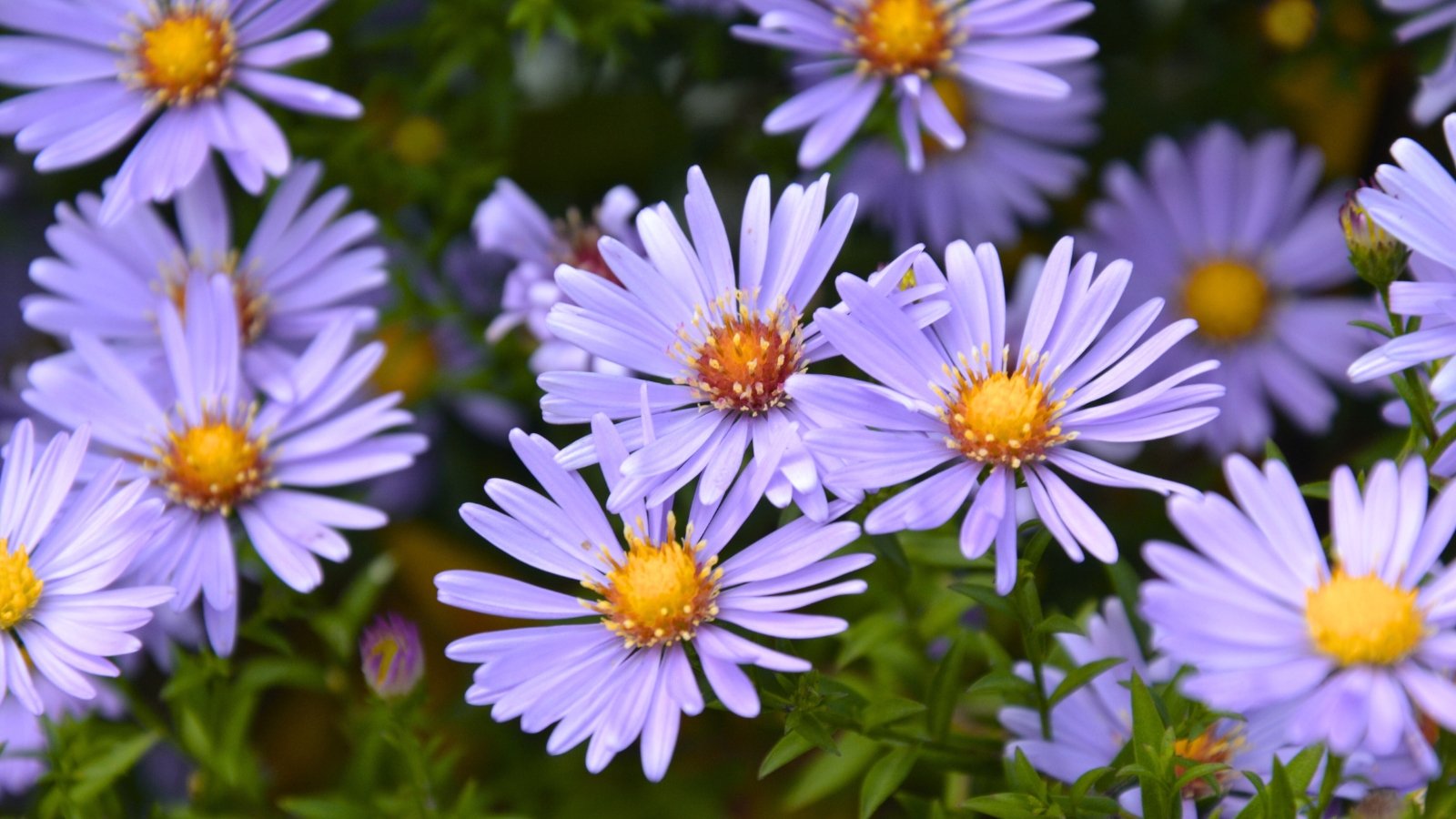 Blooms late into fall and thrives in poor soils.
There are hundreds of Aster species, and the broad range means a wide selection across sites. Many species are native to North America, including prairie selections like aromatic and smooth asters.
Asters are stars of the fall garden with a blanket of blooms and support for beneficial insects as the seasons change. Aromatic aster (S. oblongifolium) has blue flowers that last well into fall. Their dense, one to two-foot forms are leafy and fragrant when crushed. Aromatic aster does well in sandy or clay soils.
Smooth aster (S. laeve) reaches two to four feet tall with sky-blue flowers and good mildew resistance. Drought-tolerant once established, this one joins aromatic as a native prairie garden flower across much of North America.
Asters do best with good air circulation through proper spacing and thinning stems in summer if the crown gets crowded. Good drainage, too, helps stave off foliar diseases.
Penstemon
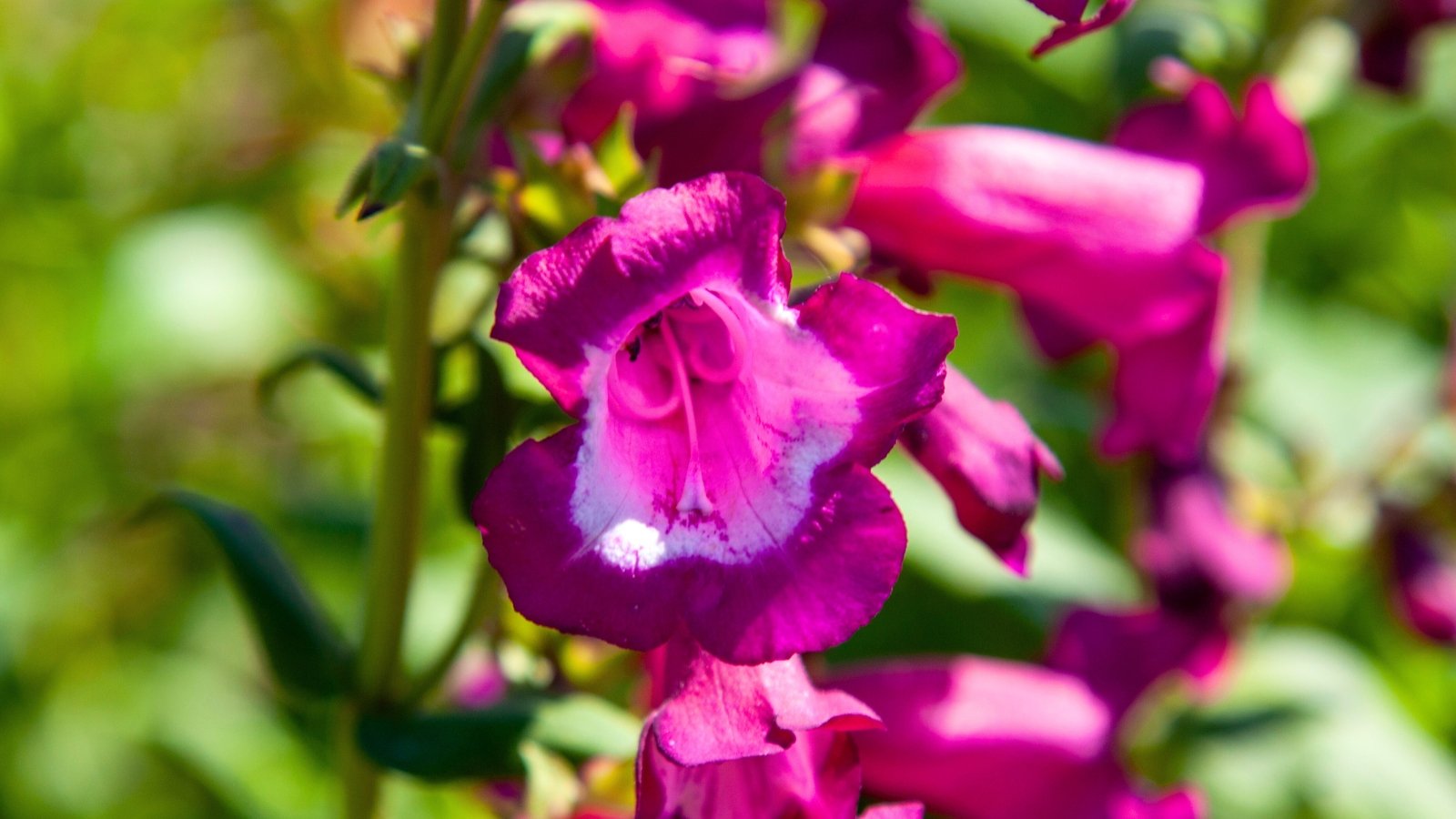 Upright spikes bring color and bees to sunny spots.
Penstemon is a bold prairie wildflower with tall spikes loaded with bells. Like aster, many species are native to the U.S. with brilliant blooms and dark green foliage. They’re a favorite of native bees, who visit each blossom for nectar.
Firecracker penstemon (Penstemon eatonii) features showy scarlet bells on tall spikes in spring through summer. Firecracker is drought-tolerant and hardy, preferring gravelly sites and lean soils. It benefits from afternoon sun protection in hot, dry areas.
Foxglove penstemon (P. digiitalis) is a native that tolerates both dry and moist situations and varying exposures. While it prefers organic loams, it grows in areas with clay or sandy soils.
Rocky Mountain blue penstemon (P. strictus) is a long-lived, reliable heirloom with striking bloom spikes in early summer. Like other durable selections, it tolerates varying soil conditions.
Penstemon seeds benefit from cold stratification. Sow in fall, winter, or early spring to allow exposure to cold temperatures and moisture for germination as the weather warms.
Baptisia
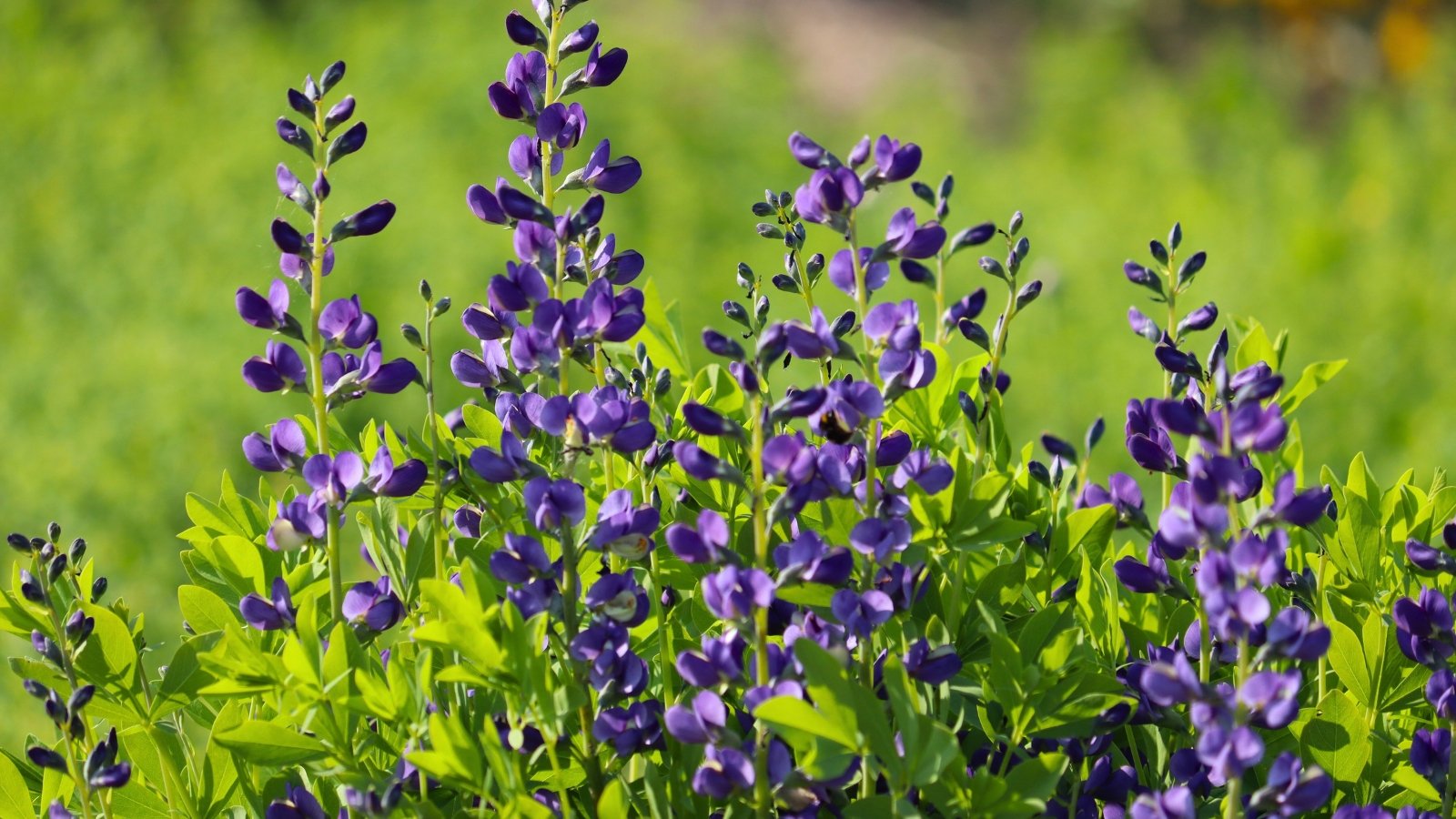 Deep roots and lasting color appear from spring to winter pods.
Baptisia, or false indigo, sports blue legume blooms in spring and summer. Its ample, blue-green, palmate foliage is attractive all season. After these prairie garden flowers fade, spikes bear showy seed pods that give winter interest.
Baptisia is native to the central and eastern U.S., occurring naturally in prairies, open woodlands, and along streambanks. The straight species is highly ornamental, and native bees and bumble bees appreciate the pealike blooms.
Baptisia is a long-lived perennial. It spends its first growing season developing extensive roots and leafy upper growth, flowering in its second year.
Black-eyed Susan
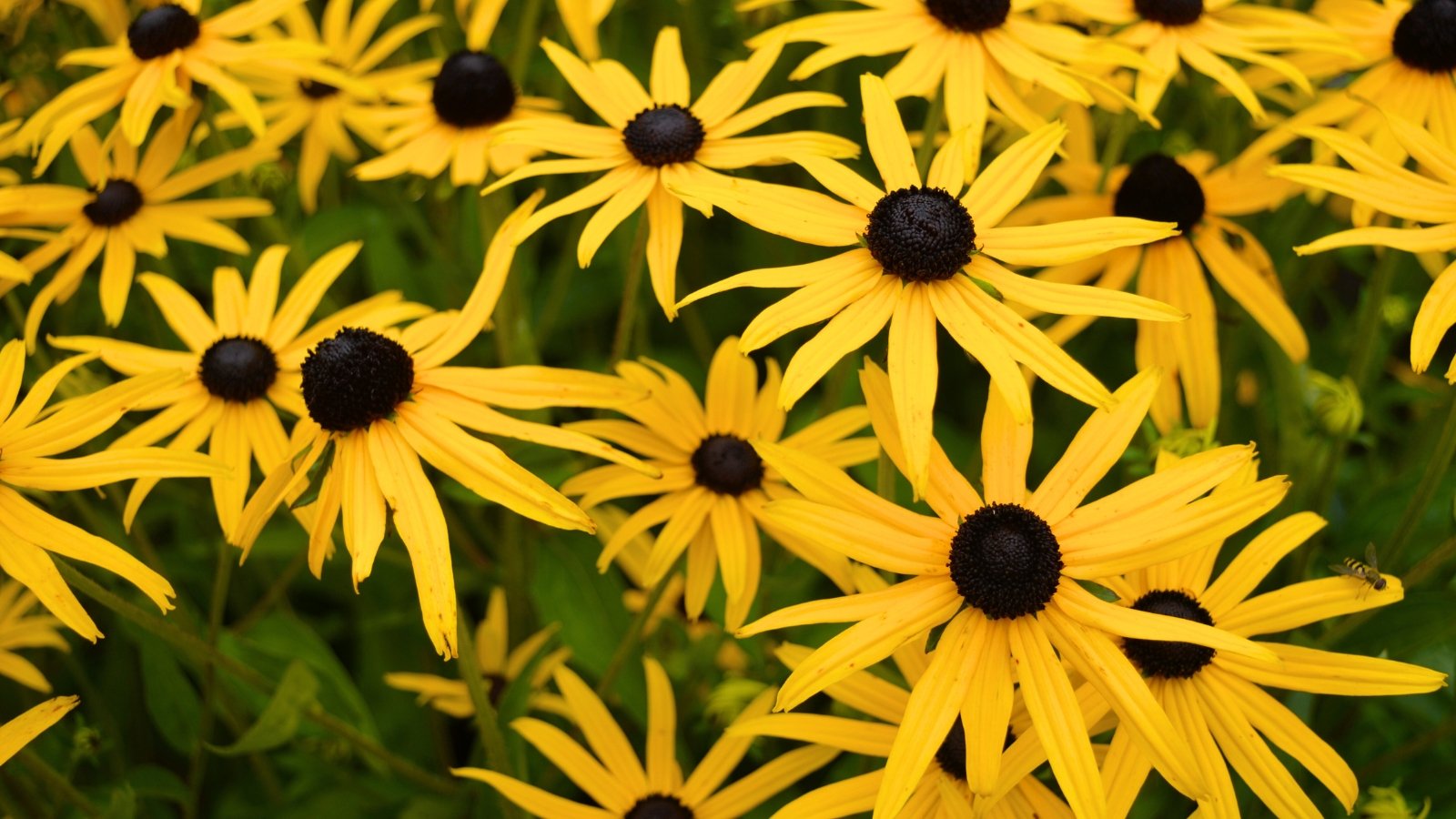 Bright summer color keeps blooming into fall.
Black-eyed Susan is a prairie garden flower with recognizable golden daisy-ray flowers with dark button centers. Rudbeckia is long-blooming, with a show of color through fall.
Black-eyed Susan is native to parts of the Southeast, Central, and Western United States. It thrives in various conditions, tolerating heat, humidity, and drought. Various species come from the prairie, including R. triloba, or brown-eyed Susan, with flowers that emerge later in the season and go through frost.
Sweet Joe Pye Weed
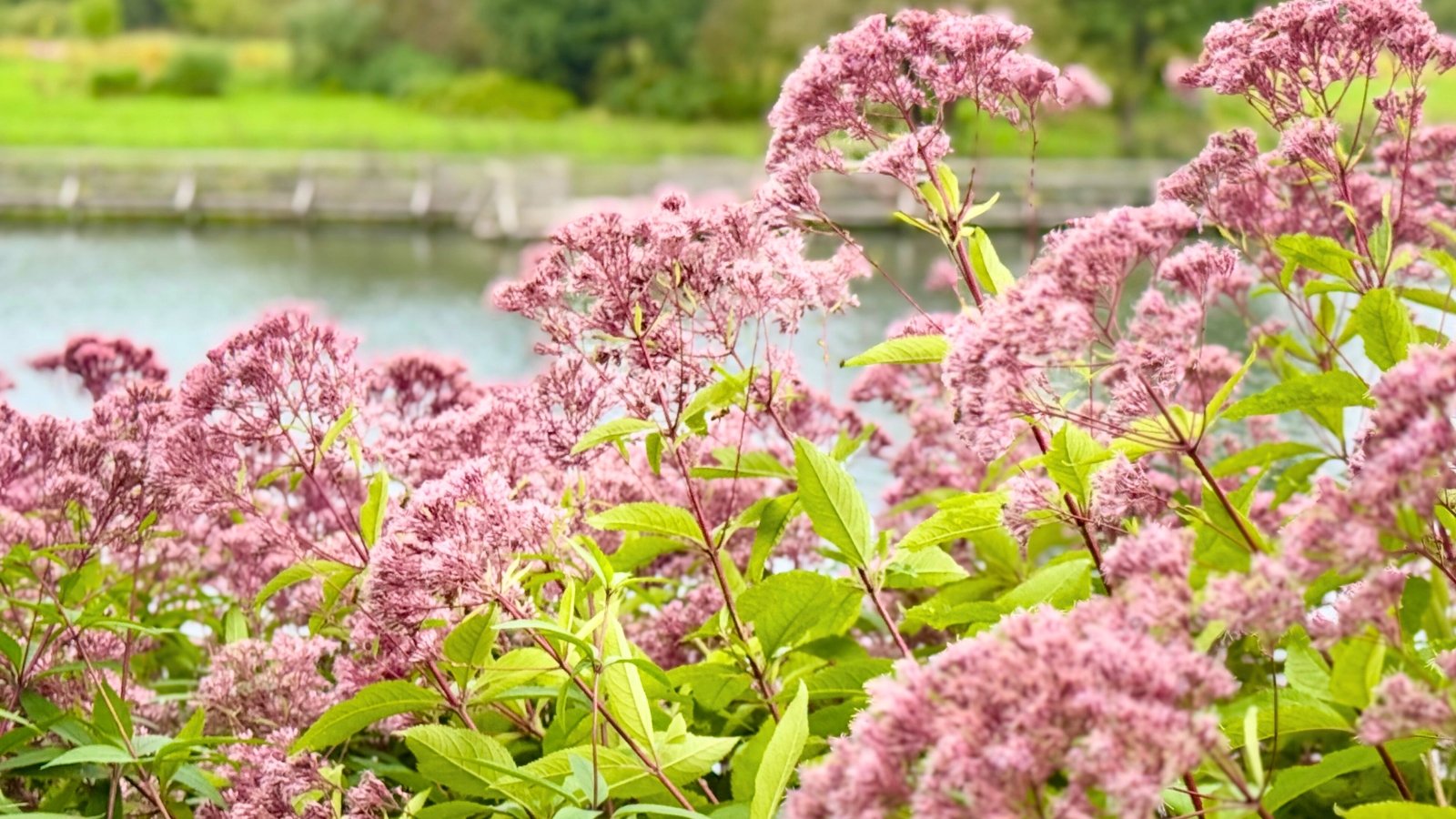 Tall summer standout that thrives in moist prairie spots.
Joe Pye weed is showy in a mass, and a prairie planting with plenty of room lets it shine. Large, domed flower clusters in rosy purple emerge in late summer and last into fall, drawing pollinators and other beneficial insects.
The perennial grows in challenging conditions and in a range of soils, including clay. If you have a moist prairie with well-draining soils, Joe Pye weed is a great option.
Blue-eyed Grass
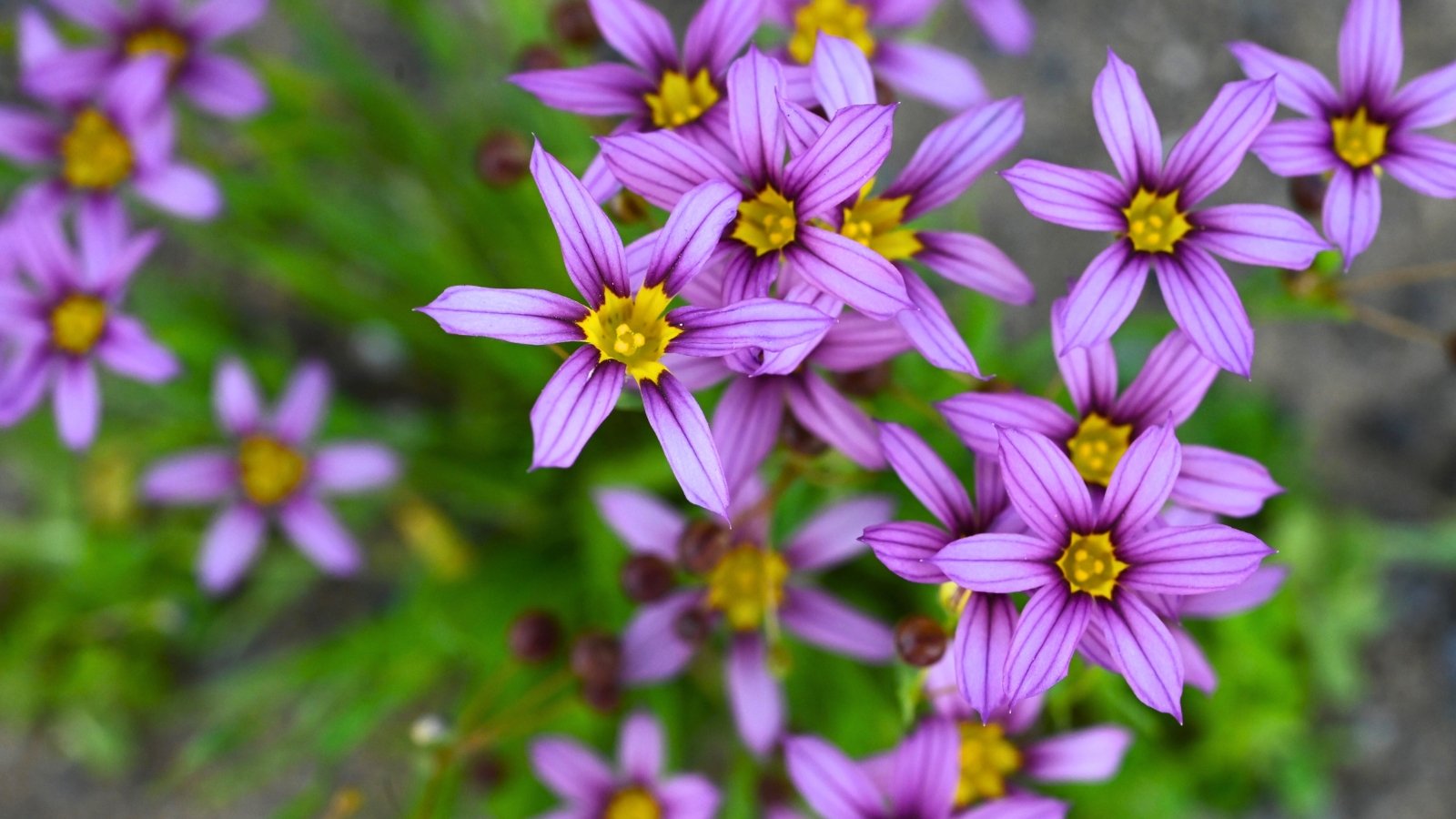 Low grower that shines at meadow edges or paths.
Blue-eyed grass is not really grass, but a blooming annual or perennial, depending on the species. A member of the Iris family, its narrow, upright blades lend a grassy texture. Starry blue prairie garden flowers soften the plant’s stiff form.
Sisyrinchium montanum, strict blue-eyed grass, is a hardy species naturally found in midwestern prairies and widespread across the U.S. It has slightly broader leaves than other species and violet blooms.
S. campestre, prairie blue-eyed grass, is another native for the garden style with pale to light blue blooms on multi-branched stems.
Butterfly Milkweed
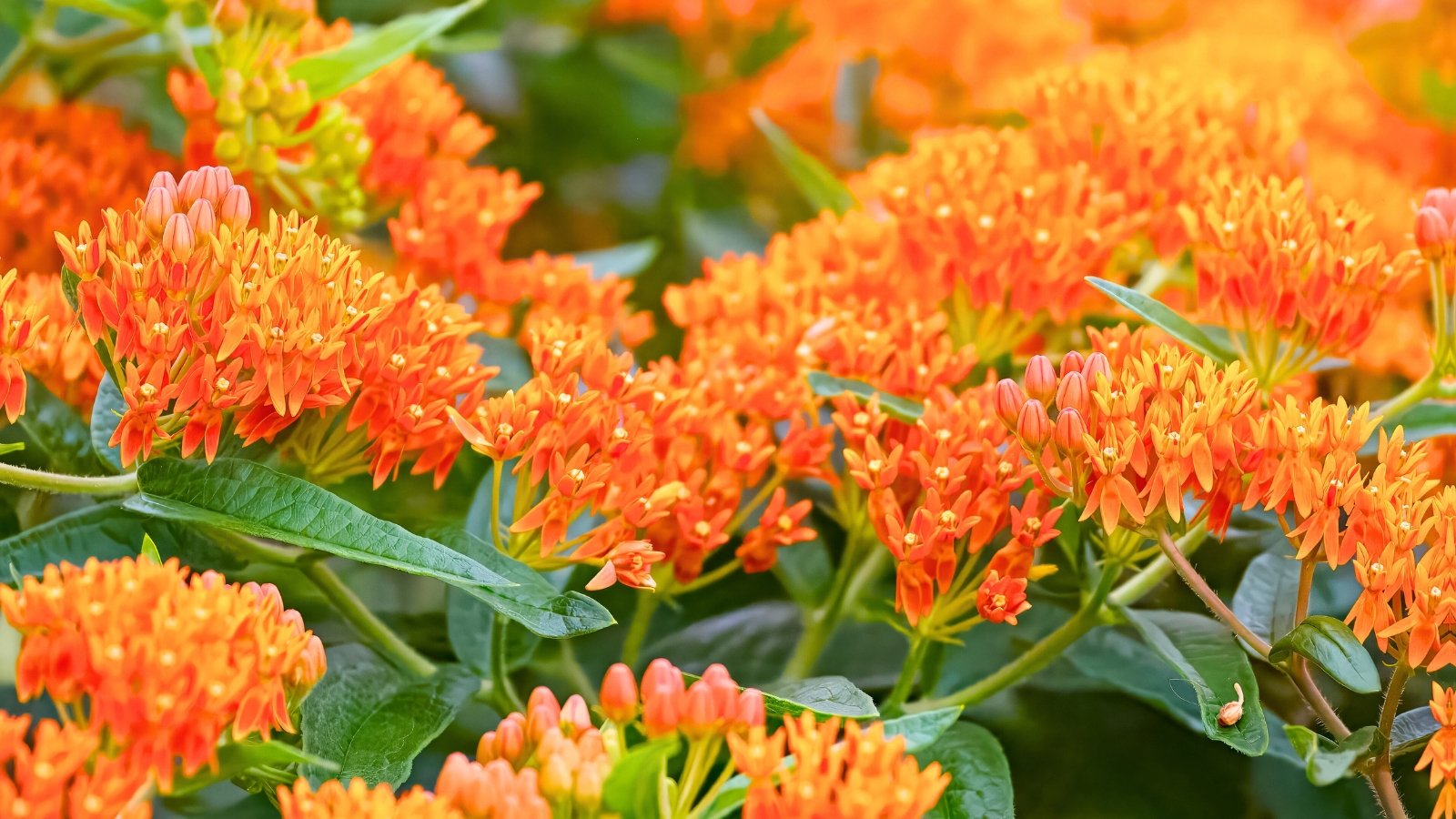 Hardy native that supports life from soil to sky.
Native milkweed species suit a variety of growing conditions, and by choosing the best milkweed for our regions, we can support pollinators with a low-maintenance planting.
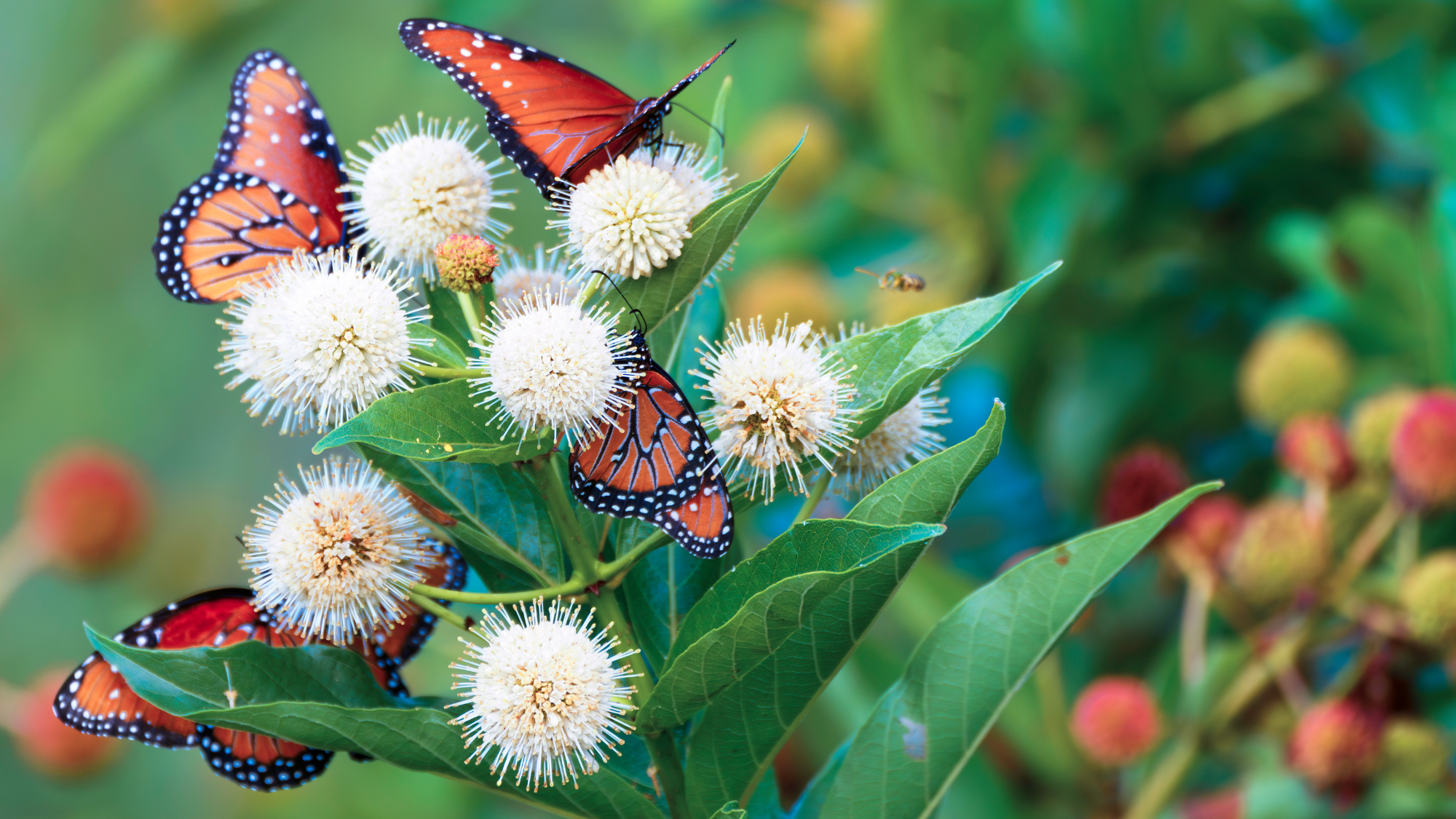
Butterfly milkweed provides vibrant, nectar-rich blooms for important pollinators like monarch butterflies. The flat-topped bloom clusters in red-orange are also a beacon for other beneficial insects that can help manage common pests.
For moist prairies, Asclepias incarnata, or swamp milkweed, is a fit and has flat clusters of deep pink blooms.
Columbine
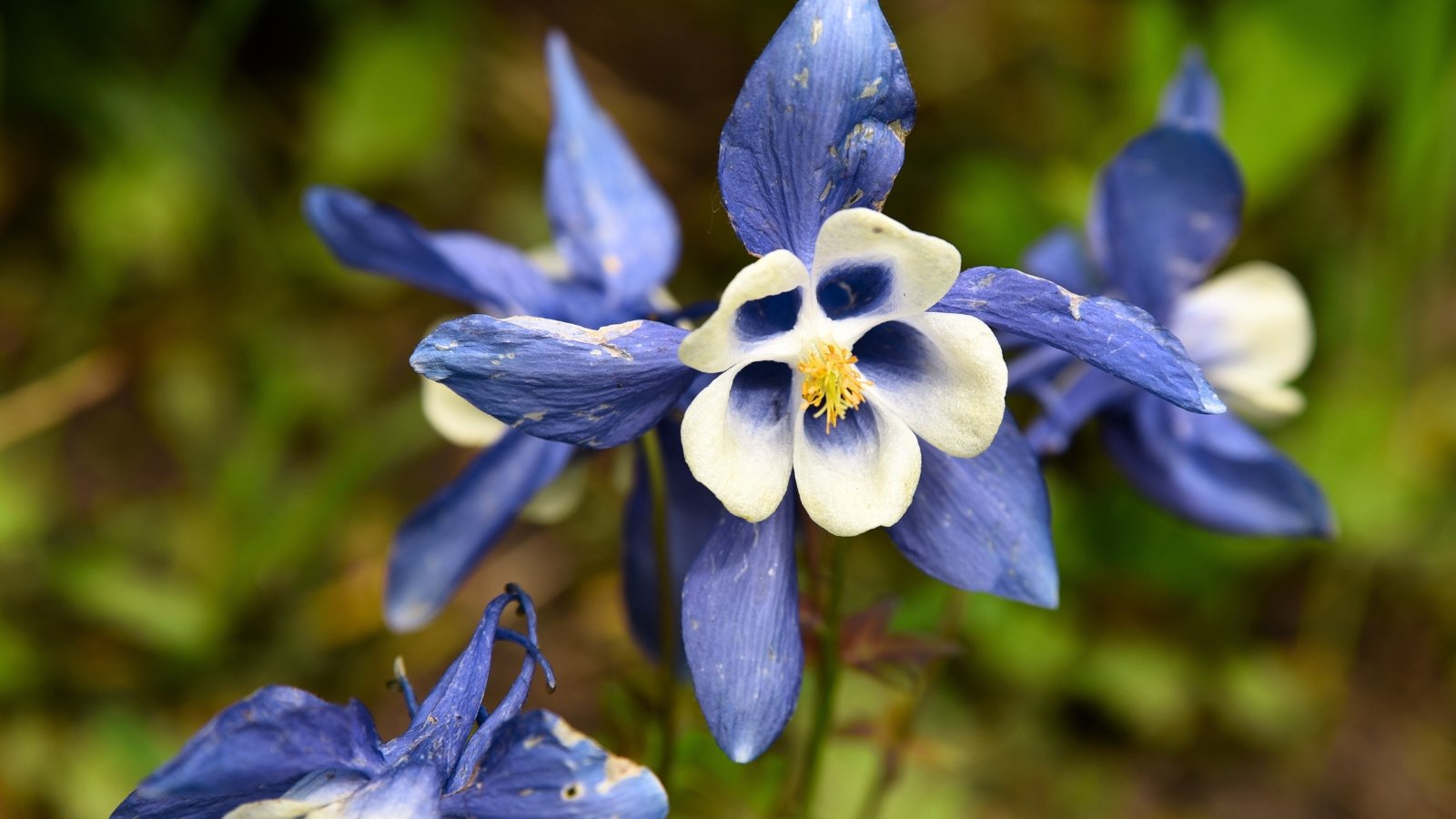 Woodland-edge flower that invites hummingbirds and early pollinators.
Columbine is a native wildflower with graceful nodding blooms and attractive compound leaves. Depending on the species, flowers range from vibrant red and yellow to cool blues. Hummingbirds appreciate the nectar from the tubular blooms, and birds feed on the seeds in fall.
Eastern red columbine (Aquilegia canadensis) brings red and yellow bell flowers, perennializes well, and spreads by self-seeding. Aquilegia coerulea, the heirloom Rocky Mountain blue columbine, brings violet and white blooms with yellow stamens.
With a natural habitat in clearings, woodland edges, and along streambanks, columbine grows best in moderately moist, well-drained soils. Protect it from the hot afternoon sun in areas with hot summers. Columbine enters dormancy in extreme hot or cold temperatures, reemerging as temperatures moderate.
Paintbrush
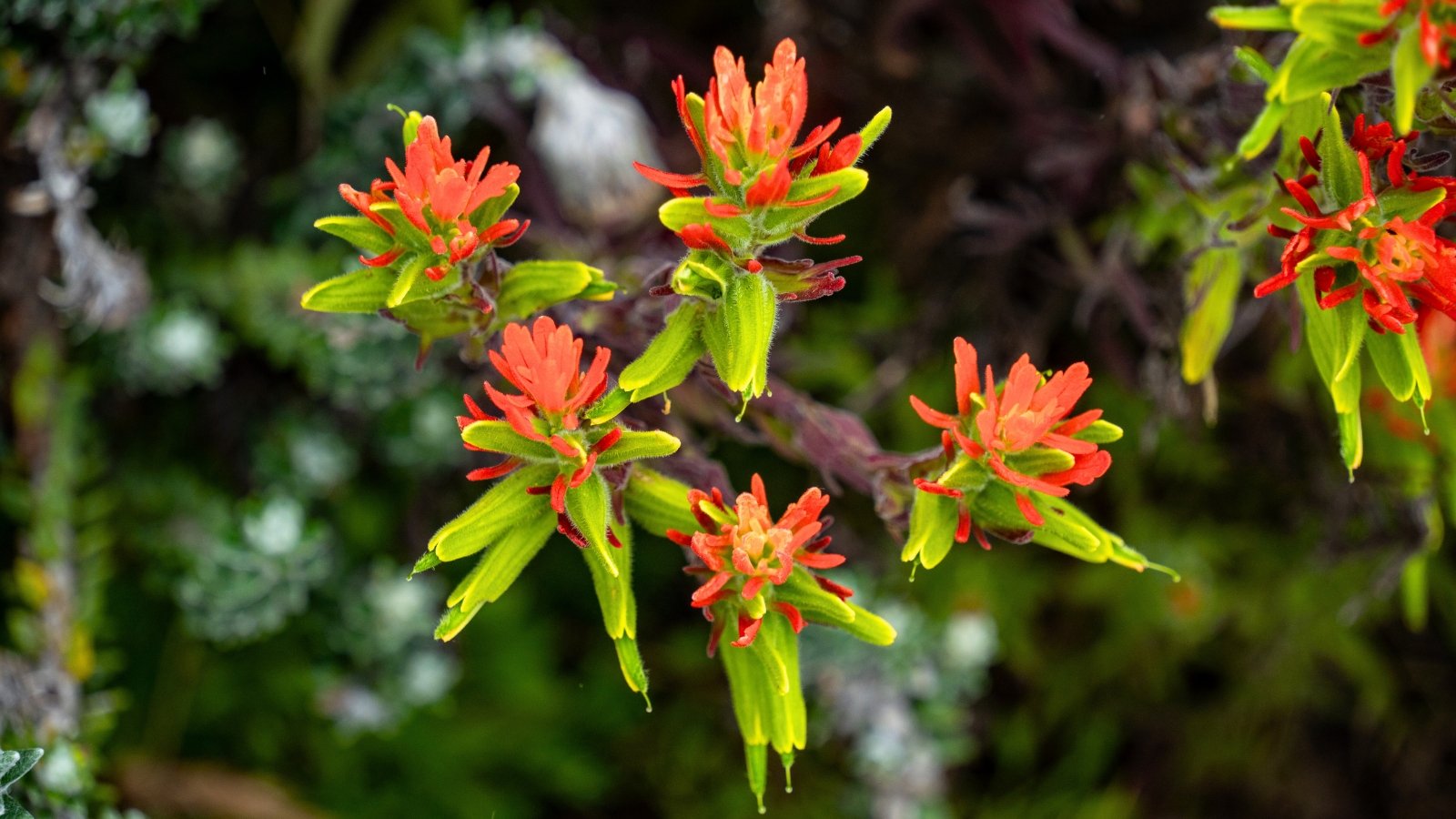 Scarlet spikes borrow nutrients from nearby roots.
Paintbrush has a distinctive scarlet bloom that pops up across prairies, woodlands, sagebrush thickets, and desert landscapes from April through July. Divided bracts create the bright, brushy bloom spike.
Paintbrush is a biennial that sets roots in the first year for flowering and seeding in its second year (reseeding readily in optimal conditions). The perennial is hemiparasitic, absorbing part of its nutrients from the roots of other plants like sage and grasses.
Coreopsis
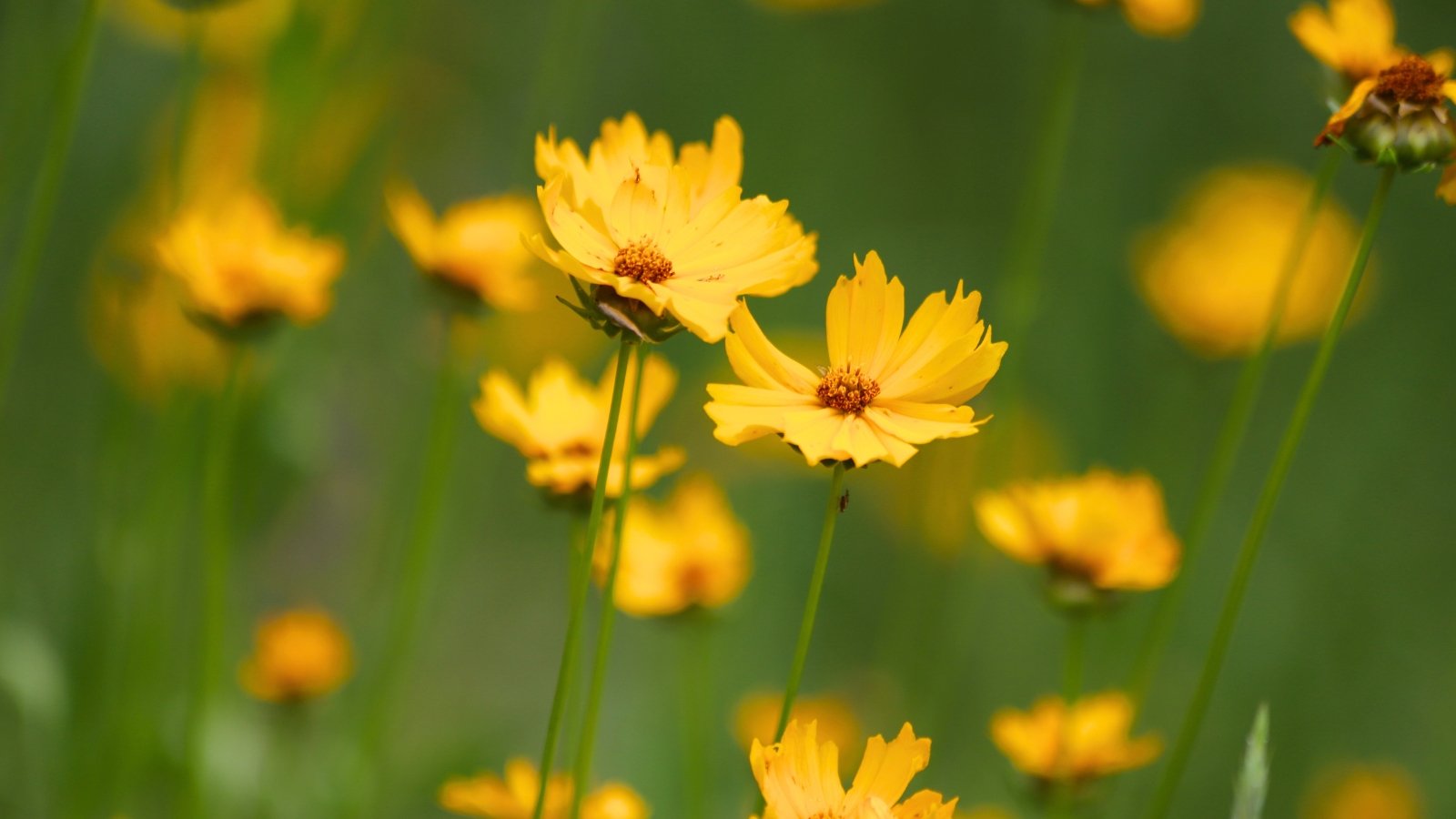 Long-lasting golden waves reseed for years of color.
Coreopsis brings waves of sunny blooms across the landscape, one of the first to appear and last to fade. Lance-leaved coreopsis (Coreopsis lanceolata) is the most common species with signature golden ray petals, yellow centers, and a feathery daisy flower. Easy to grow, C. lanceolata is drought-tolerant and forms clumping colonies of pincushion leaves.
Plains coreopsis (C. tinctoria) is native to the western U.S. with yellow ray petals, deep red highlights, and brown button centers. Though considered an annual, a single plant may flower for two to three years. Like others in the genus, it reseeds to expand the colony. Songbirds forage on the seeds in fall and winter.
Mountain Mint
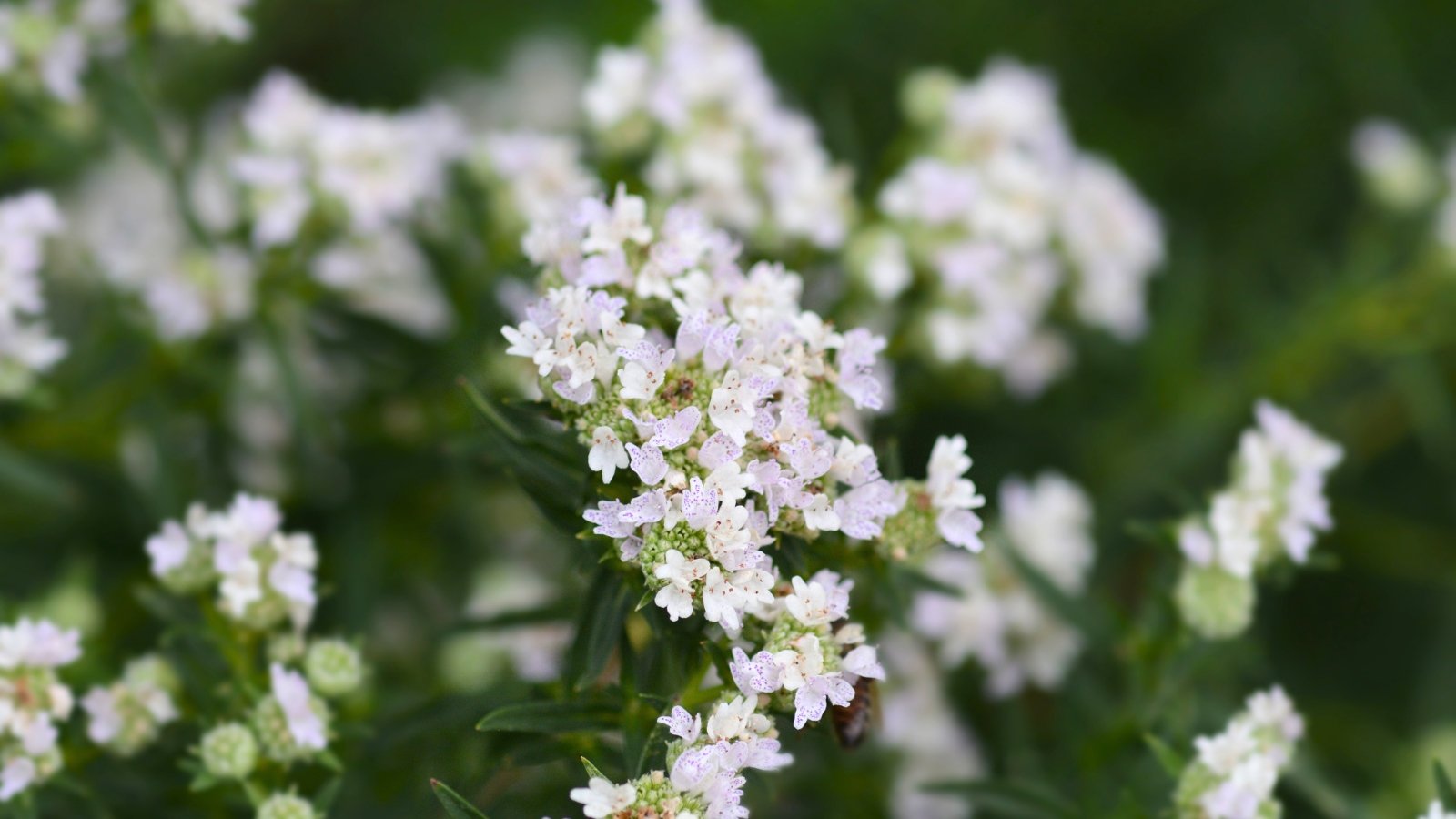 Fragrant clumping mint buzzing with pollinator activity.
Mountain mint is a valuable pollinator plant with white, purple-speckled blooms from July to September. When crushed, the leaves and petals have a spearmint aroma and are flavorful in cooking and teas.
Mountain mint grows naturally in grassy, open fields, meadows, and low woodland areas. It tolerates most soils, including moist conditions. The clump-forming woody perennial spreads by rhizomes and grows vigorously in optimal conditions, but isn’t invasive.
Cut the roots with a spade to control the spread if space is an issue. Spread usually lessens when grown in drier situations.
Purple Coneflower
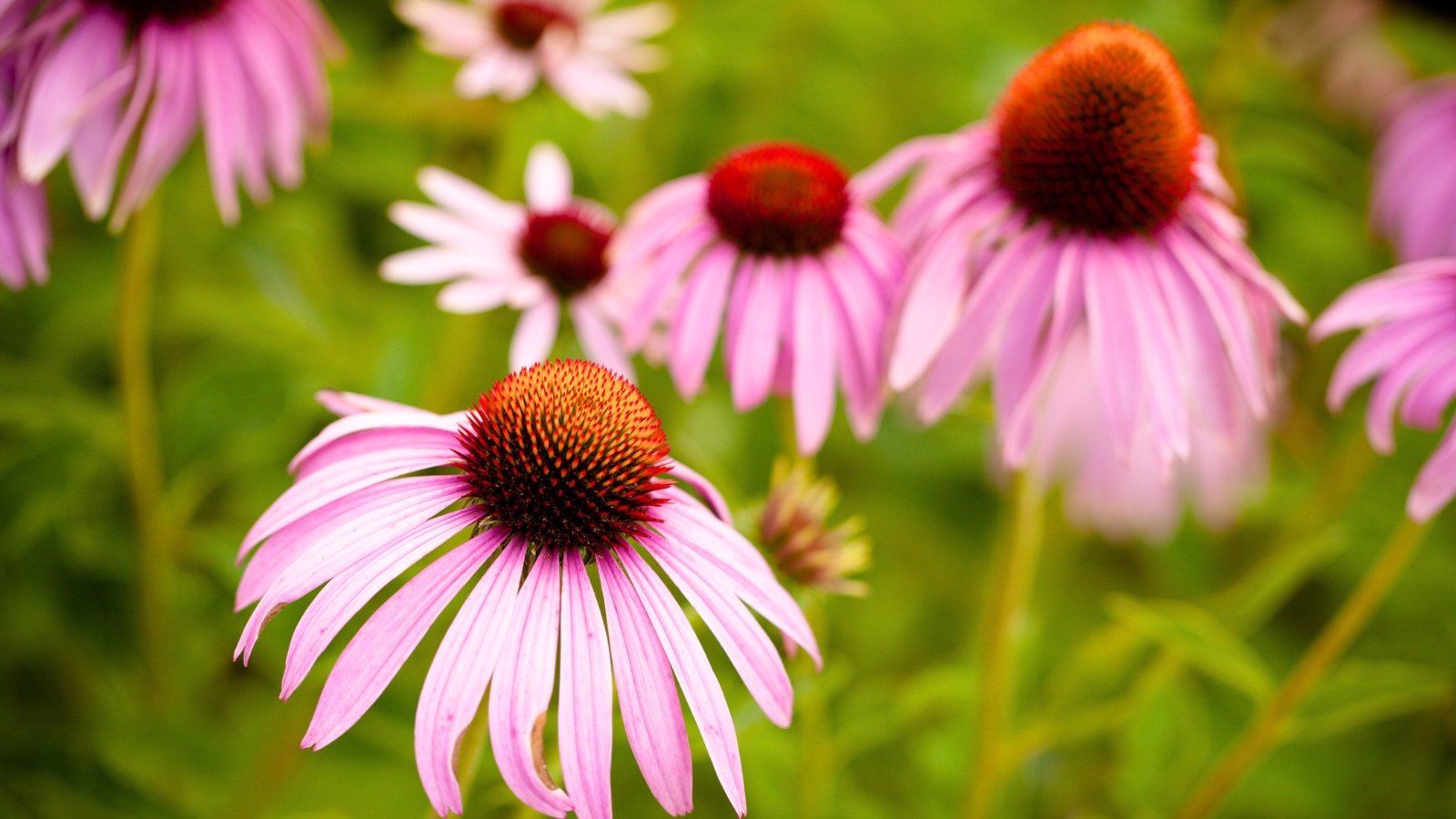 Draws pollinators in summer, then birds in fall.
Purple coneflower is the quintessential prairie garden flower, thriving in summer heat and cold winters. Ray flowers surround a central disc of pollinator-attracting florets. Dried seed heads extend winter interest and provide a food source for birds and small mammals.
Coneflower relies on well-draining soils to thrive. It grows easily from seed, benefitting from a fall or winter sowing for the required cold stratification. Leave echinacea standing during dormancy, as hollow stems in winter provide nesting sites for overwintering insects.
Blanketflower
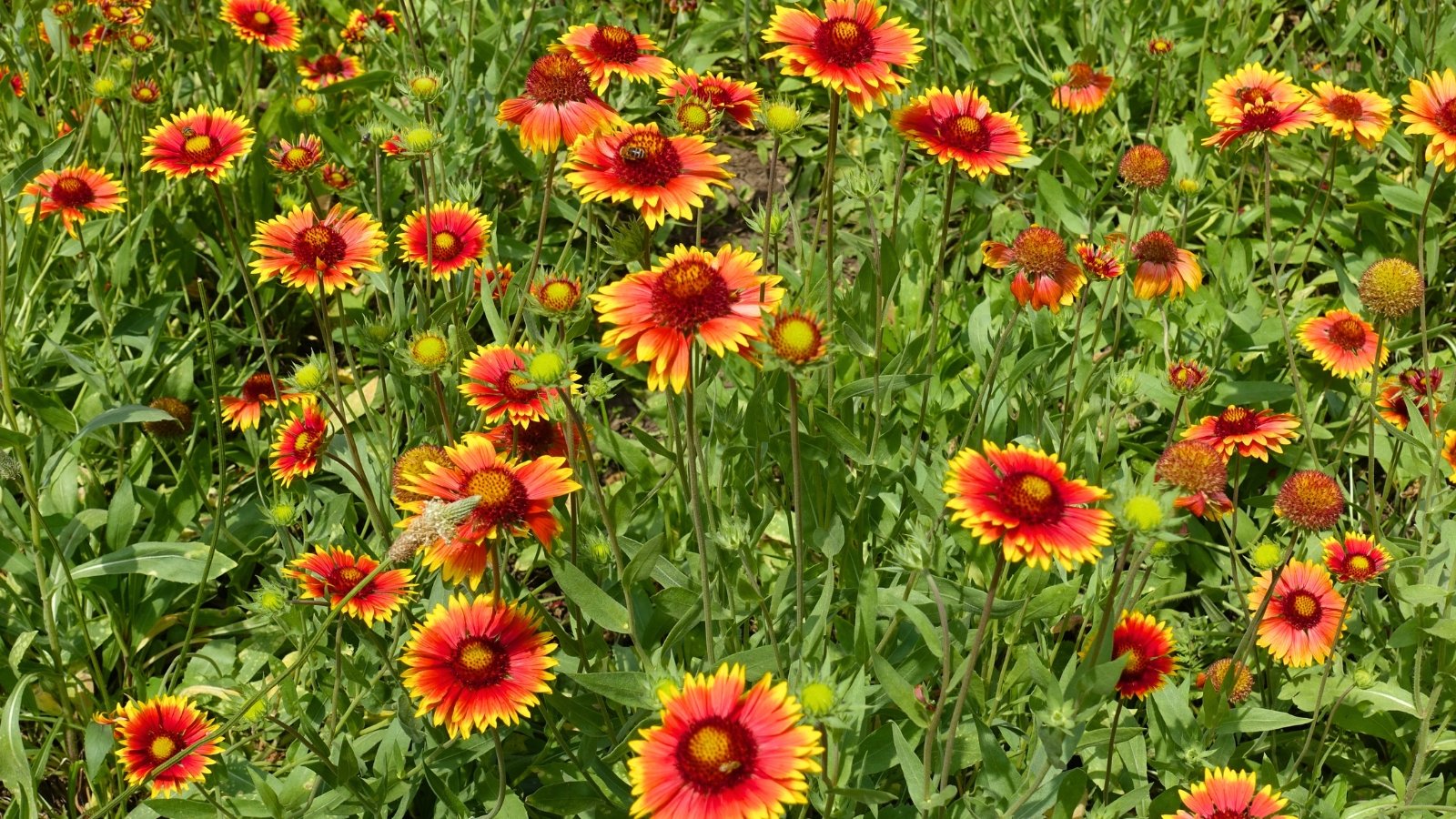 Spreads gently and reseeds for ongoing color.
Gaillardia glows with sunny ray blooms even in challenging sites. In yellow, orange, and red with brown button centers, it shines throughout the summer and into fall. The North American wildflower reseeds to expand the display, often blooms in its first growing season, and is drought and heat-tolerant. Gaillardia is a carefree prairie garden flower, growing in poor, sandy soils.
Gaillardia pulchella originates in the Southwest with desert sky colors to match in warm tones of red and gold bloom from spring through fall. G. aristata boasts yellow, red, and purple tones and reaches four feet tall. Like all in the genus, it’s adaptable, versatile, and a butterfly favorite.
Heliopsis
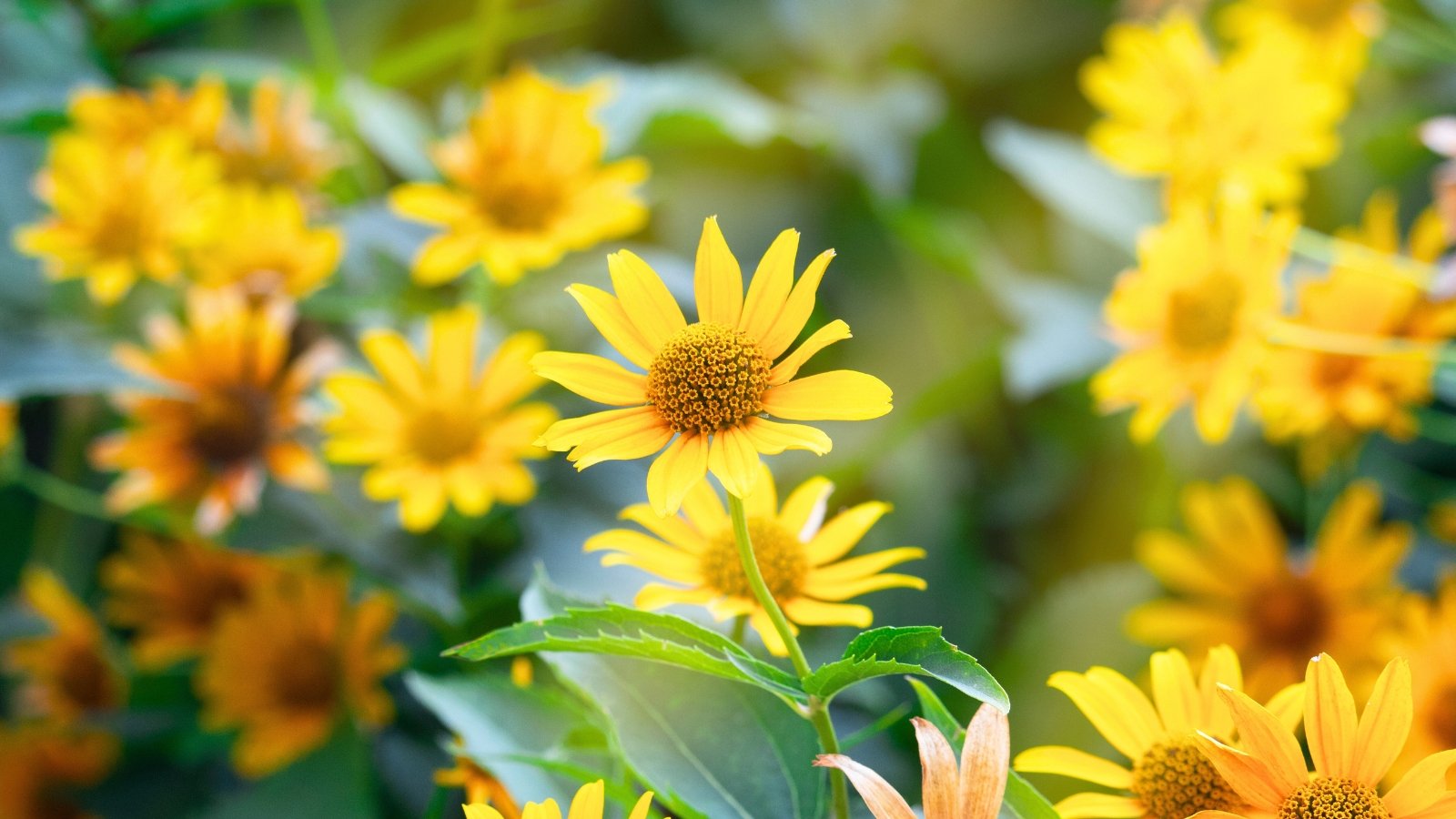 Self-seeds lightly and returns stronger each year.
Heliopsis, also called ox-eye daisy or oxeye sunflower, is native to the central and eastern U.S. and bears golden sunflower blooms with fuzzy yellow centers. Keeping time with the tones of the harvest season, color shows from summer through autumn.
Oxeye sunflower is easy to grow and prominent in a mass with stiff, sturdy stems that grow to five feet. Flowers attract bees, butterflies, and other pollinators. Birds eat the seeds post-bloom, and leftovers self-seed.
Prairie Blazing Star
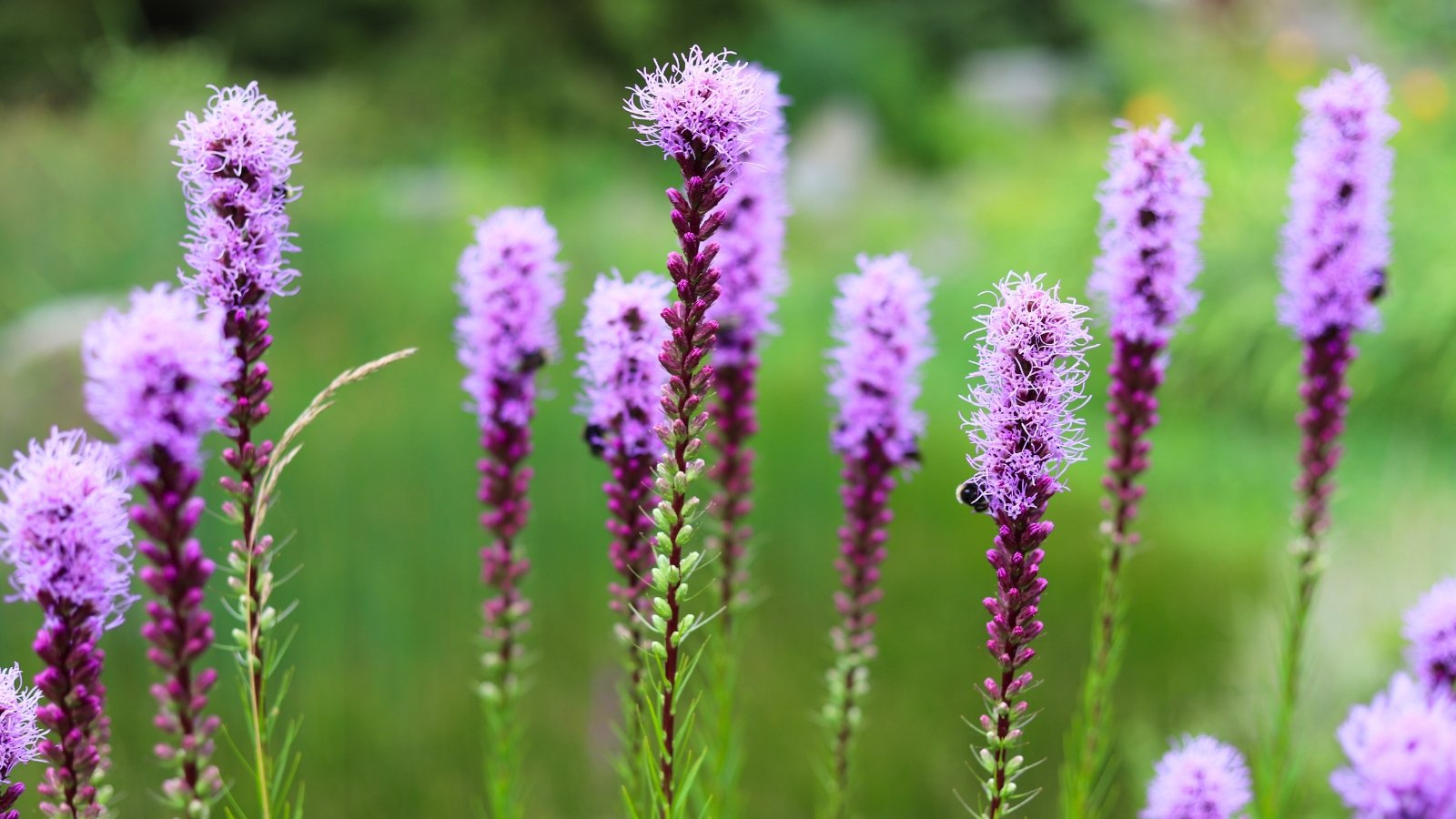 Mid-summer showstopper for sunny, open prairie sites.
Blazing star, or gayfeather, features bold flowers on upright stalks in purples, pinks, and whites. Prairie blazing star is native to the moist prairies of the Midwest and bordering states. Dense magenta and pink flowers line the stalks above arching, fine-bladed foliage.
Prairie blazing star is showy in mid to late summer, attracting pollinators and serving as host plants for butterflies and moths.
Look also to rough blazing star (Liatris aspera) for dry, sandy situations. Magenta-purple pompom blooms open in late summer on two to four-foot stems. Once established, blazing star is quite drought-tolerant.
Lupine
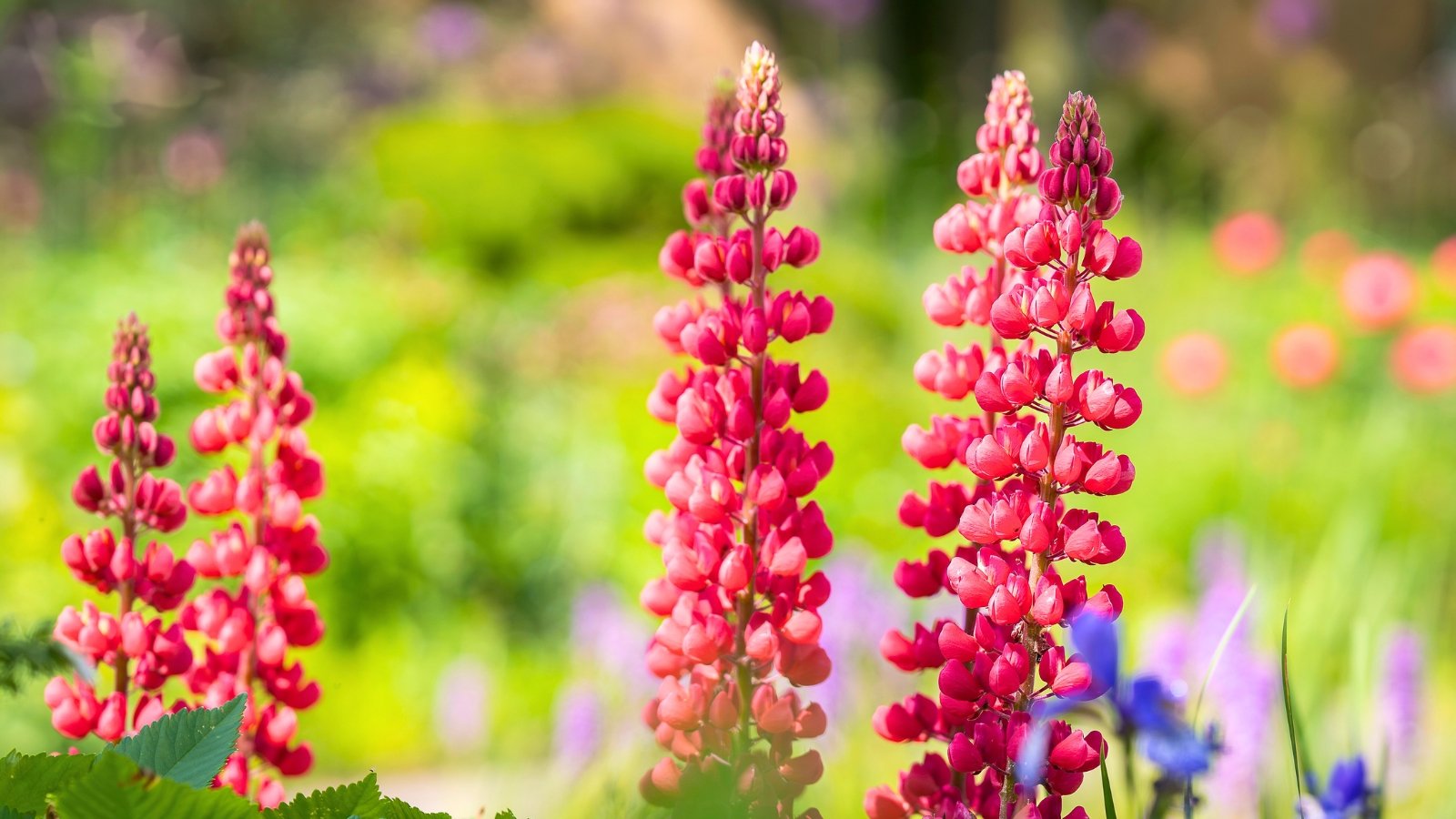 Soil-improving legume with tall spikes of spring color.
Lupine charms the spring and summer prairie planting with lovely bells in blues, purples, pinks, whites, and yellows. The ornamental prairie garden flowers grow in a variety of wild conditions, from dry to moist, hot to cold, and in lean soils. As legumes, they fix nitrogen in the soil and improve the surrounding soil nutrition.
Lupinus perennis, or wild lupine, is native to eastern North America with sky-blue flowers and multiple long, full spikes. Flowers are often two-toned purple and blue amongst attractive palmate leaves.
Meadow lupine (L. polyphyllus) is a Western species and one of the lushest, with dense violet spikes atop a cushion of pretty blue-green leaves. It is robust in form and vigorous in growth. In its native western range, it plays a vital role in ecosystem management like erosion control, soil improvement, and pollinator food sources.
Turk’s Cap
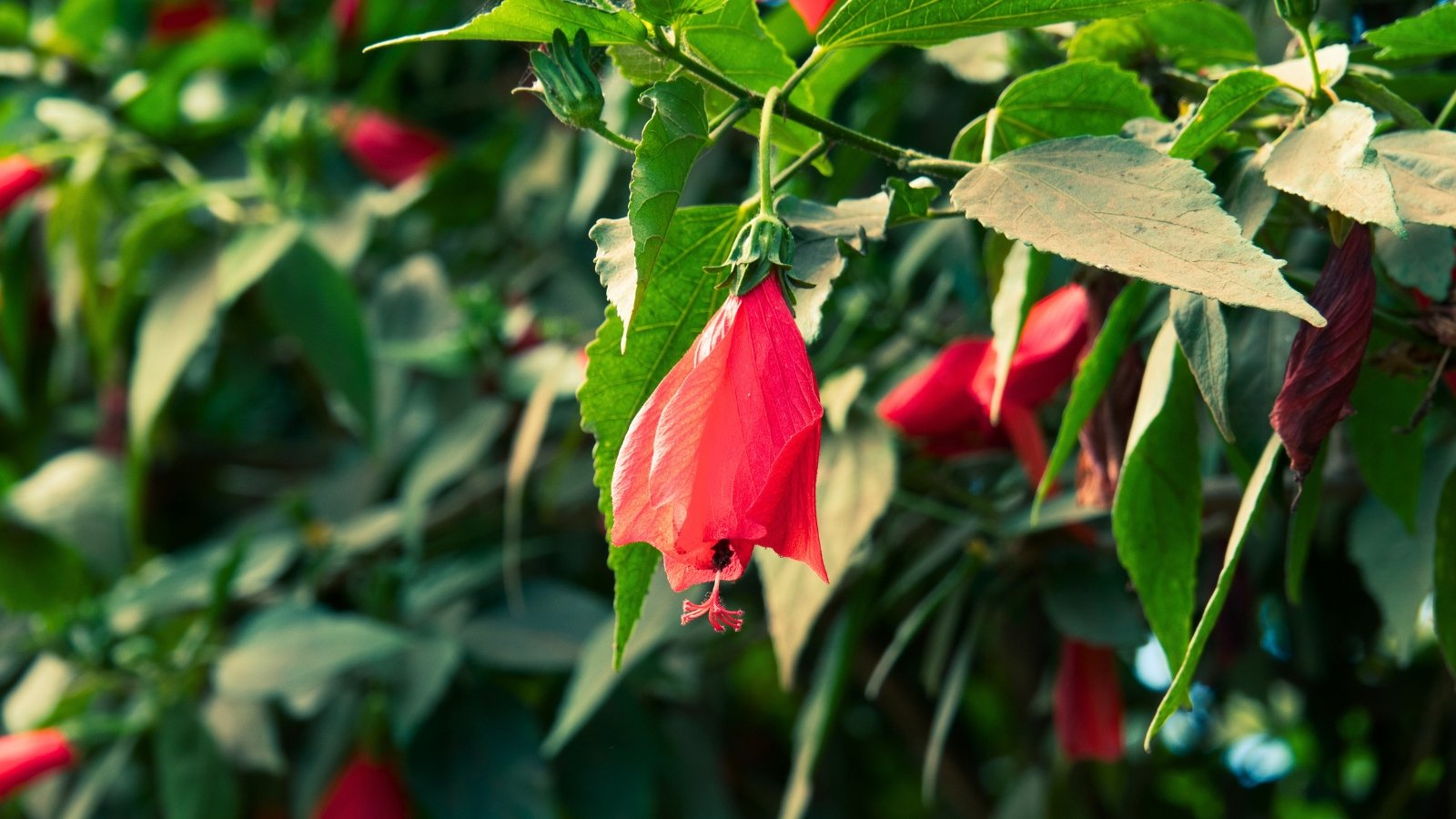 Shade-tolerant bloomer with hibiscus-like flowers and red berries.
Turk’s cap is a hardworking wildflower from Texas and Mexico to the Carolinas. It spans various soil and light conditions and flowers from mid-summer until frost. In the mallow family, blooms resemble a mini red hibiscus about to unfurl. Adding interest post-bloom are bright red berries, offering a food source for birds.
The natives tolerate heat, drought, and coastal exposures, and are deer-resistant. Employ Turk’s cap in moist prairie sites or along treed borders, where it does well in partial shade. In too much shade, flowering decreases.
Prairie Coneflower
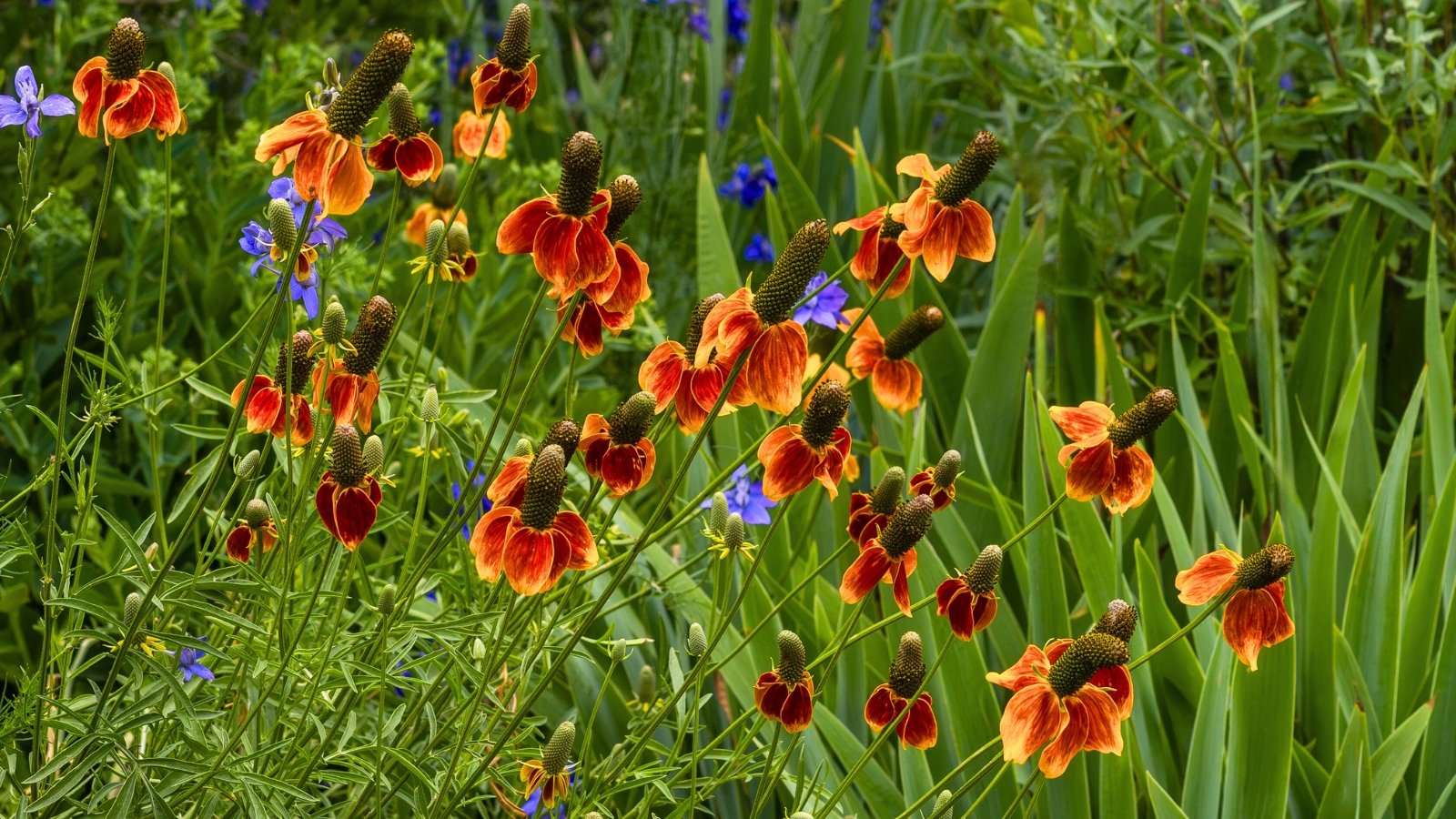 Easy, sun-loving perennial with bright color and movement.
Prairie coneflower is a highly ornamental, long-blooming, and easy-to-grow selection with tall prairie garden flowers in vibrant yellows and deep reds. Ratibida columnifera (upright prairie coneflower or Mexican hat) has ray petals in red, yellow, or dark purple-red with bright gold edges. Petals droop below a central gold-brown disc on stems reaching three feet tall.
Grey-head coneflower (Ratibida pinnata) is exceptionally cold-hardy and features yellow blooms on tall stems. Leaves are sparse, and plants look best in mixed planting with additional leafy coverage.
Prairie coneflower is fast-growing, drought-tolerant, and withstands competition from other plants. It can be aggressive in optimal growing conditions and may overtake weaker specimens.












 English (US) ·
  French (CA) ·