

 9 months ago
258
9 months ago
258
PROTECT YOUR DNA WITH QUANTUM TECHNOLOGY
Orgo-Life the new way to the future Advertising by AdpathwayFir trees are wonderful for gardens that have space for them, whether dwarf or full-sized. If they could talk, wildlife would have many good things to divulge about fir trees. Landscape-centric thinkers admire them for their ability to add structure and a focal point to the garden.
But they offer shelter to birds and other animals in their evergreen leaves, too. While non-native firs are planted all over the world, there is only one that invades areas of North America. All others are non-invasive, and some are even adapted to multiple environments.
We’re looking at seven of the best firs for your garden – and we’re leaving out the invader! If you need a conifer with long-lasting greenery through winter, one of these is sure to be a good candidate. Consider them as you plan your plantings.
Concolor
 The branches offer shelter to birds.
If you live in the Rocky Mountains and you have space for a tall tree, this fir is for you. Commonly referred to as white fir, this Western North American native has the conical shape these trees are known for.
Once established, this tree is drought-tolerant. Its branches offer shelter to birds, and its cones are colorful and attractive. They are five inches long with green coloration that takes on a purplish sheen early on. The cones develop and turn brown, releasing winged seeds.
While this is a tree that grows naturally in the Sierra Nevada mountain range, it is not fire-resistant. If you live in a fire-prone area, avoid planting this one and stick to the fire-safe trees.
Canaan
 The aromatic needles are what give it its common name.
Much like the previous tree, the Canaan tree, or Basalm fir, is one of the taller fir trees. Landscape with this tree if you have room for 40 to 70 feet of evergreen majesty. It has a similar structure to the Concolor, with sparser foliage that forms a narrow pyramid when mature.
This tree is native to Eastern North America, occurring naturally in the Great Lakes area, the Northeast, and in Alberta. Its aromatic needles are what give it its common name, as they have a green, piney scent. The pine cones on this tree are erect, rather than hanging.
Fraser
 If you have space to fill, this is a great option.
 The Fraser Fir is specific to Appalachia, popping up naturally in North Carolina, Tennessee, and Virginia. Its deep green needles make it a calming tree that slows down the overall feel, unlike more silvery fir trees. Landscape this one if you have a bit of space, and if you like a Christmassy feel.
This tree is often selected for sensory gardens due to its fragrant, soft, and long-lasting needles. Smaller trees often have a fuller appearance than more mature ones, as they tend to elongate over time. Still, they offer the same conical shape that other firs do.
Horstmann’s Silberlocke Korean
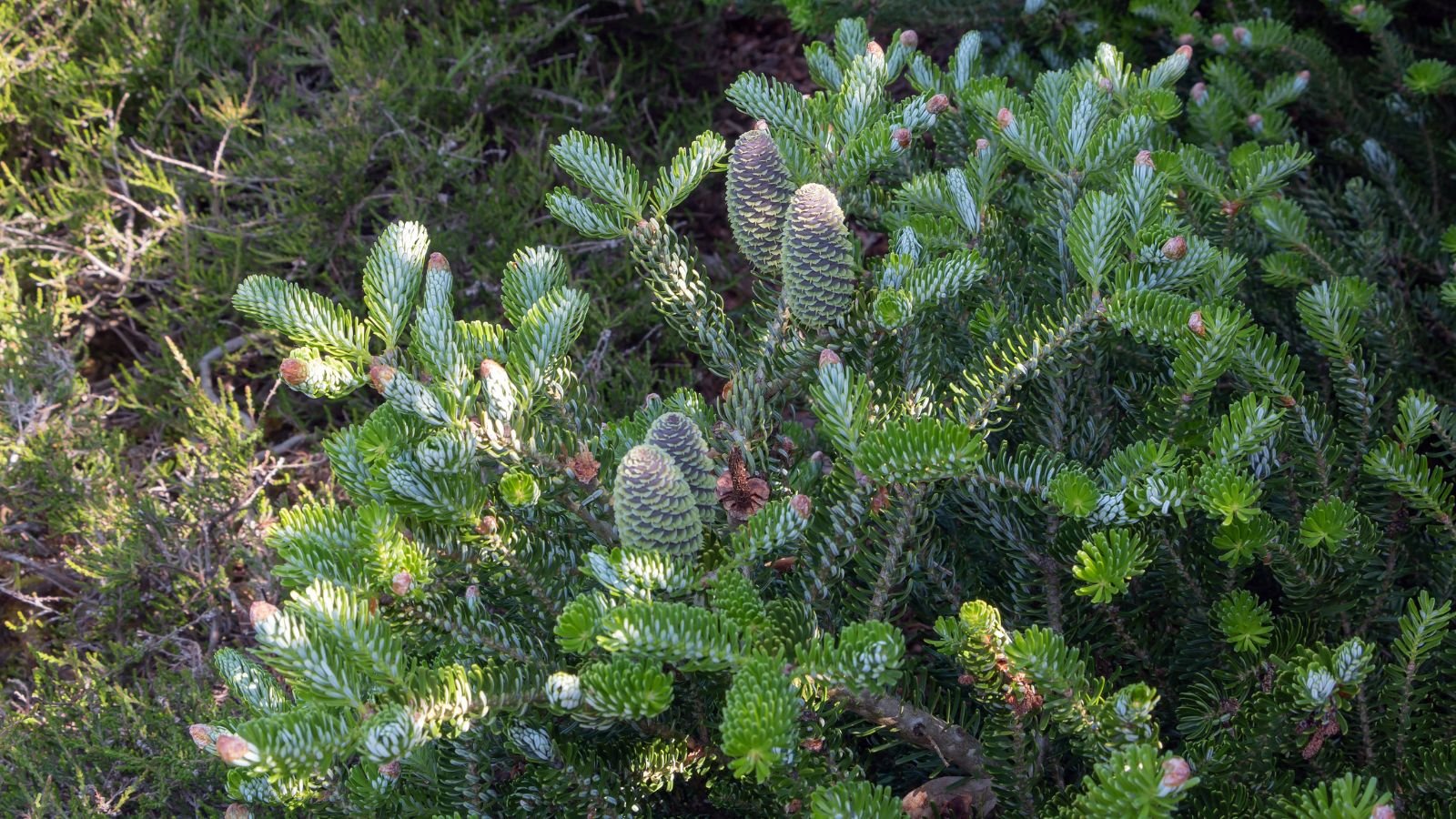 The green to brown cones are partially bare as they disintegrate.
Despite being from Korea, ‘Silberlocke’ is a great tree for North American gardens. It’s smaller than the trees on this list so far, topping out at 30 feet (and typically staying around 20 feet). It has a silvery look, with green to brown cones that are partially bare as they disintegrate.
German nurseryman Gunter Horstmann bred this tree in the 1980s. If you want to grow your own ‘Silberlocke’ seeds develop true to type. There is no need to purchase one if you have the time it takes to grow one.
Douglas
 This fir provides food for deer and elk and shelter for birds.
 We could not write a piece about these trees without including the famous Douglas fir trees. Landscape benefits of this plant include shelter for birds, food for deer and elk, and a host to the Pine White and Ceanothus Silkmoth. The overall look of a Douglas fir is spiky, both in its foliage and cones.
This tree needs moist, acidic soil that is well-draining and rich in organic material. It thrives in Southwestern British Columbia to West Central California, and is the Oregon state tree. It’s a perfect tree for ecologically friendly gardens where a wild look and habit are appropriate.
Dwarf Blue Arizona
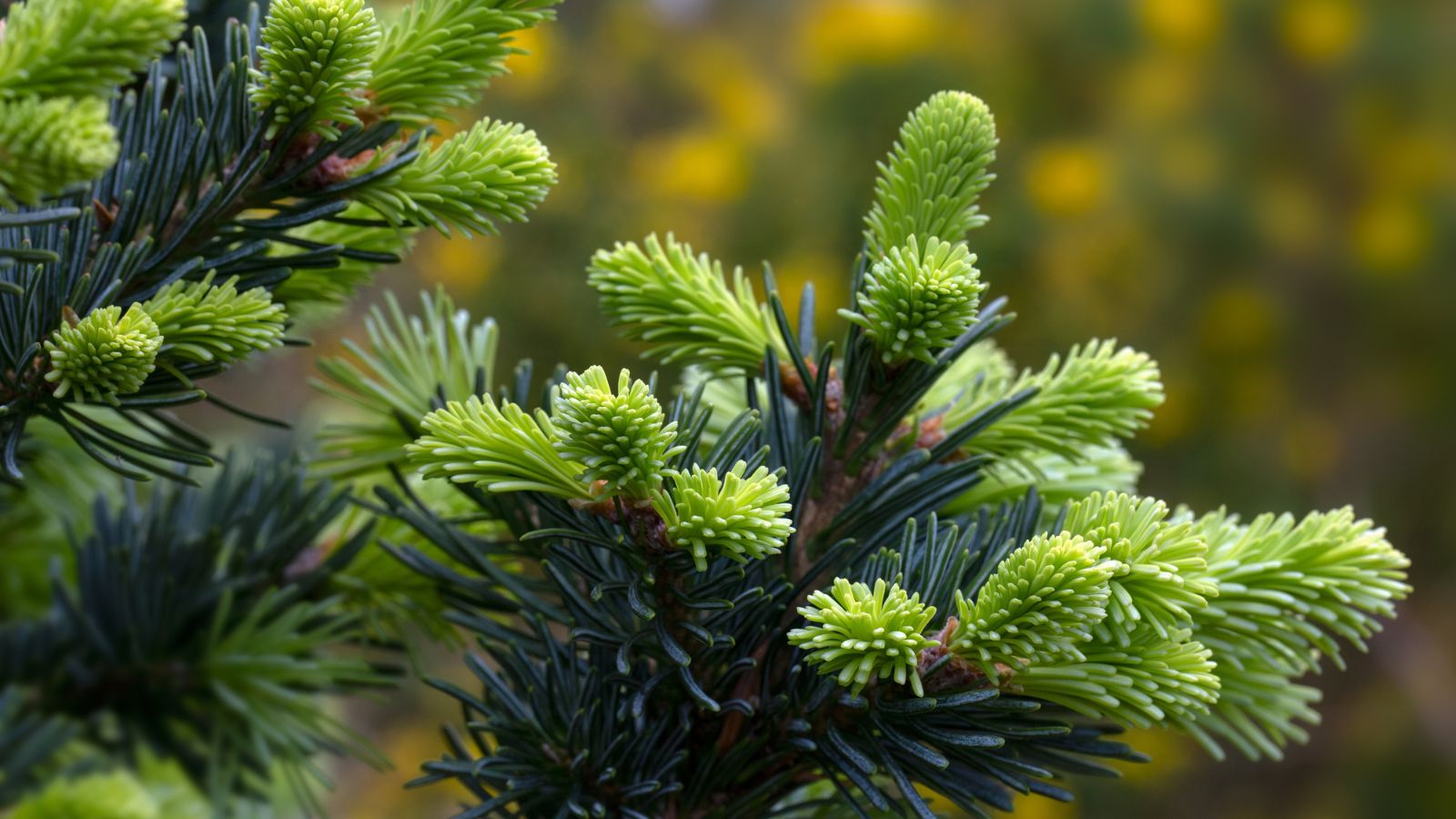 A row planted together makes a nice medium-sized hedge.
With all the tall specimens out there, we needed to add at least one of the dwarf fir trees. Landscape this one almost anywhere, as long as the soil is rich and consistently moist. This baby tree thrives in the Pacific Northwest, but due to its height, it’s a great container tree too.
While the parent species of Blue Arizona (Abies lasiocarpa) reaches up to 100 feet, this dwarf cultivar tops out at 5 feet in ten years. A row of these is easy to tend to and makes a nice medium-sized hedge. Its needles are slightly rounded at their tips, and silvery, cooling areas where it is situated.
Blue Spanish
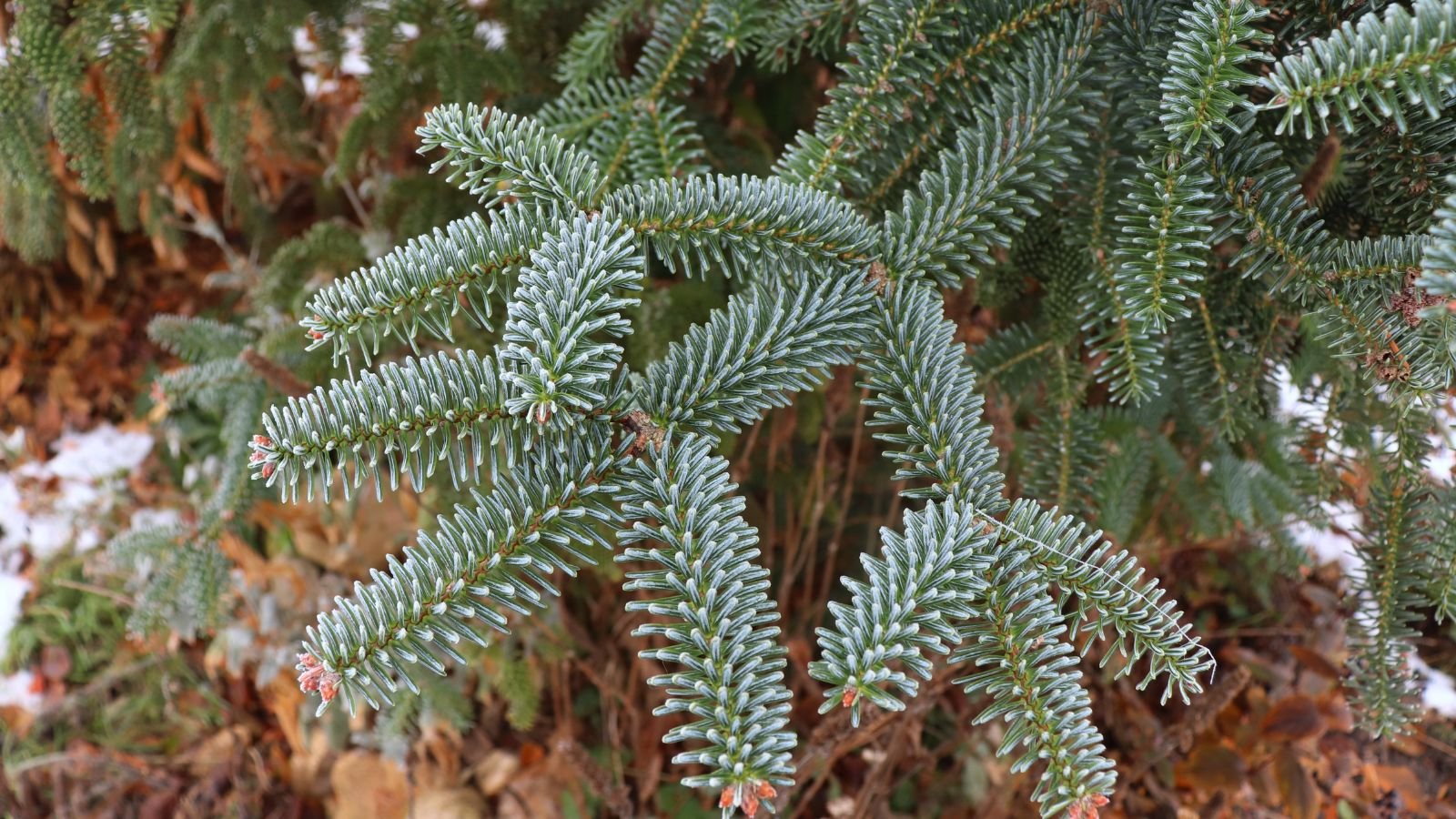 The light green to bluish needles don’t point upward like other firs.
 And now we’re back to tall trees that require some space! The Blue Spanish fir has such an interesting look, though, that we couldn’t leave it off the list. Its dense, light green to bluish needles are arranged radially around its branchlets, rather than pointing upward like most fir trees.
Landscape with this one if you want a Mediterranean feel and growth habit. It’s native to the region, and handles drought with ease once it has a few years of growth. It won the Award of Garden Merit in 1993, and there’s no question as to why. It’s unique and beautiful.













 English (US) ·
  French (CA) ·