

 5 days ago
10
PROTECT YOUR DNA WITH QUANTUM TECHNOLOGY
Orgo-Life the new way to the future Advertising by AdpathwayHighly pathogenic avian influenza has been confirmed in dairy cattle in Washington for the first time, with two infected herds in Yakima County now under quarantine. The U.S. Department of Agriculture's Animal and Plant Health Inspection Service announced the detections on Oct. 8, calling them the first confirmed cases of the virus in livestock in the state.
Both herds were tested after cows showed signs of illness, and both had previously tested negative through routine milk surveillance. The detection puts Washington on the map of an outbreak that has reached dairy cattle in roughly 20 states since March 2024, although agency counts differ on the exact number.
For the Yakima Valley, one of the Pacific Northwest's major dairy regions, the cases arrive at a sensitive time. Fall bird migration is underway along the Pacific Flyway, and state officials are urging dairy operators to tighten biosecurity, keep wild waterfowl away from water sources, and report sick animals quickly.
Two Herds Under Quarantine in the Yakima Valley
The Washington Animal Disease Diagnostic Laboratory made the initial detection, and USDA's National Veterinary Services Laboratories confirmed the virus as H5 clade 2.3.4.4b, according to the Washington State Department of Agriculture, as reported by the Avian Flu Diary. Genetic sequencing is still underway, so the specific genotype has not been announced.
Both farms are quarantined under strict biosecurity measures, and veterinarians are treating sick cows. Most affected cattle recover with supportive care, typically within about six weeks, the state agency said. Milk from affected animals is diverted or destroyed and does not enter the food supply.
State officials said WSDA and Washington State University had run more than 7,000 avian influenza surveillance tests over the past two years, all negative, before these cases. State Veterinarian Dr. Amber Itle urged producers to act now. "The most important thing you can do is implement enhanced biosecurity," she said.
Counting the States, and Why the Number Varies
APHIS and WSDA both say dairy cattle in 19 states have been infected since the outbreak began in March 2024. Some reports have described Washington as the 19th state, but the count is not settled.
NWN's sister site MedicalDaily reported in July, citing USDA data, that more than 1,166 herds in 19 states had already been affected before Washington's cases. The Avian Flu Diary, which tracks the outbreak closely, describes Washington as the 20th state and notes Wisconsin was the previous new state, in December 2025. NWN will update the count if the agencies clarify it.
Either way — 19th or 20th — Washington is the first new state to report infected dairy cattle in 2026. USDA said cases this year have occurred in only a small number of states.
Wild Birds, Migration and Farm Biosecurity
The H5N1 virus spreading in U.S. dairy cattle originated in wild birds, and Washington has a long history with it. In a January 2025 update from the state veterinarian's office, WSDA reported confirmed cases in 51 backyard and three commercial poultry flocks across 19 Washington counties, along with detections by the Washington Department of Fish and Wildlife in wild birds, raccoons, cougars, and seals. The same bulletin noted Washington recorded the first U.S. detection of the D1.1 genotype in fall 2024.
WSDA says wild birds can carry the virus but are not considered the main source of spread between dairy herds. Movement of cattle, shared equipment, vehicles and workers between farms has driven much of the spread. That is why the state is asking dairies not to move lactating animals between farms and not to share equipment or personnel.
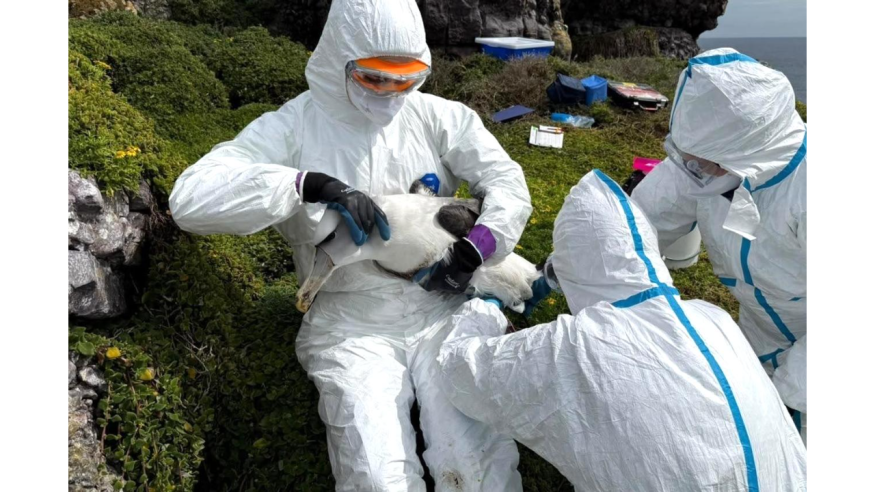
Wildlife still matters on the farm — especially during fall migration. WSDA is advising producers to restrict wild waterfowl access to open water used by cattle and to control rodents and other wildlife. USDA also asks producers to report unusual sick or dead wildlife to their state veterinarian, which helps biologists track the virus during migration season.
Signs Producers and Neighbors Should Watch
Dairy operators should watch for thicker or discolored milk, a drop in milk output, reduced feed intake, fever, respiratory symptoms, changes in manure, and reduced cud chewing. Sick animals should be isolated, and new animals should be held separately for 30 days before joining a herd, according to WSDA.
Producers can report clinical signs to their veterinarian and to WSDA at 360-902-1878 or [email protected]. Financial assistance is available for biosecurity and HPAI-related costs, according to USDA. Backyard flock owners and anyone who finds several dead wild birds should report them to state officials rather than handling them.
For households, health officials say the risk to the general public remains low. The CDC considers people with job-related or recreational exposure to infected birds or mammals to be at higher risk, and farmworkers should use protective equipment. Pasteurized milk is safe, and WSDA does not expect shortages. Raw milk and raw pet food are not considered safe because infected cows can shed the virus in their milk.
Sequencing Results and Next Steps
USDA will announce the virus's genotype once sequencing is complete. That result will help show whether the Washington cases are linked to the strain that has circulated widely in cattle since 2024 or to a separate spillover from wild birds. Officials have not said how the virus reached the two farms.
State and federal investigators are continuing on-farm investigations, diagnostic testing and epidemiological work. The quarantines will remain until the herds test clear.
The bottom line is that bird flu has reached Washington's dairy herds just as migratory birds move through the region. The risk to the public remains low, but dairies, farmworkers and backyard flock owners in central Washington should step up biosecurity and report sick animals promptly.
What Readers Want to Know
Where was bird flu found in Washington dairy cattle?
Two dairy herds in Yakima County tested positive, the first confirmed livestock cases in the state, USDA announced Oct. 8, 2026.
How many states have infected dairy herds?
USDA and WSDA say 19 states since March 2024, but earlier USDA data and outbreak trackers suggest Washington may be the 20th. The count is pending clarification.
Is pasteurized milk safe?
Yes. Federal officials say pasteurization inactivates the virus, and milk from infected cows is kept out of the food supply. Raw milk is not considered safe.
What is the risk to the public?
The CDC rates the risk to the general public as low. Farmworkers and others with close contact with infected animals face higher risk.
What should dairy producers do?
Isolate sick animals, quarantine new arrivals for 30 days, avoid sharing equipment or workers, keep waterfowl away from water sources, and report signs to WSDA at 360-902-1878.
Did wild birds infect the herds?
Officials have not said how the virus reached the farms. WSDA says wild birds carry the virus but are not the main driver of spread between dairy herds.
© 2026 NatureWorldNews.com All rights reserved. Do not reproduce without permission.













 English (US) ·
 French (CA) ·