

 5 hours ago
15
PROTECT YOUR DNA WITH QUANTUM TECHNOLOGY
Orgo-Life the new way to the future Advertising by AdpathwayA chemically synthesized dietary curcumin analog designated GO-Y022 exhibits potent antiviral and anti-inflammatory activity against severe acute respiratory syndrome coronavirus 2 across cellular and animal models, according to a preclinical investigation published in Frontiers in Cellular and Infection Microbiology. Conducted by a multidisciplinary research collaboration across Japanese institutions, the study demonstrated that GO-Y022 markedly restricted viral replication in human lung adenocarcinoma cells and suppressed severe inflammatory lung injury induced by the viral envelope protein in mice. SARS-CoV-2, the positive-sense single-stranded RNA betacoronavirus responsible for the coronavirus disease 2019 pandemic, has transitioned into an endemic pathogen that continues to cause periodic outbreaks, severe pneumonia, and life-threatening systemic cytokine storms. While vaccines and several therapeutic drug classes have substantially mitigated acute disease burdens, emerging viral variants, treatment costs, and vulnerabilities among older adults sustain the urgent demand for safe, broadly accessible therapeutics that simultaneously target infection and aberrant immune activation.
Natural curcumin, a hydrophobic polyphenol extracted from turmeric rhizomes, has long been investigated for therapeutic properties and has previously shown clinical benefits in randomized controlled trials, including reductions in all-cause mortality and recovery failures among COVID-19 cohorts. However, clinical implementation of parent curcumin has historically been restricted by poor metabolic stability, low systemic absorption, and moderate potency. To overcome these pharmacological constraints, researchers engineered a library of mono-ketonic curcumin analogs featuring pentanoid backbones that lack the central diketone moiety characteristic of heptanoid curcumin. Among these compounds, GO-Y022, chemically identified as 1,5-bis(4-hydroxy-3-methoxyphenyl)-1,4-pentadiene-3-one, has demonstrated superior antitumor and immunomodulatory activity in prior experimental models. Although naturally occurring in minute quantities within thermally treated turmeric and prepared curry dishes, the compound was chemically synthesized and purified for rigorous experimental evaluation, yielding a single major compound whose structure was verified by nuclear magnetic resonance spectroscopy before antiviral testing.
To evaluate antiviral activity, the researchers conducted in vitro infection assays utilizing human lung Calu-3 cells stably engineered to overexpress angiotensin-converting enzyme 2 via a lentiviral vector system. Cells were challenged with the SARS-CoV-2 clinical isolate 2019-nCoV/Japan/TY/WK-521/2020 at a multiplicity of infection of 0.8 in the presence of varying analog concentrations. High-content automated fluorescence imaging quantified infection by measuring spike protein immunoreactivity relative to DAPI-stained nuclei. The screening revealed that several mono-ketonic analogs, including GO-Y015, GO-Y098, GO-Y019, and GO-Y023, inhibited viral infection more effectively than natural curcumin, which registered a half-maximal inhibitory concentration of 28.9 micromolar. GO-Y022 proved to be the most potent derivative, exhibiting a half-maximal inhibitory concentration between 5.2 and 12.5 micromolar, representing an antiviral potency approximately 2.3 to 5.6 times greater than parent curcumin, with mean values recorded at 7.6 plus or minus 2.72 micromolar across independent trials.
Cellular toxicity profiling performed in Calu-3-ACE2 cultures established a half-maximal cytotoxic concentration of 112.3 micromolar for GO-Y022, yielding a favorable in vitro selectivity index of 21.6 and confirming a broad therapeutic window between 9.4-fold and 21.6-fold. Comparative evaluations demonstrated that while several synthetic pentanoids exhibited elevated cytotoxicity thresholds above 125 or 333 micromolar, GO-Y022 maintained the most advantageous balance of low-micromolar viral suppression and cellular tolerability. Furthermore, researchers evaluated GO-Y201, a water-soluble glycosylated derivative synthesized by conjugating D-mannose to GO-Y022 to address the characteristic insolubility of curcuminoids. In cellular infection assays, GO-Y201 retained strong antiviral capability, registering a half-maximal inhibitory concentration of 29.4 micromolar alongside a cytotoxic threshold exceeding 125 micromolar, verifying that structural modifications designed to improve aqueous delivery preserve substantive viral inhibition.
To determine the precise temporal window during which GO-Y022 disrupts the viral life cycle, investigators performed time-of-drug-addition experiments comparing continuous exposure against transient interventions. Calu-3-ACE2 cultures treated with 20 micromolar GO-Y022 throughout infection exhibited a near-total collapse of viral infectivity, with the proportion of spike-protein-positive cells dropping to 0.47 plus or minus 0.34 percent compared to untreated control levels. Conversely, delaying compound administration until three hours post-infection significantly impaired therapeutic efficacy, leaving 25.46 plus or minus 20.38 percent of cells infected. Quantitative real-time reverse transcription polymerase chain reaction corroborated these imaging findings by measuring intracellular viral RNA accumulation targeting the envelope gene. While vehicle-treated control cultures exhibited a 220.73-fold expansion in viral RNA transcripts between one and six hours post-infection, GO-Y022-treated cells showed only a 2.42-fold increase, demonstrating that the compound arrests early intracellular viral genome replication.
Seeking the direct molecular mechanism responsible for this antiviral blockade, the research team analyzed whether GO-Y022 interferes with initial receptor attachment or host protease processing. In biochemical binding assays, GO-Y022 failed to exhibit significant inhibitory action against the physical binding interaction between the viral spike receptor-binding domain and the host ACE2 receptor protein. Similarly, enzymatic profiling demonstrated that GO-Y022 did not suppress host furin protease activity at 12.5 micromolar, and maintained 81.7 percent of normal cleavage activity even at high 50 micromolar concentrations, indicating that the compound does not operate by obstructing spike cleavage at the S1-S2 junction. Full-length viral RNA genome sequencing of infected cells revealed four consensus point mutations across structural and non-structural coding regions, yet identical genomic variations occurred in untreated controls, confirming that GO-Y022 did not induce mutagenic drift within the viral population during short-term culture.
To assess host transcriptional consequences, investigators conducted microarray expression profiling using human transcriptome arrays covering over 285,000 transcripts to inspect a validated 25-gene signature characteristic of severe SARS-CoV-2 cellular pathology. Viral infection induced prominent upregulation across twelve signature inflammatory genes, including marked spikes in IL1A, CXCL2, TNFAIP3, PTX3, NFKB1A, CXCL3, CCL20, IFIT2, ARRDC3, and EREG, alongside an independent 213.8-fold surge in interleukin-6 expression. Treatment with 20 micromolar GO-Y022 comprehensively counteracted this inflammatory surge, suppressing ten of the twelve induced signature genes back toward baseline homeostatic levels. Specifically, cellular transcript expression plummeted to 0.2 percent of infected control levels for IL1A, 0.3 percent for TNFAIP3, 0.37 percent for IFIT2, 0.56 percent for PTX3, 0.68 percent for NFKB1A, and 0.8 percent for interleukin-6, demonstrating that GO-Y022 directly mitigates the pro-inflammatory cascades triggered by viral invasion.
Beyond live viral challenge in vitro, the investigators validated anti-inflammatory efficacy in vivo using a specialized murine acute lung injury model driven by intratracheal instillation of recombinant SARS-CoV-2 envelope protein. The envelope protein is an essential structural component known to trigger severe alveolar cell infiltration, lung edema, and cytokine release independently of intact replicating virions. Male C57BL/6 mice were stratified into four experimental groups receiving vehicle alone, 25 micrograms of envelope protein, 4.5 micrograms of GO-Y022, or simultaneous envelope protein and GO-Y022. The 4.5-microgram pulmonary dose was mathematically translated based on mouse lung epithelial surface area measurements to align with tolerable oral dosing parameters established in prior pharmacological research. Animals were monitored for 48 hours post-instillation, and harvested lung tissues were prepared for histopathological sectioning, hematoxylin and eosin staining, and blind quantitative digital image analysis.
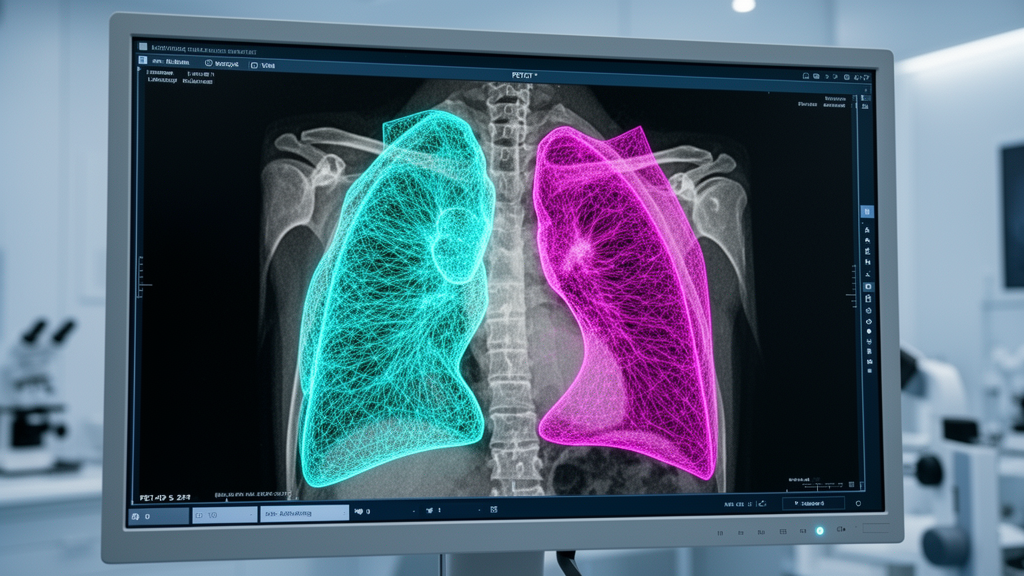
Quantitative whole-lung digital histology using HALO image analysis revealed that intratracheal envelope protein administration induced extensive alveolar inflammatory cell infiltration, bronchial wall thickening, and intra-alveolar hemorrhage. To accurately isolate true inflammatory lesions, researchers subtracted the baseline vascular congestion area of 50.4 plus or minus 1.4 percent observed in unmanipulated control lungs. In vehicle controls, the median inflammatory area occupied 1.4 percent, whereas envelope protein exposure escalated the median lesion area to 17.3 percent. Co-administration of GO-Y022 reduced median inflammatory tissue involvement to 0.0 percent, mirroring the 0.0 percent observed in mice receiving GO-Y022 alone. The Kruskal-Wallis test confirmed significant global variance across groups, with pairwise comparisons demonstrating significant reductions in inflammatory pathology following compound treatment, and the overall incidence of visible inflammatory lesions fell from 64.7 percent in the envelope protein group to 20.0 percent in the co-treated cohort.
Immunohistochemical examination of mouse lung sections further substantiated the targeted down-regulation of acute-phase inflammatory mediators in pulmonary tissues. Staining for pentraxin 3, an established clinical biomarker of severe pulmonary damage and mortality risk in coronavirus infections, revealed a significant reduction in immunoreactive cells from 32.8 plus or minus 10.1 percent in envelope-treated animals down to 24.0 plus or minus 8.1 percent in animals receiving GO-Y022 co-treatment. In parallel cellular experiments examining primary sorted mouse alveolar macrophages, envelope protein stimulation elevated interleukin-6 and tumor necrosis factor-alpha gene expression by 1.82-fold and 1.73-fold over baseline without compromising macrophage viability. GO-Y022 restored macrophage transcript levels to normal and significantly reduced secreted interleukin-6 protein concentrations from 0.91 to 0.14 micrograms per milliliter, demonstrating powerful local repression of pivotal cytokine storm drivers.
The study authors highlighted critical limitations that contextualize their preclinical findings, emphasizing that in vitro analyses relied upon the Calu-3 lung adenocarcinoma cell line overexpressing ACE2, which may differ physiologically from primary human airway epithelia. Furthermore, the purified envelope protein lung inflammation model isolates specific structural toxicity rather than replicating complete systemic pathophysiology associated with active multiorgan viral proliferation. In MH-S alveolar macrophage cultures, GO-Y022 suppressed envelope-induced interleukin-6 secretion with an IC50 of 2.5 micromolar, outperforming natural curcumin, yet the precise intracellular signaling targets governing this response remain to be fully characterized. The authors concluded that while GO-Y022 demonstrates exceptional dual-action efficacy against viral replication and pulmonary cytokine storms, comprehensive evaluations regarding long-term repeated-dose toxicity, metabolic pharmacokinetics, and broader antiviral spectrum against divergent circulating viral sublineages are essential before human clinical translation.
Subject of Research: Evaluation of mono-ketonic curcumin analogs for antiviral and anti-inflammatory efficacy against SARS-CoV-2
Article Title: Curcumin analogs can inhibit the infection and inflammation associated with the coronavirus disease 19
Article References: Hayashi, T., Shimazu, K., Yamakoshi, H., Maruyama, T., Hirano, J., Kohyama, A., Yoshida, T., Tanikawa, T., Hoshizaki, M., Kuba, K., Nanjyo, H., Iwabuchi, Y., & Shibata, H. (2026). Curcumin analogs can inhibit the infection and inflammation associated with the coronavirus disease 19. Frontiers in Cellular and Infection Microbiology, 16, 1957161. https://doi.org/10.3389/fcimb.2026.1957161
Image Credits: AI Generated
DOI: 10.3389/fcimb.2026.1957161
Keywords: curcumin analog, GO-Y022, SARS-CoV-2, COVID-19, pulmonary inflammation, cytokine storm, interleukin-6, envelope protein, Calu-3 cells, ACE2 receptor, antiviral activity, in vitro screening, acute lung injury, pentraxin 3, alveolar macrophages, HALO histology, monoketonic pentanoid















 English (US) ·
 French (CA) ·