

 7 months ago
212
7 months ago
212
PROTECT YOUR DNA WITH QUANTUM TECHNOLOGY
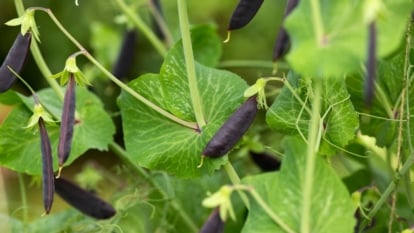
Orgo-Life the new way to the future Advertising by AdpathwayEvery year, I grow ‘Sugar Magnolia’ snap peas in my spring garden. They are some of the sweetest snaps I’ve ever tasted, and they look amazing in the garden, with their pink-purple flowers and greenish-eggplant pods.
What’s great about these peas is that they grow in my garden until the high heat of midsummer sets in. At that point, they stop flowering. But they will grow in frost too, so in my mild fall garden, I can get a second harvest for the year. While not everyone has a split season, this fact is a testament to the resilient nature of ‘Sugar Magnolia’ snap peas.
If you haven’t tried growing peas in your garden before, these are a good variety to start with. You don’t need a raised bed to grow these, though you will need support, as they can grow tall. As long as you have a stake to keep them upright, you’ll get to enjoy the sweet and sugary fresh flavor of this excellent pea.
Sugar Magnolia Snap Pea Seeds

Sugar Magnolia Snap Pea Seeds
Wow, a purple snap pea, tender and delicious! ‘Sugar Magnolia’ isn’t just a famous Grateful Dead song, it is also a beautiful, fine-flavored, edible-pod pea with purple flowers. Long hypertendrils (vigorous, multi-branching tendrils) act as extra sturdy supports for 6′-7′ vining plants, creating an airy structure that helps prevent mildew. Some of these open-pollinated peas may be speckled with green, or be fully green.
‘Sugar Magnolia’ Snap Pea Overview
|
Plant Type Annual vegetable Family Fabaceae Genus Lathyrus Species oleraceus |
Native Area Eurasia, Northern Africa Exposure Full sun Height 6-7’ Watering Requirements Moderate |
Pests & Diseases Aphids, spider mites, leafminers, cutworms, wilt, root rot Maintenance Medium Soil Type Rich, well-draining Hardiness Zone 2-11 |
What Is It?
This variety was initially cultivated by Oregon farmer and free thinker Alan Kapuler, aka Mushroom, who founded the organization, Peace Seeds. The org aimed to develop a seed catalog which acted as a “manual for conserving the plant gene-pool of planet Earth”. In his 15-plus years of plant breeding, Kapuler developed many varieties of open-pollinated veggies.
As you may have gathered, the variety is named for the song “Sugar Magnolia” by Kaluper’s favorite band, The Grateful Dead. This sweet snap pea is similar botanically to other snap peas, but has purple coloration and a sweeter flavor.
Characteristics
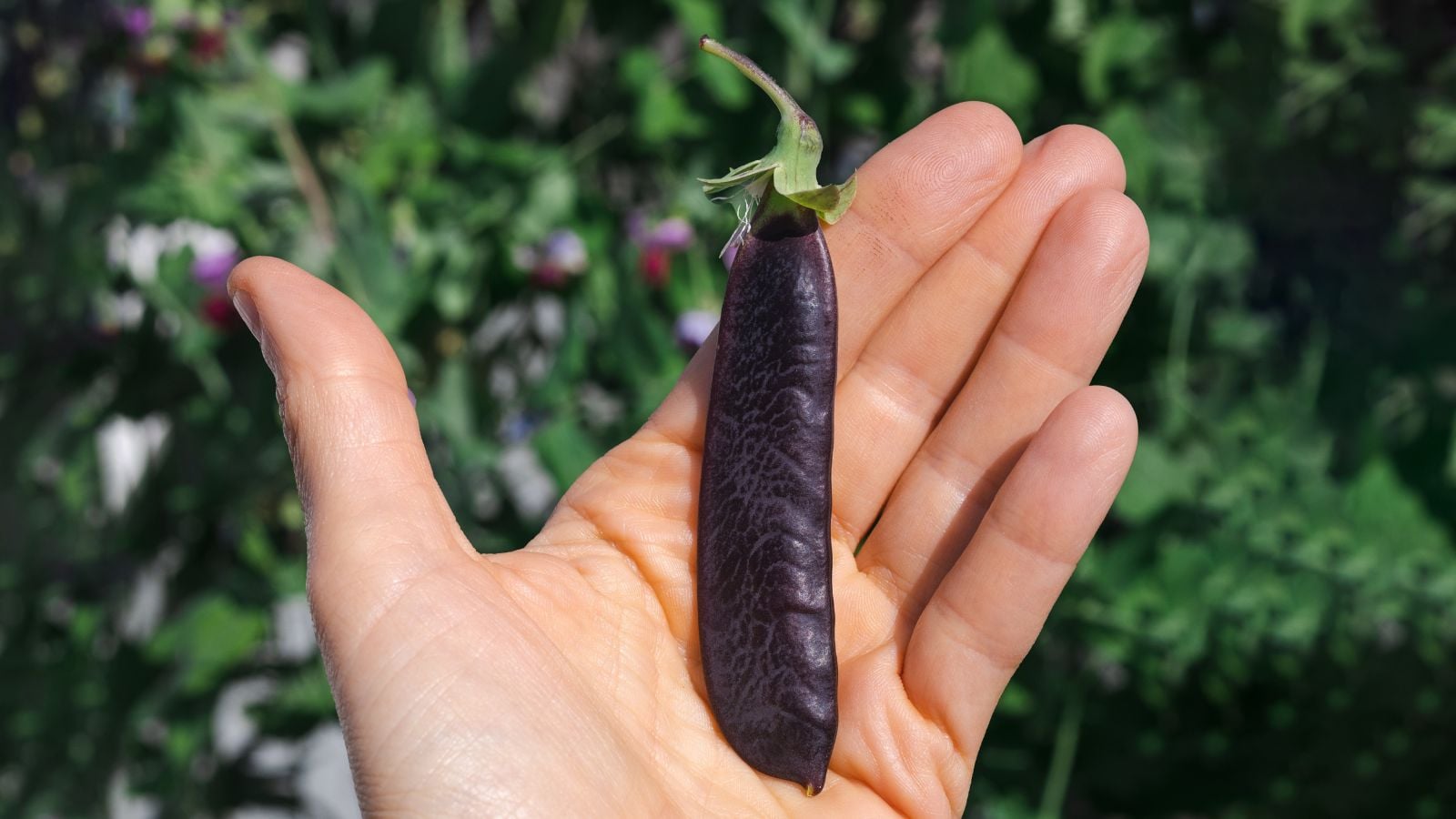 The pods have unique coloring.
 Peas are excellent nitrogen fixers in the garden, and ‘Sugar Magnolia’ snap peas are no exception to that rule. This vine reaches roughly six to seven feet tall, with pronounced branching tendrils that readily clasp and climb. This open habit keeps the plant from taking on mildew, unlike other peas.
Not only do the pods take on deep purple coloring, but the blooms are mostly purple-pink with a deep maroon lip. These flowers develop in spring and, when pollinated, form pods that are best eaten when they’re small. At full maturity, they reach three to four inches.
Speaking of pollination, this is an open-pollinated variety. Open-pollinated varieties are more accessible to the public, as opposed to trademarked ones, which have laws preventing their propagation and sale.
Native Area
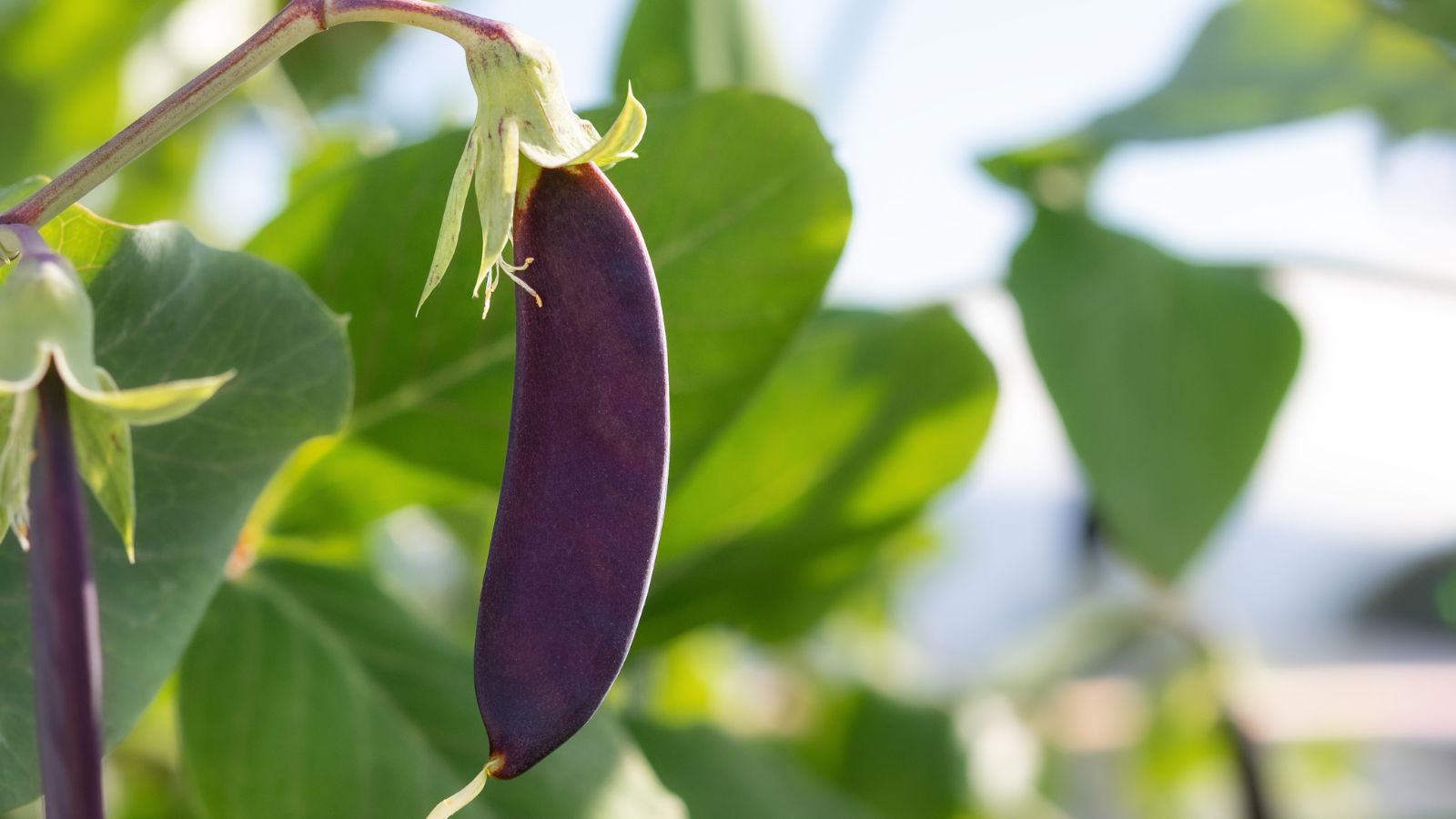 These hybrids are aptly named.
 Snap peas were developed as a cross between shelling pea mutants found in 1952 in Utah and snow pea cultivars. The first of the current snap peas, called ‘Sugar Snap’, was released in 1979. Botanically, they’re called Lathyrus oleraceus (Macrocarpon Group), and previously Pisum sativum. The ‘Sugar Magnolia’ variety was bred in Oregon.
Planting
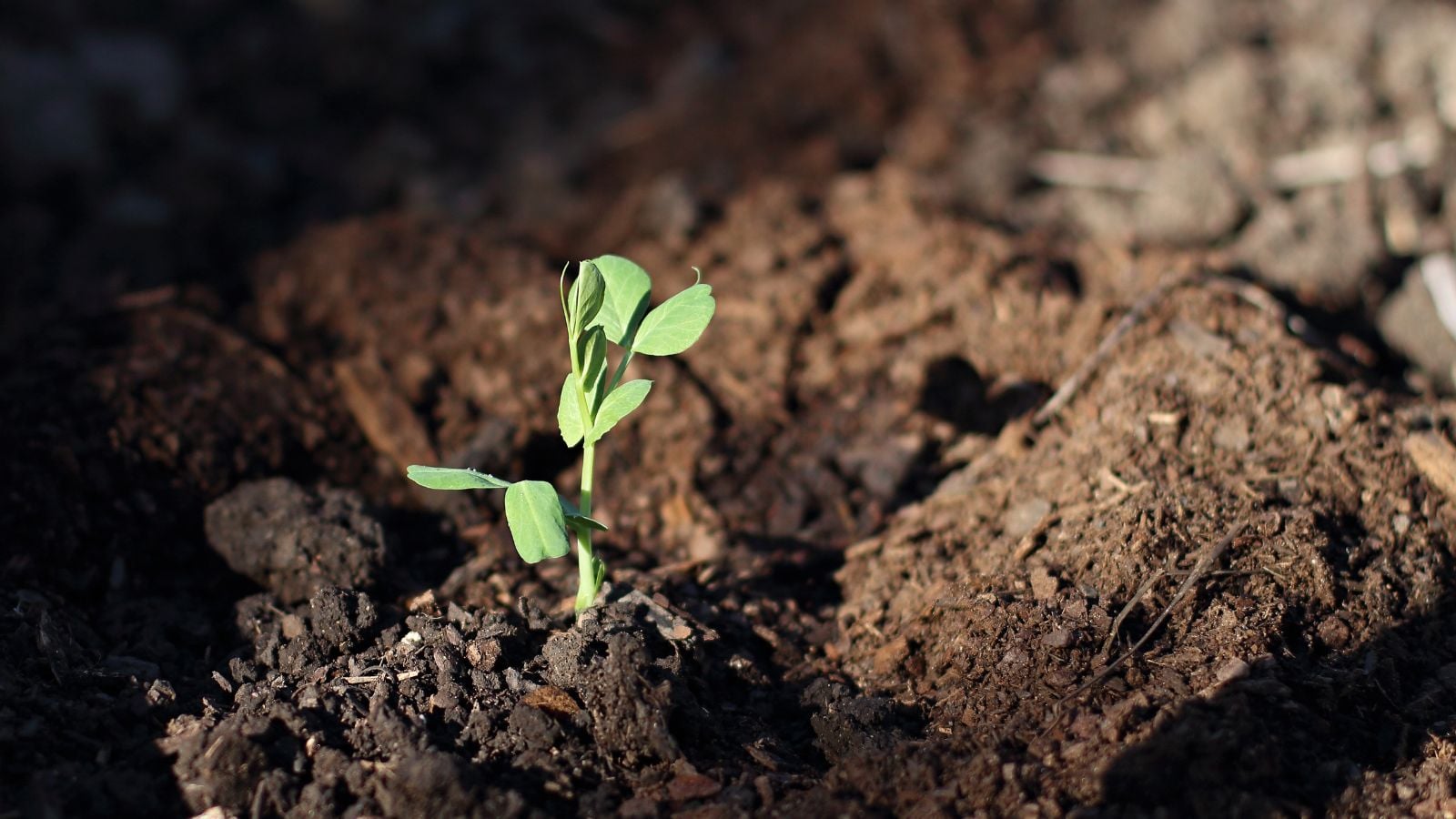 It’s best to direct sow these seeds.
 While you can find pea transplants at local nurseries, we do not recommend transplanting peas. They grow quickly and are highly susceptible to root disturbances. For that reason, it’s best to sow them directly. ‘Sugar Magnolia’ snap pea seeds will germinate more easily if you soak them for 12 to 24 hours before planting. This goes for all pea seeds.
Wait for four to six weeks before your last frost to get your snaps started. Ideal soil temperatures are between 40 and 60°F (4-16°C). You can sow them again in the fall if you have a mild season with at least a couple of months of non-freezing weather. In this case, sow them directly 10 to 12 weeks before your last frost when temperatures remain below 85°F (29°C) and consistently above freezing.
Plant your seeds one inch deep, two inches apart, in rows four to six feet apart. I like to plant mine close together near a trellis or bamboo stake. Remember to include support when you plant. Seeds should emerge within five to ten days. No thinning is needed. They’re good candidates for container growing, along with in-ground growing.
How to Grow
When you get the timing right, and you sow in rich soil, you will watch these pods really take off. The biggest task after that is keeping them trained, fed, and harvested often.

Light
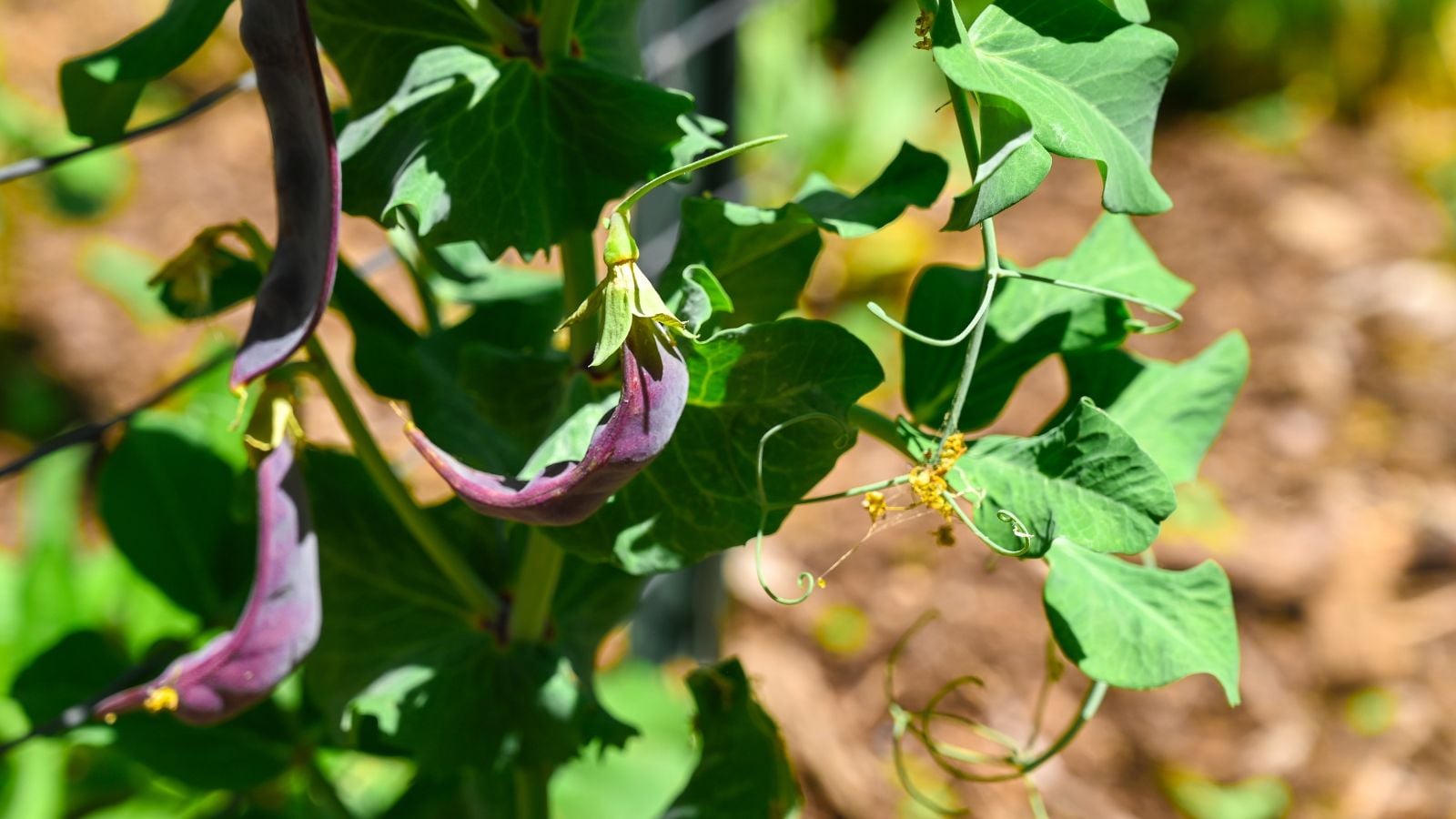 Choose a spot with direct sun exposure.
 Keep your pea plants in full sun, with at least six to eight hours of direct sunlight per day. As the season warms, some afternoon shade will prevent halted pod development that comes from heat. In hot areas, a shade canopy could keep sunlight filtered and extend the harvest slightly longer into the later parts of spring.
Water
 Provide around an inch of water per week.
 Peas need consistently moist, but not waterlogged soil to produce their water-filled, sugary pods. One inch of water per week is best. In areas where spring tends to be rainy and moist, there’s no need to supplement with irrigation. But in warmer and drier areas, water deeply and infrequently with drip irrigation or a soaker hose.
Soil
 The soil should be rich and well-draining.
 Ensure your garden bed or planter has rich, well-draining soil. They can handle clay, sand, or loam, as long as it’s well-draining. In heavy soils, amend with well-rotted compost. If you live in a region that gets warm quickly, mulch around the base of plants after they emerge to keep the soil moist and promote better temperature regulation.
Temperature and Humidity
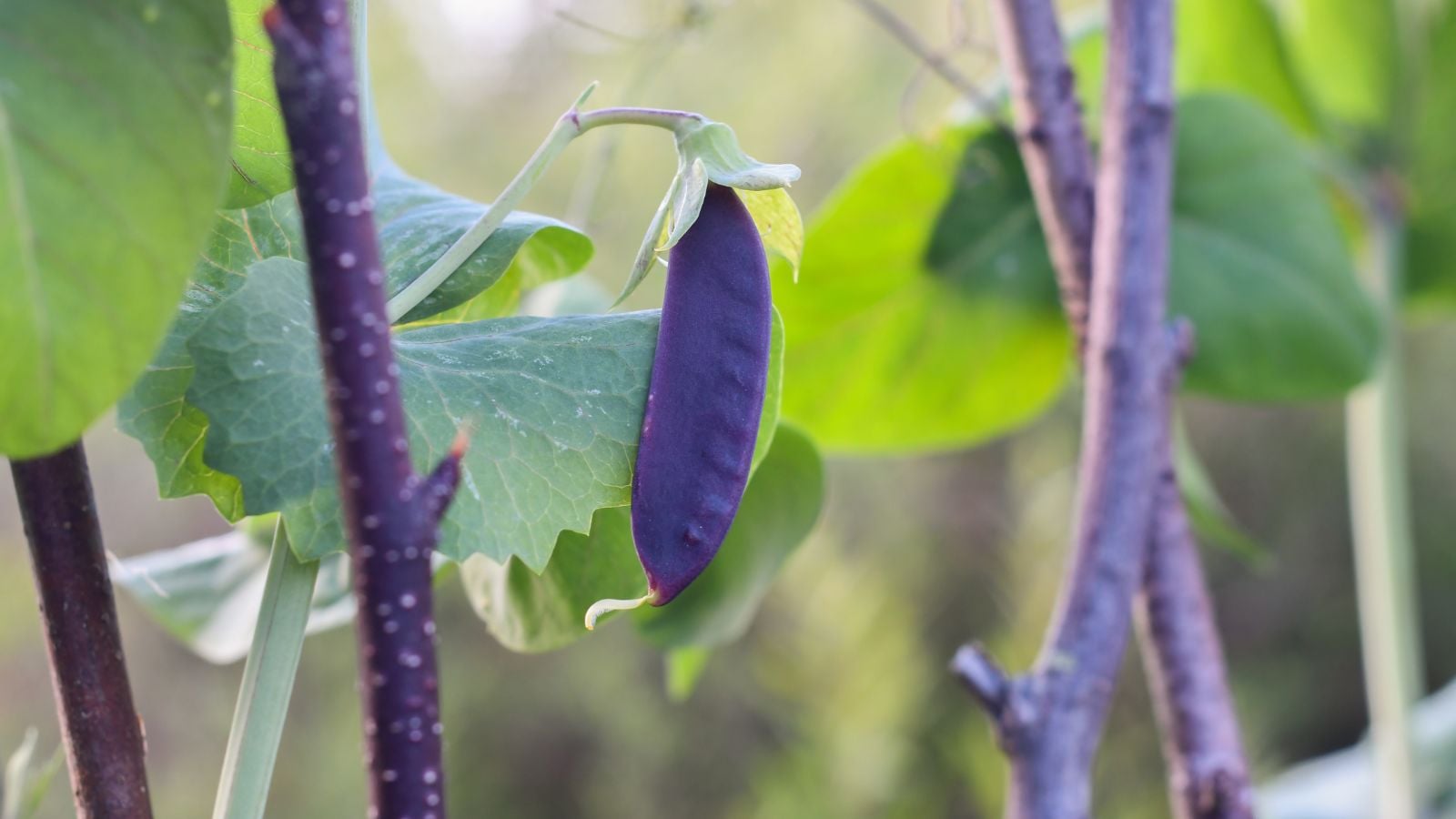 When temperatures are too high, they stop producing.
Snaps prefer temperatures between 55 and 65°F (13-18°C). At 85°F (29°C) and higher, flowers stop developing, and pods cease formation. Use various light blockers and mulches to keep the temperature below ground controlled if you’re in a warm area. Established plants do just fine in temperatures around 40°F (4°C).
Consistent freezes will damage plants, so protect them with cold frames and frost covers as needed. Humidity can promote wilt diseases, but because this plant has an open habit, it’s less likely to occur.
Fertilizing
 Good soil is enough to keep them happy.
 Well-rotted compost amendments are often enough to set your peas off and encourage them to flower and develop pods for the season. However, if you want to give them a little boost, use a powdered organic fertilizer. Work a small amount – about a tablespoon per six inches – into the soil surface at planting. No additional applications are needed.
Maintenance
 Provide supports at planting time.
 You don’t need to do much for your peas, other than ensure they reach the trellis you planted them with. Their tendrils should hook around whatever support you choose. No pruning is needed, other than to control and prevent the spread of pests and diseases.
Propagation
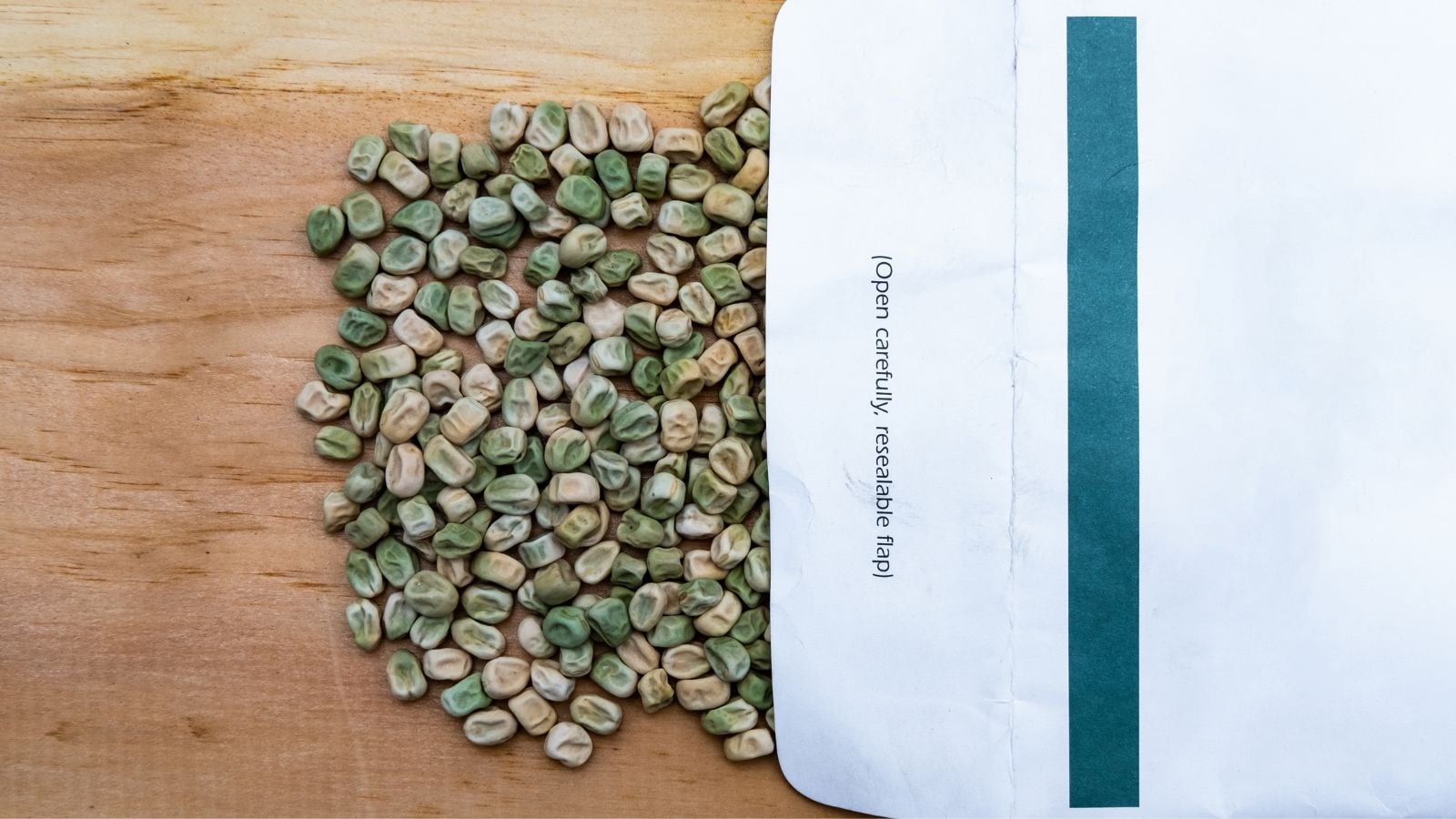 Collect seeds to plant again next season.
 The only way to propagate snap peas is to plant seeds annually. Again, you can find starts at local nurseries, but these tend to perform poorly, as peas have sensitive roots. Let at least a few pods dry on the plant to gather seeds at the end of the season. The pods should be dried, and the peas will rattle within them when they’re ready for saving. Store them in an opaque envelope, label them, and keep them in a cool, dry place until next winter.
Harvesting and Storage
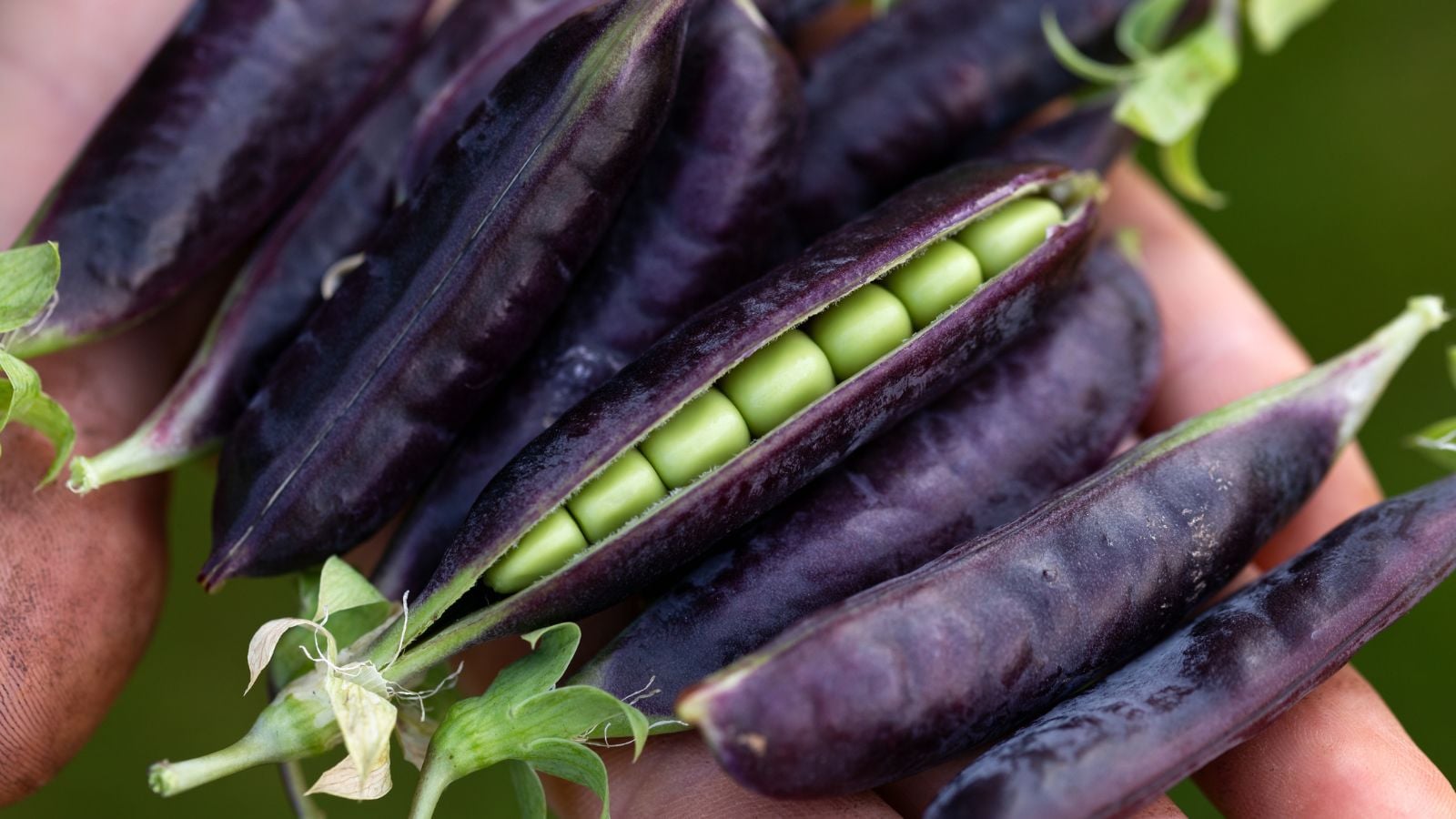 Pick the pods when they are mostly purple.
 ‘Sugar Magnolia’ snap peas have pods that grow up to four inches long. However, at this stage, they can be tough and stringy. Instead, pick the pods when they’re two to three inches long. You can test young, small pods at this point. If they snap and crunch and have a sweet, fresh flavor, you can do a full harvest.
Pods should be mostly purple when ready. Harvest regularly to keep production going. While you can pull the pods off the vine, they are fragile, so snipping them with sterile shears is a good idea. Put the peas in a clear plastic bag and store them in the refrigerator for up to 10 days.
Common Problems
Because they’ve been so heavily cultivated, pests and diseases are common. Thankfully, with ‘Sugar Magnolia’ snap peas, you won’t have to deal with mildew. But there are other things to look out for.
Pests
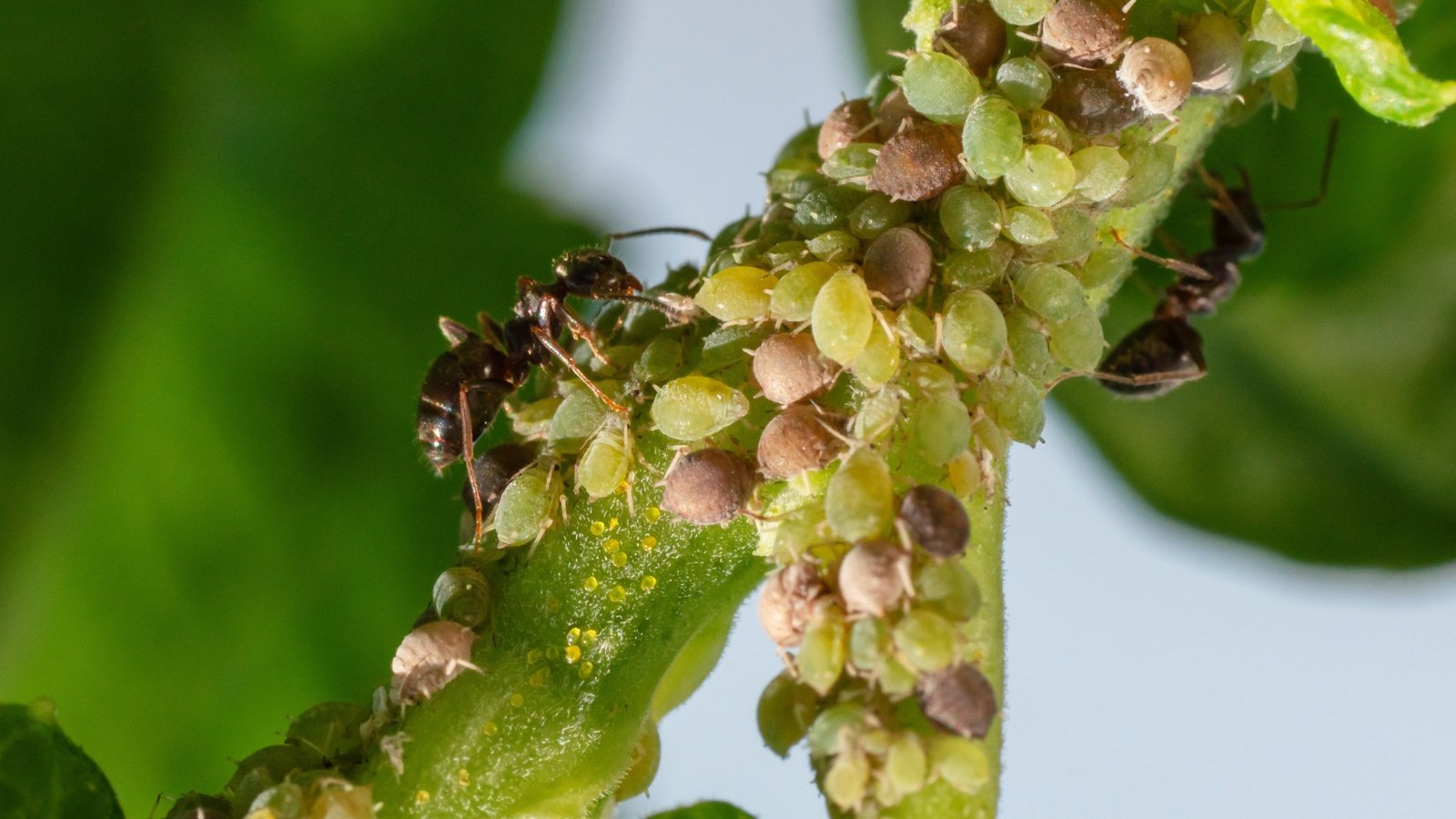 Watch out for aphids and other common pests.
 Aphids and spider mites can attack snap pea vines. Snip off heavily infected areas if it doesn’t sacrifice the vine’s integrity, and ensure your soil is moist to keep spider mites away. Don’t overfeed plants, as this attracts more pests.
Leafminers are the larval stage of a fly that feeds on the inner tissue of pea leaves. If you see small white trails developing on leaves, you can simply remove the individual leaf. Hand-pick any type of cutworm you notice, or spray the vine with Bt pre-emptively to stop their feeding.
In areas where pests come on quickly, use covers to prevent early infestations.
Diseases
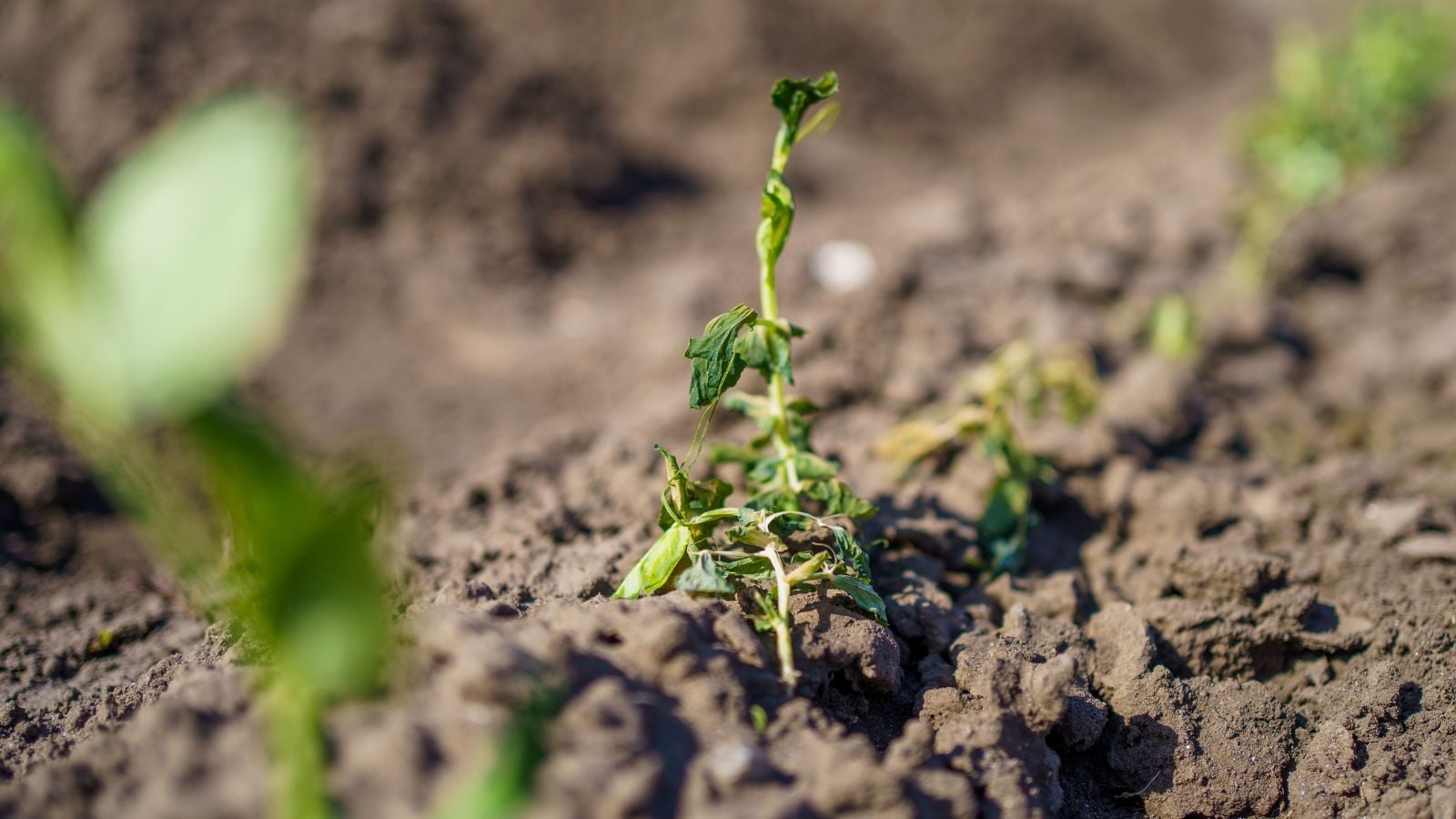 Root rot can occur in waterlogged, clay soils.
 Wilt and blight can be a problem for vines in heavily humid areas. Snip off leaves that take on lesions, and remove infested or completely wilted plants. Root rot can be a problem when the soil is too moist. Keep the soil moist, but don’t overwater to prevent rot.
Frequently Asked Questions
These vines grow up to six or seven feet in a season. Ensure they have support to grow properly.
These peas take around 70 days from seed to harvest.
Keep your pea seeds about two inches apart in the garden as you sow them directly.
In most areas, yes, it’s often too hot in July, though there are exceptions. If you don’t live in a consistently cool region, you should instead plant them four to six weeks before your last frost, or 10 to 12 weeks before your first frost.












 English (US) ·
  French (CA) ·