

 6 months ago
331
6 months ago
331
PROTECT YOUR DNA WITH QUANTUM TECHNOLOGY
Orgo-Life the new way to the future Advertising by AdpathwayOnion sets are one of the easiest ways to grow onions at home. Gardening expert Madison Moulton explains how to choose, plant, and grow onion sets for a reliable harvest.

Written by Madison Moulton Horticulture review by Sarah Jay Last updated: April 10, 2026 | 2 min read
Onion sets are small, dormant bulbs grown the previous season and sold ready to plant. They skip the slow, finicky germination stage, and they give you a head start that’s hard to beat. Push them into the ground in early spring, keep them watered and weeded, and you should have full-sized bulbs by midsummer.
The trade-off is variety selection and the potential for bolting. Sets are usually sold by color rather than by named cultivar, so you have fewer choices. Their advanced growth stage also makes bolting far more likely if you’re not careful about where and how you’re planting.
If you want a specific variety, seeds give you more options. But for a straightforward crop of onions with minimal fuss, plant onion sets.

Texas Early Grano Bulb Onion

Texas Early Grano Bulb Onion Seeds

Red Amposta Bulb Onion Seeds
Prepare the Soil
 Amend the soil with compost before you plant onion sets.
Onions need fertile, well-drained soil with plenty of organic matter, and they don’t compete well with weeds or compacted ground. Working compost into the top several inches of soil before planting improves both fertility and drainage, which is especially important in heavier clay soils where onions tend to struggle.
A slightly acidic to neutral pH is ideal. If you’ve never tested your soil, this is a crop where it’s worth doing. Onions are sensitive to acidity, and a simple amendment can make a massive difference in performance later on.
Full sun is essential. Onions need at least six hours of direct light per day, and more is better. A shaded spot won’t produce the foliage growth the plant needs to build large bulbs.
Plant Onion Sets
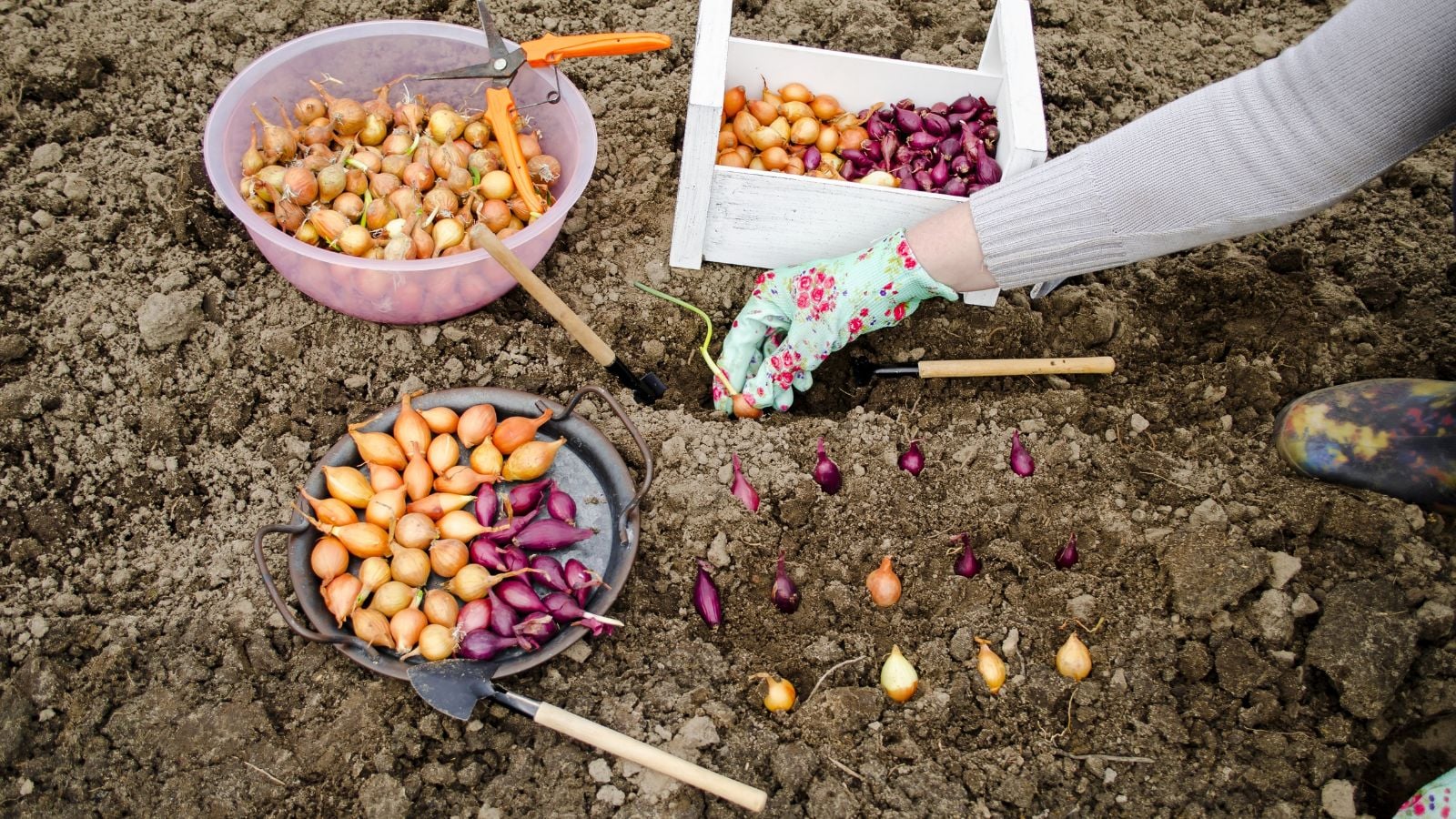 Stick to sets on the smaller side to limit the risk of bolting.
Plant onion sets as soon as the ground can be worked in spring, typically two to four weeks before your last frost date. Onions are cold-hardy and can handle a light frost, so there’s no reason to wait for warmer weather.
When selecting sets, choose bulbs on the smaller side. Sets smaller than three-quarters of an inch in diameter tend to produce the best full-sized bulbs. Larger ones are more likely to bolt, which is already a concern when growing from sets.
Push each set into the soil pointed end up, about an inch deep. Space them four inches apart if you want full-sized bulbs. If you’d like to harvest some early along the way, plant them closer (about two inches apart) and pull every other one once they’re big enough to use, leaving the rest to size up.
Water and Weed
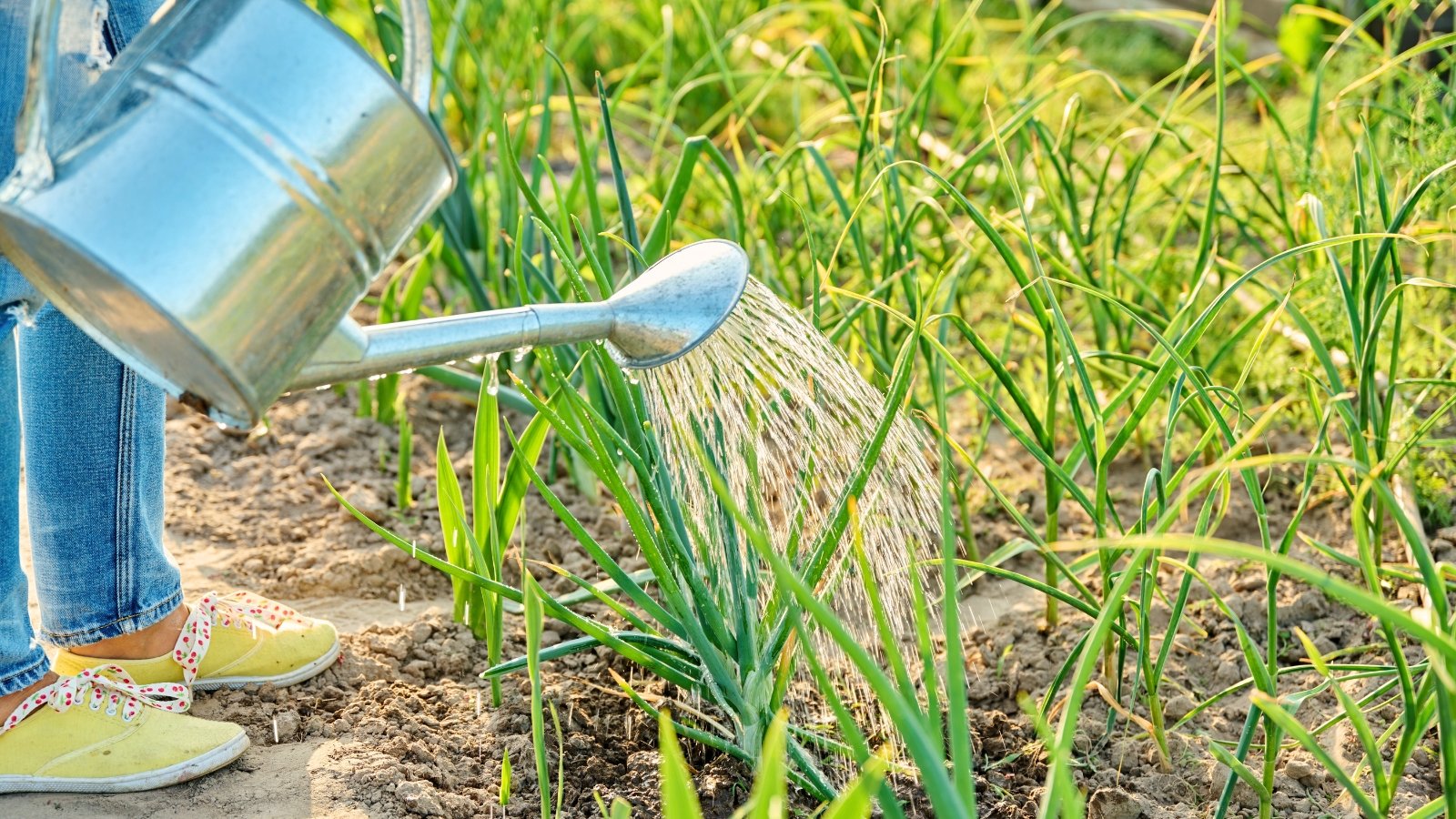 Keep weeds away from the bulbs to promote growth.
Onions have shallow root systems, which means they can’t pull moisture from deep in the soil the way crops like tomatoes can. They need consistent water, about an inch per week. Inconsistent watering leads to smaller bulbs and can cause splitting.
Weeding is just as important. Because onion roots sit near the surface and the narrow, upright leaves don’t shade the ground much, weeds have an easy time establishing themselves in an onion bed. Pull them while they’re small. Hand-pulling is usually the safer option, especially once the bulbs start to swell.
A thin layer of mulch (straw or shredded leaves) helps with both moisture retention and weed suppression, but keep it light. Heavy mulch around the necks can trap moisture and encourage rot.
Know When to Harvest
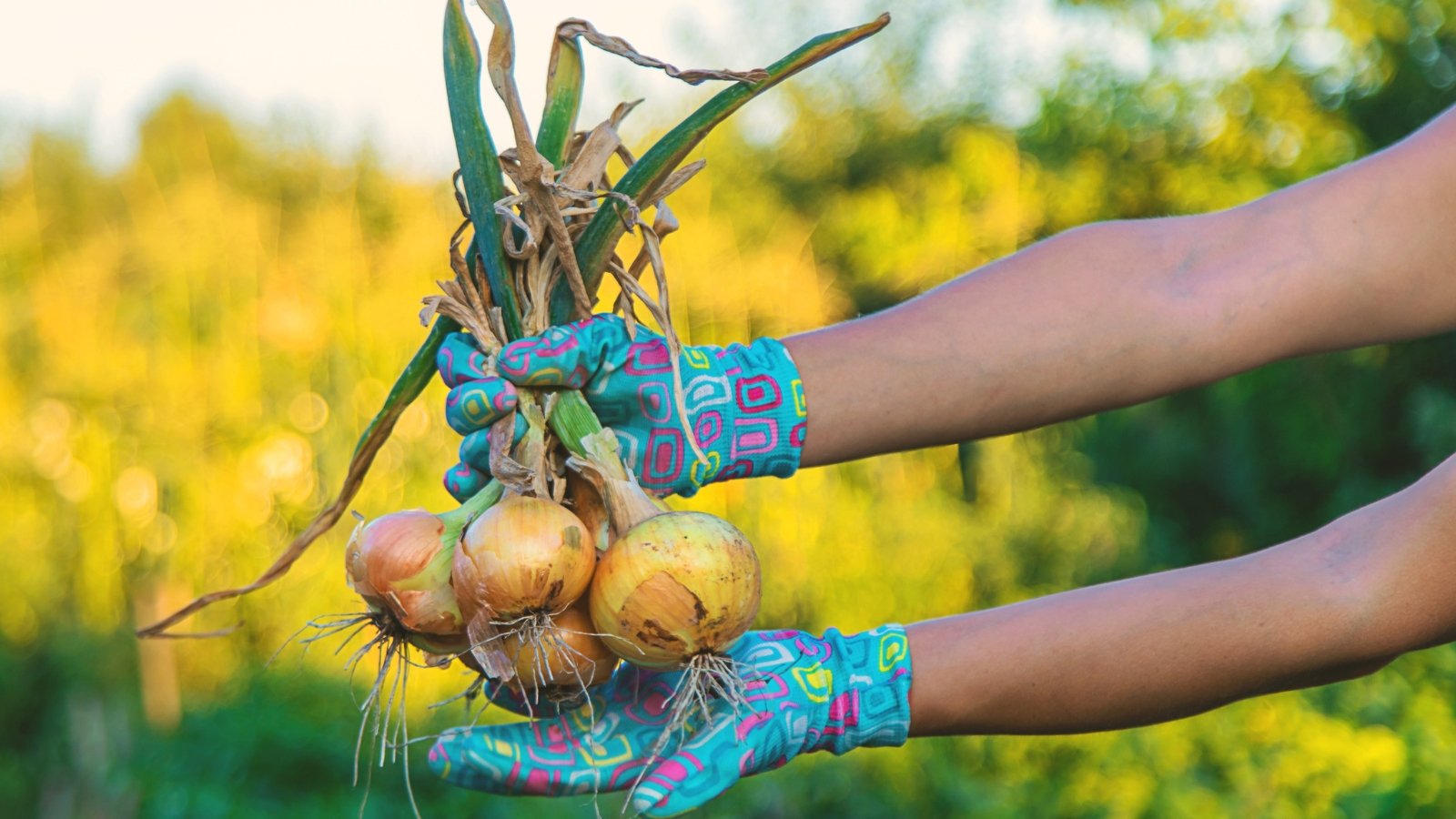 Pull bulbs when the tops fall over.
As the bulbs reach full size, the tops begin to yellow and flop over. Once about half the tops in a row have fallen, stop watering and let the bulbs sit in dry soil for a few days. This starts the curing process and helps the outer skin toughen up for storage.
Pull the onions on a dry day and lay them out in a warm, well-ventilated spot (a garage, covered porch, or shaded area of the yard) to cure for a week or two. The necks should be completely dry and papery before you trim the tops and move them into storage. Handle them gently, as even a small bruise can lead to rot over time.
Well-cured onions stored in a cool, dry place with good air circulation should keep for several months, depending on the variety. Sets grown as yellow storage onions tend to last the longest. Red varieties are best used within a few weeks.













 English (US) ·
  French (CA) ·