

PROTECT YOUR DNA WITH QUANTUM TECHNOLOGY
Orgo-Life the new way to the future Advertising by Adpathway
For animals left behind, the violence in Ukraine is terrifying. Explosions shatter the quiet of once-familiar neighborhoods, buildings collapse, and the streets they once roamed are suddenly filled with smoke and debris.

By Ruslan Horbal
In the small Ukrainian village where I grew up, you never saw dogs lounging on the sofa or curled up by the fireplace. Dogs, I was told, were to be kept on chains or in kennels outside. Their job was to “guard” the house, although I never understood how that would be possible for any animal, let alone one who could never escape a few square feet of dirt.
As I got older, I started to question why we treated them so callously, as if their needs were of no consequence. Seeing them shivering in the snow, panting miserably in the baking sun, or desperately struggling to reach any nearby family member for even a moment of companionship, I realized that their needs aren’t all that different from our own. They feel fear when they’re in danger, loneliness when they’re without a friend, relief when they’re safe, and joy when they’re shown kindness. They want comfort, freedom, and a chance to live without suffering, just as we all do. Once I allowed myself to see that, I could no longer accept the idea that they were meant to spend their lives at the end of a chain. I began to understand that animals are not tools for our use—they are living beings with their own thoughts and desires.
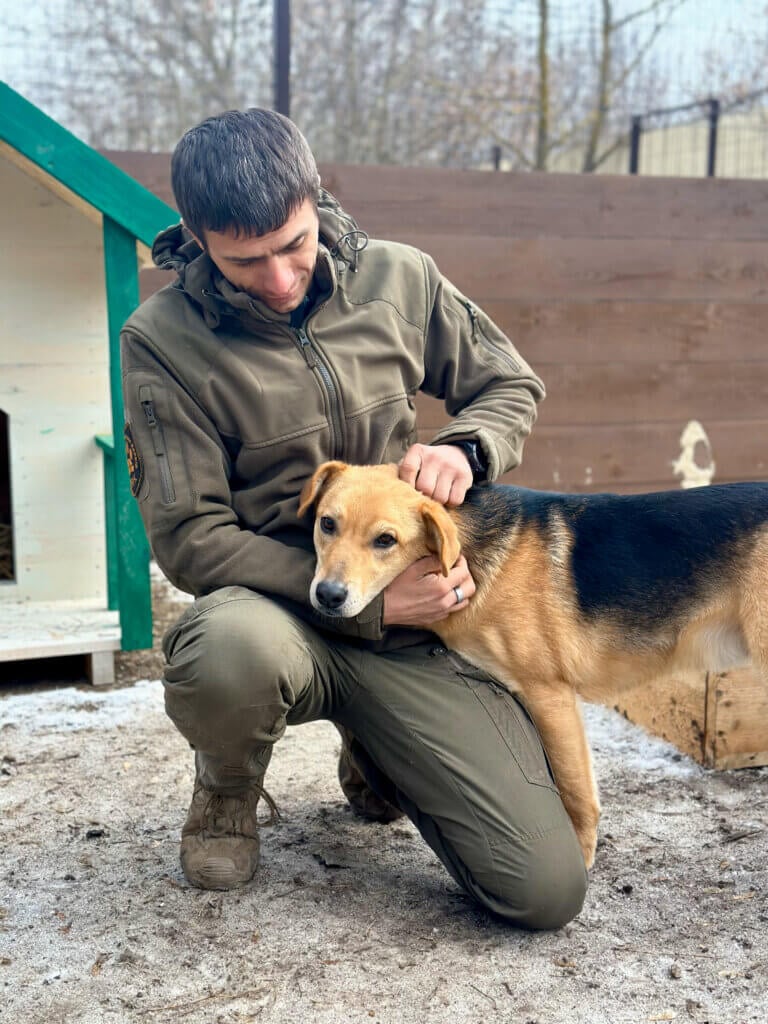
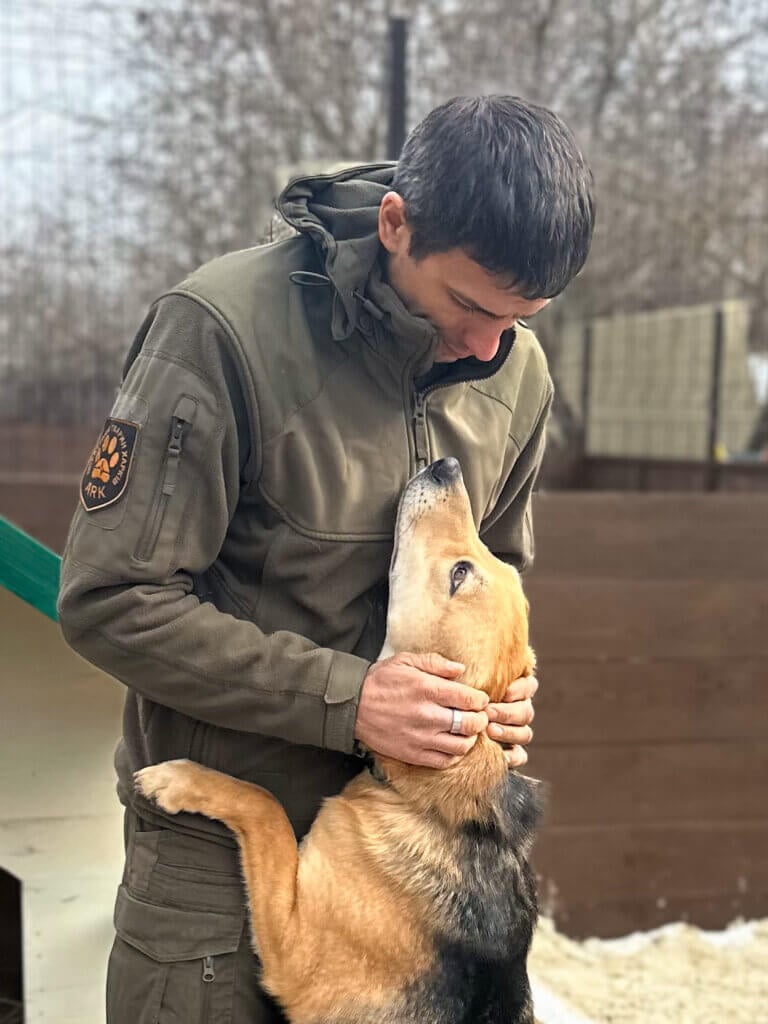
That’s why, since the start of the war, I’ve spent every day traversing ruined streets and combing leveled neighborhoods to reach dogs and other animals left behind after their families were forced to flee. Our rescue vans have been pummeled by enemy fire, we’ve lost beloved colleagues and we have to carry emergency weapons to shoot down hostile drones circling overhead. Bombs explode, bridges collapse, and roadways turn into crumpled ribbons of asphalt. But once you’ve seen traumatized animals, alone, starving, and shaking in fear, you can’t look away. Knowing that they’re out there keeps us coming back into the war zone day after day.
With support from PETA’s Global Compassion Fund, our teams at Animal Rescue Kharkiv have saved more than 30,000 animals trapped along the front lines of the war. Some dogs race to me, as if they understand I can help. Others are so broken and scarred that no amount of coaxing will convince them that my outstretched hands mean safety. To rescue these souls, we have to prepare a gentle sedative, knowing that when they wake up in ARK’s Peace Sanctuary—a haven for animals saved from the hell of war—the long road to healing can begin.
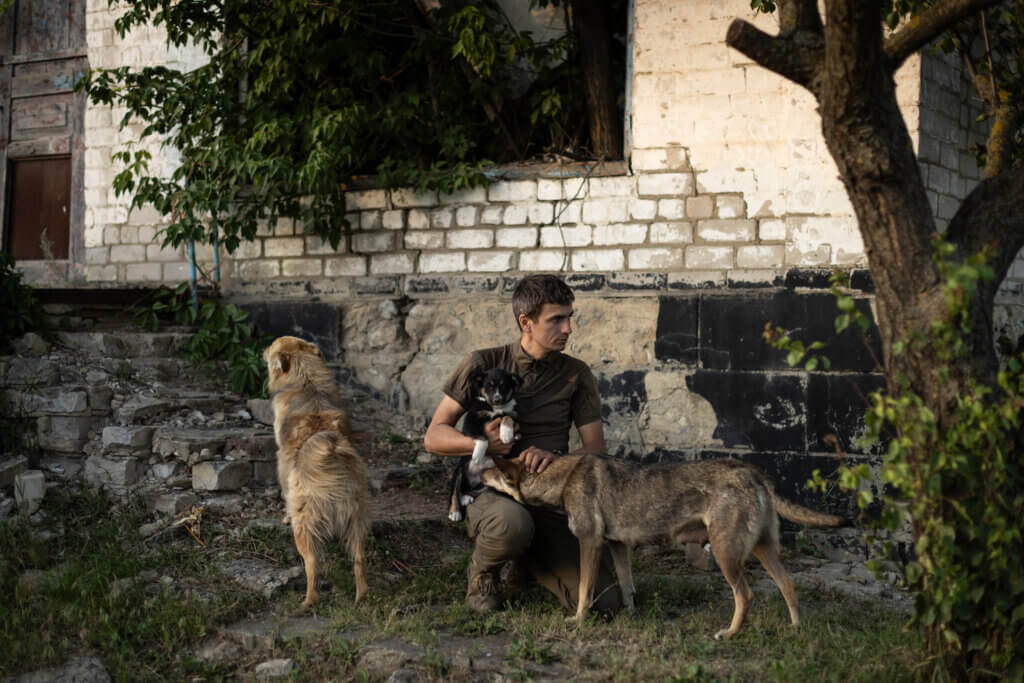 Photo: Ben Hoffman
Spending time with the dogs there is as soothing for me as it is for them. Washing the dust of war from their coats, assisting the veterinarians in bandaging their injuries and helping them learn how to trust, play, and have fun make the bond of our shared experience tangible. Against all odds and with help from PETA Germany, we’ve been able to reunite about half the dogs and cats we’ve rescued with their guardians, along with many sheep, goats, horses, donkeys, pigs, and cows. Others are placed with caring adopters in Ukraine and other parts of Europe. But I understand dogs the best, especially ones who need a little more time for the wounds of war to heal. I’ve learned how much they carry in silence, and somewhere along the way, their pain and resilience have become intertwined with my own.
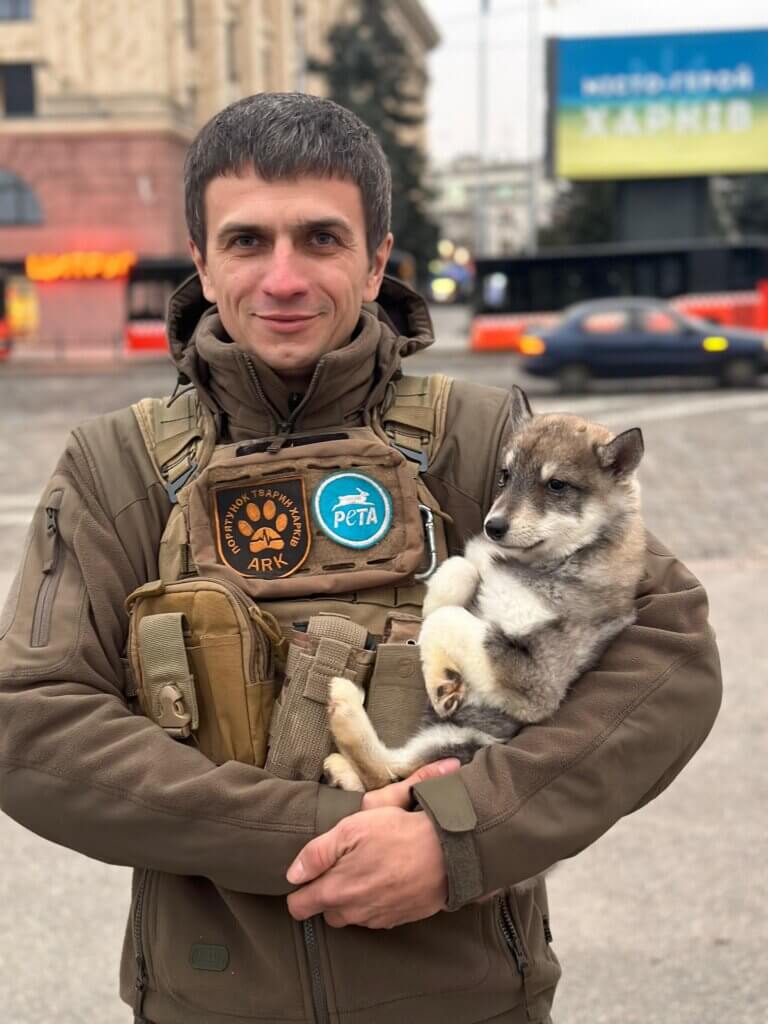
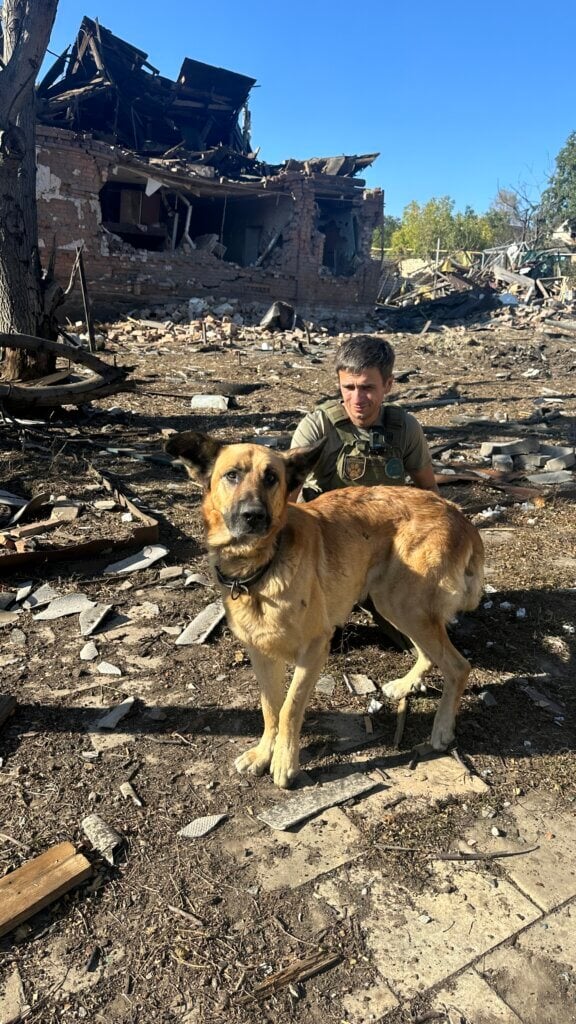
I believe that as children, we’re born with a natural empathy and appreciation for animals, just as puppies almost instantly begin licking human hands and asking to play. A lack of consideration for animals and oppression of them comes later. Those things are learned. The mentality is not all that different from the one behind war. They are “others” of less importance, and their lives are considered to be of less value, particularly if there’s something to be gained from them. As long as people accept the mindset of domination, whether on the battlefield or at the end of a chain, peace will remain out of reach.
Ruslan Horbal is Head of Rescue Operations for Animal Rescue Kharkiv, a critical program backed by PETA’s Global Compassion Fund that has brought more than 32,500 animals in Ukraine to safety since February 2022.
PETA’s Global Compassion Fund is supported exclusively by the contributions of kind individuals like you. Your gift is helping PETA entities and partners create positive, sustainable change in corners of the Earth where animals desperately need assistance—and may have no other hope.











 English (US) ·
  French (CA) ·