

PROTECT YOUR DNA WITH QUANTUM TECHNOLOGY
Orgo-Life the new way to the future Advertising by Adpathway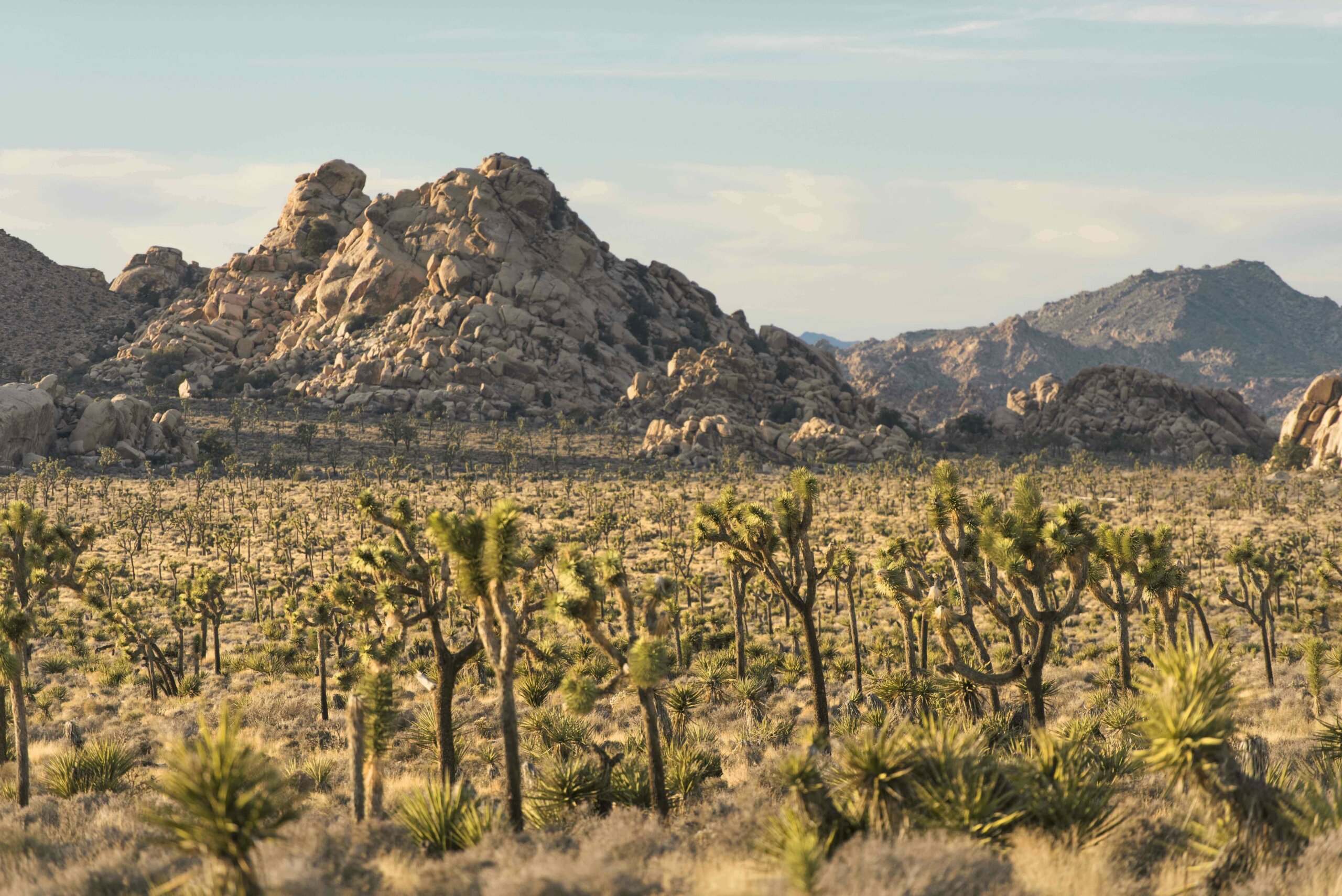
Joshua trees and rock outcrops in Lost Horse Valley, Joshua Tree National Park. Credit: Brad Sutton / NPS
Location: Riverside and San Bernardino Counties, California, United States
Size: 795,156 acres (Slightly larger than the state of Rhode Island)
Established: August 10, 1936 as a National Monument; October 31, 1994 as a National Park
Overview:
A vast, sculpted landscape where two distinct desert ecosystems converge, Joshua Tree National Park showcases the raw beauty, dramatic geology, and astonishing biodiversity of the American Southwest. The Park serves as an ecological crossroads, blending the starkly different climates, elevations, and plant communities of the higher Mojave Desert and the lower-lying Colorado Desert.
The Park owes its baseline protection to the fierce activism of Minerva Hoyt, a Pasadena resident who witnessed the rampant destruction of unique desert cacti and plants by collectors in the 1920s and 1930s. Hoyt’s tireless advocacy persuaded President Franklin D. Roosevelt to set aside the area as a National Monument in 1936. Decades later, the California Desert Protection Act of 1994 elevated its status to a full National Park. Today, nearly 430,000 acres of its expanse are managed as pristine, unspoiled wilderness.
While the Park is celebrated today as a place of beauty and sanctuary, it carries a deep connection with human history spanning thousands of years. The land is the ancestral home of Indigenous cultures including the Serrano, Cahuilla, Chemehuevi, and Mojave peoples. These communities expertly navigated the rugged terrain, harvested desert plants like yucca and mesquite, and maintained a profound relationship of stewardship with the land. Today, visitors from across the globe travel to the Park to marvel at its bizarre flora, scale its world-famous rock formations, and witness its pristine starry skies.
Where Two Deserts Meet
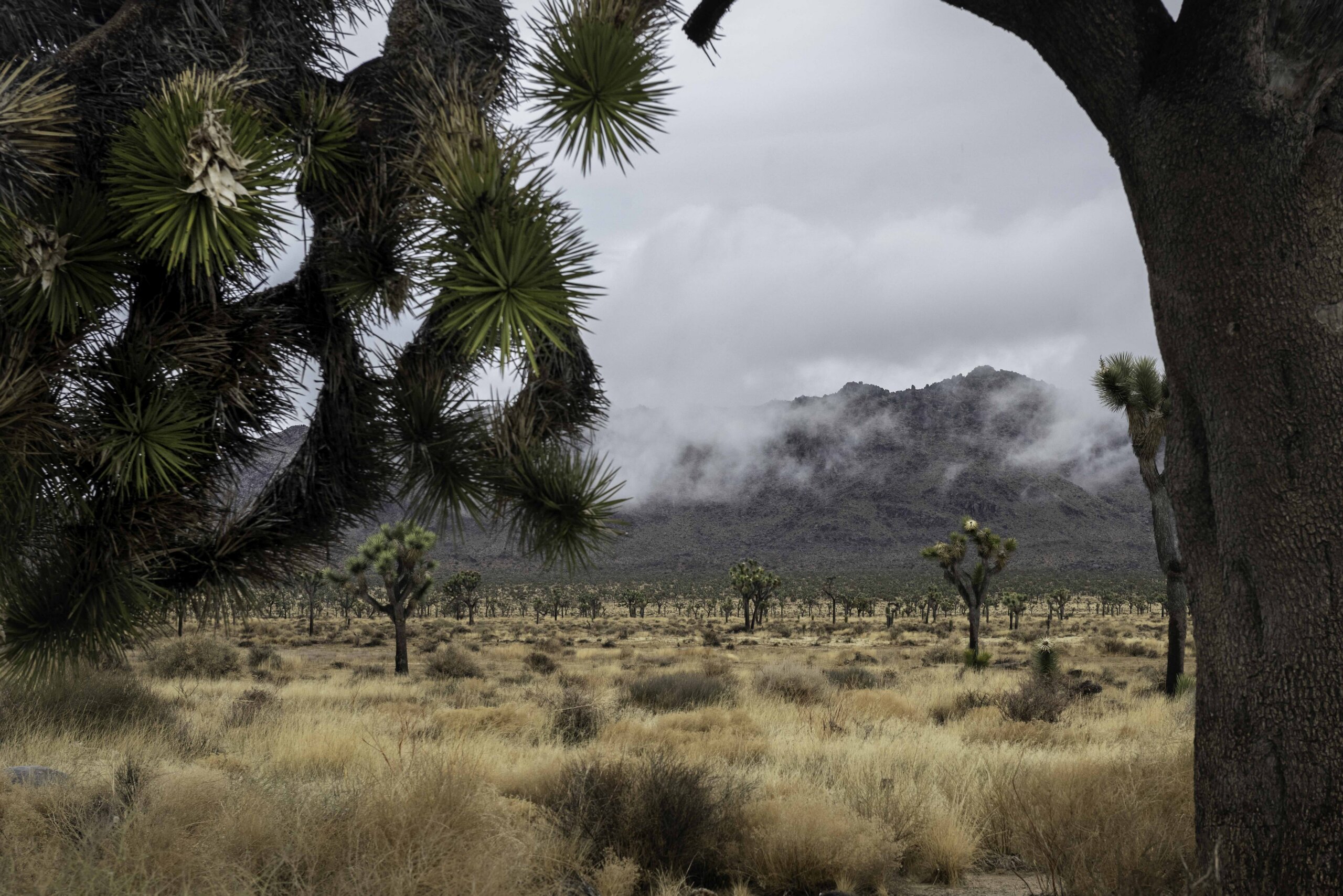
Clouds over Queen Mountain and Joshua trees in the higher, wetter Mojave Desert at Joshua Tree National Park. Credit: Emily Hassell / NPS
Joshua Tree National Park is unique because it contains portions of two different desert ecosystems, separated by an elevation line situated at 3,000 feet. As you travel from west to east through the park, the landscape shifts dramatically:
- The Mojave Desert (Western Portion): Positioned above 3,000 feet, the Mojave is a “high desert” characterized by cooler average temperatures and slightly more rainfall and winter snow. This extra moisture makes it the exclusive home of the Park’s namesake Joshua trees, which grow alongside pinyon pines, California junipers, and dense communities of low-lying blackbrush.
- The Colorado Desert (Eastern Portion): Dropping below 3,000 feet, the eastern half of the Park belongs to the Colorado Desert, a northwestern extension of the massive Sonoran Desert. This “low desert” experiences significantly hotter temperatures and receives less than five inches of rain per year. Here, Joshua trees cannot survive; they are replaced by vast expanses of creosote bush, spiny ocotillo plants, and thick forests of jumping cholla cactus.
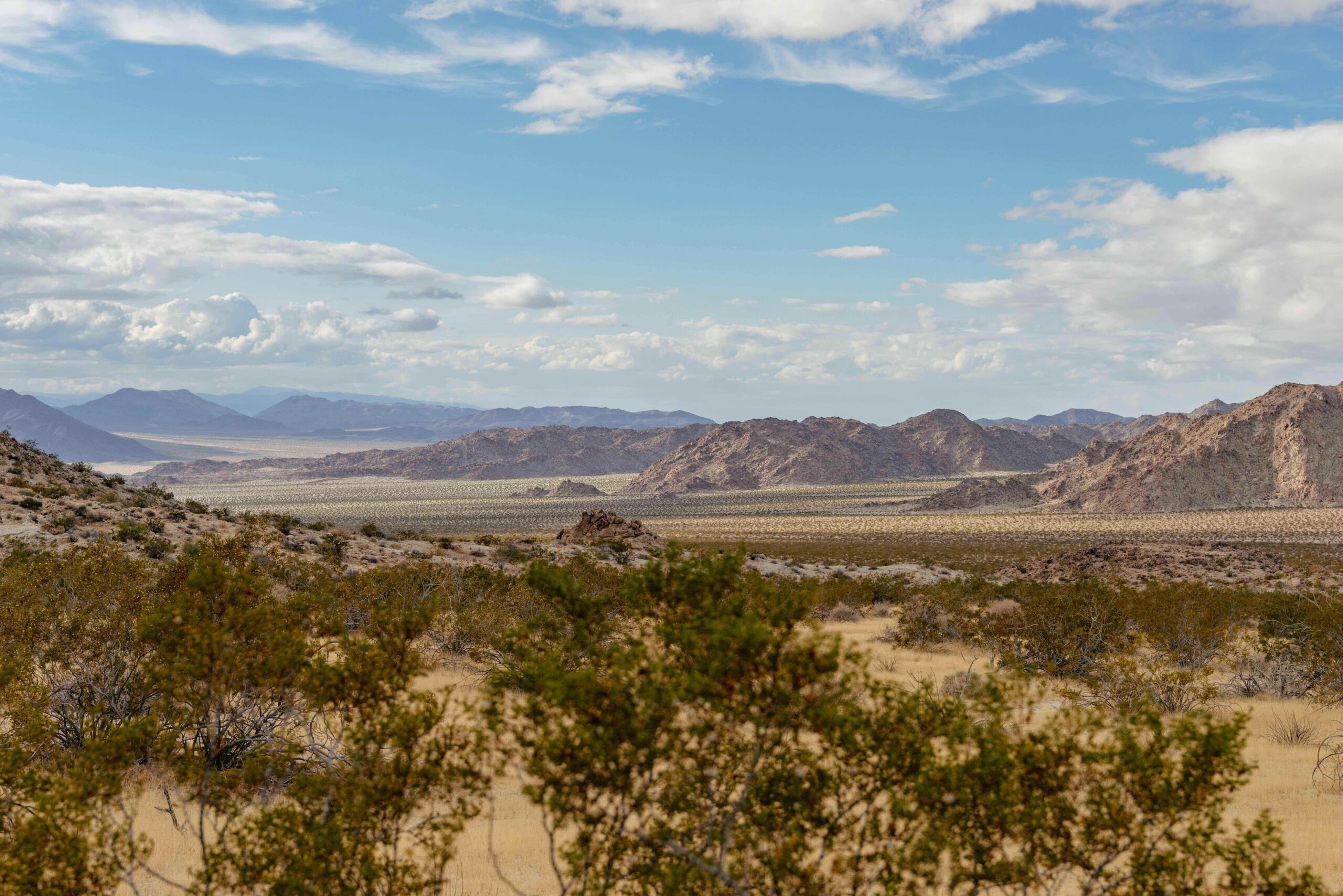
A view into Pinto Basin, part of the lower, drier Colorado Desert at Joshua Tree National Park Credit: Bill Bjornstad / NPS
The Iconic Joshua Tree
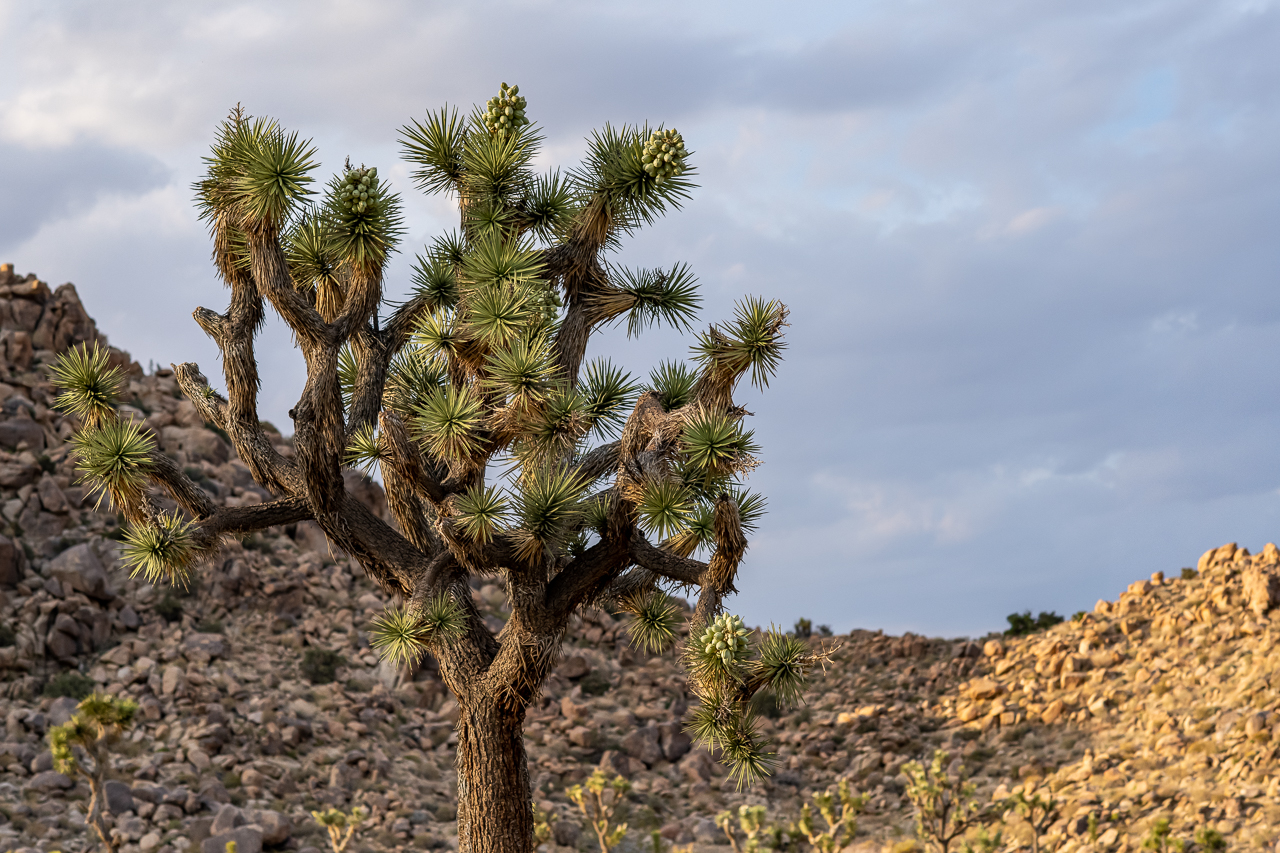
A budding Joshua tree in front of a cloudy sky and a boulder-filled ridgeline in Joshua Tree National Park. Credit: Samantha Laarman / NPS
Despite its name, the Joshua tree is not a true tree at all. Legend has it that 19th-century Mormon immigrants named the plant after the biblical figure Joshua, seeing its gnarled limbs as arms stretched upward in prayer. In reality, the Joshua tree is a giant monocot belonging to the family Asparagaceae, making it a close relative of agaves and asparagus. These fascinating plants have evolved with highly specialized survival mechanisms:
- Leisurely Growth Rates: Joshua trees grow exceptionally slowly. After a brief early spurt, they settle into a steady growth pace of ½ inch to 3 inches per year. Unlike traditional trees, they lack growth rings, making age estimation difficult. Instead, scientists estimate their age based on their height. The tallest Joshua trees in the Park stand over 40 feet tall, with an average lifespan thought to be around 150 years (but some may be far older.)
- The Flowering and Branching Cycle: A young Joshua tree grows straight up like a single, spiky stalk without branches for many years. Branching occurs only after a major flowering event, which usually happens in the spring following a cold, wet winter. When the flower cluster dies, it destroys the growing tip at the end of the stalk, forcing the plant to split and send out new branches from the sides.
- The Yucca Moth Partnership: Joshua trees rely on a mutual relationship with a single insect pollinator: the yucca moth. The trees lack sweet nectar to attract standard birds or bees, so the female moth steps in, using specialized mouthparts to gather pollen from one flower and pack it onto another. She then lays her eggs inside the flower. When her larvae hatch, they feed on a small fraction of the developing seeds, leaving the remaining seeds intact to grow new trees.
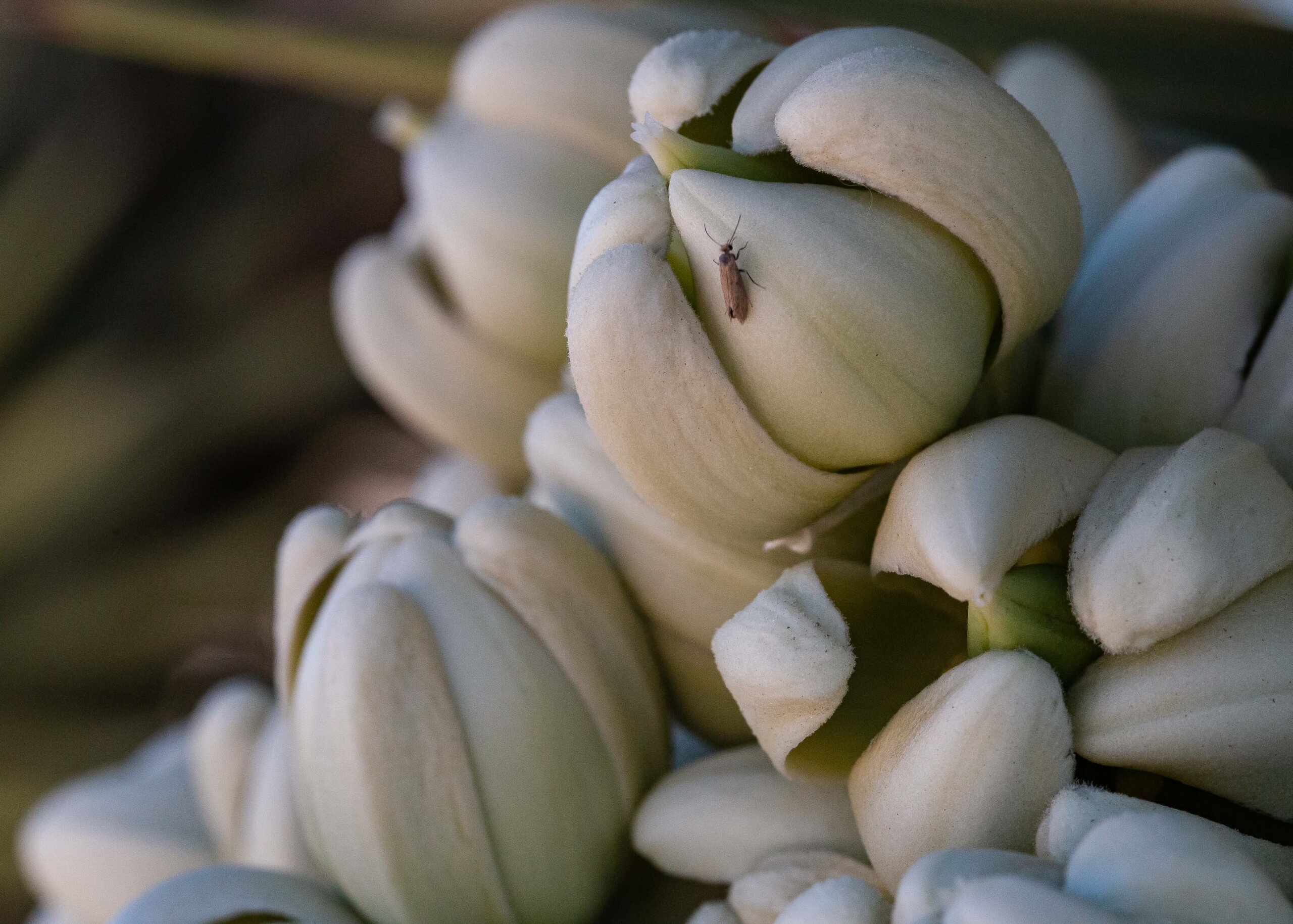
Joshua Tree yucca moth on a Joshua tree bloom at Joshua Tree National Park. Credit: Carmen Aurrecoechea / NPS
A Geologic Wonderland
Video from Joshua Tree National Park Rangers on the Park’s geology:
The surreal landscapes of Joshua Tree National Park are defined by colossal, gravity-defying stacks of smooth, rounded granite boulders that erupt suddenly from the desert floor. This labyrinth of stone was created by an intricate, multimillion-year geological process that began deep beneath the Earth’s crust:
- Underground Magma Roots: Roughly 100 million years ago, continuous tectonic plate subduction forced molten rock (magma) upward into the Earth’s upper crust. This magma cooled and hardened slowly below the surface, forming a rock known as monzogranite.
- Rectangular Cracking (Jointing): As the molten rock cooled and contracted, and as tectonic forces lifted the region, the solid monzogranite developed internal fractures called joints. These joints, or cracks, intersected at roughly right angles, dividing the massive underground formations into neat, rectangular blocks.
- Chemical Weathering: During a prehistoric era when the climate was much wetter and more tropical, groundwater seeped down through the soil into these rectangular cracks. The water chemically reacted with the minerals in the rock, softening and eroding the sharp corners of the subterranean blocks and turning them into rounded spheres surrounded by loose soil.
- Flash Floods: Over millions of years, the climate shifted to an arid desert, causing the overlying vegetation to thin. Flash floods and wind gradually wore away the loose, weathered surface material, exposing the stacks of clean, rounded boulders we see today. Today, these formations offer more than 8,000 established climbing routes, making the Park a world-class destination for rock climbers.
Hidden Oases and Wild Adaptations
Water is life in the desert, and though the Park looks unforgiving, it supports 57 mammal species, 46 reptile species, and over 250 species of birds. Life here thrives around rare water sources and highly specialized evolutionary designs:
- Fan Palm Oases: The Park features seven natural oases where underground geologic fault lines have crushed the rock, creating an impermeable barrier that forces deep groundwater up to the surface. These watery havens support the desert fan palm (Washingtonia filifera). Towering up to 75 feet tall and weighing as much as three tons, it is one of the tallest and heaviest native palms in North America.
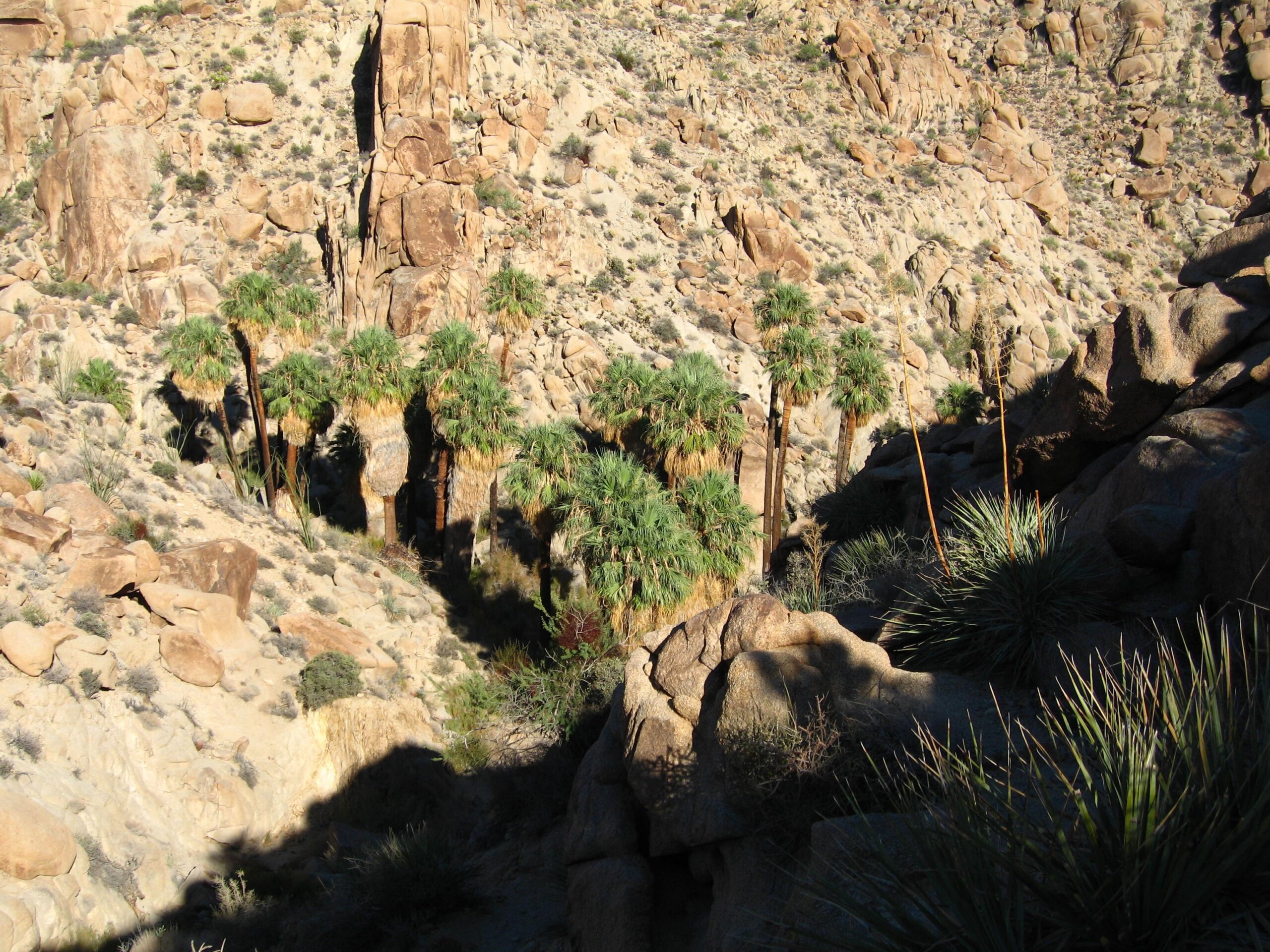
Lost Palms Oasis with fan palms in Joshua Tree National Park. Credit: Robb Hannawacker / USFWS
- Desert Tortoise: The Mojave Desert tortoise (Gopherus agassizii) survives the intense elements by spending up to 95% of its life underground. They use their shovel-like forelimbs to dig deep burrows that stay insulated against scorching summer heat and freezing winter nights. During prolonged droughts, the tortoises can retreat to their burrows and survive for more than a year without access to free water.
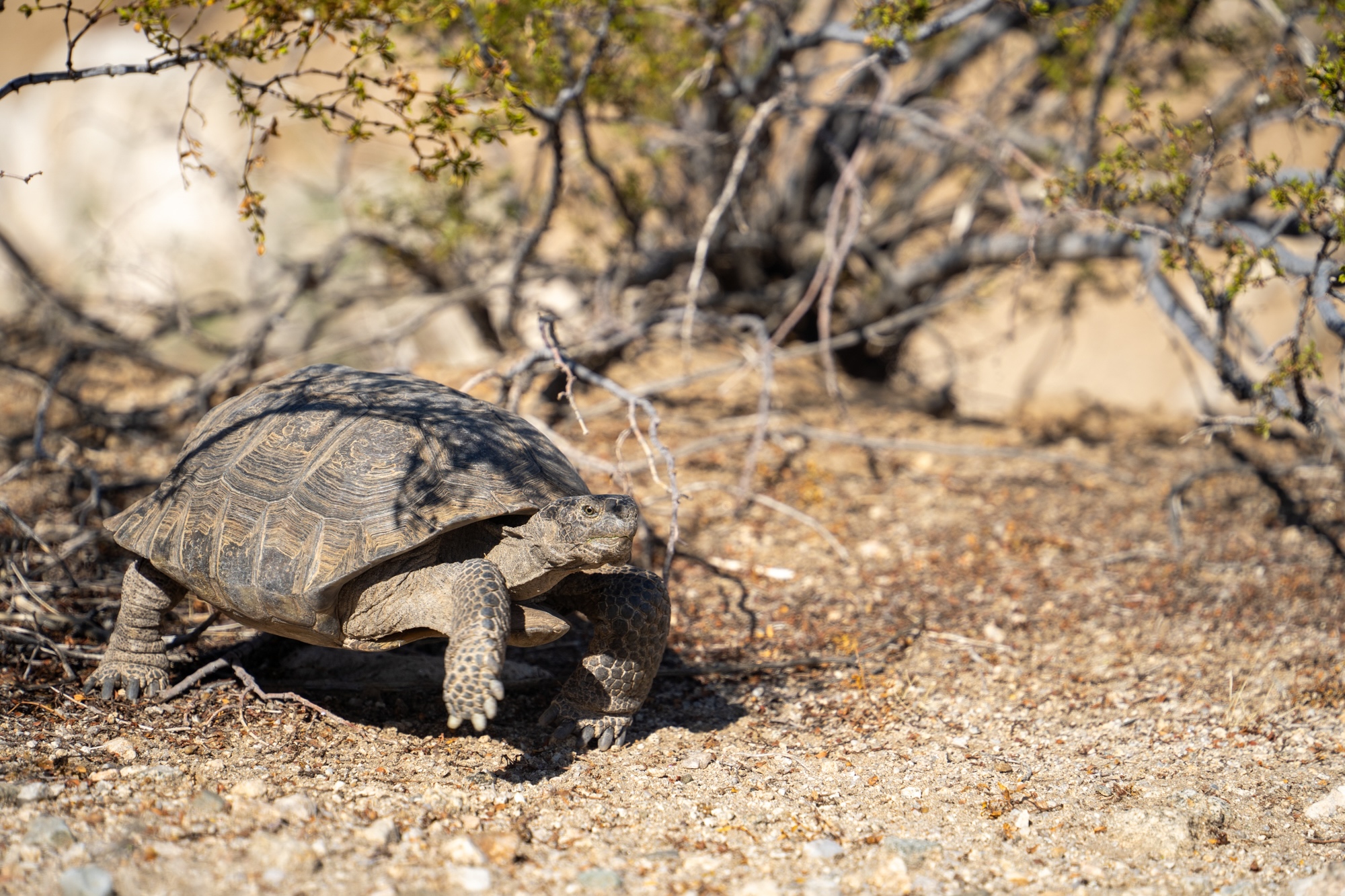
A Mojave desert tortoise climbs through shrubs at Joshua Tree National Park. Credit: Samantha Laarman / USFWS
- The Kangaroo Rat: The kangaroo rat is a master of water conservation, possessing adaptations that enable it to live its entire life without drinking a single drop of water. To avoid the punishing midday heat, it stays deep in its underground burrow, plugging the entrance with dirt to lock out the hot, dry air. Amazingly, kangaroo rats can manufacture water metabolically from the digestion of dry seeds! To prevent precious moisture from escaping, the kangaroo rat’s super-efficient kidneys recycle water from its urine back into its blood, while specialized organs in its nasal cavities capture and reclaim moisture that would normally be lost when breathing out.
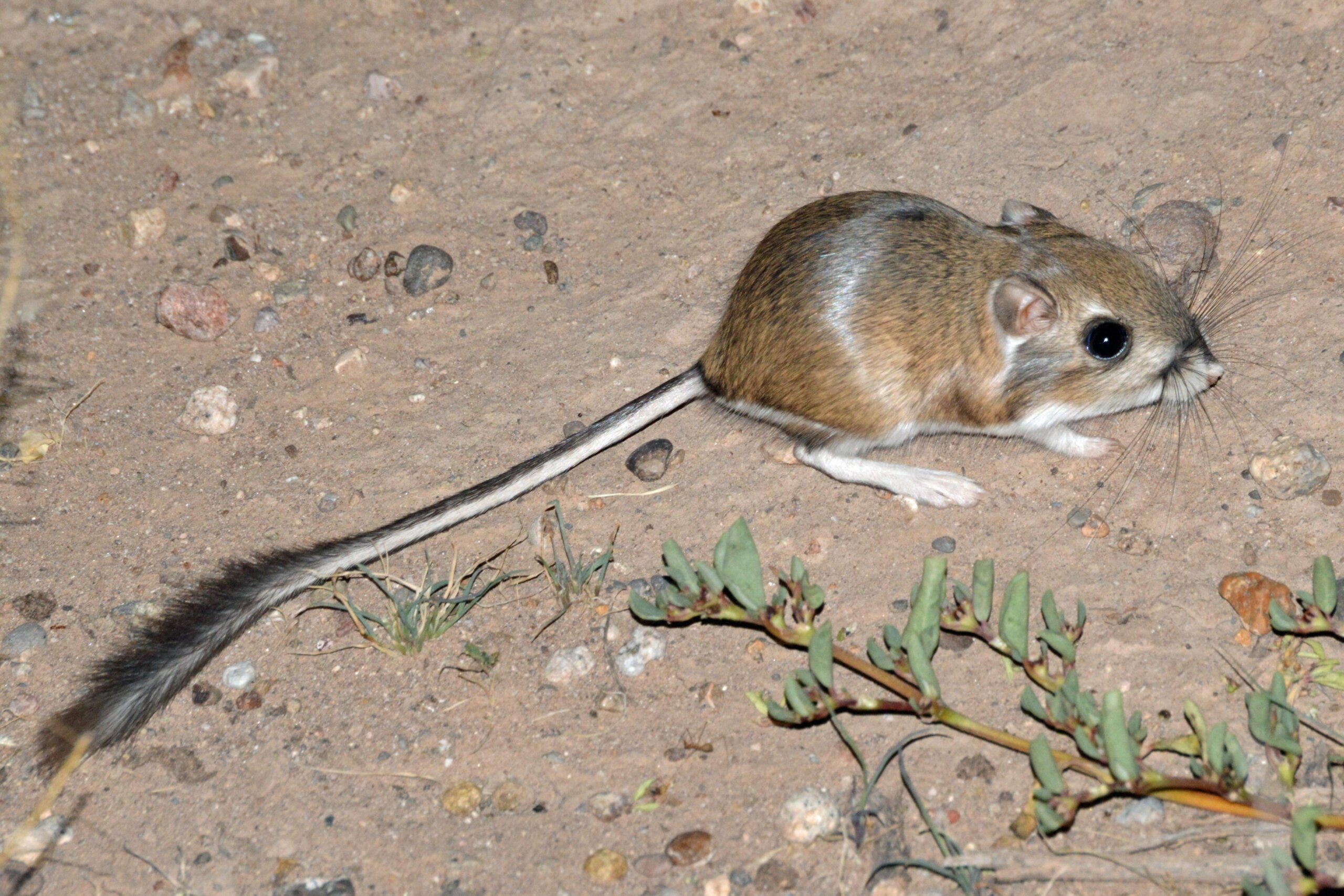
A kangaroo rat at night. Credit: NPS
Sources: All images and data are public domain provided via the Joshua Tree National Park NPS Site.
This piece comes to us from our nonprofit partner Post Pigeon EDU. With a mission to spark curiosity about the amazing nature in our public lands, Nature and Post Pigeon EDU are collaborating on a series of posts that will share the histories and stories of our National Parks and other public lands.
More about Post Pigeon EDU: To ignite the next generation of planetary stewards, Post Pigeon EDU is a nonprofit organization working to increase exposure and access to the outdoors by bringing public lands and leadership into K-12 classrooms, virtually.













 English (US) ·
  French (CA) ·