

 5 days ago
7
PROTECT YOUR DNA WITH QUANTUM TECHNOLOGY
Orgo-Life the new way to the future Advertising by AdpathwayTwo of the 17 threats a major international commission has mapped for the rest of this century carry the potential to end humanity, though the experts behind it stress that the chance of either happening is low. The Lancet Commission on 21st Century Global Threats to Health named the malicious use of artificial intelligence, including AI-assisted bioweapons, and nuclear conflict followed by nuclear famine as the only two risks in its extinction tier.
The Commission's report, published in The Lancet, was launched Oct. 11 at the World Health Summit in Berlin. It is co-chaired by Christopher Murray, director of the University of Washington's Institute for Health Metrics and Evaluation (IHME) in Seattle, and Natalia Kanem, former head of the UN Population Fund.
For Nature World News readers, the environmental thread runs through the findings. Nuclear famine is, at its core, a sudden climate disruption, and climate change and air pollution both appear among the 15 other threats the Commission says will cost humanity more than 1 billion years of healthy life by 2100.
Two Threats in a Category of Their Own
The Commission measured each threat in disability-adjusted life years, or DALYs, a standard public health unit in which one DALY equals one year of healthy life lost to illness, disability or early death. For scale, the authors note that 1 billion DALYs is roughly the toll of two COVID-19 pandemics.
To place the two extinction-tier threats, the Commission multiplied the harm each could cause by the odds of it happening. According to Health Policy Watch, which covered the Berlin launch, malicious AI came out at 10.4 billion avoidable DALYs and nuclear conflict at 9.35 billion, with uncertainty ranges running from zero up to 15.6 billion and 24.5 billion, respectively. Kanem said both carry a "non-zero risk of human extinction during this very century."
Those figures rest on expert judgment rather than historical data. Forecasters consulted by the Commission put the odds of AI-driven human extinction by 2100 at 0.4%, while AI specialists put them at 3%, Health Policy Watch reported — neither number is a measured probability.
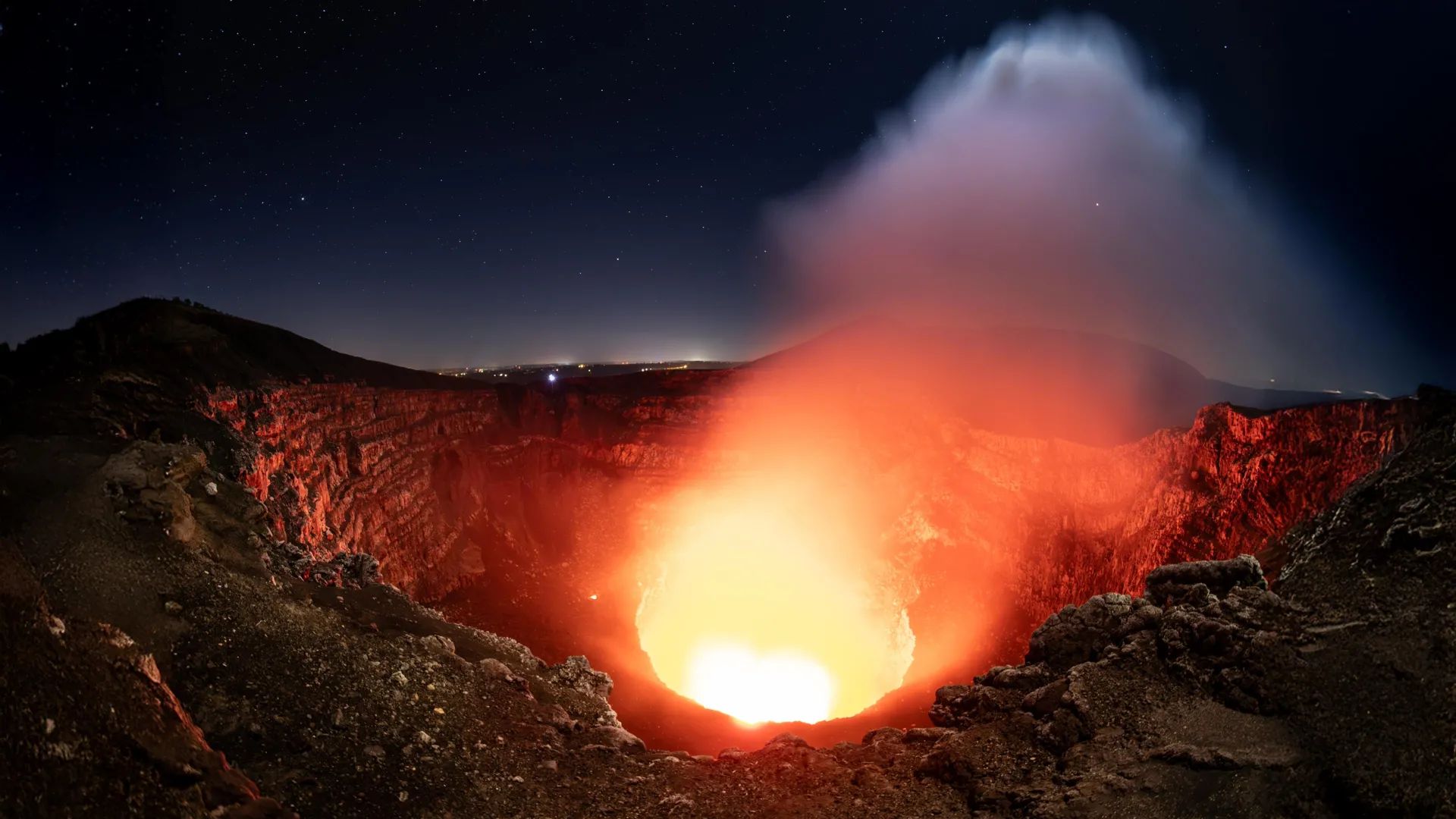
Asteroid strikes and supervolcano eruptions were left off the list entirely. The report acknowledges that both could, in theory, end humanity, but judged them too unlikely to occur before 2100 to belong among the century's major threats. The creation of so-called mirror life, synthetic organisms built from reversed molecules, was also excluded because it does not yet exist and its risks cannot be quantified.
Nuclear Famine Is a Climate Shock First
The Commission treats a collapse in global food production as the main route by which a nuclear war could threaten human survival. Firestorms from burning cities would loft soot into the upper atmosphere, block sunlight and cool the planet enough to cripple harvests for years.
Earlier peer-reviewed modeling shows why that matters far from any battlefield. A 2020 study co-authored by Rutgers University climatologist Alan Robock found that even a limited India-Pakistan exchange would hit crops hardest in northerly breadbaskets, including the United States, Canada, Europe, Russia and China. "More people could die outside the target areas due to famine," Robock said at the time.
The new report reaches a similar conclusion. It says nuclear famine would affect every region of the world, and it assigns sub-Saharan Africa the largest share of the burden, 2.97 billion of the 9.35 billion DALYs, even though no nuclear weapons are based there, according to Health Policy Watch.
Climate Change Ranks Lower Than Critics Expected
The 15 other threats are a mix of environmental, social and medical problems: air pollution, antimicrobial resistance, childhood malnutrition, climate change, the collapse of international health aid, conventional armed conflict, high alcohol use, high blood pressure, income inequality, low educational attainment, naturally occurring pandemics, obesity, poor mental health, smoking and unhealthy aging. Obesity carries the largest avoidable burden, at about 23.1 billion DALYs.
Climate change lands at 1.89 billion avoidable DALYs, with a range of 1.32 billion to 2.48 billion, and air pollution falls below that. Some climate-health researchers objected at the launch. Planetary health scientist Melissa Jiménez Gómez Tagle told Health Policy Watch that presenting the list in a way the public may read as a ranking could mislead people about climate's true weight.
The Commission's own caveats support caution. Its climate estimate leaves out migration, biodiversity loss, drought, sea-level rise and tipping points such as a collapse of the Atlantic Meridional Overturning Circulation, and the authors concede the figure could rise in future evaluations. The report also warns that climate change could escalate into an extinction-level threat in later centuries if emissions are not curtailed.
Probabilities, Not Predictions
The Commission's central message is about choices rather than fate. "The striking finding is not only the scale of these threats, but that humanity still has the agency to act," Murray said in an IHME release.
Readers should keep three limits in mind. The work is a modeling assessment, not a forecast of specific events. Each threat was calculated separately, so the totals overlap and cannot be added together. And because DALYs only count people alive before 2100, an extinction event's full cost is not captured by the numbers at all.
The Commission makes three recommendations: build and fund threat-ready health systems, sharply increase investment in breakthrough innovation in health, climate and technology, and create a standing Lancet Monitor of 21st Century Global Threats to Health to update the assessment over time. In an accompanying editorial, The Lancet's editors argued the report's biggest contribution is to "move global health beyond the consideration of individual harms."
For households, the most practical takeaway is not alarm — several of the threats on the list, including air pollution, high blood pressure, smoking and obesity, are already measurable in daily life and respond to local action, from checking air-quality readings before outdoor exercise to routine health screenings. The more remote risks depend on decisions by governments, which is where the Commission aims its recommendations.
Next comes the Lancet Countdown on Health and Climate Change, the journal's annual climate-health report, which Health Policy Watch said is due out this month and will offer a separate, climate-focused look at the same century of risk. The bottom line: extinction is on the list, but at low odds, while slower-moving threats tied to the air, the climate and daily habits are already costing billions of healthy years.
What Readers Want to Know
What did the Lancet Commission find?
The Commission identified 17 major threats to human health through 2100. Two of them, malicious use of AI and nuclear conflict with nuclear famine, were placed in a tier with extinction potential, while 15 others were each projected to cost more than 1 billion years of healthy life.
Does this mean humanity is likely to go extinct?
No. The Commission described the extinction risks as low-probability, and its estimates rely on expert judgment rather than historical data. Forecasters it consulted put the chance of AI-driven extinction by 2100 between 0.4% and 3%.
Why were asteroids and supervolcanoes left out?
The report said both could, in theory, cause human extinction, but judged them too unlikely to occur before 2100 to rank among the century's major threats.
How is nuclear famine connected to climate?
Firestorms from a nuclear war could inject soot high into the atmosphere, block sunlight and cool the planet, sharply reducing crop yields worldwide. Earlier modeling found major grain-producing regions, including the United States, would be among the hardest hit.
Where does climate change rank in the report?
Climate change was estimated at about 1.89 billion avoidable DALYs by 2100. The authors note the figure excludes several impacts, including sea-level rise, drought and climate tipping points, and could rise in future assessments.
What happens next?
The Commission called for a standing monitor to track and update its threat assessments. The Lancet Countdown on Health and Climate Change, an annual report, is expected later this month.
© 2026 NatureWorldNews.com All rights reserved. Do not reproduce without permission.
















 English (US) ·
 French (CA) ·