

 5 hours ago
4
5 hours ago
4
PROTECT YOUR DNA WITH QUANTUM TECHNOLOGY
Orgo-Life the new way to the future Advertising by AdpathwayPenguins are usually pictured on Antarctic ice, but some of the most threatened colonies live along one of the driest coastlines on Earth. At Punta San Juan, a desert reserve in southern Peru, Humboldt penguins numbered about 3,000 in 2012. By 2025, fewer than 500 remained, according to a Science News report by Ana Elisa Sotelo.
The colony, once Peru's largest, was hit first by avian flu in 2022 and 2023, then by an El Niño that drove the penguins' food out of reach. Now a new and potentially historic El Niño is building. During a visit in July, Sotelo saw only five penguins and several abandoned nests with cold eggs.
The timing matters well beyond Peru. NOAA's Climate Prediction Center outlook, issued Sept. 10, gives a greater than 90 percent chance of a very strong El Niño during the Northern Hemisphere fall and winter, an event that also tends to shift weather patterns across the United States.
Penguins Built for a Desert Coast
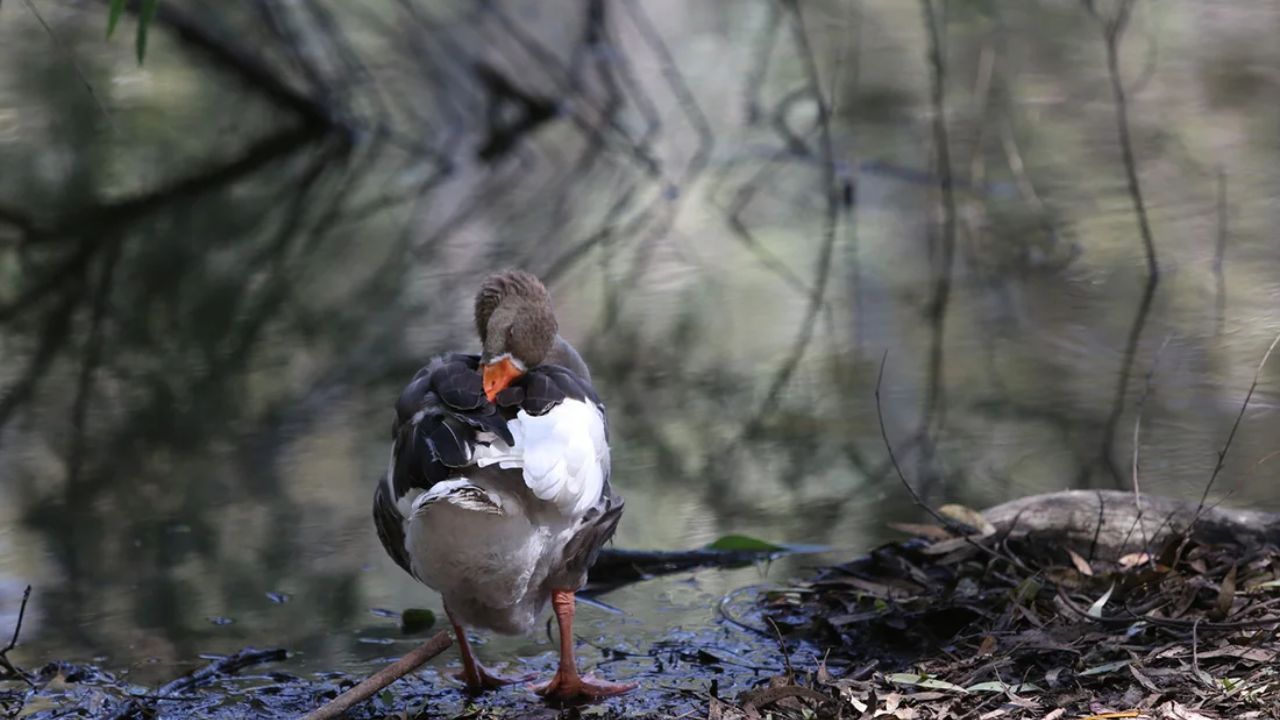
Humboldt penguins are one of the few penguin species that live in desert environments. They range along the arid coasts of Peru and Chile, nesting in burrows dug into guano, the accumulated droppings of seabirds, or in small cliff caves. At Punta San Juan, the birds walk more than 2 kilometers (about 1.2 miles) across the desert to reach the sea and feed.
Their survival depends on the Humboldt Current, a cold, fish-rich flow along South America's Pacific coast. Anchovy is the penguins' main food, and when the current warms, that food supply can move out of reach.
The 133-acre reserve has long been one of the largest seabird gatherings on Earth. In 2012 it held more than a quarter million seabirds, including some 300,000 Guanay cormorants. Researchers there have worked for decades in what program director Susana Cárdenas-Alayza calls a "living laboratory," counting birds, recording diets and building artificial nests for chicks.
Bird Flu, Warm Water and Fishing Pressure
The decline came from overlapping stresses. Avian flu spread through the reserve in 2022 and 2023, crashing seabird populations and spreading to marine mammals such as sea lions and seals, Science News reported. El Niño followed, pushing anchovy deeper and farther offshore. Industrial fishing added pressure on the animals that survived.
When food is scarce, penguins either stop breeding or abandon their nests to search for better habitat, and many starve along the way, according to Cárdenas-Alayza. "Diseases and climate events escape my control," the ecologist told Science News.
Biologist Patricia Majluf, who founded the Punta San Juan Program in 1979, pointed to a precedent. The 1997-98 El Niño decimated the reserve's sea lions and seals and pushed penguin numbers into the low hundreds. The animals eventually recovered, helped by a major reduction in anchovy fishing quotas in 2006.
A Record Daily Reading, Not Yet an Official Record
The new El Niño is unusually intense. On Sept. 21, the daily sea surface temperature in the central and eastern equatorial Pacific reached 3.08 degrees Celsius (about 5.5 degrees Fahrenheit) above the 1991-2020 average, exceeding the previous daily record of 3.02 degrees Celsius set in November 2015, according to a Science News report on the record, citing University of Maine Climate Reanalyzer data.
That daily record is not the same as an official ranking. NOAA uses a three-month average and a newer measure called the Relative Oceanic Niño Index to gauge El Niño strength. By that measure, the event had not yet surpassed the 1997-98 El Niño as of late September. NOAA's outlook gives a 75 percent chance that the October-December season will exceed the strength of every El Niño on record since 1950.
The Climate Prediction Center's El Niño Advisory remains in effect, and its next diagnostic discussion is scheduled for Oct. 8. "We're probably going to reach our peak within the next few months," said Nathaniel Johnson, a climate scientist at NOAA's Geophysical Fluid Dynamics Laboratory in Princeton, N.J.
Scientists caution against attributing this specific event to climate change. "It's really an unanswered question,"Johnson said of how much human-caused warming has fueled the El Niño's strength, adding that there is not yet a scientific consensus on how climate change affects extreme El Niño events.
Effects That Reach the United States
For U.S. readers, El Niño is not only a distant ocean story. Johnson said strong El Niño winters tend to bring rainier conditions to the southern United States and drier conditions to the Pacific Northwest, with warmer-than-average weather over the northern states and Canada. Nathan Lenssen of the National Center for Atmospheric Research cautioned that a powerful El Niño does not make those impacts more certain, and the 2023-24 event brought less wet weather to California than expected.
The penguins' story also connects to the global food system. Peruvian anchovy supports one of the world's largest fisheries, and much of the catch is processed into fishmeal for aquaculture and animal feed. Researchers at Punta San Juan are lobbying for stricter fishing quotas and an ecosystem restoration strategy that involves fishing communities, companies, students and local chefs.
The reserve's program is run in partnership with Cayetano Heredia University, the Peruvian government and American zoos, giving U.S. institutions a direct role in its conservation work. Scientists there are also trapping invasive foxes and rats that prey on young birds and developing AI tools to analyze camera footage of surviving penguins.
No one knows how long the current El Niño will last or when the fish will return. Many species at Punta San Juan are loyal to their home territory and tend to come back when conditions improve, which gives researchers some hope.
What Readers Want to Know
What are desert penguins?
Humboldt penguins live along the arid coasts of Peru and Chile, nesting in guano burrows and cliff caves and feeding in the cold Humboldt Current.
How much has the Punta San Juan colony declined?
The colony had about 3,000 penguins in 2012 and fewer than 500 by 2025, according to Science News.
What caused the decline?
Avian flu in 2022 and 2023, an El Niño that pushed anchovy out of reach and pressure from industrial fishing combined to cut the population.
Is this El Niño the strongest on record?
Daily ocean temperatures set a record on Sept. 21, but NOAA's official measure had not yet ranked it above 1997-98. NOAA gives a 75 percent chance it will exceed all events since 1950 in the October-December season.
Will El Niño affect U.S. weather?
Strong El Niño winters often bring wetter conditions to the southern U.S. and drier conditions to the Pacific Northwest, but these are probabilities, not guarantees.
When is NOAA's next El Niño update?
The Climate Prediction Center's next ENSO diagnostic discussion is scheduled for Oct. 8.
© 2026 NatureWorldNews.com All rights reserved. Do not reproduce without permission.













 English (US) ·
  French (CA) ·