

 4 hours ago
4
4 hours ago
4
PROTECT YOUR DNA WITH QUANTUM TECHNOLOGY
Orgo-Life the new way to the future Advertising by AdpathwaySearching for life on Saturn's icy moon Enceladus may be more practical than scientists assumed, according to two studies published the same day in Science Advances and announced Sept. 25 by Freie Universität Berlin. The first suggests the moon's plumes naturally sort and concentrate chemicals from its hidden ocean, which could make faint chemical signals easier for a passing spacecraft to detect. The second shows that a methane-producing microbe from Earth can grow in a laboratory recreation of that ocean.
Neither study finds life on Enceladus. Together, they address two practical questions: whether a future mission could detect evidence of life in the plumes, and whether the ocean's chemistry could support known types of microbes.
Enceladus has become one of the top targets in the search for life beyond Earth because it sprays material from a global subsurface ocean directly into space. Its ocean is the only one beyond Earth from which scientists have directly analyzed samples, collected by NASA's Cassini spacecraft.
A Moon That Prepares Its Own Samples
Between 2004 and 2017, the Cosmic Dust Analyzer on Cassini measured individual ice grains in Saturn's E ring, which is fed by material erupting from Enceladus. A team led by Frank Postberg of Freie Universität Berlin examined 961 spectra from salt-rich grains and found they varied dramatically in composition, according to a summary from the Institute of Science Tokyo. Some were rich in sodium chloride, while others carried more carbonates, phosphates or potassium chloride.
To explain that puzzle, Yasuhito Sekine and colleagues at the Earth-Life Science Institute in Tokyo froze laboratory droplets containing salts thought to be in Enceladus' ocean. When droplets about 200 micrometers across froze slowly, the salts separated into different regions. When they froze quickly, the ingredients stayed mixed.
"What surprised us was that the diversity seen by Cassini could emerge," Sekine said, from droplets originating in essentially the same ocean water.
The study led by Postberg proposes that ocean spray freezes slowly as it moves through cracks in the ice shell, then shatters against vent walls near the surface into smaller grains, each carrying different concentrated ingredients. Earlier work showed organic compounds can be separated the same way, and earlier Cassini analyses of organic molecules found complex organics in plume grains. In effect, Enceladus performs the separation and concentration steps that laboratories on Earth carry out before analyzing a sample.
"Enceladus actually does a lot of the work for us," Postberg said. If any droplet carried material from microbes, he explained, it could end up concentrated in a small fraction of ice grains in relatively pure form.
A Methane-Making Microbe Grows in a Simulated Ocean
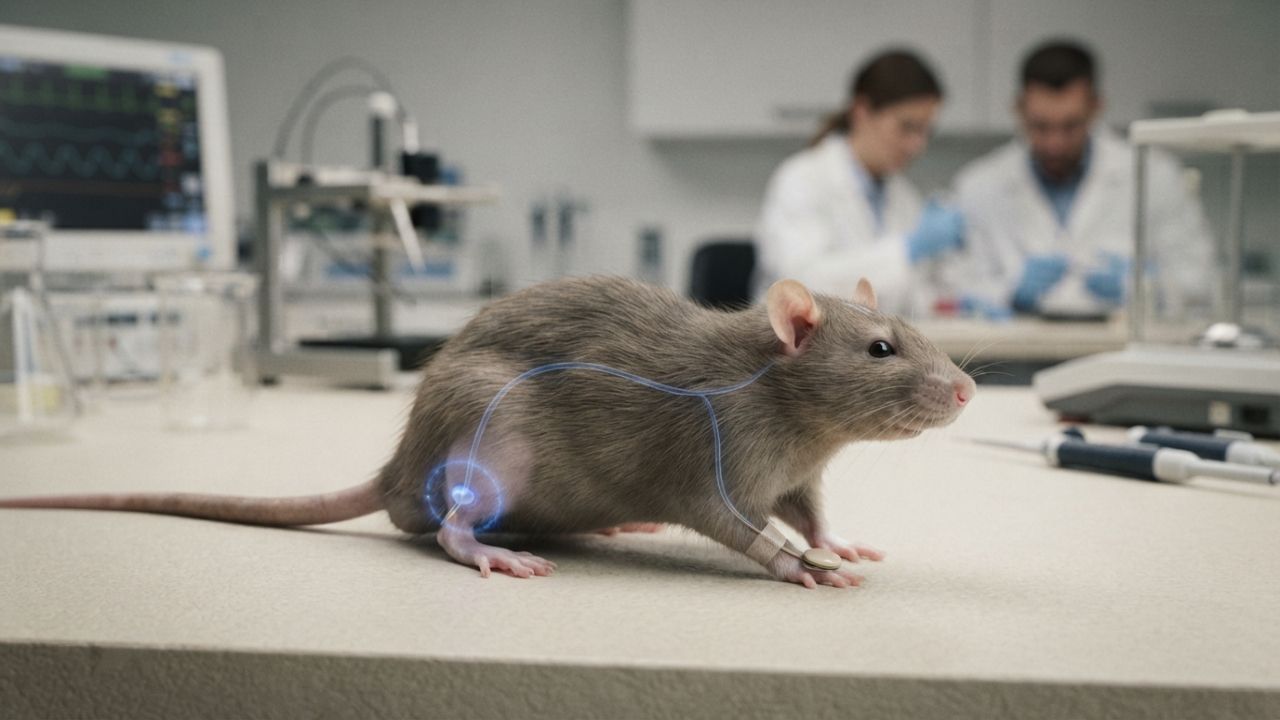
The second study, led by Vanessa Helmbrecht of Ludwig-Maximilians-Universität München with Postberg and Freie Universität Berlin colleague Nozair Khawaja, tested Methanothermococcus okinawensis. This organism is an archaeon, not a bacterium, that lives near deep-sea hydrothermal vents on Earth. It needs no oxygen and makes methane from hydrogen and carbon dioxide.
The team recreated key features of Enceladus' ocean, including its low oxygen, high carbonate content, strongly alkaline water with a pH of 10 or 11, and reactions between water and rock on the ocean floor. The microbe failed to grow in an optimal laboratory medium at that high pH, where dissolved carbon dioxide was lacking. In the Enceladus simulant, it continued to grow and produce methane using hydrogen generated by the simulated water-rock reactions, and it adapted its metabolism to the low amounts of carbon dioxide.
"This was really a surprise to us," Khawaja said, adding that the team had not expected such a successful outcome.
Limits on the Evidence
Both studies come with important limits. The first relies on laboratory freezing experiments and a reinterpretation of Cassini data. It offers a physical explanation for the grain diversity, not proof that the process works exactly this way inside the moon.
The second is a laboratory test of one Earth organism under selected simulated conditions. Cassini detected methane in the plumes of Enceladus, but its source, biological or not, remains unknown. Showing that a microbe could make methane in such conditions does not show that microbes actually do.
"That doesn't mean that there is life on Saturn's moon," Postberg said. Enceladus' real ocean may also contain compounds that slow or block microbial growth, and conditions likely vary between the seafloor and the waters near the ice shell. Future missions would need to measure those conditions directly.
Missions That Could Put the Ideas to the Test
The findings could shape the design of future missions. NASA has studied a flagship concept called Enceladus Orbilander, which would orbit the moon and sample its plumes before landing near the south pole. In Europe, Freie Universität Berlin says ESA's L4 mission, now in planning, would look specifically for signs of life on the moon.
None of these missions has launched, and any arrival at Saturn would be well over a decade away. The new studies suggest instruments should analyze many individual grains, where key compounds may be concentrated, rather than relying only on averaged plume samples. Postberg said future spacecraft could identify biosignatures in such particles with technology already available.
For now, the practical takeaway is narrow but meaningful. If life exists in Enceladus' ocean, the moon may make it easier to find than scientists feared, but answering the question will require a new spacecraft to fly through the plumes.
What Readers Want to Know
Did scientists find life on Enceladus?
No. The two studies suggest life could be easier to detect if it exists and that one Earth microbe can grow in a simulated version of the moon's ocean, but no life has been found.
What did the first study find?
It found that ocean droplets likely freeze slowly and then shatter, producing ice grains with different concentrated ingredients, which could make faint chemical signals easier to detect.
What microbe was tested?
Researchers tested Methanothermococcus okinawensis, a methane-producing archaeon that lives near deep-sea hydrothermal vents on Earth.
Why does methane matter?
Cassini detected methane in Enceladus' plumes. Its source is unknown, and the experiment shows a microbe could produce methane under simulated conditions, not that it does.
Where were the studies published?
Both studies appeared in Science Advances on the same day and were announced by Freie Universität Berlin on Sept. 25.
When could a mission test these ideas?
NASA has studied an Enceladus orbiter and lander concept, and ESA is planning a large mission to the moon, but neither has launched and arrival would be more than a decade away.
© 2026 NatureWorldNews.com All rights reserved. Do not reproduce without permission.













 English (US) ·
  French (CA) ·