

 3 months ago
115
3 months ago
115
PROTECT YOUR DNA WITH QUANTUM TECHNOLOGY
Orgo-Life the new way to the future Advertising by AdpathwayIn a world of emerging diseases that threaten both wildlife conservation and public health, finding innovative ways to monitor animal populations has never been more necessary. Traditional methods often involve capturing or handling animals, which is stressful, costly, and logistically challenging. But what if we could detect diseases without disturbing an animal? A promising solution for this challenge is the use of camera traps. This non-invasive tool is increasingly used in wildlife research, and its application could significantly contribute to wildlife health surveillance.
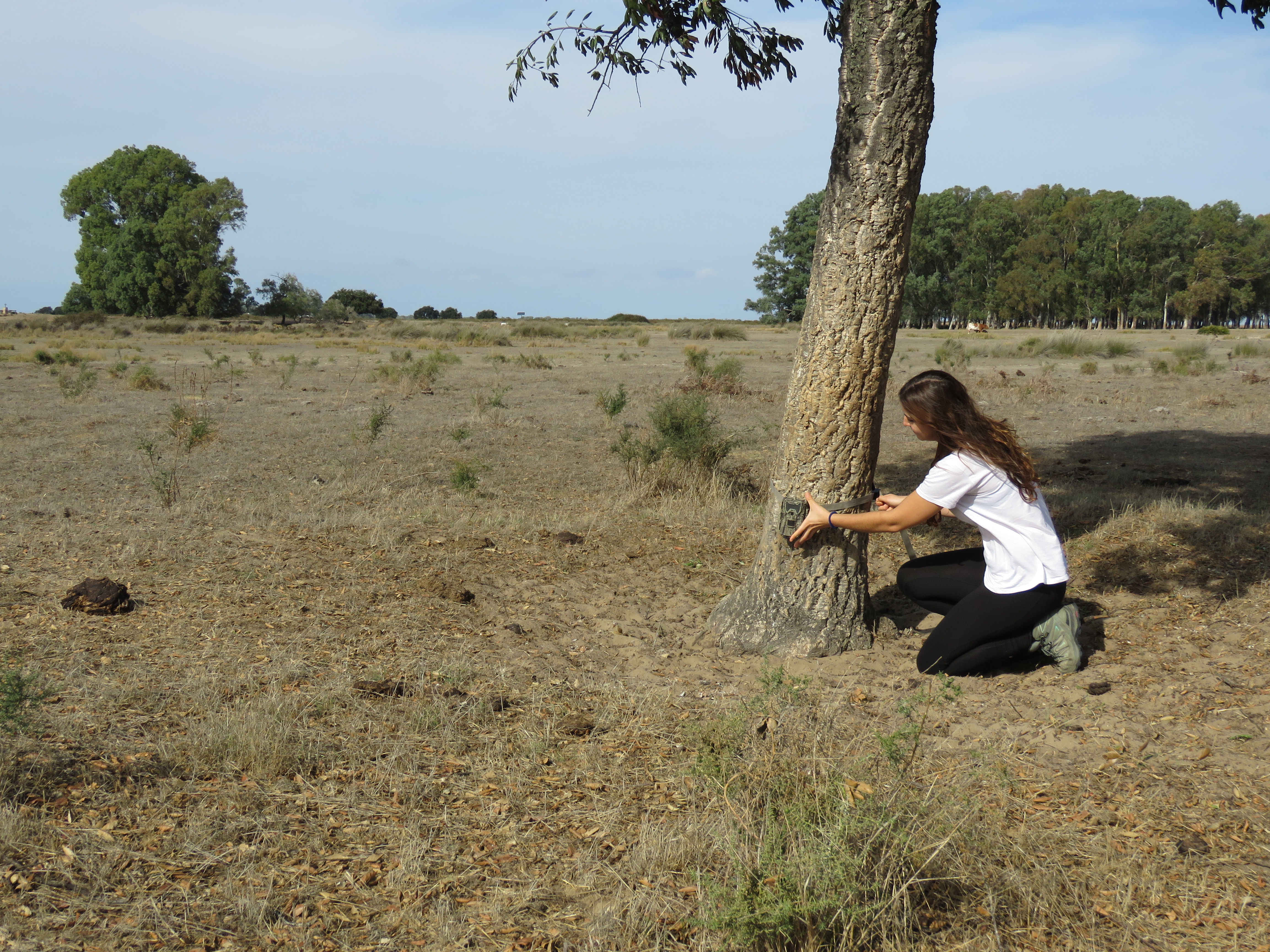 Deployment of a camera trap during fieldwork © Pablo Palencia
Our recent review, published in the Journal of Applied Ecology, explored how researchers are using camera traps to monitor health impairments in wildlife. We found that although these devices are widely used for ecological studies, their potential for detecting diseases in wildlife remains underutilised, with only 35 studies identified over the last 30 years (1994-2024).
What pathologies could camera traps detect?
Camera traps act as silent sentinels in the wild, capable of identifying a wide range of visible health impairments. Our review found that camera traps are useful for detecting diseases (85.7% of studies), with sarcoptic mange being the most reported (83.3%). Beyond this, authors reported cases of leprosy (6.7%), Tasmanian devil facial tumour disease (3.3%), giraffe skin disease (3.3%), and demodectic mange (3.3%).
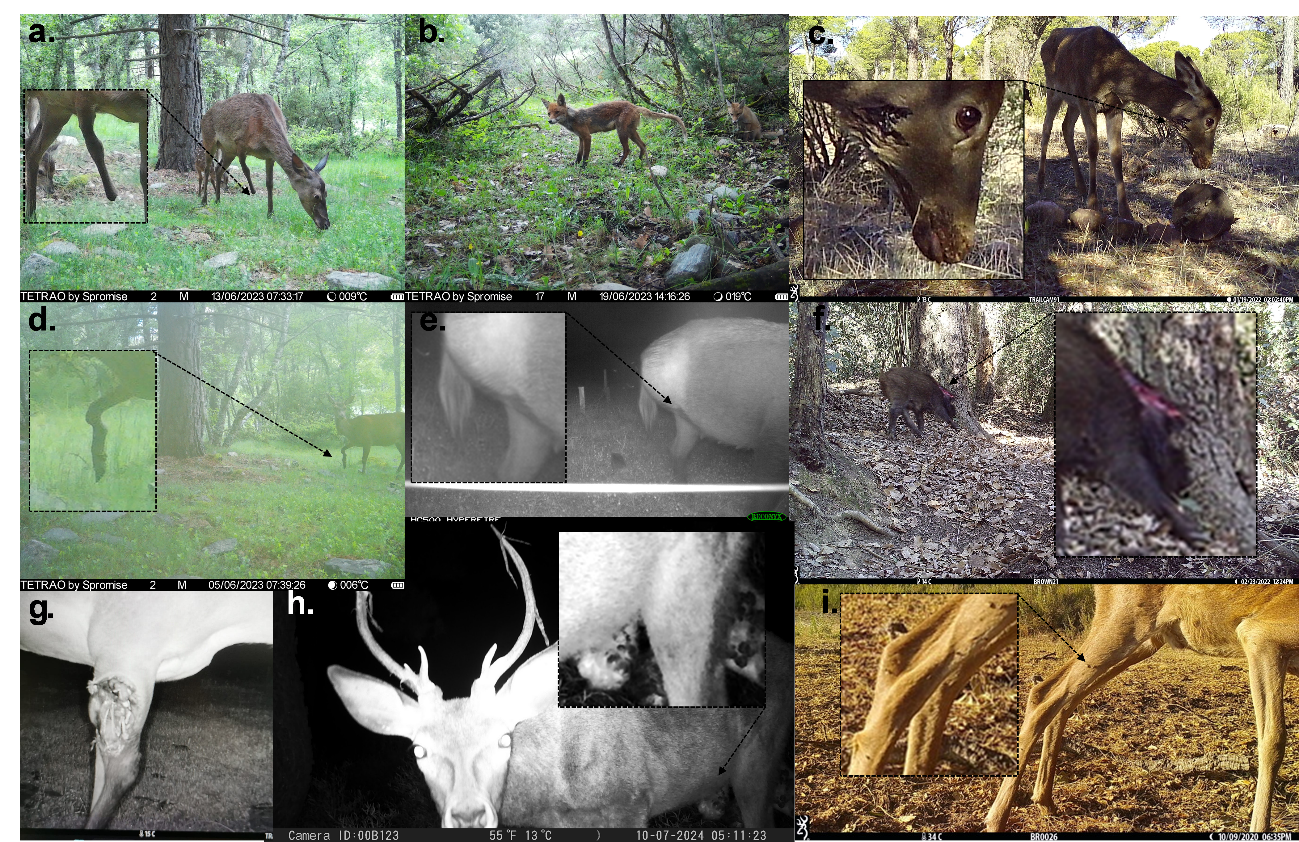
 Examples of diseased or injured animals detected by camera traps in the field. (a) Red deer with a hoof amputated due to trauma, (b) Red fox with lesions compatible with sarcoptic mange, (c) Red deer with a lesion compatible with an open wound with myiasis between the branches of the mandible, (d) Malformation in a red deer’s limb, probably due to improper healing of a fracture, (e) Wild boar with an amputated limb, (f) Wounded wild boar fleeing, (g) Red deer limb with an open wound, (h) Papilloma in the inguinal region of a red deer, and (i) Cachectic red deer with several ticks visible on its right hind limb © Patricia Barroso, Pablo Palencia, SaBio group of IREC
Furthermore, camera traps are not limited to detecting diseases, but can also effectively detect other conditions such as physical malformations (5.7%), fractures or injuries (14.3%), or behavioural abnormalities or stress markers (2.9%). In fact, we identified a total of 51 different diseases and health impairments that could potentially be detected by expert veterinarians reviewing camera trap images.
The strengths and the limitations of camera traps for wildlife health surveillance
The great strength of camera trapping is its ability to provide continuous, non-invasive monitoring across large areas and long time periods. It aligns perfectly with ethical principles of wildlife research and can be particularly valuable for monitoring endangered species, risk areas or dangerous diseases.
However, as the authors of the reviewed studies frequently recognised (45.7%), the approach is not without its challenges. Is that patch of missing fur really mange, or just seasonal moulting? Was that same alopecic fox counted multiple times, skewing our prevalence estimates? Furthermore, small or early-stage lesions can be missed, and species that are small, elusive, or well-camouflaged are often underrepresented in the data. Image quality is another critical factor for accurate identification. Finally, it is essential to remember that even the best image captured by a camera trap cannot confirm the presence of a pathogen, as it only reveals visible symptoms. Traditional methods such as molecular analysis of non-invasive samples (e.g., faeces, saliva, or hair) are still necessary for this purpose.
Future perspectives
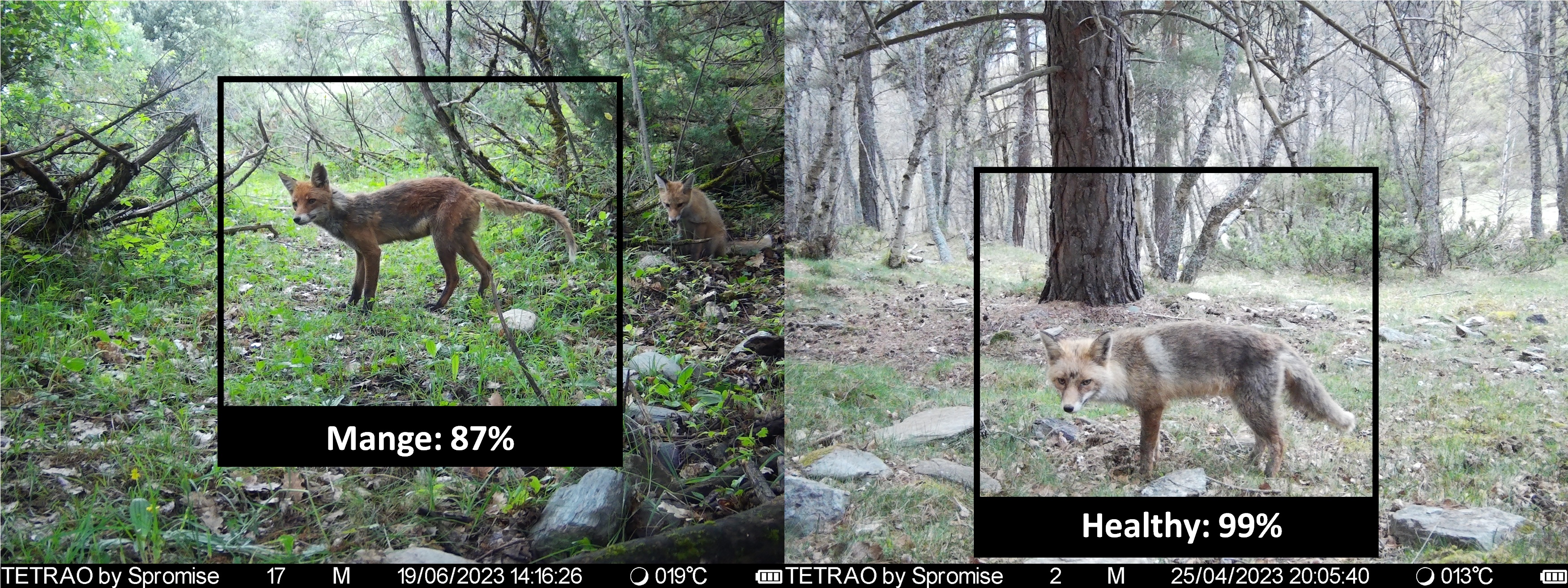
So, where do we go from here? The findings of these studies provide a foundation for the next steps, which will likely involve greater automation. Artificial intelligence is helping to examine millions of images in a few minutes and classify them by species. Training models to detect potential health issues with visible signs seems reasonable and technically feasible, which could ultimately enable automatic large-scale surveillance of these pathologies. Furthermore, combining camera trap data with other technologies, like thermal imaging or photogrammetry (measuring lesions via images), could help us detect more subtle signs and even quantify disease severity.
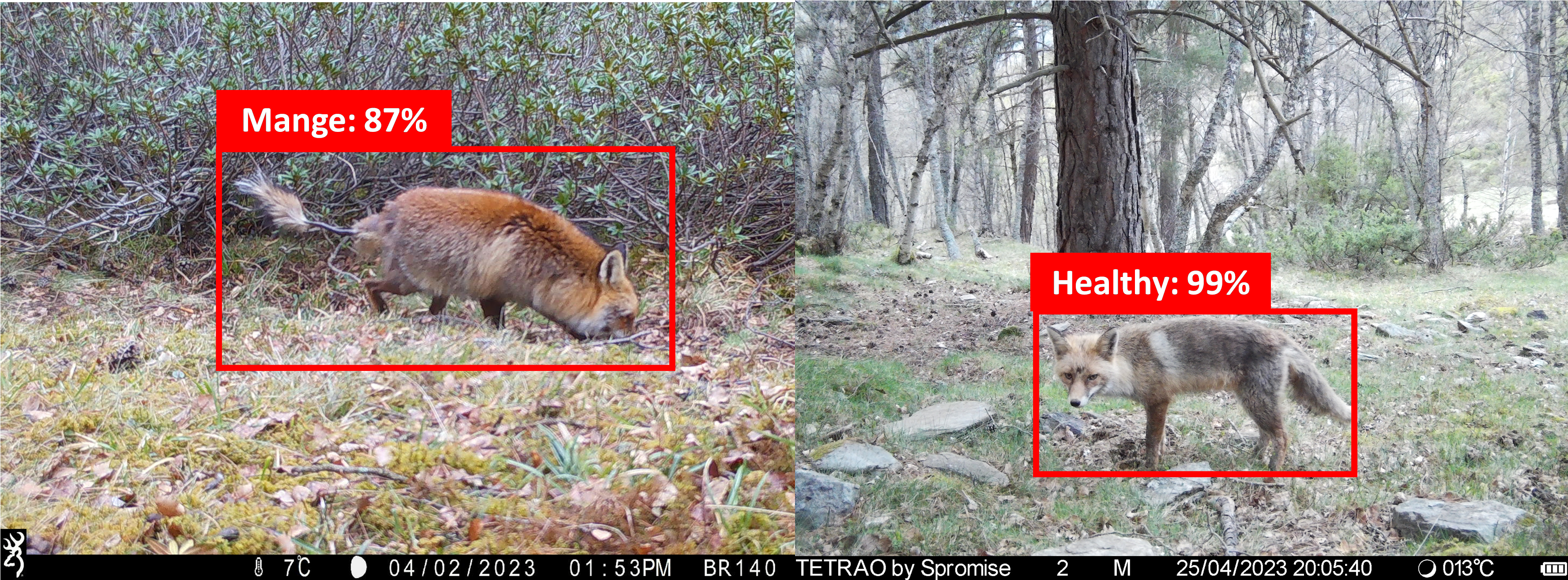 Conceptual illustration of a future AI model designed to distinguish healthy and diseased wildlife. Research is ongoing © Patricia Barroso and Pablo Palencia
We also need to broaden the scope. All studies have focused on mammals and most of them were developed in the Northern Hemisphere (67.5%). Expanding camera trap surveillance to biodiversity-rich tropics and other species or taxonomic groups represents an opportunity. Likewise, while sarcoptic mange dominates the current literature, many other pathologies with visible signs, from poxviruses to cutaneous fibromas, await investigation.
Implications for conservation and global health
Camera trapping will not replace all traditional wildlife health monitoring but could become a powerful complementary tool. By providing a cost-effective way to detect disease outbreaks early, track their spread, and even assess the impact of control measures, camera traps can help us make more effective decisions for wildlife conservation and global health. As we face a future of global change, integrating camera trapping into our health surveillance systems represents an innovative approach to protect ecosystem health.
Blog post by Patricia Barroso and Pablo Palencia. Read the full article ‘Pixelated pathologies: Camera trapping as a tool for monitoring wildlife health’ in Journal of Applied Ecology.















 English (US) ·
  French (CA) ·