

 1 week ago
30
PROTECT YOUR DNA WITH QUANTUM TECHNOLOGY
Orgo-Life the new way to the future Advertising by AdpathwayWhen smoke from Canadian wildfires drifted over Massachusetts this summer, it reached a place far from any flames: a row of bluebird nesting boxes at Mass Audubon's Drumlin Farm Wildlife Sanctuary in Lincoln. Bird project coordinator Pam Sowizral, whose team has checked the boxes three times a week for about 20 years, noticed the difference. "Those periods of time when the smoke was here, the air somehow felt a little different," she told NPR in a report published by KPBS on Oct. 6.
The checks are routine and gentle. Sowizral approaches each box the same way. "Always give a little knock first. Let them know you're coming," she said. Inside one box late in the season, she found two baby bluebirds, the last of the year.
That long record of nests, eggs and fledglings is exactly what researchers studying smoke need. Scientists say the impact of wildfire smoke on wildlife is poorly understood, and the best data often come from volunteers and long-running monitoring programs.
It also means ordinary backyard birders can play a real role. As wildfire seasons lengthen, smoke is reaching more people and more birds in places that never see fire.
Built for Flight, Exposed to Smoke
Birds breathe differently from people. Their lungs are connected to air sacs that keep air flowing through in one direction, extracting far more oxygen with each breath. That design powers flight, but it also pulls in more of whatever is floating in the air.
Cornell University global change ecologist Olivia Sanderfoot, a leader in the emerging field of smoke ecology, said that efficiency comes with a cost. Birds take in roughly twice as much oxygen per breath as humans do, and "they're vulnerable to all the other things that are in the air, too," she said in the NPR report.
The Cornell Lab of Ornithology notes the same trade-off. Bird lungs are highly efficient at extracting oxygen, but that efficiency renders birds more sensitive to pollutants.
Smoke is not a single pollutant. Sanderfoot described it as "a toxic soup of substances" that can affect breathing and may also interfere with cues birds use to navigate. And it travels. "Smoke can blow hundreds to thousands of miles away from that burn site," she said.
Smoke as Its Own Kind of Disturbance
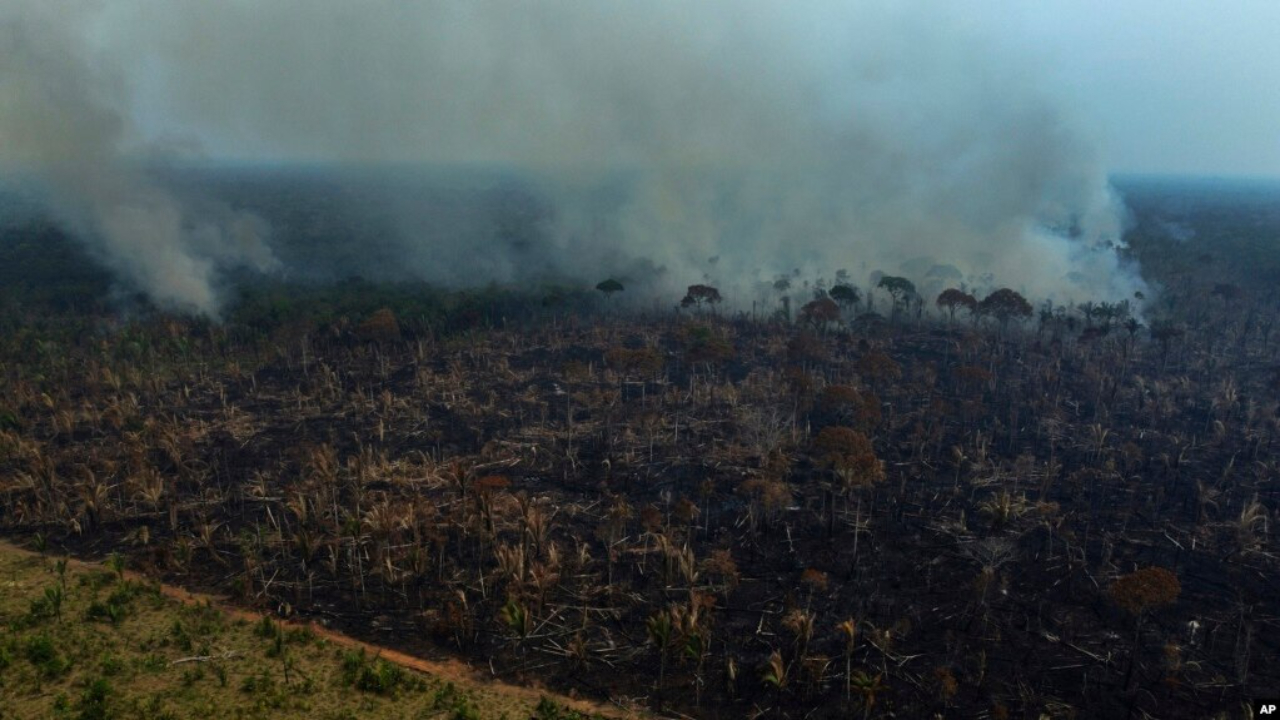
Ecologists have long studied how fire reshapes habitats. Smoke is different. It can blanket entire regions for days or weeks without burning a single tree, which means its effects can be felt by birds that never see a flame.
UCLA ecologist Morgan Tingley wants that distinction recognized. "What we're trying to do is getting smoke to be recognized as a disturbance in and of itself distinct from fire that is worthy of our concentrated attention," he said in the NPR report.
Early research supports the concern. A 2024 study in the journal Ornithology, led by Tingley's group using 20 years of data from the San Francisco Bay Bird Observatory, found that short-term smoke exposure reduced bird activity and that repeated exposure to fine particle pollution was linked to lower body mass, UCLA reported.
Those findings show associations, not proof that smoke directly caused every change. Birds also responded in different ways, scientists say. Some stay put, some move away, and others change behavior by singing less or foraging less.
A Field That Spans Lungs, Air and Data
Studying smoke requires expertise that rarely sits in one department. University of Wisconsin-Madison atmospheric chemist Tracey Holloway, who works with NASA's Health and Air Quality Applied Sciences Team, said ecologists need help from air-quality scientists and statisticians. "Real-world problems don't map cleanly onto academic silos," she said in the NPR report.
Satellite smoke maps and air-quality monitors can show where smoke went and how thick it was. Bird data can then be matched to those maps to see whether nesting success, activity or body condition changed during smoky periods.
The missing piece is often the bird data itself. Long-term programs like Drumlin Farm's box checks provide before, during, and after records, NPR reported. That is why researchers are leaning on networks of amateur and professional birders across the country.
Turning Backyard Birding Into Science
Birders in the West can join Project Phoenix, a UCLA-led effort that asks volunteers to watch neighborhood birds for about 10 minutes a week, according to the Cornell Lab. Anywhere in the U.S., birders can submit sightings through eBird or report nest box activity through the Cornell Lab's NestWatch program, creating records scientists can compare with smoke maps.
Nest box monitors are especially valuable. Records of when eggs were laid, how many hatched and how many young left the nest can show whether a smoky stretch coincided with failed nests or smaller broods.
The most useful data are consistent. Watching the same spot at the same time each week, and continuing during smoky days when it is safe to do so, gives researchers the comparison they need.
People should protect themselves first. When air-quality alerts are in effect, keep observations short, wear an N95 mask outdoors, or watch from a window. Sensitive groups, including people with asthma or heart disease, should stay inside during heavy smoke.
Bird lovers can also help birds directly by keeping water sources clean and filled during smoke and heat. There is no evidence that bringing wild birds indoors helps them, and handling wild birds is not recommended.
The bottom line: smoke reaches far beyond burn scars, birds are among the most exposed animals, and the long-term records that can reveal its effects depend heavily on volunteers who keep watching.
What Readers Want to Know
Why are birds sensitive to wildfire smoke?
Their lungs and air sacs move air through in one direction, extracting more oxygen per breath. That also means they take in more pollutants.
Can smoke affect birds far from a fire?
Yes. Smoke can travel hundreds to thousands of miles. This summer, Canadian wildfire smoke reached bluebird boxes in Massachusetts.
What have studies found?
A 2024 study found short-term smoke reduced bird activity and repeated exposure was linked to lower body mass in California birds.
What does "smoke as a disturbance" mean?
Scientists want smoke studied as its own ecological stress, separate from the effects of fire on habitat.
How can I help?
Join Project Phoenix in the West, submit eBird checklists, or report nest box activity through NestWatch.
Is it safe to bird during smoky days?
Limit time outdoors during air-quality alerts, wear an N95 mask, or observe from indoors. Sensitive groups should stay inside.
© 2026 NatureWorldNews.com All rights reserved. Do not reproduce without permission.















 English (US) ·
 French (CA) ·